
Kirjahaku
Etsi kirjoja tekijän nimen, kirjan nimen tai ISBN:n perusteella.
39 kirjaa tekijältä Chris Goss
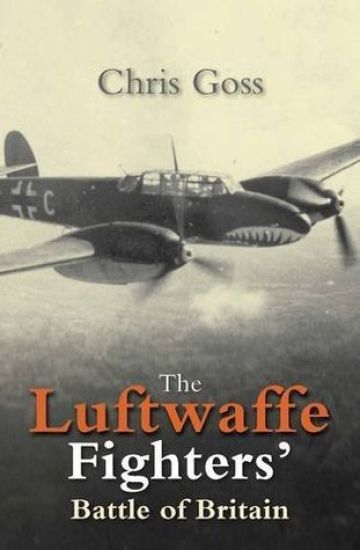
The story of how the outnumbered RAF fought and defeated the superior Luftwaffe in the Battle of Britain will always be a source of fascination. However, accounts of summer 1940 have tended to centre on the British defenders, both in the air and on the ground, whilst the story of the losing German side has remained largely untold. In 1939 the Luftwaffe was opposed to an RAF which was disorganized and inferior in both technology and number. Using first hand accounts from Luftwaffe pilots, best-selling author Chris Goss explains how those same German aircrew felt just months later when they flew against a tenacious enemy with nothing to lose. The Luftwaffe Fighters' Battle of Britain provides a new insight into the experiences of the German fighter and bomber crews from the attacker's viewpoint.
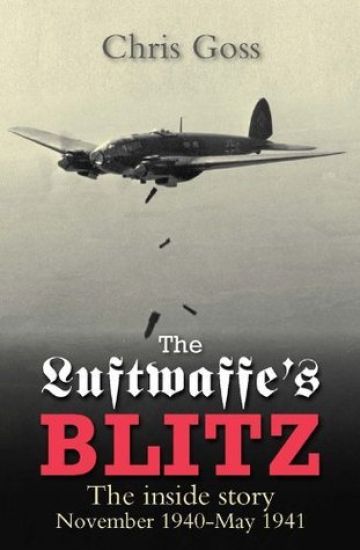
Due to the failure of the day campaign during what has become known as the Battle of Britain, on 7 September 1940, the Luftwaffe commenced bombing London and major cities, predominantly by night. What became known as the Blitz continued until May 10,1941 with many towns and cities across the country being attacked and London being struck 57 nights in succession. By the end of May 1941, over 43,000 civilians, half of them in London, had been killed by bombing and more than a million houses destroyed or damaged in London alone. The Blitz failed to break the morale of the British people and any thoughts of a German invasion were cancelled with German attention quickly being transferred to the Soviet Union. Accordingly, the intensity of the attacks against mainland Britain lessened considerably. Much has been written about the Blitz from a British perspective but The Luftwaffe's Blitz tells the story from the viewpoint of the German aircrew involved, many of whom were shot down and taken prisoner. Using over 30 first hand accounts and previously unpublished photos, The Luftwaffe's Blitz details the Luftwaffe's assault against the United Kingdom in 1941, covering the major attacks and those that occurred during the remaining months of that year. Integrated with accounts from the aircrew of RAF's embryonic night fighter force as they fought against the Luftwaffe night after night in very difficult and sometimes primitive circumstances, this book provides a new perspective on the Blitz from the attacker's point of view.

Bloody Biscay is the story of the Luftwaffe's only long range maritime fighter unit -- V Gruppe/Kampfgeschwader 40 (V/KG 40) and its battles against the RAF, the US Army Air Force (USAAF) and the US Navy (USN) from July 1942 to August 1944 above the Bay of Biscay. Using personal accounts from both German and Allied survivors, Bloody Biscay relates the initial tribulations of the unit, the height of its success in spring and summer 1943, its battles against overwhelming odds and its eventual annihilation over the Normandy beaches in June 1944. The book contains comprehensive appendices detailing the unit's commanding officers, known aircrew, all of its known 'kills' matched to Allied losses and its combat losses. It also describes the attack in which the famous British actor Leslie Howard perished and so clarifies the facts surrounding one of the most enduring mysteries of the 2nd World War. Illustrated with 200 photographs, the vast majority of German origin, Bloody Biscay gives a graphic insight into the activites of V/KG 40.
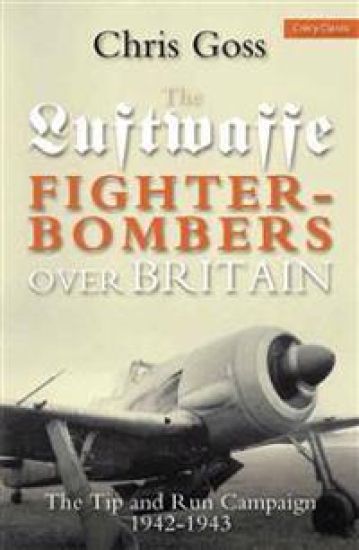
As the Battle of Britain came to a close, the Luftwaffe began arming its single-engined fighters with bombs, using them in preference to twin-engined bombers against many daylight targets. Two units were designated for these Jagdbomber (literally fighter-bomber) attacks--10/JG 26. Their targets included shipping and coastal installations, railways, gas holders and selected military and civilian objectives. The detrimental effect on British morale caused by these 'Tip and Run' attacks was devastating. How could the British military combat the raids effectively? How could the local populations cope? Questions were asked in Parliament but no effective answer was supplied. The locals lived in fear of where and when the next would occur. Luftwaffe Fighter-Bombers over Britain analyses the campaign from March 1942-June 1943 using contemporary records and first-hand accounts from both the German and British sides and highlights, amongst others, unopposed attacks in London, Bexhill, Eastbourne, Hastings, Yeovil, Salisbury, the Isle of Wight, Great Yarmouth, Torquay and Bournemouth. Tactics are considered from both attacker and defender viewpoints, their successes and their failures. Incorporating almost 300 previously unpublished photographs, and packed with detailed research, Luftwaffe Fighter-Bombers over Britain tackles a previously little known aspect of the World War II air war and will appeal to those experiencing the raids, those with an interest in local history, the military researcher and aviation historian.
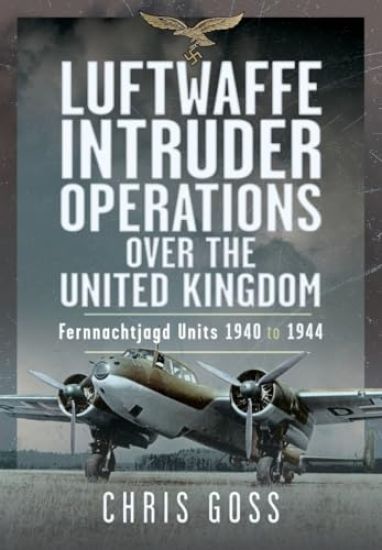
On 17 July 1940, Oberst Josef Kammhuber took command of the Luftwaffe’s 1 Nachtjagddivision after his release from French captivity. He was tasked with combating RAF bombers, which were increasingly threatening Germany during the Battle of Britain. Kammhuber’s strategy, the Fernnachtjagd (long-range night fighter missions), focused on targeting bombers while they were vulnerable during takeoff and return to bases. Kammhuber believed that converted German bombers like the Dornier Do 17Z and Junkers Ju 88, flown by experienced crews, would be ideal for these missions. The first claims from Fernnachtjagd occurred on 23 July 1940, when Luftwaffe pilots mistakenly shot down a Bristol Blenheim, thinking it was a Vickers Wellington. These night missions continued over the next few years, with varying success. By 1942, the campaign shifted to a “stopgap” phase, and the introduction of the Messerschmitt Me 210 and Me 410 marked further changes in the tactics and aircraft used. While Fernnachtjagd operations had some impact in 1941, by 1944, their effectiveness had diminished. Notably, during the Allies' Berlin raid on 19 February 1944, the Luftwaffe claimed more RAF bombers than the entire Me 410 campaign achieved in 14 months.
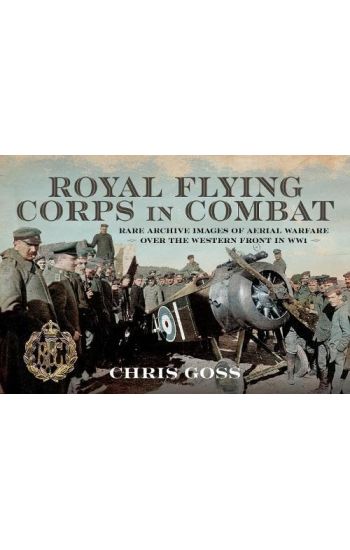
"Knights of the Air" was the title given to daring aviators of the First World War, who flew fragile, unreliable machines in thrilling dogfights. Many pilots of the Royal Flying Corps met tragic ends, and this book by Chris Goss showcases an extraordinary collection of photos and stories of these downed aircraft from the Western Front. Each image tells the tale of the aviators behind them. For example, Second Lieutenant Gilbert Insall and Air Mechanic Thomas Donald, after their Vickers FB 5 Gunbus was damaged, made repairs under enemy fire and returned to base. They were shot down again weeks later, but Insall later escaped captivity and received the Victoria Cross. Chris Goss delves into the stories behind the crashes, even identifying enemy pilots who shot down some of the planes. The mysterious case of Second Lieutenant John Holtom’s DH 2, whose body was never recovered, remains unsolved. This book also reveals how many surviving pilots went on to have distinguished careers, including Montagu Chidson, who, after being captured in 1915, later rescued vital diamonds from Amsterdam in 1940 while serving with M.I.9. Royal Flying Corps in Combat is a captivating account of the aircraft, battles, and aviators of the First World War.
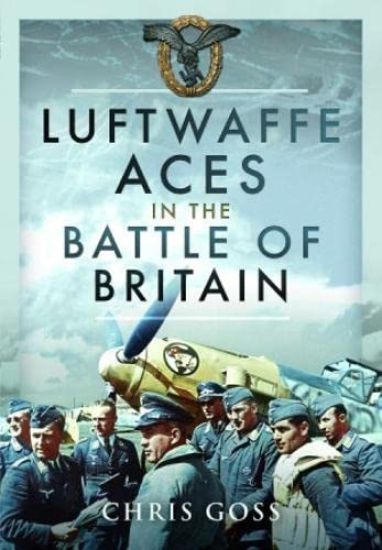
The term fighter ace' grew in prominence with the introduction and development of aerial combat in the First World War. The actual number of aerial victories required to officially qualify as an ace' has varied but is usually considered to be five or more. For the Luftwaffe, a number of its fighter pilots, many of whom had fought with the Legion Condor in Spain, had already gained their Experte, or ace, status in the Battle of France. However, many more would achieve that status in the hectic dogfights over southern England and the Channel during the Battle of Britain in the summer of 1940. A number would also be either killed or captured. Some of these men, individuals such as Adolf Galland, Werner Molders, and Helmut Wick, who between them had claimed 147 aerial victories by 31 October 1940, are well-known, but most are less so. In this book, the story of each of the Luftwaffe's 204 Messerschmitt Bf 109 aces' from the summer of 1940 is examined, with all of the individual biographies, detailing individual fates during the war, being highly-illustrated throughout. Original German records from the summer of 1940, have been examined, providing a definitive list of each pilot's individual claims. It also covers, to a lesser extent, those forgotten fifty-three Messerschmitt Bf 110 pilots who also achieved ace status by day and also by night between 10 July and 31 October 1940.
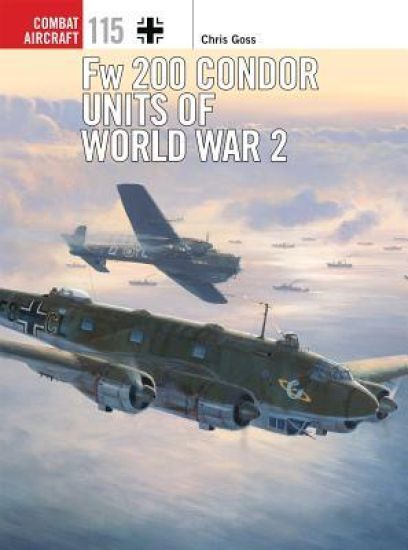
An illustrated history of the 'Scourge of the Atlantic' and its audacious attacks on Allied shipping.The Fw 200 Condor first made an appearance over Norway in April 1940, flying with the unit that eventually become synonymous with it – Kampfgeschwader 40. As the war in the west progressed, and German forces advanced, French airfields opened up, allowing the Condor to fly around the UK and out into the Atlantic, where it rapidly established itself as one of the key menaces to Allied shipping. Able to attack shipping directly, or able to guide U-Boats to their prey the Condor scored its first major success when it crippled the liner Empress of Great Britain.But the tables were to turn on the 'Scourge of the Atlantic' as mechanical failures induced by their harsh operating environment and changes in Allied tactics began to take a toll. Vulnerable to aerial attack, the deployment of Allied carriers and their associated fighters combined with the introduction of more loing range maritime patrol aircraft exposed the Condor's deficiencies.Packed with rare first-hand accounts, profile artwork and photographs, this is the history of one of the unsung types to take to the skies during World War 2.
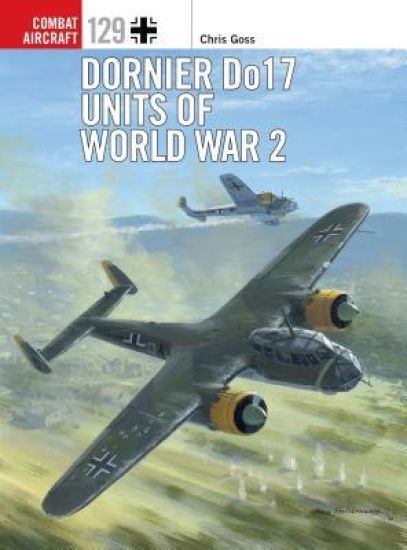
Initially designed as a high-speed mail aeroplane and airliner, the Do 17 first made an appearance as a military aircraft in the Spanish Civil War, both as a bomber and in reconnaissance roles. In the early stages of World War II, it, together with the Heinkel He 111, formed the backbone of the German bomber arm over Poland, France, Belgium and the Low Countries, and saw action in almost every major campaign in this period. However, by the start of the Battle of Britain, the Do 17’s limited range and small bomb load meant that it was ripe for replacement by the Ju 88. Though it performed well at lower altitudes, the model suffered heavy losses during raids, particularly during the Blitz and were increasingly phased out. This fully illustrated study uses detailed full-colour artwork and authoritative text from an expert author to tell the full operation story of one of Nazi Germany’s best light bombers from the early years of World War II.
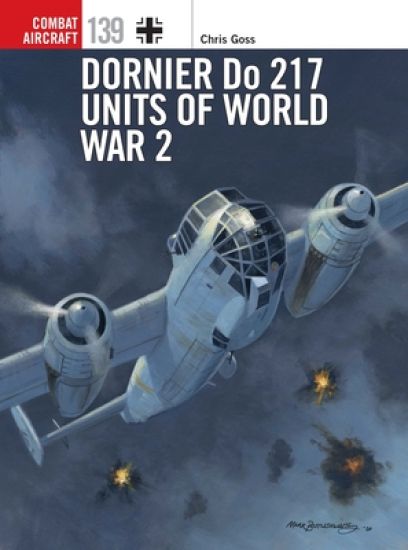
The Do 217 had a much larger bomb load capacity and had considerably greater range than the Do 17, which it replaced in frontline service from mid to late 1941. Although initially used simply as a bomber, later variants were developed to allow the Do 217 to undertake the precision maritime strike role. In order to perform the latter mission, the Do 217 was modified to launch glide bombs – units employing these pioneering weapons enjoyed some success in the Mediterranean from the autumn of 1943. During the course of these operations the Do 217 became the first aircraft in military aviation history to deploy a precision-guided bomb in combat in the form of the ‘Fritz X’ radio-guided, free-fall weapon, which sank the Italian battleship Roma shortly after Italy capitulated in September 1943. The Do 217 served on all fronts, and was often used on anti-shipping strikes during the Battle of the Atlantic and against the Allied invasion fleet at Normandy. This versatile aircraft was also converted into a nightfighter, seeing action in the Defense of the Reich through to war’s end.This highly illustrated study explores the design and development of the Do 217 and chronicles its use in the frontline as a strategic bomber, launch platform for first generation precision weapons, reconnaissance aircraft and nightfighter, among others.
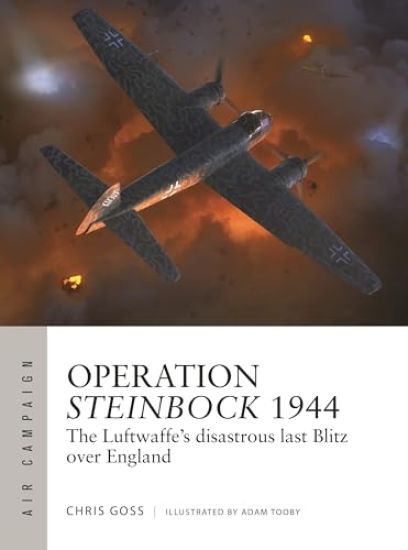
The story of Germany's disastrous last cross-Channel Blitz in early 1944, which left the Luftwaffe devastated and barely able to oppose the D-Day landings. Operation Steinbock, or as it became known, the ‘Baby Blitz’ was the Luftwaffe’s last sustained night bomber offensive against the United Kingdom. In this book, renowned Luftwaffe historian Chris Goss explains how and why the Luftwaffe's last cross-Channel campaign was such a contrast to the Battle of Britain and subsequent Blitz of 1940–41. In 1944, the Luftwaffe’s under-trained, hard-pressed, and inexperienced bomber crews were out-thought and outfought by their opponents, who combined the latest ground-controlled radar with powerful new night fighters and advanced anti-aircraft defences, including radar-assisted guns and even anti-aircraft rockets. Packed with dramatic original illustrations, explanatory diagrams, 2D maps of the strategic situation and 3D maps recreating key missions, this book tells the story of Operation Steinbock and its crucial consequences. The Germans' last air campaign over England ended in late May 1944, with the Luftwaffe having lost hundreds of much-needed aircraft and crews. Just days later, the Allies stormed ashore across the beaches of Normandy, and the Luftwaffe could do little to stop them.
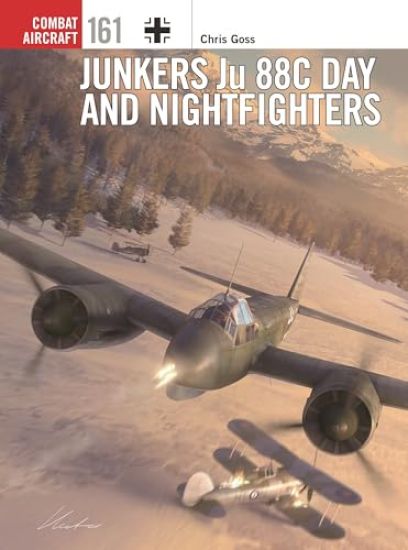
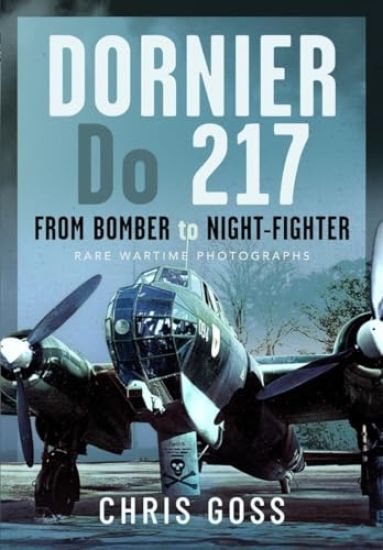
Entering service in early 1941, the Dornier Do 217 was designed as an improved version of the ‘Flying Pencil’, the Do 17 bomber. The Do 217E-1 twin radial-engine bomber first flew in October 1940, the same month that the production of the Do 17 ceased. The Do 217 was initially used for conventional bombing and anti-shipping missions around the United Kingdom, including the infamous Baedeker Blitz against British provincial cities in 1942\. The Do 217 was the main German bomber in this theatre until late 1943, when it started to be replaced by the Messerschmitt Me 410 and Junkers Ju 188\. During this period, the Do 217E was improved, leading to the introduction of the Do 217K or M, the difference between the two being the engines. The Do 217 would be deployed in all of the Luftwaffe’s campaigns and fronts in the Second World War. Curiously, though, the only operational units to use the type on the Eastern Front were the night reconnaissance units, aside from which only occasionally did other Do 217 units fly missions against Stalin’s forces. With the delay in the Heinkel He 177 entering service, it was the Do 217 that became the first aircraft in history to be used to deploy precision-guided weapons in combat. This came on 21 July 1943, when Do 217s of KG 100 attacked Allied shipping in Augusta harbour, Sicily, using Fritz X radio-guided glide bombs. Then, on 25 August 1943 twelve Do 217E-5s from II./KG 100 attacked a convoy off the Spanish coast with a similar weapon to the Fritz X, the Henschel Hs 293 radio-guided glide bomb. This attack resulted in damage to three warships. In response to the intensifying Allied strategic bomber offensive, additional night fighters were needed by the Luftwaffe. The Do 217E-2 was therefore modified by fitting four MG17s and four MG-FF 20mm cannon in a solid nose. The rear firing guns, including the MG131 in the turret, were retained, as was the ability to carry bombs, creating the Do 217J-1 which was intended as a night intruder. The Do 217 also served extensively as a night fighter, with examples being fitted with Lichtenstein radar and obliquely mounted upward-firing MG151 cannon in the fuselage, the so called Schräge Musik modification. Despite the Do 217’s versatility and wide-spread deployment – all of which is explored here by the author through a remarkable set of archive images, many of which have never been seen in print before – production ceased in October 1943\. By the following year, the Do 217 had become obsolete.
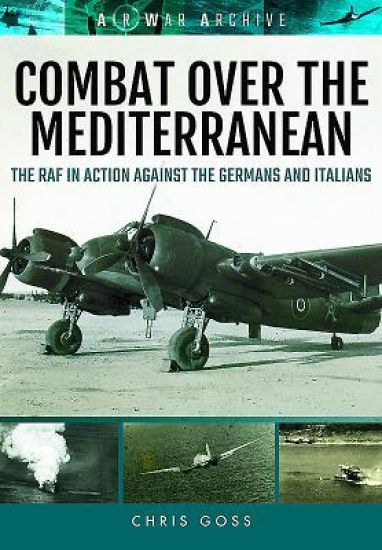
Drawing on an extremely rare collection of photographs taken by the camera guns of Bristol Beaufighters deployed on ground-attack and anti-shipping operations, this book will form a rare indeed unique view of what it was like to fly dangerous strike missions against German and Italian forces over North Africa and the Mediterranean between 1942 and 1945. Despite being reformed in the UK in November 1940 as Coastal Commands first Beaufighter squadron, 252 Squadron, which also operated Bristol Blenheims until April 1941, was destined to spend most of its service in North Africa and the Mediterranean before being disbanded in Greece in December 1946. One of the squadrons commanding officers, Wing Commander DOB Butler, DFC, had the foresight to keep perfect examples of the many thousands of gun camera stills taken by the Beaufighter pilots under his command. As a result, he has preserved a remarkable history of the air and sea war in the Mediterranean from October 1942 to May 1945. These dramatic stills show attacks against German and Italian aircraft, Axis warships and merchantmen, harbours and other targets on what are now popular holiday destinations such as Rhodes, Naxos and Kos and across the Greek Islands, the Aegean and Ionian Seas. This book will be based around these remarkable and spectacular photographs and will include full details of key missions and the crews who participated, with information drawn from Squadron records and combat reports.
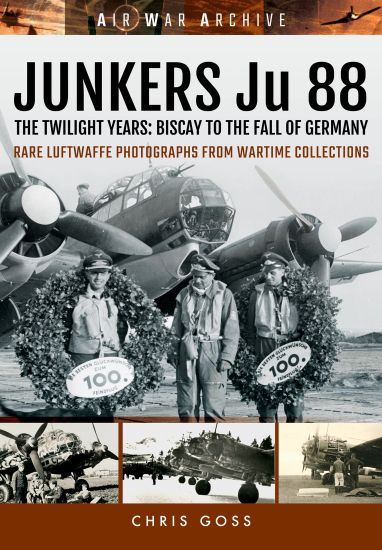
Designed as a fast bomber that could out-run the fighters of the era, the twin-engine Junkers Ju 88 became one of the most versatile aircraft of the Second World War. Such was the success of the design that its production lines operated constantly from 1936 to 1945, with more than 16,000 examples being built in dozens of variants - more than any other twin-engine German aircraft of the period. From an early stage it was intended that it would be used as a conventional light bomber and as a dive-bomber. As such, it served in the invasion of Poland, the Norway campaign, the Blitzkrieg and the invasion of France and the Battle of Britain. This latest volume in Frontline's Air War Archive examines the Ju 88s use in the latter years of the Second World War. The type's use as a torpedo bomber or reconnaissance aircraft, as well as its deployment in Russia, over the Bay of Biscay and in the Mediterranean theatre are all explored. Even its use in the Mistel flying-bomb is covered. In this selection of unrivalled images collected over many years, the operations of this famous aircraft in its twilight years are portrayed and brought to life.
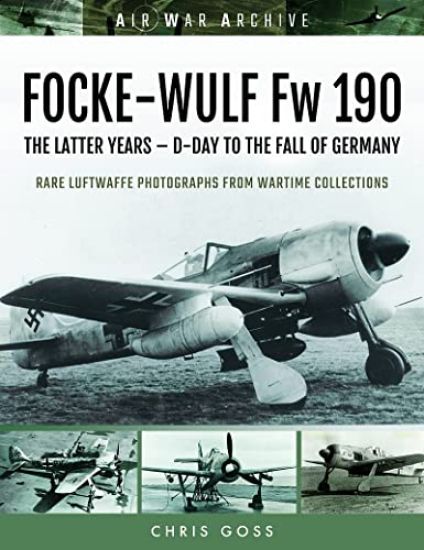
As the war began to turn against Germany, the Luftwaffe was forced to defend the Reich against increasingly overwhelming numbers of Allied fighters and bombers. The Focke-Wulf Fw 190, together with the Bf 109G, was the mainstay of the Luftwaffe's Reichsverteidigung (Defence of the Reich) fighter force, both by day and by night. As the war progressed, the US Eighth Air Force, suffering heavy losses over Germany, changed tactics. The escorting US fighters had been expected to fly alongside the bombers to provide close protection. But this meant that they could not chase after the enemy when in combat, having to return to the bombers. So, from early 1944, the decision was made to free the fighters, allowing them to fly ahead of the bomber stream clearing the skies of German fighters. To counter this, the Luftwaffe developed the Gefechtsverband, or battle formation, composed of two units of Bf 109s and one Sturmgruppe of Fw 190s. In Gefechtsverband operations, the Bf 109s would engage the Allied fighters, particularly the long-range P-51 Mustangs, leaving the more heavily-armed Fw 190s to attack the bombers. Though the large Gefechtsverband formations were unweildy and not always effective, when they did work well, the powerful and well-armoured Fw 190s wreaked havoc amongst the US bombers. Meanwhile, on the Eastern Front, the Fw 190 was incresaingly relied upon for fighter and Jabo missions against a dogged Soviet Air Force. With the tide well and truly turned against the Luftwaffe, newer versions of the Fw 190, such as the F and G variants, were intruduced as well as the superlative D-9 which was powered by the Jumo 213 A engine, armed with two MG 131s and two MG 151/20 guns and had a new fuselage and wings. In this second volume detailing the service of the Fw 190, Chris Goss has assembled photographs, many of which have come from the archive of the late Dr Alfred Price, to illustrate the final years of the type's war.
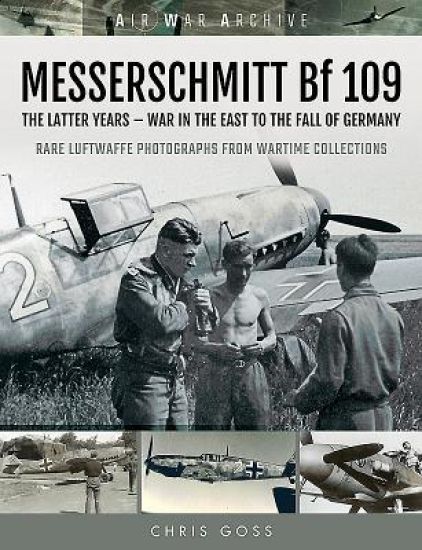
The most iconic German aircraft of the Second World War, the Messerschmitt Bf 109 was the Luftwaffe's principal fighter from 1939 until 1942 when the superior Focke-Wulf Fw 190 came into greater prominence. The Bf 109 served in every theatre of the war, though in this book the author examines the Tip and Run era, D-Day and the Eastern Front. In the later years of the war, the Bf 109 fought with some success in the defence of Germany against Allied bombers. The Bf 109 was the most produced fighter aircraft in history and more aerial kills were made with this fighter than any other aircraft. Indeed, A total of 105 Bf 109 pilots were each credited with the destruction of 100 or more enemy aircraft; thirteen of these men scored more than 200 kills, while two scored more than 300\. The Bf 109 was flown by the three top-scoring fighter aces of the war: Erich Hartmann, the top-scoring fighter pilot of all time claiming 352 victories, Gerhard Barkhorn with 301 victories, and Gunther Rall, who claimed 275 victories. All of them flew with JG 52, a unit which exclusively flew the Bf 109 and was credited with over 10,000 victories, chiefly on the Eastern Front. The Bf 109 was also supplied to several of Germany's allies, including Finland, Hungary, Romania, Bulgaria, Croatia, and Slovakia. In this selection of unrivalled images collected over many years, the operations of this famous aircraft in the latter part of the Second World War are portrayed and brought to life.
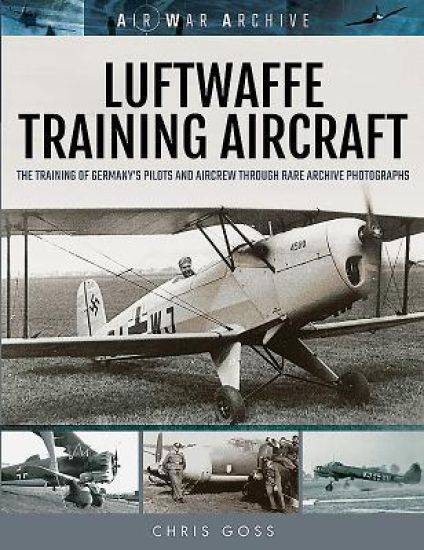
The often unseen and unrecognised element in aerial warfare, is that of training the pilots and crews, yet it its value is beyond calculation. In this fundamental role, a wide variety of aircraft were used by the Luftwaffe, with trainee pilots progressing from simpler, older machines, such as the Klemm 35, the Focke-Wulf Fw 44 and the Bucker 131, to the more sophisticated Arado Ar 66, the Gotha Go 145 and the Arado Ar 76, as well as heavier aircraft like the Junkers W33 and W44. Gradually they would be introduced to newer and faster models that enabled them to experience, to some degree, the type of aircraft they would be flying in combat. Recruits would initially spend six months at a Fliegerersatzabteilung or training depot, where the main emphasis was on drill and physical training, with introductory lectures on the principles of wireless operation and map reading. This would be followed by two months studying general aeronautical subjects, before being sent to elementary flying school. The various kinds of aircraft used for training depended upon the role each individual trainee would eventually undertake, from single-seat fighters to multiple-crew bombers or transports. For example, those men ear-marked to become bomber pilots trained on early versions of He 111, the Ju 52, Ju 86 and the Do 17. In this, the Luftwaffe was also able to make use of captured enemy aircraft. It also established training units through the Occupied territories to enable its trainees to familiarise themselves with different conditions and terrain. In the less-pressurised environment of the training schools away from the front line, more care could be taken over photography, resulting in the author of this extensive study of the wide range of aircraft used for training by the Luftwaffe, being able to assemble such a fine collection of excellent images.
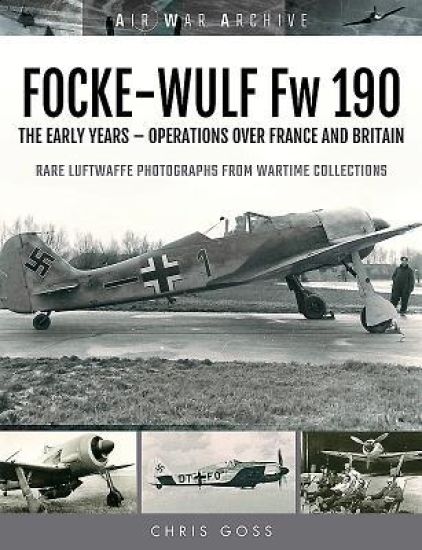
The Focke-Wulf Fw 190 was widely regarded as the Luftwaffe's finest fighter. It first saw service in France in August 1941, immediately proving itself at least the equal of the then latest Spitfire variant, the Mk.V. There were a number of characteristics which contributed to the Fw 190's success. The first of these was that it had been designed from the outset to be a weapons platform, rather than an aircraft to which weapons were added, as was the case with previous fighters. This meant that it could carry a wide range of armament in the form of various combinations of bomb racks, cannon pods and, later, unguided rockets. It was also built to withstand heavy punishment, with the extensive use of electrically-powered equipment instead of the hydraulic systems which, used by most aircraft manufacturers of the time, were more susceptible to failure if damaged by gunfire. The relatively small diameters of electrical wires were much less likely to be hit by gunfire than larger hydraulic pipes. Another element in the Fw 190's construction which added to its durability was its wide-tracked, inwards-retracting landing gear, as opposed to the much narrower, outwards-retracting landing gear of the Messerschmitt Bf 109\. This gave the Fw 190 much greater stability on the ground which resulted in far fewer ground accidents than experienced by the Bf 109. The Fw 190's BMW 801 D-2 radial engine also produced 1,677 horse power, giving the early Focke-Wulf 190 A-8 a top speed of more than 400 miles per hour - which was considerably faster than the early variant Spitfires. It was the Spitfires with which the Fw 190 pilots frequently had to contend when in combat over the English Channel, and particularly during the Allied raid on Dieppe in August 1942, when more than 100 Focke-Wulfs (from Jagdgeschwaders JG 2 and JG 26) engaged Spitfires and Hawker Typhoons, claiming sixty-one Allied aircraft 'kills' against just twenty-five losses of their own. The Fw 190's weapons capability also saw it used as a fighter-bomber. The Fw 190 A-3/U3 Jabo was used with considerable effect against Allied shipping in the Channel and against the south-eastern coasts of England in 1942 in tip-and-runs raids. These fast, low-level attacks proved very difficult for the defending RAF squadrons to counter and only one Fw 190 was lost on these operations. In this illuminating study of the early service of the Fw 190, Chris Goss has assembled a unique collection of photographs illustrating the wide use of this highly versatile aircraft.