Kirjojen hintavertailu. Mukana 11 717 486 kirjaa ja 12 kauppaa.

Kirjahaku

Etsi kirjoja tekijän nimen, kirjan nimen tai ISBN:n perusteella.

10 kirjaa tekijältä Christian B. Miller

The Character Gap

The Character Gap

Christian B. Miller

Oxford University Press Inc
2018
sidottu
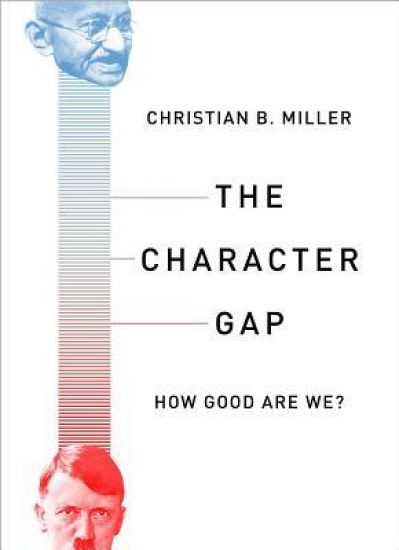
We like to think of ourselves, our friends, and our families as pretty decent people. We may not be saints, but we are basically good, fairly honest, relatively kind, and mostly trustworthy. One of the central themes of The Character Gap is that we are badly mistaken in thinking this way. In recent years, hundreds of psychological studies have been done which tell a rather different story. We have serious character flaws that prevent us from being good people, many of which we do not even recognize in ourselves. Does this mean that instead we are wretched people, vicious, cruel or hateful? Christian Miller does not argue that this is necessarily the case either. Instead, the more we put our characters to the test, the more we see that we are a mixed bag. On the one hand, most of us as bystanders will do nothing as someone cries out for help. Even worse, under pressure from authority figures we might kill innocent people. Yet it is also true that there will be many times when we selflessly come to the aid of a complete stranger, or don't lie, steal, or cheat even if we could get away with it. As we embark on this journey of putting our characters to the test, some of the main questions will include: What is good character? Why should we bother working to develop a good character? What does the research in psychology suggest about how good (or bad) our characters really are? What secular strategies for improving our characters show a lot of promise? What religious, and specifically Christian, strategies for improving our characters show a lot of promise? In The Character Gap Miller shows not only how mixed our characters tend to be, but also how we can try to bridge the gap between who we are and the virtuous people we should strive to become.
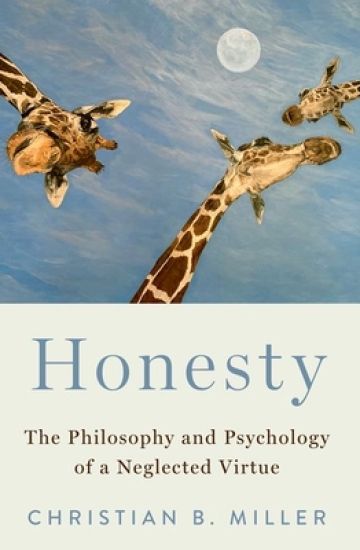
Honesty

Honesty

Christian B. Miller

Oxford University Press Inc
2021
sidottu
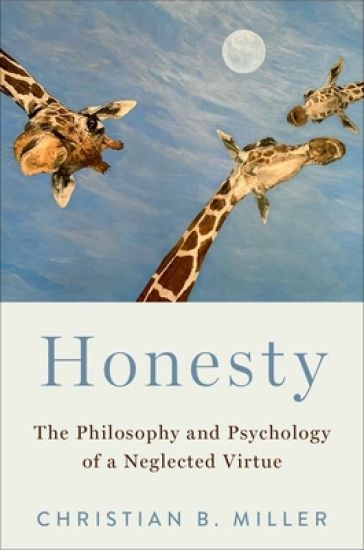
Honesty is an important virtue. Parents want to develop it in their children. Close relationships depend upon it. Employers value it in their employees. Surprisingly, however, philosophers have said very little about the virtue of honesty over the past fifty years. In this book, Christian B. Miller aims to draw much greater attention to this neglected virtue. The first part of the book looks at the concept of honesty. It takes up questions such as: What does honesty involve? What are the motives of an honest person? How does practical wisdom relate to honesty? Miller explores what connects the many sides of honesty, including not lying, not stealing, not breaking promises, not misleading others, and not cheating. He argues that the honest person reliably does not intentionally distort the facts as she takes them to be. Miller then examines the empirical psychology of honesty. He takes up the question of whether most people are honest, dishonest, or somewhere in between. Drawing extensively on recent studies of cheating and lying, the model Miller articulates ultimately implies that most of us have a long way to go to reach an honest character. Honesty: The Philosophy and Psychology of a Neglected Virtue provides both a richer understanding of what our character looks like, as well as what the goal of being an honest person actually involves. Miller then leaves it up to us to decide if we want to take steps to shrink the character gap between the two.
Honesty

Honesty

Christian B. Miller

OXFORD UNIVERSITY PRESS INC
2023
nidottu
Honesty is an important virtue. Parents want to develop it in their children. Close relationships depend upon it. Employers value it in their employees. Surprisingly, however, philosophers have said very little about the virtue of honesty over the past fifty years. In this book, Christian B. Miller aims to draw much greater attention to this neglected virtue. The first part of the book looks at the concept of honesty. It takes up questions such as: What does honesty involve? What are the motives of an honest person? How does practical wisdom relate to honesty? Miller explores what connects the many sides of honesty, including not lying, not stealing, not breaking promises, not misleading others, and not cheating. He argues that the honest person reliably does not intentionally distort the facts as she takes them to be. Miller then examines the empirical psychology of honesty. He takes up the question of whether most people are honest, dishonest, or somewhere in between. Drawing extensively on recent studies of cheating and lying, the model Miller articulates ultimately implies that most of us have a long way to go to reach an honest character. Honesty: The Philosophy and Psychology of a Neglected Virtue provides both a richer understanding of what our character looks like, as well as what the goal of being an honest person actually involves. Miller then leaves it up to us to decide if we want to take steps to shrink the character gap between the two.
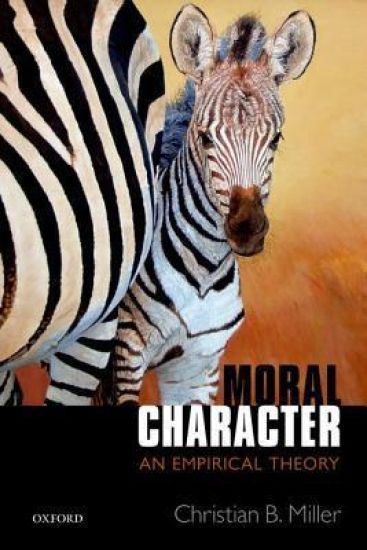
Moral Character

Moral Character

Christian B. Miller

Oxford University Press
2015
nidottu
Christian Miller presents a new account of moral character. Most of our friends, colleagues, and even family members are not virtuous people. They do not have virtues such as compassion, honesty, or courage. But at the same time, they are not vicious people either. They do not have vices such as cruelty, dishonesty, or cowardice. Instead most people today have characters which do not qualify as either virtuous or vicious. They have many positive moral features, but also many negative ones too. Our characters are decidedly mixed, and are much more complex than we might have thought. On the one hand, many of us would kill an innocent person in a matter of minutes under pressure from an authority figure as part of a psychology study. Or we would pretend to not see someone collapse from an apparent heart attack across the street. Or we would make a wide circle around someone's dropped papers rather than stop to help pick them up. Yet it is also true that many of us would help another person when we are by ourselves and hear sounds of a non-ambiguous emergency in the next room. Or we would come to the aid of a friend when feeling empathy for her need, and do so for altruistic rather than egoistic reasons. In Moral Character: An Empirical Theory Miller outlines a new picture of our moral character which involves what are called Mixed Character Traits. This picture can help make sense of how most of us are less than virtuous people but also morally better than the vicious.
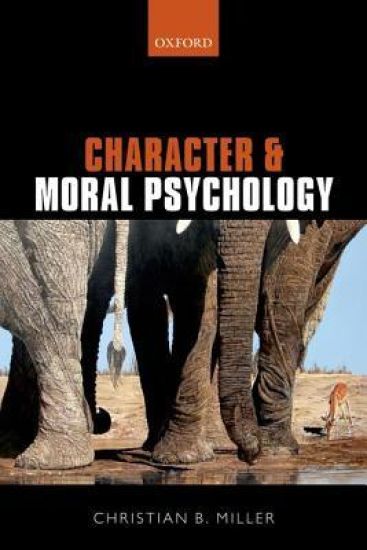
Character and Moral Psychology

Character and Moral Psychology

Christian B. Miller

Oxford University Press
2016
nidottu
Philosophers and psychologists have been hard at work trying to unlock the mysteries of our characters. Unfortunately, their answers have been all over the map. According to one position, every single person has all of the moral virtues, such as modesty and compassion, although to varying degrees. Yet according to another position, no one has any character traits at all since they are simply illusions and do not exist. Hence not one person is honest or compassionate or courageous. And between these extremes, there are plenty of intermediate views. Christian B. Miller argues that not one of these leading positions accurately reflects what most of us are like today. He explores the implications of the Mixed Trait framework-a theory of moral character developed in his previous book, Moral Character: An Empirical Theory. Mixed traits have both morally positive aspects (hence they are not vices) along with morally negative aspects (hence they are not virtues). Miller engages with the other leading positions on the empirical nature of character: situationism, the CAPS model, the Big Five model, and the local trait model. He goes on to apply the Mixed Trait framework to several important topics in ethics, especially the development of an error theory about judgments of character and the challenge faced by virtue ethics from the widespread lack of virtue.
Moral Character

Moral Character

Christian B. Miller

Oxford University Press
2013
sidottu
Christian Miller presents a new account of moral character. Most of our friends, colleagues, and even family members are not virtuous people. They do not have virtues such as compassion, honesty, or courage. But at the same time, they are not vicious people either. They do not have vices such as cruelty, dishonesty, or cowardice. Instead most people today have characters which do not qualify as either virtuous or vicious. They have many positive moral features, but also many negative ones too. Our characters are decidedly mixed, and are much more complex than we might have thought. On the one hand, many of us would kill an innocent person in a matter of minutes under pressure from an authority figure as part of a psychology study. Or we would pretend to not see someone collapse from an apparent heart attack across the street. Or we would make a wide circle around someone's dropped papers rather than stop to help pick them up. Yet it is also true that many of us would help another person when we are by ourselves and hear sounds of a non-ambiguous emergency in the next room. Or we would come to the aid of a friend when feeling empathy for her need, and do so for altruistic rather than egoistic reasons. In Moral Character: An Empirical Theory Miller outlines a new picture of our moral character which involves what are called Mixed Character Traits. This picture can help make sense of how most of us are less than virtuous people but also morally better than the vicious.
Character and Moral Psychology

Character and Moral Psychology

Christian B. Miller

Oxford University Press
2014
sidottu
Philosophers and psychologists have been hard at work trying to unlock the mysteries of our characters. Unfortunately, their answers have been all over the map. According to one position, every single person has all of the moral virtues, such as modesty and compassion, although to varying degrees. Yet according to another position, no one has any character traits at all since they are simply illusions and do not exist. Hence not one person is honest or compassionate or courageous. And between these extremes, there are plenty of intermediate views. Christian B. Miller argues that not one of these leading positions accurately reflects what most of us are like today. He explores the implications of the Mixed Trait framework-a theory of moral character developed in his previous book, Moral Character: An Empirical Theory. Mixed traits have both morally positive aspects (hence they are not vices) along with morally negative aspects (hence they are not virtues). Miller engages with the other leading positions on the empirical nature of character: situationism, the CAPS model, the Big Five model, and the local trait model. He goes on to apply the Mixed Trait framework to several important topics in ethics, especially the development of an error theory about judgments of character and the challenge faced by virtue ethics from the widespread lack of virtue.
Moral Psychology

Moral Psychology

Christian B. Miller

Cambridge University Press
2021
pokkari
This Element provides an overview of some of the central issues in contemporary moral psychology. It explores what moral psychology is, whether we are always motivated by self-interest, what good character looks like and whether anyone has it, whether moral judgments always motivate us to act, whether what motivates action is always a desire of some kind, and what the role is of reasoning and deliberation in moral judgment and action. This Element is aimed at a general audience including undergraduate students without an extensive background in philosophy.
The Honesty Crisis

The Honesty Crisis

Christian B. Miller

OXFORD UNIVERSITY PRESS INC
2026
sidottu
Honesty is our most treasured virtue. Research has found that honesty is the single most important characteristic a person can possess when it comes to liking them, respecting them, and understanding them. But honesty is eroding at a frightening rate in many areas of society today, as we are confronted with a number of honesty crises. The frequency of deepfakes has skyrocketed, now that they are simple to make and untraceable. In our relationships, with the easy availability of online pornography, anonymous chatrooms, and infidelity websites like Ashley Madison, cheating in a relationship has never been easier. In education, many students are using AI to complete their writing assignments with little chance of detection. . In politics, social media helps with the dissemination of fake news, and polarization reduces our tendency to condemn political dishonesty if it aligns with our own views. In public spaces, it is easier to become a celebrity than it has ever been in human history, and yet celebrity encourages greater dishonesty. In religion, religious leaders are increasingly confronted by temptations to plagiarize sermon material from the Internet and AI. Christian Miller's The Honesty Crisis diagnoses this problem across a range of social phenomena, drawing on his years of research, and makes the case that the stakes are higher than we realize. Proposing concrete solutions, Miller's urgent and timely book will interest anyone concerned about the moral character of our world, and its future.