Kirjojen hintavertailu. Mukana 11 627 220 kirjaa ja 12 kauppaa.

Kirjahaku

Etsi kirjoja tekijän nimen, kirjan nimen tai ISBN:n perusteella.

22 kirjaa tekijältä Christian Smith

Christian America?

Christian America?

Christian Smith

University of California Press
2002
pokkari
In recent decades Protestant evangelicalism has become a conspicuous and - to many Americans, worrisome - part of this country's cultural and political landscape. But just how unified is the supposed constituency of the Christian Coalition? And who exactly are the people the Christian Right claims to represent? In the most extensive study of American evangelicals ever conducted, Christian Smith explores the beliefs, values, commitments, and goals of the ordinary men and women who make up this often misunderstood religious group. The result is a much-needed contribution to the discussion of issues surrounding fundamental American freedoms and the basic identity of the United States as a pluralistic nation. Based on data from a three-year national study, including more than 200 in-depth interviews of evangelicals around the country, "Christian America?" assesses the common stereotype of evangelicals as intolerant, right-wing, religious zealots seeking to impose a Christian moral order through political force. What Smith finds instead are people vastly more diverse and ambivalent than this stereotype suggests. On issues such as religion in education, 'family values,' Christian political activism, and tolerance of other religions and moralities, evangelicals are highly disparate and conflicted. As the voices of interviewees make clear, the labels 'conservative' and 'liberal' are too simplistic for understanding their approaches to public life and political action.
Atheist Overreach

Atheist Overreach

Christian Smith

Oxford University Press Inc
2019
sidottu
In recent years atheism has become ever more visible, acceptable, and influential. Atheist apologists have become increasingly vociferous and confident in their claims: that a morality requiring benevolence towards all and universal human rights need not be grounded in religion; that modern science disproves the existence of God; and that there is nothing innately religious about human beings. In Atheist Overreach, Christian Smith takes a look at the evidence and arguments, and explains why we ought to be skeptical of these atheists' claims about morality, science, and human nature. He does not argue that atheism is necessarily wrong, but rather that its advocates are advancing crucial claims that are neither rationally defensible nor realistic. Their committed worldview feeds unhelpful arguments and contributes to the increasing polarization of today's political landscape. Everyone involved in the theism-atheism debates, in shared moral reflection, and in the public consumption of the findings of science should be committed to careful reasoning and rigorous criticism. This book provides readers with the information they need to participate more knowledgably in debates about atheism and what it means for our society.
Moral, Believing Animals

Moral, Believing Animals

Christian Smith

Oxford University Press Inc
2003
sidottu
What kind of animals are human beings? And how do our visions of the human shape our theories of social action and institutions? In Moral, Believing Animals, Christian Smith offers innovative, challenging answers to these and other fundamental questions in sociological, cultural, and religious theory. Smith's work is based on the assumption (unfashionable in certain circles) that human beings have an identifiable and peculiar set of capacities and proclivities that distinguishes them significantly from other animals on this planet. Smith argues that all people are at bottom believers, whose lives, actions, and institutions are constituted, motivated, and governed by narrative traditions and moral orders on which they inescapably depend. This approach - which has profound consequences for how we think about knowledge, culture, social action, institutions, religion, and the task of social sciences - will be of interest to scholars in sociology, social theory, religious and cultural studies, psychology, and anthropology.
Why Religion Went Obsolete

Why Religion Went Obsolete

Christian Smith

OXFORD UNIVERSITY PRESS INC
2025
sidottu
Is traditional American religion doomed? Traditional religion in the United States has suffered huge losses in recent decades. The number of Americans identifying as "not religious" has increased remarkably. Religious affiliation, service attendance, and belief in God have declined. More and more people claim to be "spiritual but not religious." Religious organizations have been reeling from revelations of sexual and financial scandals and cover-ups. Public trust in "organized religion" has declined significantly. Crucially, these religious losses are concentrated among younger generations. This means that, barring unlikely religious revivals among youth, the losses will continue and accelerate in time, as less-religious younger Americans replace older more-religious ones and increasingly fewer American children are raised by religious parents. All this is clear. But what is less clear is exactly why this is happening. We know a lot more about the fact that traditional American religion has declined than we do about why this is so. Why Religion Went Obsolete aims to change that. Drawing on survey data and hundreds of interviews, Christian Smith offers a sweeping, multifaceted account of why many Americans have lost faith in traditional religion. An array of large-scale social forces-everything from the end of the Cold War to the rise of the internet to shifting ideas about gender and sexuality-came together to render traditional religion culturally obsolete. For growing numbers of Americans, traditional religion no longer seems useful or relevant. Using quantitative empirical measures of big-picture changes over time as well as exploring the larger cultural environment--the cultural "zeitgeist"--Smith explains why this is the case and what it means for the future. Crucially, he argues, it does not mean a strictly secular future. Rather, Americans' spiritual impulses are being channelled in new and interesting directions. Why Religion Went Obsolete is a tour de force from one of our leading chroniclers of religion in America.
The Sacred Project of American Sociology

The Sacred Project of American Sociology

Christian Smith

Oxford University Press Inc
2014
sidottu
Counter to popular perceptions, contemporary American sociology is and promotes a profoundly sacred project at heart, Sociology today is in fact animated by sacred impulses, driven by sacred commitments, and serves a sacred project. Sociology appears on the surface to be a secular, scientific enterprise-its founding fathers were mostly atheists. Its basic operating premises are secular and naturalistic. Sociologists today are disproportionately not religious, compared to all Americans, and often irreligious. The Sacred Project of American Sociology shows, counter-intuitively, that the secular enterprise that everyday sociology appears to be pursuing is actually not what is really going on at sociology's deepest level. Christian Smith conducts a self-reflexive, tables-turning, cultural and institutional sociology of the profession of American sociology itself, showing that this allegedly secular discipline ironically expresses Emile Durkheim's inescapable sacred, exemplifies its own versions of Marxist false consciousness, and generates a spirited reaction against Max Weber's melancholically observed disenchantment of the world. American sociology does not escape the analytical net that it casts over the rest of the ordinary world. Sociology itself is a part of that very human, very social, often very sacred and spiritual world. And sociology's ironic mis-recognition of its own sacred project leads to a variety of arguably self-destructive and distorting tendencies. This book re-asserts a vision for what sociology is most important for, in contrast with its current commitments, and calls sociologists back to a more honest, fair, and healthy vision of its purpose.
Moral, Believing Animals

Moral, Believing Animals

Christian Smith

Oxford University Press Inc
2009
nidottu
What kind of animals are human beings? And how do our visions of the human shape our theories of social action and institutions? In Moral, Believing Animals, Christian Smith advances a creative theory of human persons and culture that offers innovative, challenging answers to these and other fundamental questions in sociological, cultural, and religious theory. Smith suggests that human beings have a peculiar set of capacities and proclivities that distinguishes them significantly from other animals on this planet. Despite the vast differences in humanity between cultures and across history, no matter how differently people narrate their lives and histories, there remains an underlying structure of human personhood that helps to order human culture, history, and narration. Drawing on important recent insights in moral philosophy, epistemology, and narrative studies, Smith argues that humans are animals who have an inescapable moral and spiritual dimension. They cannot avoid a fundamental moral orientation in life and this, says Smith, has profound consequences for how sociology must study human beings.
To Flourish or Destruct

To Flourish or Destruct

Christian Smith

University of Chicago Press
2015
sidottu
In his 2010 book What Is a Person?, Christian Smith argued that sociology had for too long neglected this fundamental question. Prevailing social theories, he wrote, do not adequately "capture our deep subjective experience as persons, crucial dimensions of the richness of our own lived lives, what thinkers in previous ages might have called our 'souls' or 'hearts.'" Building on Smith's previous work, To Flourish or Destruct examines the motivations intrinsic to this subjective experience: Why do people do what they do? How can we explain the activity that gives rise to all human social life and social structures? Smith argues that our actions stem from a motivation to realize what he calls natural human goods: ends that are, by nature, constitutionally good for all human beings. He goes on to explore the ways we can and do fail to realize these ends-a failure that can result in varying gradations of evil. Rooted in critical realism and informed by work in philosophy, psychology, and other fields, Smith's ambitious book situates the idea of personhood at the center of our attempts to understand how we might shape good human lives and societies.
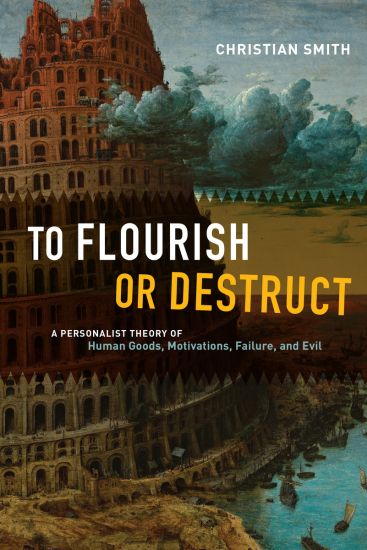
To Flourish or Destruct

To Flourish or Destruct

Christian Smith

University of Chicago Press
2021
nidottu
In his 2010 book What Is a Person?, Christian Smith argued that sociology had for too long neglected this fundamental question. Prevailing social theories, he wrote, do not adequately “capture our deep subjective experience as persons, crucial dimensions of the richness of our own lived lives, what thinkers in previous ages might have called our ‘souls’ or ‘hearts.’” Building on Smith’s previous work, To Flourish or Destruct examines the motivations intrinsic to this subjective experience: Why do people do what they do? How can we explain the activity that gives rise to all human social life and social structures? Smith argues that our actions stem from a motivation to realize what he calls natural human goods: ends that are, by nature, constitutionally good for all human beings. He goes on to explore the ways we can and do fail to realize these ends—a failure that can result in varying gradations of evil. Rooted in critical realism and informed by work in philosophy, psychology, and other fields, Smith’s ambitious book situates the idea of personhood at the center of our attempts to understand how we might shape good human lives and societies.
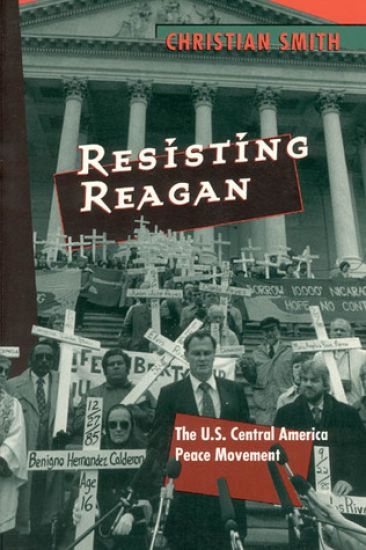
Resisting Reagan

Resisting Reagan

Christian Smith

University of Chicago Press
1996
sidottu
An analysis of the US Central America peace movement. This work explains why more than 100,000 US citizens marched in the streets, illegally housed refugees, travelled to Central American war zones, committed civil disobedience, and hounded their political representatives to contest the Reagan administration's policy of sponsoring wars in Nicaragua and El Salvador. Focusing on the movement's three most important national campaigns - Witness for Peace, Sanctuary, and the Pledge of Resistance - this work demonstrates the centrality of morality as a political motivator, highlights the importance of political opportunities in movement outcomes, and examines the social structuring of insurgent consciousness. Based on extensive surveys, interviews, and research, the book aims to increase understanding of the formation of individual activist identities, of national movement dynamics, and of religious resources for political activism.
Resisting Reagan

Resisting Reagan

Christian Smith

University of Chicago Press
1996
nidottu
An analysis of the US Central America peace movement. This work explains why more than 100,000 US citizens marched in the streets, illegally housed refugees, travelled to Central American war zones, committed civil disobedience, and hounded their political representatives to contest the Reagan administration's policy of sponsoring wars in Nicaragua and El Salvador. Focusing on the movement's three most important national campaigns - Witness for Peace, Sanctuary, and the Pledge of Resistance - this work demonstrates the centrality of morality as a political motivator, highlights the importance of political opportunities in movement outcomes, and examines the social structuring of insurgent consciousness. Based on extensive surveys, interviews, and research, the book aims to increase understanding of the formation of individual activist identities, of national movement dynamics, and of religious resources for political activism.
The Emergence of Liberation Theology

The Emergence of Liberation Theology

Christian Smith

University of Chicago Press
1991
nidottu
Liberation theology is a school of Roman Catholic thought which teaches that a primary duty of the church must be to promote social and economic justice. In this book, Christian Smith explains how and why the liberation theology movement emerged and succeeded when and where it did.
American Evangelicalism

American Evangelicalism

Christian Smith

University of Chicago Press
1998
nidottu
Based on a national telephone survey and 300 personal interviews with evangelicals and other churchgoing Protestants, this study provides an analysis of the commitments, beliefs, concerns and practices of this group. Examining how evangelicals interact with and attempt to influence secular society, the text argues that traditional, orthodox evangelicalism endures because of the challenges and structures of our modern pluralistic environment. It also looks beyond evangelicalism to explore the problems of traditional religious belief and practice in the modern world.
What Is a Person?

What Is a Person?

Christian Smith

University of Chicago Press
2010
sidottu
What is a person? This fundamental question is a perennial concern of philosophers and theologians. But, Christian Smith argues, it also lies at the center of the social scientist's quest to interpret and explain social life. In this ambitious book, Smith presents a new model for social theory that does justice to the best of our humanistic visions of people, life, and society. Finding much current thinking on personhood to be confusing or misleading, Smith finds inspiration in critical realism and personalism. Drawing on these ideas, he constructs a theory of personhood that forges a middle path between the extremes of positivist science and relativism. Smith then builds on the work of Pierre Bourdieu, Anthony Giddens, and William Sewell to demonstrate the importance of personhood to our understanding of social structures. From there he broadens his scope to consider how we can know what is good in personal and social life and what sociology can tell us about human rights and dignity. Innovative, critical, and constructive, "What Is a Person?" offers an inspiring vision of a social science committed to pursuing causal explanations, interpretive understanding, and general knowledge in the service of truth and the moral good.
What Is a Person?

What Is a Person?

Christian Smith

University of Chicago Press
2011
nidottu
What is a person? This fundamental question is a perennial concern of philosophers and theologians. But, Christian Smith argues, it also lies at the center of the social scientist's quest to interpret and explain social life. In this ambitious book, Smith presents a new model for social theory that does justice to the best of our humanistic visions of people, life, and society. Finding much current thinking on personhood to be confusing or misleading, Smith finds inspiration in critical realism and personalism. Drawing on these ideas, he constructs a theory of personhood that forges a middle path between the extremes of positivist science and relativism. Smith then builds on the work of Pierre Bourdieu, Anthony Giddens, and William Sewell to demonstrate the importance of personhood to our understanding of social structures. From there he broadens his scope to consider how we can know what is good in personal and social life and what sociology can tell us about human rights and dignity. Innovative, critical, and constructive, "What Is a Person?" offers an inspiring vision of a social science committed to pursuing causal explanations, interpretive understanding, and general knowledge in the service of truth and the moral good.
Religion

Religion

Christian Smith

Princeton University Press
2019
pokkari
A groundbreaking new theory of religionReligion remains an important influence in the world today, yet the social sciences are still not adequately equipped to understand and explain it. This book advances an innovative theory of religion that goes beyond the problematic theoretical paradigms of the past. Drawing on the philosophy of critical realism and personalist social theory, Christian Smith explores why humans are religious in the first place—uniquely so as a species—and offers an account of secularization and religious innovation and persistence that breaks the logjam in which religious scholarship has been stuck for so long. Certain to stimulate debate and inspire promising new avenues of scholarship, Religion features a wealth of illustrations and examples that help to make its concepts accessible to readers. This superbly written book brings sound theoretical thinking to a perennially thorny subject, and a new vitality and focus to its study.
The Bible Made Impossible – Why Biblicism Is Not a Truly Evangelical Reading of Scripture
Biblicism, an approach to the Bible common among some American evangelicals, emphasizes together the Bible's exclusive authority, infallibility, clarity, self-sufficiency, internal consistency, self-evident meaning, and universal applicability. Acclaimed sociologist Christian Smith argues that this approach is misguided and unable to live up to its own claims. If evangelical biblicism worked as its proponents say it should, there would not be the vast variety of interpretive differences that biblicists themselves reach when they actually read and interpret the Bible. Far from challenging the inspiration and authority of Scripture, Smith critiques a particular rendering of it, encouraging evangelicals to seek a more responsible, coherent, and defensible approach to biblical authority.This important book has generated lively discussion and debate. The paperback edition adds a new chapter responding to the conversation that the cloth edition has sparked.
Calling All Americans: A Solution to Fight Back Corruption

Calling All Americans: A Solution to Fight Back Corruption

Christian Smith

Independently Published
2018
nidottu
Are you tired of the poor management of power in our American government? Do you feel like their is nothing that can be done to fight against the corruption and greed that plagues our government? Well, their is In this short simplified book I show you how You and I can change the government without actually being apart of the government. Be part of a movement that will sweep the nation as Americans unite and take back power for the people and drive out those that seek to abuse the power of being elected to benefit themselves and their agenda's for power.