Kirjojen hintavertailu. Mukana 11 717 486 kirjaa ja 12 kauppaa.

Kirjahaku

Etsi kirjoja tekijän nimen, kirjan nimen tai ISBN:n perusteella.

8 kirjaa tekijältä Christof Koch

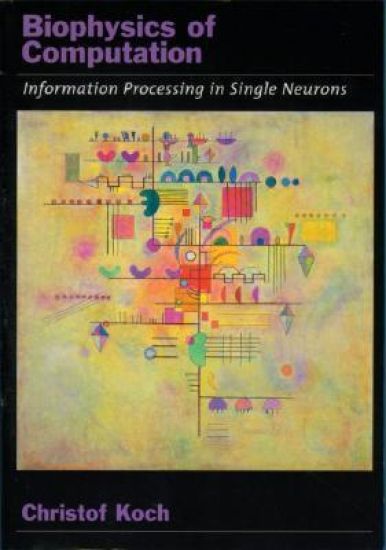
Biophysics of Computation

Biophysics of Computation

Christof Koch

Oxford University Press Inc
2004
nidottu
Neural network research often builds on the fiction that neurons are simple linear threshold units, completely neglecting the highly dynamic and complex nature of synapses, dendrites, and voltage-dependent ionic currents. Biophysics of Computation: Information processing in single neurons challenges this notion, using richly detailed experimental and theoretical findings from cellular biophysics to explain the repertoire of computational functions available to single neurons. The author shows how individual nerve cells can multiply, integrate, or delay synaptic inputs and how information can be encoded in the voltage across the membrane, in the intracellular calcium concentration, or in the timing of individual spikes. Key topics covered include the linear cable equation; cable theory as applied to passive dendritic trees and dendritic spines; chemical and electrical synapses and how to treat them from a computational point of view; nonlinear interactions of synaptic input in passive and active dendritic trees; the Hodgkin-Huxley model of action potential generation and propagation; phase space analysis; linking stochastic ionic channels to membrane-dependent currents; calcium- and potassium-currents and their role in information processing; the role of diffusion, buffering and binding of calcium, and other messenger systems in information processing and storage; short- and long-term models of synaptic plasticity; simplified models of single cells; stochastic aspects of neuronal firing; the nature of the neuronal code; and unconventional models of sub-cellular computation. This book serves as an ideal text for advanced undergraduate and graduate courses in cellular biophysics, computational neuroscience, and neural networks, and will appeal to students and professionals in neuroscience, electrical and computer engineering, and physics.
Consciousness

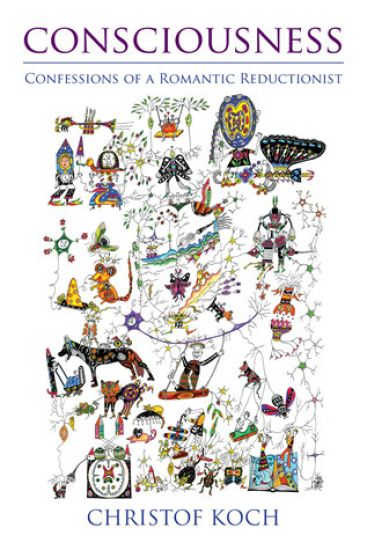
Consciousness

Christof Koch

MIT Press
2017
pokkari
In which a scientist searches for an empirical explanation for phenomenal experience, spurred by his instinctual belief that life is meaningful.What links conscious experience of pain, joy, color, and smell to bioelectrical activity in the brain? How can anything physical give rise to nonphysical, subjective, conscious states? Christof Koch has devoted much of his career to bridging the seemingly unbridgeable gap between the physics of the brain and phenomenal experience. This engaging book—part scientific overview, part memoir, part futurist speculation—describes Koch's search for an empirical explanation for consciousness. Koch recounts not only the birth of the modern science of consciousness but also the subterranean motivation for his quest—his instinctual (if "romantic") belief that life is meaningful.Koch describes his own groundbreaking work with Francis Crick in the 1990s and 2000s and the gradual emergence of consciousness (once considered a "fringy" subject) as a legitimate topic for scientific investigation. Present at this paradigm shift were Koch and a handful of colleagues, including Ned Block, David Chalmers, Stanislas Dehaene, Giulio Tononi, Wolf Singer, and others. Aiding and abetting it were new techniques to listen in on the activity of individual nerve cells, clinical studies, and brain-imaging technologies that allowed safe and noninvasive study of the human brain in action. Koch gives us stories from the front lines of modern research into the neurobiology of consciousness as well as his own reflections on a variety of topics, including the distinction between attention and awareness, the unconscious, how neurons respond to Homer Simpson, the physics and biology of free will, dogs, Der Ring des Nibelungen, sentient machines, the loss of his belief in a personal God, and sadness. All of them are signposts in the pursuit of his life's work—to uncover the roots of consciousness.
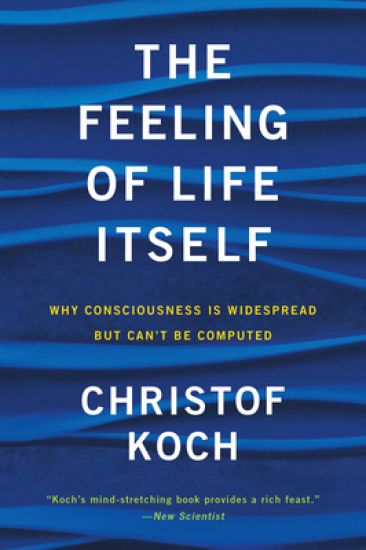
The Feeling of Life Itself

The Feeling of Life Itself

Christof Koch

MIT Press
2020
nidottu
A thought-provoking argument that consciousness—more widespread than previously assumed—is the feeling of being alive, not a type of computation or a clever hack In The Feeling of Life Itself, Christof Koch offers a straightforward definition of consciousness as any subjective experience, from the most mundane to the most exalted—the feeling of being alive. Psychologists study which cognitive operations underpin a given conscious perception. Neuroscientists track the neural correlates of consciousness in the brain, the organ of the mind. But why the brain and not, say, the liver? How can the brain—three pounds of highly excitable matter, a piece of furniture in the universe, subject to the same laws of physics as any other piece—give rise to subjective experience? Koch argues that what is needed to answer these questions is a quantitative theory that starts with experience and proceeds to the brain. In The Feeling of Life Itself, Koch outlines such a theory, based on integrated information. Koch describes how the theory explains many facts about the neurology of consciousness and how it has been used to build a clinically useful consciousness meter. The theory predicts that many, and perhaps all, animals experience the sights and sounds of life; consciousness is much more widespread than conventionally assumed. Contrary to received wisdom, however, Koch argues that programmable computers will not have consciousness. Even a perfect software model of the brain is not conscious. Its simulation is fake consciousness. Consciousness is not a special type of computation—it is not a clever hack. Consciousness is about being.
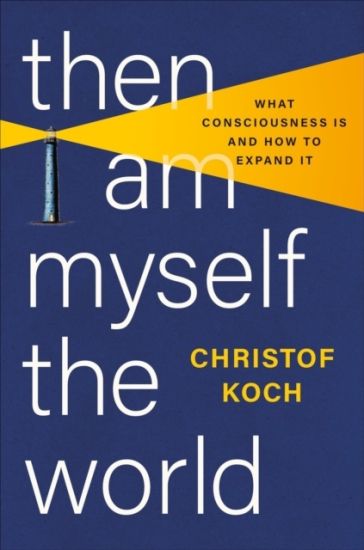
Then I Am Myself the World

Then I Am Myself the World

Christof Koch

BASIC BOOKS
2024
sidottu
In Then I Am Myself the World, Christof Koch explores the only thing we directly experience: consciousness. At the book's heart is integrated-information theory, the idea that the essence of consciousness is the ability to exert causal power over itself, to be an agent of change. Koch investigates the physical origins of consciousness in the brain and how this knowledge can be used to measure consciousness in natural and artificial systems. Enabled by such tools, Koch reveals when and where consciousness exists, and uses that knowledge to confront major social and scientific questions: When does a foetus first become self-aware? Can psychedelic and mystical experiences transform lives? What happens to consciousness in near-death experiences? Why will generative AI ultimately be able to do the very thing we can do, yet never feel any of it? And do our experiences reveal a single, objective reality? This is an essential book for anyone who seeks to understand ourselves and the future we are creating.
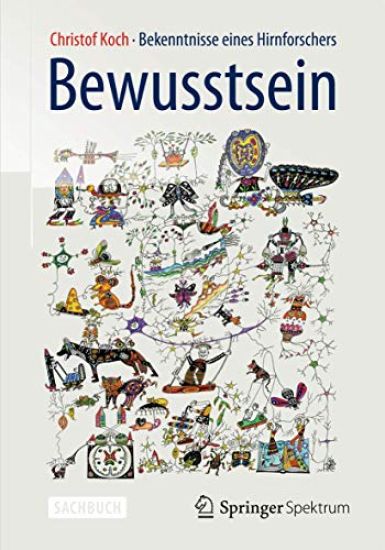
Bewusstsein

Bewusstsein

Christof Koch

Springer Fachmedien Wiesbaden
2013
sidottu
Wie kann Aktivität im Gehirn Gefühle auslösen? Wie kann „bloßes Fleisch“ – so wird der Körper in Cyberpunkromanen oft abfällig genannt -- subjektives Empfinden hervorbringen? Oder allgemeiner gesagt: Wie kann etwas Physisches etwas Nichtphysisches, subjektive Zustände erzeugen? Ob es der Zahnschmerz ist, die Freude beim Anblick der eigenen Kinder oder der Geschmack eines edlen Weins, sie alle haben denselben Ursprung in der Aktivität von Nervengewebe, im Bewusstsein. Christof Koch forscht seit Jahren über das Thema Bewusstsein. In einer Art Bestandsaufnahme zeigt er den derzeitigen Stand der Forschung auf, an dem auch maßgeblich Wissenschaftler wie Francis Crick, Ned Block, David Chalmers, Stanislas Dehaene, Giulio Tononi und Wolf Singer mitgewirkt haben. Ihm erscheint nicht als Widerspruch, mit naturwissenschaftlichen, empirischen Methoden erklären zu wollen, wie Gefühle entstehen. Wir sind uns der meisten Dinge, die in unserem Kopf vorgehen, nicht bewusst. Koch postuliert, dass Zombies ohne Bewusstsein in weiten Teilen unser Leben steuern, auch wenn wir der festen Überzeugung sind, darüber selbst zu bestimmen. Seiner Meinung nach wird es gelingen, empfindungsfähige Maschinen zu bauen – er liefert eine erste Vorlage hierfür im Buch. Er reflektiert so diverse Aspekte wie die Unterscheidung zwischen Aufmerksamkeit und Bewusstsein, das Unbewusste, die Physik und Biologie des freien Willen, Hunde, den Ring der Nibelungen, den Glauben an einen persönlichen Gott und Traurigkeit. Kochs Buch ist mehr als ein wissenschaftlicher Überblick – es ist zudem Bekenntnis, Autobiographie und futuristische Spekulation.
Bewusstsein

Bewusstsein

Christof Koch

Springer-Verlag Berlin and Heidelberg GmbH Co. K
2020
nidottu
Bewusstsein – das weiter verbreitet ist als bisher angenommen – ist das Gefühl, lebendig zu sein, es ist kein Rechenvorgang und auch kein cleverer Trick. In diesem Buch liefert Christof Koch eine schnörkellose Definition des Bewusstseins als bewusstes Erleben, vom alltäglichsten bis zum außergewöhnlichsten – eben das Gefühl zu leben.Die Psychologie erforscht, welche kognitiven Vorgänge einer bewussten Wahrnehmung jeweils zugrunde liegen. Die Neurowissenschaft spürt den neuronalen Korrelaten des Bewusstseins im Gehirn nach, dem Organ des Geistes. Aber warum das Gehirn und nicht etwa die Leber oder ein anderes Organ? Wie kann das Gehirn, drei Pfund höchst erregbares Gewebe, ein Gegenstand im Universum, der denselben physikalischen Gesetzen gehorcht wie jeder andere Gegenstand, subjektives Erleben hervorbringen? Will man eine Antwort auf diese Frage finden, braucht man, so Koch, eine quantitative Theorie, die beim Erleben ansetzt und zum Gehirn fortschreitet. Im vorliegenden Buch umreißt der Autor eine solche Theorie, basierend auf der integrierten Informationstheorie. Koch beschreibt, wie die Theorie viele Fakten zur Neurologie des Bewusstseins erklärt und wie man mit ihrer Hilfe sogar ein in der Klinik einsetzbares Bewusstseins-Messgerät konstruiert hat. Die Theorie sagt voraus, dass viele, ja vielleicht alle Tiere das Leben in vielen Facetten erleben; Bewusstsein ist viel weiter verbreitet als allgemein angenommen. Entgegen der landläufigen Ansicht aber argumentiert Koch, dass programmierbare Computer kein Bewusstsein haben werden. Selbst ein perfektes Softwaremodell des Gehirns ist nicht bewusst – es simuliert lediglich Bewusstsein. Bewusstsein ist keine bestimmte Art von Rechenvorgang, es ist kein cleverer Trick. Bewusstsein ist Sein.reich mit dem Sachbuchprogramm waren.
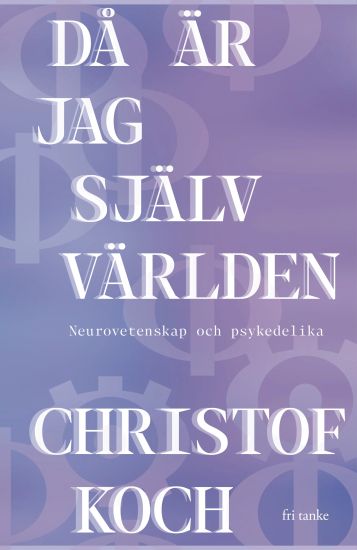
Då är jag själv världen: Neurovetenskap och psykedelika
Forskningen om medvetandet gör ständigt nya framsteg. Men det krävs en stilist av rang för att sammanställa rönen till en helhet som har betydelse för våra helt vanliga, och alldeles ovanliga, liv. Christof Koch duckar inte för stora frågor som: När utvecklas medvetandet hos ett foster? Hur nära är AI-algoritmerna att utveckla något som kan kallas för medvetande, och är den mänskliga hjärnan fortfarande världens mest avancerade system? Utöver sin långa yrkesbana väver Koch också in psykedeliska drogtrippar och en nära döden-upplevelse i sina försök att lösa medvetandets gåtor.Då är jag själv världen baseras på de senaste rönen inom neurovetenskap, men rösten som talar är subjektiv, det är en ärlig och öppensinnad skildring för den som vill förstå sig själv och framtiden vi just nu medverkar till att skapa.
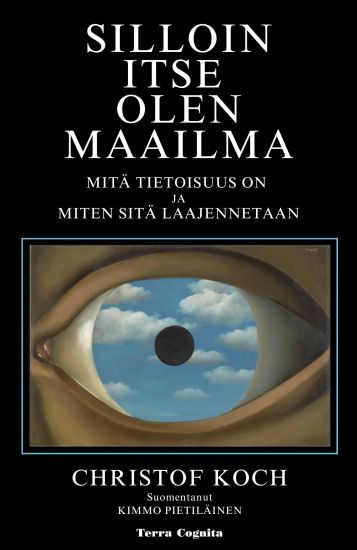
Silloin itse olen maailma

Silloin itse olen maailma

Christof Koch

Terra Cognita
2025
nidottu
Tässä teoksessa neurotieteen johtaviin tutkijoihin kuuluva Christof Koch tutkii ainoaa asiaa, jonka koemme suoraan: tietoisuutta. Teoksen ydin on alan kenties vahvin teoria, integroidun informaation teoria: tietoisuudessa olennaista on kyky kohdistaa kausaalinen voima itseensä, kyky aiheuttaa muutos. Kirja tutkii tietoisen fyysistä alkuperää aivoissa ja miten tällä tiedolla voidaan mitata tietoisuutta luonnossa esiintyvissä ja rakennetuissa järjestelmissä. Näillä tiedoilla Koch kertoo, missä ja milloin tietoisuus ilmenee ja vastaa seuraaviin yhteiskunnallisesti ja moraalisesti tärkeisiin kysymyksiin: Milloin sikiön tietoisuus alkaa? Voivatko psykedeeliset ja mystiset kokemukset muuttaa elämän? Mitä kuolemanrajakokemuksissa tapahtuu? Miksi yleinen tekoäly tekee lopulta kaiken, minkä mekin teemme, muttei tunne siitä mitään? Ja paljastaako tietoisuuden kokemus lopulta yhden, objektiivisen todellisuuden?