Kirjojen hintavertailu. Mukana 12 363 183 kirjaa ja 12 kauppaa.

Kirjahaku

Etsi kirjoja tekijän nimen, kirjan nimen tai ISBN:n perusteella.

4 kirjaa tekijältä Christoph Heilig

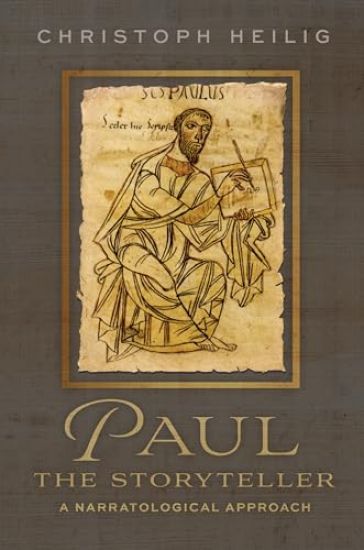
Paul the Storyteller

Paul the Storyteller

Christoph Heilig

WILLIAM B EERDMANS PUBLISHING CO
2024
sidottu
An incisive study of Paul's use of stories and narratives in his letters Paul is often thought of as a crafter of numerous and complex arguments, but some scholars, such as N. T. Wright and Richard Hays, have shown that narratives are vitally important in his letters. Through careful examination of the texts, Christoph Heilig demonstrates that Paul is indeed a talented teller of stories--not only explicit narratives but also implicit stories. In this volume, after a decade of research and writing, Heilig presents his definitive report on narrative in Paul. While Richard Hays and N. T. Wright have argued that Paul's letters contain implicit narratives, Heilig stresses that a sound methodology requires beginning with text-linguistic investigation of explicit narratives. As Heilig argues, focusing on explicit narratives repeatedly redirects our attention to implicit ("almost") stories. On this basis, he shows that Hays's "narrative substructures" and Wright's "worldview" narratives can also be fruitfully integrated into a narratological approach. Paul is a different kind of storyteller than the gospel writers, for example, but at countless points miniature narratives play a crucial role for Paul's communicative goals. Students and scholars of the New Testament will welcome Heilig's expert guidance through a hotly debated area of Pauline studies.
Paulus als Erzähler?

Paulus als Erzähler?

Christoph Heilig

De Gruyter
2020
sidottu
Paulus ist vor allem als theologischer Denker bekannt. Nun behaupten gewichtige Stimmen aus dem englischsprachigen Raum, die Exegese seiner Briefe habe sich bisher viel zu sehr auf abstrakte Konzepte und Argumentationsfiguren konzentriert. Vielmehr sei die Erkenntnis von fundamentaler Bedeutung, dass die Texte durch und durch von Geschichten geprägt seien. Gemeint sind nicht explizite Erzählungen, sondern narrative Strukturen, die im Subtext oder in der Weltanschauung des Autors verortet werden. Heiligs Studie unterzieht diesen „narrative approach“ einer kritischen Prüfung: Kann im Fall von Briefen sinnvoll von Narrativen gesprochen werden? Ist die Priorisierung impliziter Erzählungen sinnvoll? Mit welchem methodischen Werkzeug könnte man die bisher angeblich übersehenen Erzählungen identifizieren? Heilig beantwortet diese und weitere grundsätzliche Fragen unter Bezugnahme auf die erzähltheoretische und textlinguistische Forschung und zeigt in der Analyse konkreter Texte auf, wie Paulus tatsächlich als „Erzähler“ auftritt. Dabei demonstriert er, wie eine initiale Konzentration auf explizite Erzählungen tatsächlich auf einen Weg zu einer neuen, narratologisch fundierten Betrachtungsweise der Schriften des Apostels führen kann.
Hidden Criticism?

Hidden Criticism?

Christoph Heilig

Mohr Siebeck
2015
nidottu
Paul has been regarded as being uncritical of the Roman Empire for a long time, not least because of his apparent call to obey the state in Rom 13:1-7. However, recent scholarship has questioned this assumption by pointing to "hidden criticism" in the letters of the apostle. But how can we decide, in a methodologically sound way, whether such a counter-imperial message lies beneath the surface of the text? On the basis of insights from the philosophy of science, Christoph Heilig suggests several analytical steps for examining this paradigm. He concludes that the hypothesis that we can identify critical "echoes" of the Roman Empire in Paul's letters needs to be modified for it to be maintained. In particular, concern over the danger of overt criticism and subsequent persecution do not sufficiently justify this interpretative hypothesis. Nevertheless, Heilig concludes that the search for a counter-imperial subtext in Paul could turn out to be heuristically fruitful so long as the limitations of the approach are heeded. Hence, a re-evaluation of Pauline passages in light of Paul's engagement with ideas from his Roman environment is encouraged.
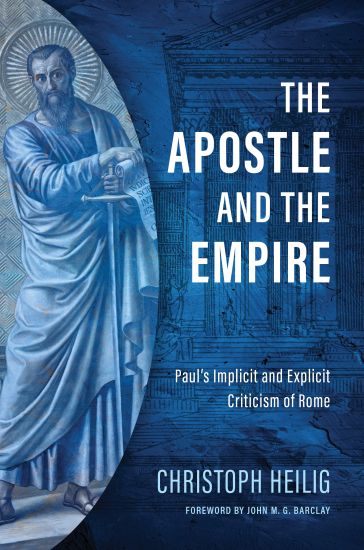
The Apostle and the Empire

The Apostle and the Empire

Christoph Heilig; John M G Barclay

WILLIAM B EERDMANS PUBLISHING CO
2022
sidottu
Was Paul silent on the injustices of the Roman Empire? Or have his letters just been misread? The inclusion of anti-imperial rhetoric in Paul's writings has come under scrutiny in recent years. Pressing questions about just how much Paul critiques Rome in his letters and how publicly critical he could have afforded to be have led to high-profile debates--most notably between N. T. Wright and John M. G. Barclay. Having entered the conversation in 2015 with his book Hidden Criticism?, Christoph Heilig contributes further insight and new research in The Apostle and the Empire, reevaluating the case for Paul hiding his criticism of Rome in the subtext of his letters. Heilig argues that scholars have previously overlooked passages that openly denounce the empire--for instance, the "triumphal procession" in 2 Corinthians, which Heilig discusses in detail by drawing on a variety of archaeological data. Furthermore, Heilig takes on larger issues of theory and methodology in biblical studies, raising significant questions about how interpreters can move beyond outdated methods of reading the New Testament toward more robust understandings of the ways ancient texts convey meaning. His groundbreaking work is a must-read for Pauline scholars and for anyone interested in how one of Christianity's most important teachers communicated his unease with the global superpower of his day.