Kirjojen hintavertailu. Mukana 11 342 296 kirjaa ja 12 kauppaa.

Kirjahaku

Etsi kirjoja tekijän nimen, kirjan nimen tai ISBN:n perusteella.

15 kirjaa tekijältä Christophe Jaffrelot

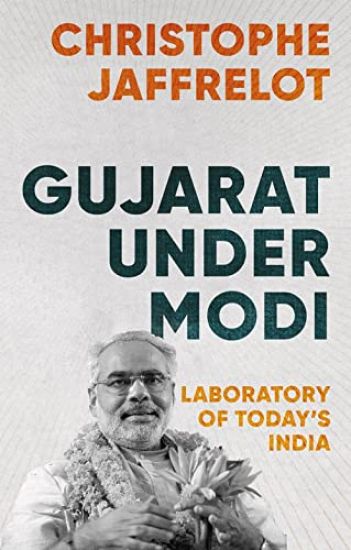
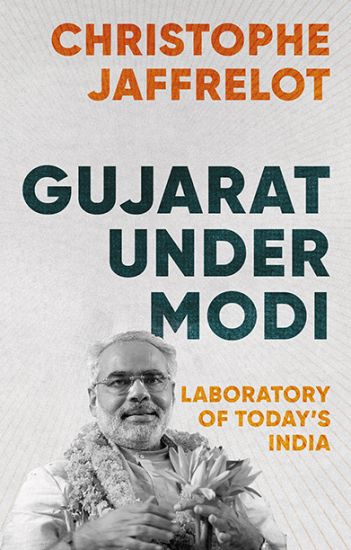
Gujarat Under Modi: Laboratory of Today's India

Gujarat Under Modi: Laboratory of Today's India

Christophe Jaffrelot

Oxford University Press
2024
sidottu
In 2012 Narendra Modi became the first Hindu nationalist politician thrice elected to lead a state of the Indian Union, his stewardship as Chief Minister of Gujarat being the longest in that state's history. Modi and his BJP supporters explained his achievement by pointing to economic growth under his leadership, yet detractors point out that Modi has been more business-friendly than market-friendly--to the benefit of large industrial corporations, and at the cost of great social polarization. In 2002, an anti-Muslim pogrom of unparalleled ferocity occurred in Gujarat, leading to the biggest number of Muslim deaths since Partition. The state's Hindu majority immediately rallied around Modi. No serious riot has occurred in Gujarat since, but polarization was key to Modi's strategy there, and he has deployed that strategy again and again since he became Prime Minister of India in 2014. For Modi has cultivated a communal image. A marketing genius, his messaging combines the politics of Hindutva with economic modernization, to the clear appreciation of Gujarat's middle class. Christophe Jaffrelot's revealing book shows how Modi's Gujarat served as the laboratory of Modi's India, not only in terms of Hindu majoritarianism and national populism, but also of caste and class politics.
Religion Caste and Politics in India

Religion Caste and Politics in India

Christophe Jaffrelot

Oxford University Press, USA
2011
nidottu
After Independence the Nehruvian approach to socialism in India rested upon three pillars: secularism and democracy in the political domain; state intervention in the economy; and diplomatic Non-Alignment mitigated by pro-Soviet leanings after the 1960s. These features defined the "Indian model," and even the country's political identity. From this starting point Christophe Jaffrelot explores the manner in which some of these dimensions have been transformed over the course of time, more especially since the 1980-90s. The world's largest democracy has sustained itself by making more room, not only for the vernacular politicians of the linguistic states, but also for Dalits and OBCs, at least after the Mandal Commission report. But the simultaneous--and related--rise of Hindu nationalism has put the minorities--and secularism--on the defensive, and in many ways the rule of law is on trial too. The liberalisaton of the economy has resulted in growth but not necessarily in development: while the new middle class is changing the face of urban India, the rural areas lag behind and inequalities have become more acute. India has also acquired a new global status, that of an emerging power seeking new political and economic partnerships in Asia and in the West, where the United States remains the first choice of the Indian middle class. The traditional Nehruvian system is giving way to a less cohesive but a more active India, a country that has already become what it is against all the odds. Christophe Jaffrelot tracks India's tumultuous journey of recent decades, exploring the role of religion, caste and politics in weaving the fabric of a modern democratic state.
The Hindu Nationalist Movement in India

The Hindu Nationalist Movement in India

Christophe Jaffrelot

Columbia University Press
1998
pokkari
A detailed account of the Hindu nationalist movement in India since the 1920s arguing that political uneasiness, created by real and imagined threats of colonialism and the presence of minority groups, paved the way for militant Hinduism on the Indian subcontinent.
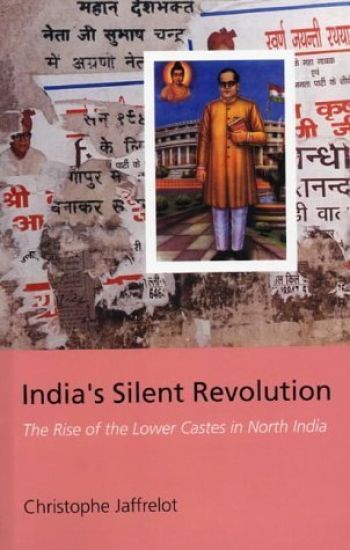
India's Silent Revolution

India's Silent Revolution

Christophe Jaffrelot

Columbia University Press
2003
sidottu
Since the 1960s a new assertiveness has characterized India's formerly silent majority, the lower castes that comprise more than two-thirds of the population. Today India's most populous state, Uttar Pradesh, is controlled by lower-caste politicians, as is Bihar, and lower-caste representation in national politics is growing inexorably. Jaffrelot argues that this trend constitutes a genuine "democratization" of India and that the social and economic effects of this "silent revolution" are bound to multiply in the years to come.
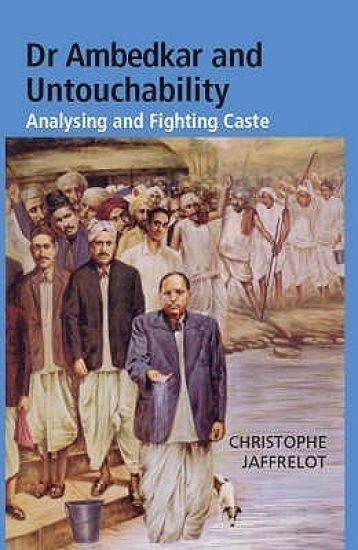
Dr. Ambedkar and Untouchability

Dr. Ambedkar and Untouchability

Christophe Jaffrelot

Columbia University Press
2005
sidottu
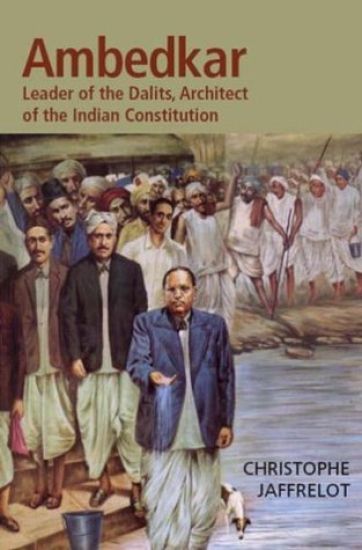
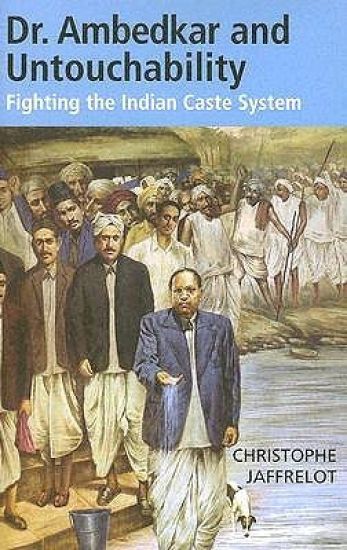
Dr. Bhimrao Ramji Ambedkar (1891-1956) rose from a community of "untouchables," to become a major figure in modern Indian history. Christophe Jaffrelot's biography reconsiders Dr. Ambedkar's life and thought and his unique combination of pragmatism and idealism. Establishing himself as a scholar, activist, journalist, and educator, Ambedkar ultimately found himself immersed in Indian politics and helped to draft the nation's constitution as law minister in Nehru's first cabinet. Ambedkar's ideas remain an inspiration to India's Dalit community.
Modi's India

Modi's India

Christophe Jaffrelot

PRINCETON UNIVERSITY PRESS
2021
sidottu
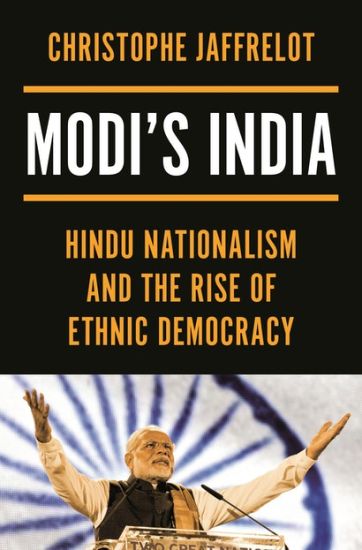
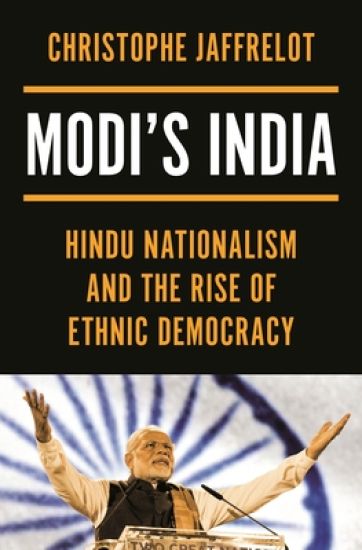
A riveting account of how a popularly elected leader has steered the world's largest democracy toward authoritarianism and intoleranceOver the past two decades, thanks to Narendra Modi, Hindu nationalism has been coupled with a form of national-populism that has ensured its success at the polls, first in Gujarat and then in India at large. Modi managed to seduce a substantial number of citizens by promising them development and polarizing the electorate along ethno-religious lines. Both facets of this national-populism found expression in a highly personalized political style as Modi related directly to the voters through all kinds of channels of communication in order to saturate the public space.Drawing on original interviews conducted across India, Christophe Jaffrelot shows how Modi's government has moved India toward a new form of democracy, an ethnic democracy that equates the majoritarian community with the nation and relegates Muslims and Christians to second-class citizens who are harassed by vigilante groups. He discusses how the promotion of Hindu nationalism has resulted in attacks against secularists, intellectuals, universities, and NGOs. Jaffrelot explains how the political system of India has acquired authoritarian features for other reasons, too. Eager to govern not only in New Delhi, but also in the states, the government has centralized power at the expense of federalism and undermined institutions that were part of the checks and balances, including India's Supreme Court.Modi's India is a sobering account of how a once-vibrant democracy can go wrong when a government backed by popular consent suppresses dissent while growing increasingly intolerant of ethnic and religious minorities.
Modi's India

Modi's India

Christophe Jaffrelot

PRINCETON UNIVERSITY PRESS
2023
pokkari
A riveting account of how a popularly elected leader has steered the world's largest democracy toward authoritarianism and intoleranceOver the past two decades, thanks to Narendra Modi, Hindu nationalism has been coupled with a form of national-populism that has ensured its success at the polls, first in Gujarat and then in India at large. Modi managed to seduce a substantial number of citizens by promising them development and polarizing the electorate along ethno-religious lines. Both facets of this national-populism found expression in a highly personalized political style as Modi related directly to the voters through all kinds of channels of communication in order to saturate the public space.Drawing on original interviews conducted across India, Christophe Jaffrelot shows how Modi's government has moved India toward a new form of democracy, an ethnic democracy that equates the majoritarian community with the nation and relegates Muslims and Christians to second-class citizens who are harassed by vigilante groups. He discusses how the promotion of Hindu nationalism has resulted in attacks against secularists, intellectuals, universities, and NGOs. Jaffrelot explains how the political system of India has acquired authoritarian features for other reasons, too. Eager to govern not only in New Delhi, but also in the states, the government has centralized power at the expense of federalism and undermined institutions that were part of the checks and balances, including India's Supreme Court.Modi's India is a sobering account of how a once-vibrant democracy can go wrong when a government backed by popular consent suppresses dissent while growing increasingly intolerant of ethnic and religious minorities.
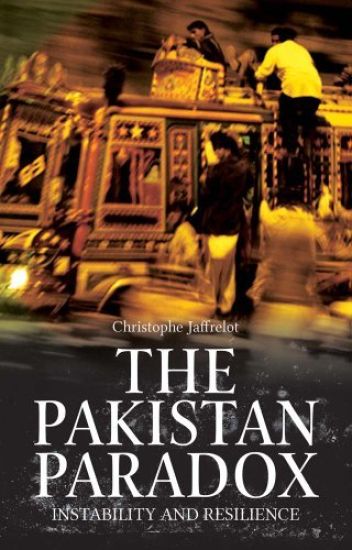
The Pakistan Paradox

The Pakistan Paradox

Christophe Jaffrelot

C Hurst Co Publishers Ltd
2015
nidottu
Pakistan was born as the creation of elite Urdu-speaking Muslims who sought to govern a state that would maintain their dominance. After rallying non-Urdu speaking leaders around him, Jinnah imposed a unitary definition of the new nation state that obliterated linguistic diversity. This centralisation - 'justified' by the Indian threat - fostered centrifugal forces that resulted in Bengali secessionism in 1971 and Baloch, as well as Mohajir, separatisms today. Concentration of power in the hands of the establishment remained the norm, and while au- thoritarianism peaked under military rule, democracy failed to usher in reform, and the rule of law remained fragile at best under Zulfikar Bhutto and later Nawaz Sharif. While Jinnah and Ayub Khan regarded religion as a cultural marker, since their time the Islamists have gradually prevailed. They benefited from the support of General Zia, while others, including sectarian groups, cashed in on their struggle against the establishment to woo the disenfranchised. Today, Pakistan faces existential challenges ranging from ethnic strife to Islamism, two sources of instability which hark back to elite domination.But the resilience of the country and its people, the resolve of the judiciary and hints of reform in the army may open a new and more stable chapter in its history.
Gujarat Under Modi

Gujarat Under Modi

Christophe Jaffrelot

C Hurst Co Publishers Ltd
2024
nidottu
In 2012 Narendra Modi became the first Hindu nationalist politician thrice elected to lead a state of the Indian Union, his stewardship as Chief Minister of Gujarat being the longest in that state’s history. Modi and his BJP supporters explained his achievement by pointing to economic growth under his leadership, yet detractors point out that Modi has been more business-friendly than market-friendly—to the benefit of large industrial corporations, and at the cost of great social polarisation. In 2002, an anti-Muslim pogrom of unparalleled ferocity occurred in Gujarat, leading to the biggest number of Muslim deaths since Partition. The state’s Hindu majority immediately rallied around Modi. No serious riot has occurred in Gujarat since, but polarisation was key to Modi’s strategy there, and he has deployed that strategy again and again since he became Prime Minister of India in 2014. For Modi has cultivated a communal image. A marketing genius, his messaging combines the politics of Hindutva with economic modernisation, to the clear appreciation of Gujarat’s middle class. Christophe Jaffrelot’s revealing book shows how Modi’s Gujarat served as the laboratory of Modi’s India, not only in terms of Hindu majoritarianism and national populism, but also of caste and class politics.
Hindu Nationalist Movement and Indian Politics

Hindu Nationalist Movement and Indian Politics

Christophe Jaffrelot

C Hurst Co Publishers Ltd
1996
sidottu
The violent campaign to erect a temple to Lord Ram on a site occupied by a mosque in the north Indian city of Ayodhya is only the latest manifestation of extreme Hindu nationalism. Hindu chauvinists argue that India's Hindu heritage was usurped by the secular idealism of the Nehru dynasty and their "pandering" to the interests of minorities, above all the 120 million Muslims. In the 1991 general election the Bharatiya Janata party (BJP), the principal political vehicle for Hindu militancy, won some notable victories and became the largest opposition party in parliament. Christophe Jaffrelot presents a study of the Hindu nationalist phenomenon and explores the movement's use of religious symbolism and popular iconography, thereby combining anthropology and political history. He begins by tracing the origins of the RSS - a party that Nehru described as "the Indian version of fascism" and which was proscribed following Mahatma Gandhi's assassination in 1948. This is followed by an analysis of the Bharatiya Jana Sangh, the most successful first-generation Hindu nationalist party, its opposition to Indira Gandhi, involvement in the JP movement and later integration into the Janata party coalition; the formation of the BJP; the relaunch by the RSS of a "front" organization, the VHP; and the BJP's change of strategy and consequent electoral success in 1989-1991.
Hindu Nationalist Movement and Indian Politics

Hindu Nationalist Movement and Indian Politics

Christophe Jaffrelot

C Hurst Co Publishers Ltd
1996
nidottu
The violent campaign to erect a temple to Lord Ram on a site occupied by a mosque in the north Indian city of Ayodhya is only the latest manifestation of extreme Hindu nationalism. Hindu chauvinists argue that India's Hindu heritage was usurped by the secular idealism of the Nehru dynasty and their "pandering" to the interests of minorities, above all the 120 million Muslims. In the 1991 general election the Bharatiya Janata party (BJP), the principal political vehicle for Hindu militancy, won some notable victories and became the largest opposition party in parliament. Christophe Jaffrelot presents a study of the Hindu nationalist phenomenon and explores the movement's use of religious symbolism and popular iconography, thereby combining anthropology and political history. He begins by tracing the origins of the RSS - a party that Nehru described as "the Indian version of fascism" and which was proscribed following Mahatma Gandhi's assassination in 1948. This is followed by an analysis of the Bharatiya Jana Sangh, the most successful first-generation Hindu nationalist party, its opposition to Indira Gandhi, involvement in the JP movement and later integration into the Janata party coalition; the formation of the BJP; the relaunch by the RSS of a "front" organization, the VHP; and the BJP's change of strategy and consequent electoral success in 1989-1991.
Dr Ambedkar and Untouchability

Dr Ambedkar and Untouchability

Christophe Jaffrelot

C Hurst Co Publishers Ltd
2005
sidottu
Jaffrelot's biography of the great Indian politician B.R. Ambedkar is both an historical study and a document relevant to today's concerns, given the rising profile of Dalits politically and otherwise in modern India.
India's Silent Revolution

India's Silent Revolution

Christophe Jaffrelot

C Hurst Co Publishers Ltd
2003
nidottu
India has long been dominated by the upper castes, even though the lower castes make up more than two thirds of the population. This book examines how the lower castes have become more assertive in recent decades.