Kirjojen hintavertailu. Mukana 11 244 527 kirjaa ja 12 kauppaa.

Kirjahaku

Etsi kirjoja tekijän nimen, kirjan nimen tai ISBN:n perusteella.

5 kirjaa tekijältä Christopher Allmand

Henry V

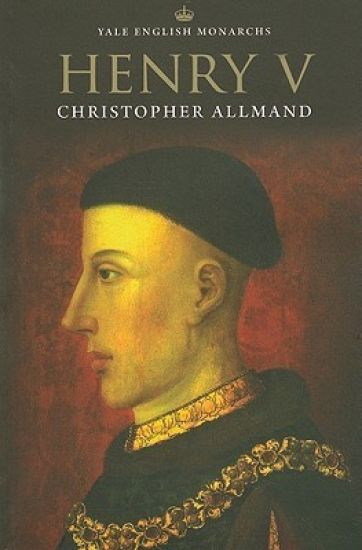
Henry V

Christopher Allmand

Yale University Press
2011
pokkari
Thanks in part to Shakespeare, Henry V is one of England's best-known monarchs. The image of the king leading his army against the French, and the great victory at Agincourt, are part of English historical tradition. Yet, though indeed a soldier of exceptional skill, Henry V's reputation needs to be seen against a broader background of achievement. This sweepingly majestic book is based on the full range of primary sources and sets the reign in its full European context. Christopher Allmand shows that Henry V not only united the country in war but also provided domestic security, solid government, and a much needed sense of national pride. The book includes an updated foreword which takes stock of more recent publications in the field. "A far more rounded picture of Henry as a ruler than any previous study."--G.L. Harris, The Times
Aspects of War in the Late Middle Ages

Aspects of War in the Late Middle Ages

Christopher Allmand

TAYLOR FRANCIS LTD
2022
sidottu
This Variorum collection of articles is intended to illustrate that conflict in the late Middle Ages was not only about soldiers and fighting (about the makers and the making of war), important as these were. Just as it remains in our own day, war was a subject which attracted writers (commentators, moralists and social critics among them), some of whom glorified war, while others did not. For the historian the written word is important evidence of how war, and those taking part in it, might be regarded by the wider society. One question was supremely important: what was the standing among their contemporaries of those who fought society’s wars? How was war seen on the moral scale of the time? The last two sections deal with a particular war, the ‘occupation’ of northern France by the English between 1420 and 1450. The men who conquered the duchy, and then served to keep it under English control for those years, had to be rewarded with lands, titles, administrative and military responsibilities, even (for the clergy) ecclesiastical benefices. For these, war spelt ‘opportunity’, whose advantages they would be reluctant to surrender. The final irony lies in the fact that Frenchmen, returning to claim their ancestral rights once the English had been driven out, frequently found it difficult to unravel both the legal and the practical consequences of a war which had caused a considerable upheaval in Norman society over a period of a single generation. (CS 1106).
The Hundred Years War

The Hundred Years War

Christopher Allmand

Cambridge University Press
1988
pokkari
This is a comparative study of how the societies of late-medieval England and France reacted to the long period of conflict between them commonly known as the Hundred Years War. Beginning with an analysis of contemporary views regarding the war. Two chapters follow which describe the military aim of the protagonists, military and naval organisation, recruitment, and the raising of taxes. The remainder of the book describes and analyses some of the main social and economic effects of war upon society, the growth of a sense of national consciousness in time of conflict, and the social criticism which came from those who reacted to changes and development brought about by war. Although intended primarily as a textbook for students, Dr Allmand’s study is much more than that. It makes an important general contribution to the history of war in medieval times, and opens up new and original perspectives on a familiar topic.
Aspects of War in the Late Middle Ages

Aspects of War in the Late Middle Ages

Christopher Allmand

TAYLOR FRANCIS LTD
2024
nidottu
This Variorum collection of articles is intended to illustrate that conflict in the late Middle Ages was not only about soldiers and fighting (about the makers and the making of war), important as these were. Just as it remains in our own day, war was a subject which attracted writers (commentators, moralists and social critics among them), some of whom glorified war, while others did not. For the historian the written word is important evidence of how war, and those taking part in it, might be regarded by the wider society. One question was supremely important: what was the standing among their contemporaries of those who fought society’s wars? How was war seen on the moral scale of the time? The last two sections deal with a particular war, the ‘occupation’ of northern France by the English between 1420 and 1450. The men who conquered the duchy, and then served to keep it under English control for those years, had to be rewarded with lands, titles, administrative and military responsibilities, even (for the clergy) ecclesiastical benefices. For these, war spelt ‘opportunity’, whose advantages they would be reluctant to surrender. The final irony lies in the fact that Frenchmen, returning to claim their ancestral rights once the English had been driven out, frequently found it difficult to unravel both the legal and the practical consequences of a war which had caused a considerable upheaval in Norman society over a period of a single generation. (CS 1106).
The De Re Militari of Vegetius

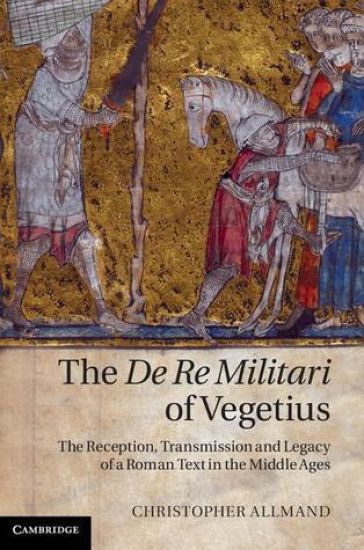
The De Re Militari of Vegetius

Christopher Allmand

Cambridge University Press
2011
sidottu
Vegetius' late Roman text became a well-known and highly respected 'classic' in the Middle Ages, transformed by its readers into the authority on the waging of war. Christopher Allmand analyses the medieval afterlife of the De Re Militari, tracing the growing interest in the text from the Carolingian world to the late Middle Ages, suggesting how the written word may have influenced the development of military practice in that period. While emphasising that success depended on a commander's ability to outwit the enemy with a carefully selected, well-trained and disciplined army, the De Re Militari inspired other unexpected developments, such as that of the 'national' army, and helped create a context in which the role of the soldier assumed greater social and political importance. Allmand explores the significance of the text and the changes it brought for those who accepted the implications of its central messages.