Kirjojen hintavertailu. Mukana 11 244 527 kirjaa ja 12 kauppaa.

Kirjahaku

Etsi kirjoja tekijän nimen, kirjan nimen tai ISBN:n perusteella.

40 kirjaa tekijältä Christopher Bollas

The Christopher Bollas Reader

The Christopher Bollas Reader

Christopher Bollas

Routledge
2011
sidottu
This reader brings together a selection of seminal papers by Christopher Bollas. Essays such as "The Fascist State of Mind," "The Structure of Evil," and "The Functions of History" have established his position as one of the most significant cultural critics of our time. Also included are examples of his psychoanalytical writings, such as "The Transformational Object" and "Psychic Genera," that deepen and renew interest in unconscious creative processes. Two recent essays, "Character and Interformality" and "The Wisdom of the Dream" extend his work on aesthetics and the role of form in everyday life. This is a collection of papers that will appeal to anyone interested in human experience and subjectivity.
The Christopher Bollas Reader

The Christopher Bollas Reader

Christopher Bollas

Routledge
2011
nidottu
This reader brings together a selection of seminal papers by Christopher Bollas. Essays such as "The Fascist State of Mind," "The Structure of Evil," and "The Functions of History" have established his position as one of the most significant cultural critics of our time. Also included are examples of his psychoanalytical writings, such as "The Transformational Object" and "Psychic Genera," that deepen and renew interest in unconscious creative processes. Two recent essays, "Character and Interformality" and "The Wisdom of the Dream" extend his work on aesthetics and the role of form in everyday life. This is a collection of papers that will appeal to anyone interested in human experience and subjectivity.
Essential Aloneness

Essential Aloneness

Christopher Bollas

OXFORD UNIVERSITY PRESS INC
2023
sidottu
Essential Aloneness presents a series of lectures on DW Winnicott delivered by Christopher Bollas in the 1980s to students and staff of the Institute of Child Neuropsychiatry at the University of Rome. Those attending were familiar with Winnicott's works; indeed, many were expert. But a question remained. How do you use Winnicott's concepts in the clinical space? Bollas not only addresses that question but also writes about his own clinical formulations at the time, such as 'the transformational object' or 'the unthought known.' Each chapter contains a unique and distinct talk, as delivered and suffused with the aliveness that is a hallmark of in-person lectures, with Bollas exhibiting a remarkable flexibility of scope and focus in order to meet the attendant group's clinical interests. The book teems with questions of Winnicottian psychoanalytic theory and practice no less relevant today than when the lectures were first delivered. These questions identify the subtle and complex positions taken by Winnicott, as understood by Bollas and other analysts in the United Kingdom and in Italy, who worked with him and knew how to make use of the Winnicott object. One of Winnicott's literary editors, Bollas brings a unique perspective in real time to the challenges Winnicott's thinking posed to the psychoanalytical, literary, and intellectual culture in the United Kingdom and abroad in the decade after Winnicott's death.
The Shadow of the Object

The Shadow of the Object

Christopher Bollas

Columbia University Press
2017
pokkari
During our formative years, we are continually "impressed" by the object world. Most of this experience will never be consciously thought, but it resides within us as assumed knowledge. In this influential work, Christopher Bollas terms this "the unthought known," offering radical new visions of the scope of psychoanalysis that expand our understanding of the creativity of the unconscious mind and the aesthetics of human character.The Shadow of the Object integrates aspects of Freud's theory of unconscious thinking with elements from the British Object Relations School. Aspects of the unthought known-the primary repressed unconscious-emerge during psychoanalysis as a mood, the aesthetic of a dream, or in our relation to the self as other. Within the unique analytic relationship, it becomes possible, at least in part, to think the unthought-an experience that has enormous transformative potential.First published in 1987, The Shadow of the Object remains a classic of the psychoanalytic literature written by a truly original thinker. The concept of the unthought known has influenced many areas of study, including literature, psychology, and the arts. This anniversary edition includes a new preface by Christopher Bollas.
When the Sun Bursts

When the Sun Bursts

Christopher Bollas

Yale University Press
2017
pokkari
A leading psychoanalyst shares his experiences working with schizophrenic patients to show how effective talk therapy can be as a treatment Many schizophrenics experience their condition as one of radical incarceration, mind-altering medications, isolation, and dehumanization. At a time when the treatment of choice is anti-psychotic medication, world-renowned psychoanalyst Christopher Bollas asserts that schizophrenics can be helped by much more humane treatments, and that they have a chance to survive and even reverse the process if they have someone to talk to them regularly and for a sustained period, soon after their first breakdown. In this sensitive and evocative narrative, he draws on his personal experiences working with schizophrenics since the 1960’s. He offers his interpretation of how schizophrenia develops, typically in the teens, as an adaptation in the difficult transition to adulthood. With tenderness, Bollas depicts schizophrenia as an understandable way of responding to our precariousness in a highly unpredictable world. He celebrates the courage of the children he has worked with and reminds us that the wisdom inherent in human beings—to turn to conversation with others when in distress—is the fundamental foundation of any cure for human conflict.
The Freudian Moment

The Freudian Moment

Christopher Bollas

Routledge
2019
sidottu
The author eloquently argues for a return to our understanding of how Freudian psychoanalysis works unconscious to unconscious. Failure to follow Freud's basic assumptions about psychoanalytical listening has resulted in the abandonment of searching for the 'the logic of sequence' which Freud regarded as the primary way we express unconscious thinking. In two extensive interviews and follow-up essays, all occurring in 2006, we follow the author exploring his most recent and radical challenge to contemporary psychoanalysis. The Freudian Moment, the author argues, realizes a phylogenetic preconception that has existed for tens of thousands of years. The invention of psychoanalysis realizes this preconception and institutes a profound step forward in human relations. The author's proposal that we use the image of the symphonic score to better imagine unconscious articulation opens up a new conceptual way for grasping the complexity of unconscious thought.
Being a Character

Being a Character

Christopher Bollas

Routledge
1993
nidottu
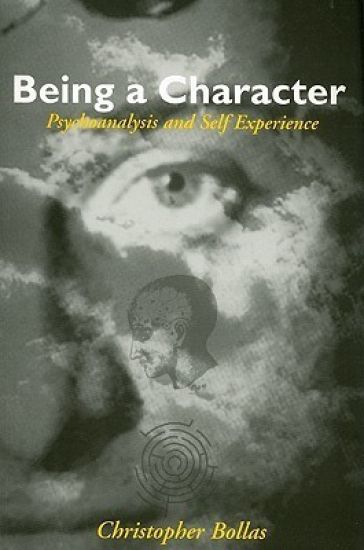
Each person invests many of the objects in his life with his or her own unconscious meaning, each person subsequently voyages through an environment that constantly evokes the self's psychic history. Taking Freud's model of dreamwork as a model for all unconscious thinking, Christopher Bollas argues that we dreamwork ourselves into becoming who we are, and illustrates how the analyst and the patient use such unconscious processes to develop new psychic structures that the patient can use to alter his or her self experience. Building on this foundation, he goes on to describe some very special forms of self experience, including the tragic madness of women cutting themselves, the experience of a cruising homosexual in bars and bathes and the demented ferocity of the facist state of mind. An original interpreter of classical theory and clinical issues, in Being a Character Christopher Bollas takes the reader into the very texture of the psychoanalytic process.
Cracking Up

Cracking Up

Christopher Bollas

Routledge
1995
sidottu
In Being a Character , Christopher Bollas argued that Freud's vision of the dream process is a model for all unconscious mental experience. In Cracking Up he extends his exploration of the inner world of human experience and suggests that the rhythm of that experience is vital to individual creativity. It allows us to develop what the author calls a 'separate sense', which we use to assess the meanings of our own experiences and also to attune ourselves sympathetically to the lives of other people.In this original and thought-provoking book, Bollas examines how people educate one another in the idioms of their unconscious lives and considers the nature and consequences of the traumas that inhibit the freedom to do this. He studies what we mean by the past - is it unchangeable or can history be a creative, open understanding of experience? We come to know who we are by giving form and meaning to our past - yet what do we mean by the self? Bollas' answer suggests yet more ways in which the 'separate sense' expresses each person's unique qualities.
Cracking Up

Cracking Up

Christopher Bollas

Routledge
1995
nidottu
In Being a Character , Christopher Bollas argued that Freud's vision of the dream process is a model for all unconscious mental experience. In Cracking Up he extends his exploration of the inner world of human experience and suggests that the rhythm of that experience is vital to individual creativity. It allows us to develop what the author calls a 'separate sense', which we use to assess the meanings of our own experiences and also to attune ourselves sympathetically to the lives of other people.In this original and thought-provoking book, Bollas examines how people educate one another in the idioms of their unconscious lives and considers the nature and consequences of the traumas that inhibit the freedom to do this. He studies what we mean by the past - is it unchangeable or can history be a creative, open understanding of experience? We come to know who we are by giving form and meaning to our past - yet what do we mean by the self? Bollas' answer suggests yet more ways in which the 'separate sense' expresses each person's unique qualities.
The Mystery of Things

The Mystery of Things

Christopher Bollas

Routledge
1999
sidottu
In The Mystery of Things, Christopher Bollas takes the reader right to the heart of psychotherapy, examining the mysterious aspects of the self that are revealed by analysis. The method of enquiry at the heart of psychoanalysis, that is, free association, runs contrary to everything that we are taught is the logical, rational, scientific way to acquire data. Yet it is only through using such an apparently illogical and subversive method that the pathological structures in thinking can be penetrated and the self underneath revealed and worked with by the analyst. Christopher Bollas focuses on the nature and effects of the free associative process. Using clinical studies, he highlights how aspects such as mental illness, and creative or artistic acts can reveal much about the self.
The Mystery of Things

The Mystery of Things

Christopher Bollas

Routledge
1999
nidottu
In The Mystery of Things, Christopher Bollas takes the reader right to the heart of psychotherapy, examining the mysterious aspects of the self that are revealed by analysis. The method of enquiry at the heart of psychoanalysis, that is, free association, runs contrary to everything that we are taught is the logical, rational, scientific way to acquire data. Yet it is only through using such an apparently illogical and subversive method that the pathological structures in thinking can be penetrated and the self underneath revealed and worked with by the analyst. Christopher Bollas focuses on the nature and effects of the free associative process. Using clinical studies, he highlights how aspects such as mental illness, and creative or artistic acts can reveal much about the self.
Hysteria

Hysteria

Christopher Bollas

Routledge
1999
nidottu
Hysteria has disappeared from contemporary culture only insofar as it has been subjected to a repression through the popular diagnosis of 'borderline personality disorder'.In Hysteria the distinguished psychoanalyst Christopher Bollas offers an original and illuminating theory of hysteria that weaves its well-known features - repressed sexual ideas; indifference to conversion; over-identification with the other - into the hysteric form.Through a rereading of Freud, Bollas argues that sexuality in itself is traumatic to all children, as it 'destroys' the relation to the mother, transfiguring her from 'mamma', the infant's caregiver, to 'mother', the child's and father's sex object. For the hysteric this recognition is endlessly traumatic and the hysterical personality forms itself into an organised opposition to this knowledge.True to his earlier writings, Bollas' vision is thought provoking and mind expanding. Hysteria brings new perspectives to long-standing ideas, making enlightening reading for students and professionals involved in psychoanalysis and psychotherapy alike, as well as the lay reader who takes an interest in the formation of personality in western culture.
The Infinite Question

The Infinite Question

Christopher Bollas

Routledge
2008
sidottu
In his latest book Christopher Bollas uses detailed studies of real clinical practice to illuminate a theory of psychoanalysis which privileges the human impulse to question. From earliest childhood to the end of our lives, we are driven by this impulse in its varying forms, and The Infinite Question illustrates how Freud's free associative method provides both patient and analyst with answers and, in turn, with an ongoing interplay of further questions.At the book's core are transcripts of real analytical sessions, accompanied by parallel commentaries which highlight key aspects of the free associative method in practice. These transcripts are contextualised by further discussion of the cases themselves, as well as a wider theoretical framework which places its emphasis on Freud's theory of the logic of sequence: by learning to listen to this free associative logic, Bollas argues, we can discover a richer and more complex unconscious voice than if we rely solely on Freud's theory of repressed ideas.Bollas demonstrates, in an eloquent and persuasive manner, how the Freudian position of evenly suspended attentiveness enables the analyst's unconscious to catch the drift of the patient's own unconscious. He also shows that to stimulate further questioning is often of more benefit to the analytical process than to jump to an interpretation. Yet whatever fascinating course a session may take, neither the patient nor the analyst can halt the progress of the self-propelling interrogative drive.The Infinite Question will be invaluable to both the new student and the experienced psychoanalyst, read either on its own or as a practice-based extension of the theoretical ideas elaborated in its companion volume, The Evocative Object World (also published by Routledge).
The Infinite Question

The Infinite Question

Christopher Bollas

Routledge
2008
nidottu
In his latest book Christopher Bollas uses detailed studies of real clinical practice to illuminate a theory of psychoanalysis which privileges the human impulse to question. From earliest childhood to the end of our lives, we are driven by this impulse in its varying forms, and The Infinite Question illustrates how Freud's free associative method provides both patient and analyst with answers and, in turn, with an ongoing interplay of further questions.At the book's core are transcripts of real analytical sessions, accompanied by parallel commentaries which highlight key aspects of the free associative method in practice. These transcripts are contextualised by further discussion of the cases themselves, as well as a wider theoretical framework which places its emphasis on Freud's theory of the logic of sequence: by learning to listen to this free associative logic, Bollas argues, we can discover a richer and more complex unconscious voice than if we rely solely on Freud's theory of repressed ideas.Bollas demonstrates, in an eloquent and persuasive manner, how the Freudian position of evenly suspended attentiveness enables the analyst's unconscious to catch the drift of the patient's own unconscious. He also shows that to stimulate further questioning is often of more benefit to the analytical process than to jump to an interpretation. Yet whatever fascinating course a session may take, neither the patient nor the analyst can halt the progress of the self-propelling interrogative drive.The Infinite Question will be invaluable to both the new student and the experienced psychoanalyst, read either on its own or as a practice-based extension of the theoretical ideas elaborated in its companion volume, The Evocative Object World (also published by Routledge).
The Evocative Object World

The Evocative Object World

Christopher Bollas

Routledge
2008
sidottu
In The Evocative Object World Christopher Bollas builds on Freud's account of dream formation, combining it with perceptive clinical, theoretical and cultural insights to show how the psychoanalytical method can provide a rich understanding of what has traditionally been regarded as 'the outside world'.Moving from the fundamentals of the free associative technique, through an examination of how architecture and the built environment interact with individual and societal dream life, Bollas extends the work of psychoanalysis beyond relations with literature and culture to the actual objects which surround us.As with the evocative external structures of our environment, Bollas describes how the family, with its inherited genetic structures, likewise constitutes a pre-existent unconscious formation into which we are placed, and demonstrates that there is more to this multifaceted unit than the traditional psychoanalytical notion of the Oedipal triangle.In the process, Bollas also provides a fascinating and comprehensive review of how his own theories have evolved over the past three decades: a period during which, in his view, Western society has increasingly neglected – or even become actively hostile towards – unconscious life.Throughout this engaging and accessible text, Bollas rejects the simplistic notion that mental life is unconsciously determined. Instead he provides a compelling study of how unconscious life is shaped by a diverse array of both internal and external factors, and how the work of the Freudian pair provides the best means to gain insight into our dreams, our surroundings, our families – and our mental life as a whole.
The Evocative Object World

The Evocative Object World

Christopher Bollas

Routledge
2008
nidottu
In The Evocative Object World Christopher Bollas builds on Freud's account of dream formation, combining it with perceptive clinical, theoretical and cultural insights to show how the psychoanalytical method can provide a rich understanding of what has traditionally been regarded as 'the outside world'.Moving from the fundamentals of the free associative technique, through an examination of how architecture and the built environment interact with individual and societal dream life, Bollas extends the work of psychoanalysis beyond relations with literature and culture to the actual objects which surround us.As with the evocative external structures of our environment, Bollas describes how the family, with its inherited genetic structures, likewise constitutes a pre-existent unconscious formation into which we are placed, and demonstrates that there is more to this multifaceted unit than the traditional psychoanalytical notion of the Oedipal triangle.In the process, Bollas also provides a fascinating and comprehensive review of how his own theories have evolved over the past three decades: a period during which, in his view, Western society has increasingly neglected – or even become actively hostile towards – unconscious life.Throughout this engaging and accessible text, Bollas rejects the simplistic notion that mental life is unconsciously determined. Instead he provides a compelling study of how unconscious life is shaped by a diverse array of both internal and external factors, and how the work of the Freudian pair provides the best means to gain insight into our dreams, our surroundings, our families – and our mental life as a whole.
Catch Them Before They Fall: The Psychoanalysis of Breakdown
In this exploration of a radical approach to the psychoanalytical treatment of people on the verge of mental breakdown, Christopher Bollas offers a new and courageous clinical paradigm. He suggests that the unconscious purpose of breakdown is to present the self to the other for transformative understanding; to have its core distress met and understood directly. If caught in time, a breakdown can become a breakthrough. It is an event imbued with the most profound personal significance, but it requires deep understanding if its meaning is to be released to its transformative potential.Bollas believes that hospitalization, intensive medication and CBT/DBT all negate this opportunity, and he proposes that many of these patients should instead be offered extended, intensive psychoanalysis. This book will be of interest to clinicians who find that, with patients on the verge of breakdown, conventional psychoanalytical work is insufficient to meet the emerging crisis. However, Bollas’s challenging proposal will provoke many questions and in the final section of the book some of these are raised by Sacha Bollas and presented in a question-and-answer form.
Catch Them Before They Fall: The Psychoanalysis of Breakdown
In this exploration of a radical approach to the psychoanalytical treatment of people on the verge of mental breakdown, Christopher Bollas offers a new and courageous clinical paradigm. He suggests that the unconscious purpose of breakdown is to present the self to the other for transformative understanding; to have its core distress met and understood directly. If caught in time, a breakdown can become a breakthrough. It is an event imbued with the most profound personal significance, but it requires deep understanding if its meaning is to be released to its transformative potential.Bollas believes that hospitalization, intensive medication and CBT/DBT all negate this opportunity, and he proposes that many of these patients should instead be offered extended, intensive psychoanalysis. This book will be of interest to clinicians who find that, with patients on the verge of breakdown, conventional psychoanalytical work is insufficient to meet the emerging crisis. However, Bollas’s challenging proposal will provoke many questions and in the final section of the book some of these are raised by Sacha Bollas and presented in a question-and-answer form.
China on the Mind

China on the Mind

Christopher Bollas

Routledge
2012
sidottu
Several thousand years ago Indo-European culture diverged into two ways of thinking; one went West, the other East. Tracing their differences, Christopher Bollas examines how these mentalities are now converging once again, notably in the practice of psychoanalysis. Creating a freely associated comparison between western psychoanalysts and eastern philosophers, Bollas demonstrates how the Eastern use of poetry evolved as a collective way to house the individual self. On one hand he links this tradition to the psychoanalytic praxes of Winnicott and Khan, which he relates to Daoism in their privileging of solitude and non verbal forms of communicating. On the other, Bollas examines how Jung, Bion and Rosenfeld, assimilate the Confucian ethic that sees the individual and group mind as a collective, while Freudian psychoanalysis he argues has provided an unconscious meeting place of both viewpoints. Bollas’s intriguing book will be of interest to psychotherapists, psychoanalysts, Orientalists, and those concerned with cultural studies.
China on the Mind

China on the Mind

Christopher Bollas

Routledge
2012
nidottu
Several thousand years ago Indo-European culture diverged into two ways of thinking; one went West, the other East. Tracing their differences, Christopher Bollas examines how these mentalities are now converging once again, notably in the practice of psychoanalysis. Creating a freely associated comparison between western psychoanalysts and eastern philosophers, Bollas demonstrates how the Eastern use of poetry evolved as a collective way to house the individual self. On one hand he links this tradition to the psychoanalytic praxes of Winnicott and Khan, which he relates to Daoism in their privileging of solitude and non verbal forms of communicating. On the other, Bollas examines how Jung, Bion and Rosenfeld, assimilate the Confucian ethic that sees the individual and group mind as a collective, while Freudian psychoanalysis he argues has provided an unconscious meeting place of both viewpoints. Bollas’s intriguing book will be of interest to psychotherapists, psychoanalysts, Orientalists, and those concerned with cultural studies.