Kirjojen hintavertailu. Mukana 12 016 292 kirjaa ja 12 kauppaa.

Kirjahaku

Etsi kirjoja tekijän nimen, kirjan nimen tai ISBN:n perusteella.

7 kirjaa tekijältä Christopher Castiglia

Bound and Determined

Bound and Determined

Christopher Castiglia

University of Chicago Press
1996
sidottu
This work provides an analysis of a tradition of American women's captivity narrative that ranges across three centuries, from Puritan colonist Mary Rowlandson's abduction by Narragansett Indians to Patty Hearst's kidnapping by the Symbionese Liberation Army. Examining more than 60 accounts by women captives, as well as novels ranging from Susanna Rowson's 18th-century classic "Rueben and Rachel" to modern mass-market romances, the author investigates paradoxes central to the genre. In captivity, women often find freedom from stereotypical roles as helpless, dependent, sexually vulnerable and xenophobic. In their condemnations of their non-white captors, they defy assumptions about race that undergird their own societies. Castiglia questions critical conceptions of captivity stories as primarily an appeal to racism and misogyny, and instead finds in them an appeal of a much different nature: as all-too-rare stories of imaginative challenges to rigid gender roles and racial ideologies. Whether the women of these stories resist or escape captivity, endure until they are released, or eventually choose to live among their captors, they end up with the power to be critical of both cultures. Castiglia shows that these compelling narratives, with their boundary crossings and persistent explorations of cultural divisions and differences, have significant implications for current critical investigations into the construction of gender, race and nation.
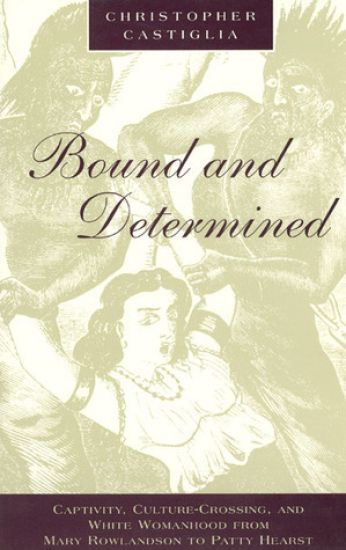
Bound and Determined

Bound and Determined

Christopher Castiglia

University of Chicago Press
1996
nidottu
This work provides an analysis of a tradition of American women's captivity narrative that ranges across three centuries, from Puritan colonist Mary Rowlandson's abduction by Narragansett Indians to Patty Hearst's kidnapping by the Symbionese Liberation Army. Examining more than 60 accounts by women captives, as well as novels ranging from Susanna Rowson's 18th-century classic "Rueben and Rachel" to modern mass-market romances, the author investigates paradoxes central to the genre. In captivity, women often find freedom from stereotypical roles as helpless, dependent, sexually vulnerable and xenophobic. In their condemnations of their non-white captors, they defy assumptions about race that undergird their own societies. Castiglia questions critical conceptions of captivity stories as primarily an appeal to racism and misogyny, and instead finds in them an appeal of a much different nature: as all-too-rare stories of imaginative challenges to rigid gender roles and racial ideologies. Whether the women of these stories resist or escape captivity, endure until they are released, or eventually choose to live among their captors, they end up with the power to be critical of both cultures. Castiglia shows that these compelling narratives, with their boundary crossings and persistent explorations of cultural divisions and differences, have significant implications for current critical investigations into the construction of gender, race and nation.
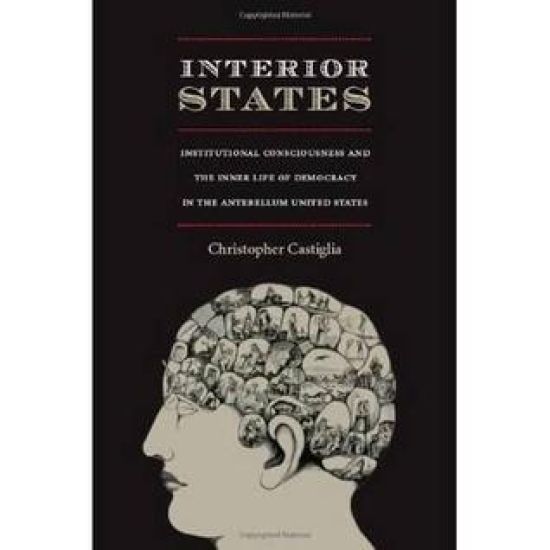
Interior States

Interior States

Christopher Castiglia

Duke University Press
2008
sidottu
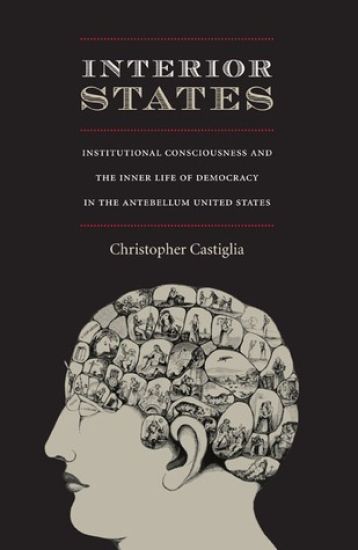
In Interior States Christopher Castiglia focuses on U.S. citizens’ democratic impulse: their ability to work with others to imagine genuinely democratic publics while taking divergent views into account. Castiglia contends that citizens of the early United States were encouraged to locate this social impulse not in associations with others but in the turbulent and conflicted interiors of their own bodies. He describes how the human interior-with its battles between appetite and restraint, desire and deferral-became a displacement of the divided sociality of nineteenth-century America’s public sphere and contributed to the vanishing of that sphere in the twentieth century and the twenty-first. Drawing insightful connections between political structures, social relations, and cultural forms, he explains that as the interior came to reflect the ideological conflicts of the social world, citizens were encouraged to (mis)understand vigilant self-scrutiny and self-management as effective democratic action. In the late eighteenth century and early nineteenth, as discourses of interiority gained prominence, so did powerful counter-narratives. Castiglia reveals the flamboyant pages of antebellum popular fiction to be an archive of unruly democratic aspirations. Through close readings of works by Maria Monk and George Lippard, Walt Whitman and Timothy Shay Arthur, Hannah Webster Foster and Hannah Crafts, and Nathaniel Hawthorne and Herman Melville, Castiglia highlights a refusal to be reformed or self-contained. In antebellum authors’ representations of nervousness, desire, appetite, fantasy, and imagination, he finds democratic strivings that refused to disappear. Taking inspiration from those writers and turning to the present, Castiglia advocates a humanism-without-humans that, denied the adjudicative power of interiority, promises to release democracy from its inner life and to return it to the public sphere where U.S. citizens may yet create unprecedented possibilities for social action.
Interior States

Interior States

Christopher Castiglia

Duke University Press
2008
pokkari
In Interior States Christopher Castiglia focuses on U.S. citizens’ democratic impulse: their ability to work with others to imagine genuinely democratic publics while taking divergent views into account. Castiglia contends that citizens of the early United States were encouraged to locate this social impulse not in associations with others but in the turbulent and conflicted interiors of their own bodies. He describes how the human interior-with its battles between appetite and restraint, desire and deferral-became a displacement of the divided sociality of nineteenth-century America’s public sphere and contributed to the vanishing of that sphere in the twentieth century and the twenty-first. Drawing insightful connections between political structures, social relations, and cultural forms, he explains that as the interior came to reflect the ideological conflicts of the social world, citizens were encouraged to (mis)understand vigilant self-scrutiny and self-management as effective democratic action. In the late eighteenth century and early nineteenth, as discourses of interiority gained prominence, so did powerful counter-narratives. Castiglia reveals the flamboyant pages of antebellum popular fiction to be an archive of unruly democratic aspirations. Through close readings of works by Maria Monk and George Lippard, Walt Whitman and Timothy Shay Arthur, Hannah Webster Foster and Hannah Crafts, and Nathaniel Hawthorne and Herman Melville, Castiglia highlights a refusal to be reformed or self-contained. In antebellum authors’ representations of nervousness, desire, appetite, fantasy, and imagination, he finds democratic strivings that refused to disappear. Taking inspiration from those writers and turning to the present, Castiglia advocates a humanism-without-humans that, denied the adjudicative power of interiority, promises to release democracy from its inner life and to return it to the public sphere where U.S. citizens may yet create unprecedented possibilities for social action.
Aesthetics and the End(s) of American Cultural Studies

Aesthetics and the End(s) of American Cultural Studies

Christopher Castiglia

Duke University Press
2004
pokkari
Reclaiming the aesthetic, emphasizing the "literary" in literary studies, conceptualizing a new formalism: such recent appeals represent the latest turn in ongoing debates about art and aesthetic ideology. Intervening in these debates-often characterized by predictable oppositions that set art against social action, structure against cultural practice, and the so-called imaginaries of affect against the putative reality of politics-this special issue of American Literature asks, what's new about the "new aesthetics," and what implications does this shifting ideology have for social and cultural thinking?
The Practices of Hope

The Practices of Hope

Christopher Castiglia

New York University Press
2017
pokkari
Offers a positive approach to literary criticism At a moment when the "hermeneutics of suspicion" is under fire in literary studies, The Practices of Hope encourages an alternative approach that, rather than abandoning critique altogether, relinquishes its commitment to disenchantment. As an alternative, Castiglia offers hopeful reading, a combination of idealism and imagination that retains its analytic edge yet moves beyond nay-saying to articulate the values that shape our scholarship and creates the possible worlds that animate genuine social critique. Drawing on a variety of critics from the Great Depression to the Vietnam War, from Granville Hicks and Constance Rourke to Lewis Mumford, C.L.R. James, Charles Feidelson, and Richard Poirier, Castiglia demonstrates that their criticism simultaneously denounced the social conditions of the Cold War United States and proposed ideal worlds as more democratic alternatives. Organized around a series of terms that have become anathema to critics—nation, liberalism, humanism, symbolism—The Practices of Hope shows how they were employed in criticism's "usable past" to generate an alternative critique, a practice of hope.
The Practices of Hope

The Practices of Hope

Christopher Castiglia

New York University Press
2017
sidottu
Offers a positive approach to literary criticism At a moment when the "hermeneutics of suspicion" is under fire in literary studies, The Practices of Hope encourages an alternative approach that, rather than abandoning critique altogether, relinquishes its commitment to disenchantment. As an alternative, Castiglia offers hopeful reading, a combination of idealism and imagination that retains its analytic edge yet moves beyond nay-saying to articulate the values that shape our scholarship and creates the possible worlds that animate genuine social critique. Drawing on a variety of critics from the Great Depression to the Vietnam War, from Granville Hicks and Constance Rourke to Lewis Mumford, C.L.R. James, Charles Feidelson, and Richard Poirier, Castiglia demonstrates that their criticism simultaneously denounced the social conditions of the Cold War United States and proposed ideal worlds as more democratic alternatives. Organized around a series of terms that have become anathema to critics—nation, liberalism, humanism, symbolism—The Practices of Hope shows how they were employed in criticism's "usable past" to generate an alternative critique, a practice of hope.