Kirjojen hintavertailu. Mukana 11 450 881 kirjaa ja 12 kauppaa.

Kirjahaku

Etsi kirjoja tekijän nimen, kirjan nimen tai ISBN:n perusteella.

5 kirjaa tekijältä Christopher D. Stanley

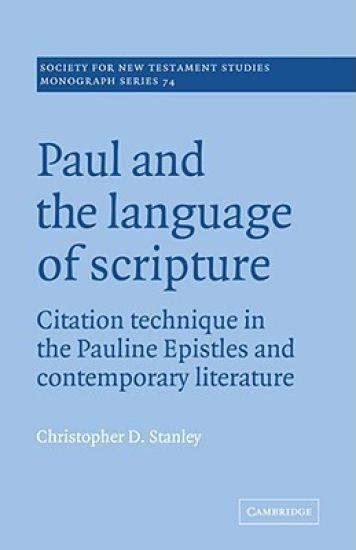
Paul and the Language of Scripture

Paul and the Language of Scripture

Christopher D. Stanley

Cambridge University Press
2008
pokkari
Explicit quotations from the Jewish Scriptures play a vital role in several of the apostle Paul's letters to struggling Christian congregations. In most cases the wording of these quotations differs markedly from all known versions of the biblical text. Studies of Paul's use of scripture routinely note the problem and suggest possible solutions, but none to date has made this phenomenon the primary object of investigation. The present study aims to remedy this deficiency with a careful examination of the way Paul and other ancient authors handled the wording of their explicit quotations. In drawing general conclusions, Dr Stanley examines the broader social environment that made 'interpretive renderings' a normal and accepted part of the literary landscape of antiquity.
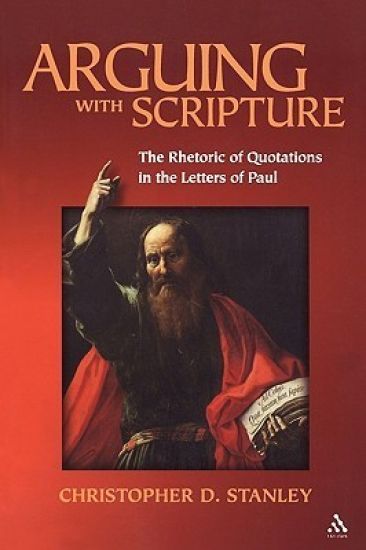
Arguing With Scripture

Arguing With Scripture

Christopher D. Stanley

T. T.Clark Ltd
2004
nidottu
Drawing on recent discussions of quotations in the fields of rhetorics, linguistics, and literary studies, Stanley argues that Paul's explicit appeals to Jewish Scriptures must be analyzed as rhetorical devices that seek to influence the thoughts, feelings, and actions of a first-century audience, an approach that requires a different set of questions and methods than scholars have typically used in their studies of Paul's quotations. Key questions include why Paul quoted words of Scripture to support some of his arguments and not others; how quotations help to advance the developing arguments of Paul's letters; and how a mostly illiterate first-century audience from a variety of backgrounds might have viewed these sudden intrusions of material from a Jewish religious text. Answering these questions requires paying careful attention to the affective and poetic dimensions as well as the intellectual aspects of the original audience's encounter with the Holy Scriptures of Israel.
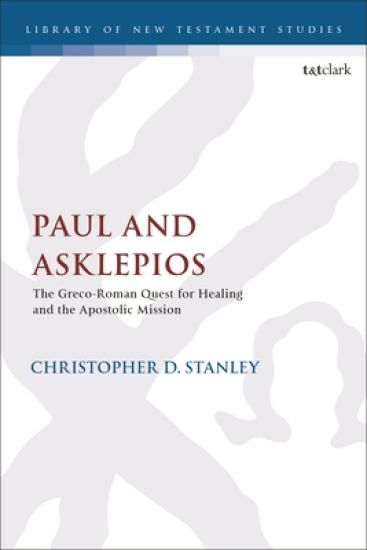
Paul and Asklepios

Paul and Asklepios

Christopher D. Stanley

BLOOMSBURY PUBLISHING PLC
2022
sidottu
What role did offers of physical healing (or the hope of receiving it) play in the missionary program of the apostle Paul? What did he do to treat the many illnesses and injuries that he endured while pursuing his mission? What did he advise his followers to do regarding their health problems? Such questions have been broadly neglected in studies of Paul and his churches, but Christopher D. Stanley shows how vital they truly become once we recognize how thoroughly “pagan” religion was implicated in all aspects of Greco-Roman health care. What did Paul approve, and what did he reject?Given Paul’s silence on these subjects, Stanley relies on a cross-cultural and interdisciplinary approach to develop informed judgments about what Paul might have thought, said, and done with regard to his own and his followers’ health care. He begins by exploring the nature and extent of sickness in the Roman world and the four overlapping health care systems that were available to Paul and his followers: home remedies, “magical” treatments, religious healing, and medical care. He then examines how Judeans and Christians in the centuries before and after Paul viewed and engaged with these systems. Finally, he speculates on what kinds of treatments Paul might have approved or rejected and whether he might have used promises of healing to attract people to his movement. The result is a thorough and nuanced analysis of a vital dimension of Greco-Roman social life and Paul’s place within it.
Paul and Asklepios

Paul and Asklepios

Christopher D. Stanley

BLOOMSBURY PUBLISHING PLC
2024
nidottu
What role did offers of physical healing (or the hope of receiving it) play in the missionary program of the apostle Paul? What did he do to treat the many illnesses and injuries that he endured while pursuing his mission? What did he advise his followers to do regarding their health problems? Such questions have been broadly neglected in studies of Paul and his churches, but Christopher D. Stanley shows how vital they truly become once we recognize how thoroughly “pagan” religion was implicated in all aspects of Greco-Roman health care. What did Paul approve, and what did he reject?Given Paul’s silence on these subjects, Stanley relies on a cross-cultural and interdisciplinary approach to develop informed judgments about what Paul might have thought, said, and done with regard to his own and his followers’ health care. He begins by exploring the nature and extent of sickness in the Roman world and the four overlapping health care systems that were available to Paul and his followers: home remedies, “magical” treatments, religious healing, and medical care. He then examines how Judeans and Christians in the centuries before and after Paul viewed and engaged with these systems. Finally, he speculates on what kinds of treatments Paul might have approved or rejected and whether he might have used promises of healing to attract people to his movement. The result is a thorough and nuanced analysis of a vital dimension of Greco-Roman social life and Paul’s place within it.
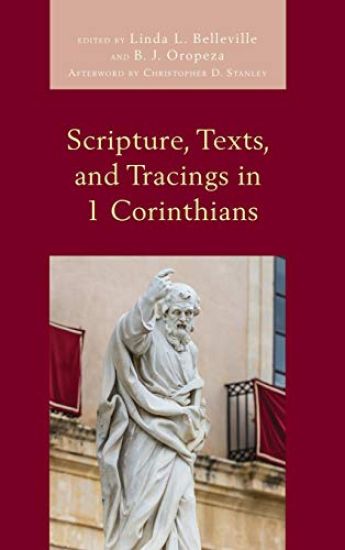
Scripture, Texts, and Tracings in 1 Corinthians

Scripture, Texts, and Tracings in 1 Corinthians

Christopher D. Stanley

Lexington Books/Fortress Academic
2019
sidottu
This book advances the interpretation of 1 Corinthians by exploring the ways the apostle Paul quoted or “echoed” Jewish scriptures more indirectly in his letter, by metonymy or allusion. Criteria and methods for identifying echoes are brought to the fore, as are questions of the texture of Paul’s theology and his understanding of scripture. Important topics in 1 Corinthians addressed here include Paul’s use of the Law, monotheism, Christology, wisdom and mystery language, punishment of the incestuous man, baptism for the dead, eschatology, and resurrection.