Originally published in 1989, Eastern Paleoindian Lithic Resource Use is a series of papers that examine Paleoindian lifeways from various viewpoints, all of which have their foundations in stone and examining artifacts. Exploring the link between lithic materials (especially cryptocrystallines and chert), and Paleoindian mobility and looking at the transport of stone, seasonal resource availability, stone caches, use as social markers and land movement patterns and its surrounding data.
Originally published in 1989, Eastern Paleoindian Lithic Resource Use is a series of papers that examine Paleoindian lifeways from various viewpoints, all of which have their foundations in stone and examining artifacts. Exploring the link between lithic materials (especially cryptocrystallines and chert), and Paleoindian mobility and looking at the transport of stone, seasonal resource availability, stone caches, use as social markers and land movement patterns and its surrounding data.
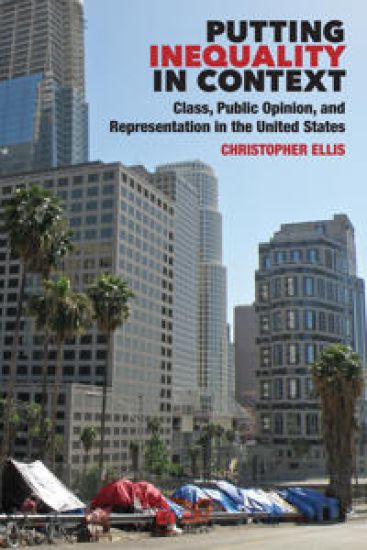
Rising income inequality is highlighted as one of the largest challenges facing the United States, affecting civic participation and political representation. Although the wealthy often can and do exert more political influence, this is not always the case. To fix political inequality, it is important to understand exactly how class divisions manifest themselves in political outcomes, and what factors serve to enhance, or depress, inequalities in political voice. Christopher Ellis argues citizens’—and legislators’—views of class politics are driven by lived experience in particular communities. While some experience is formally political, on an informal basis citizens learn a great deal about their position in the broader socioeconomic spectrum and the social norms governing how class intersects with day-to-day life. These factors are important for policymakers, since most legislators do not represent “the public” at large, but specific constituencies. Focusing on U.S. congressional districts as the contextual unit of interest, Ellis argues individuals’ political behavior cannot be separated from their environment, and shows how income’s role in political processes is affected by the contexts in which citizens and legislators interact. Political inequality exists in the aggregate, but it does not exist everywhere. It is, rather, a function of specific arrangements that depress the political influence of the poor. Identifying and understanding these factors is a crucial step in thinking about what reforms might be especially helpful in enhancing equality of political voice.
Worship in the evangelical tradition is a blend of prepared and extempore contributions. It generally follows a set pattern, but openness to spontaneity is an essential ingredient. As in other traditions, ministers and worship leaders receive very little training in how to lead worship and this book meets a pressing need. It considers many aspects of worship including: Why do we worship? Who is worship for? Patterns and shapes in worship, types of prayer, singing, preaching, The Lord's Supper, details of leading, the spirituality of leading worship, connections to the whole of life, Worship as encounter, Worship as pastoral care, Worship as evangelism, and Worship as celebration. A directory of resources and online worship is also provided.