Kirjojen hintavertailu. Mukana 11 244 527 kirjaa ja 12 kauppaa.

Kirjahaku

Etsi kirjoja tekijän nimen, kirjan nimen tai ISBN:n perusteella.

14 kirjaa tekijältä Christopher Frayling

Cinema: The Whole Story

Cinema: The Whole Story

Christopher Frayling

Thames Hudson Ltd
2019
nidottu
Cinema: The Whole Story takes a close look at the key time periods, genres and key works in world cinema. It places the burgeoning world of cinema in the context of social and cultural developments that have taken place since its beginnings. Organized chronologically, the book traces the evolution of cinematic development, from the earliest days of film projection to the multiscreen cinemas and super-technology of today. Illustrated, in-depth text charts every genre of cinema, from the first silent films to epic blockbusters, CGI graphics and groundbreaking effects of the 21st century. Cinema: The Whole Story is an indispensable book for all those who love watching and reading about films and who want to understand more about the world of cinema.
Sergio Leone

Sergio Leone

Christopher Frayling

University of Minnesota Press
2012
nidottu
Sergio Leone is a singular figure among Italian filmmakers of the postwar years; his films grow in reputation year after year. Groundbreaking westerns such as his Dollars trilogy and the authoritative Once upon a Time in the West have made Leone one of the most popular and influential directors in world cinema. Christopher Frayling’s remarkable biography of Leone—the first ever—affectionately explores his body of work and casts light on little-known details of his life. A wealth of research, story, and insight, Sergio Leone: Something to Do with Death stands as the definitive study of this master filmmaker, crafted by one of our most acclaimed critics and historians.
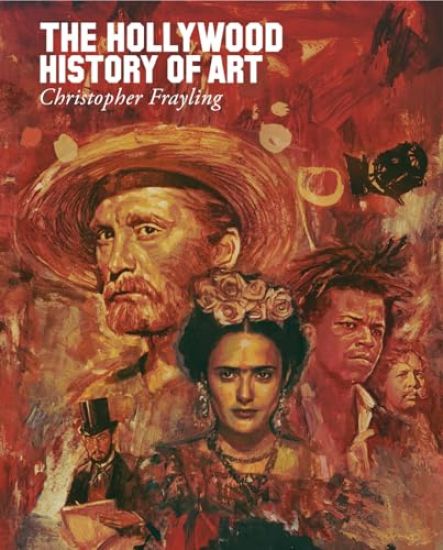
Hollywood History of Art, the

Hollywood History of Art, the

Christopher Frayling

Reel Art Press
2025
sidottu
How Hollywood has portrayed the lives of artists, from Kirk Douglas' Vincent van Gogh to Salma Hayek's Frida KahloEver since the dawn of the sound era, Hollywood and friends have made a series of elaborate feature films about the lives of the great artists: the cast of colorful characters includes Fredric March as Cellini, Charles Laughton as Rembrandt, George Sanders as Gauguin, Jos Ferrer as Toulouse-Lautrec, Kirk Douglas as Van Gogh, Charlton Heston as Michelangelo, Mel Ferrer as El Greco--and, more recently, Jeffrey Wright as Jean-Michel Basquiat Derek Jacobi as Francis Bacon, Ed Harris as Jackson Pollock, Salma Hayek as Frida Kahlo, and many others.To attain box office success, these films have represented the lives of artists in stories that take audiences on a journey from garret to gallery to glamour to gutter to grave. Although sometimes dismissed by art historians and curators, these films can tell us a great deal about how art and artists have entered the cultural bloodstream of Western culture.Until now, there has never been a full-length book devoted to the fascinating story of artists and Hollywood. Based on many years of archive research and interviews with participants, The Hollywood History of Art will appeal to museum and gallerygoers, film buffs, art fans and of course those with fond memories of Kirk Douglas being attacked by crows, Charlton Heston swallowing a mouthful of paint as he frescoes the ceiling of the Sistine Chapel, Ed Harris dripping brushfuls of paint onto a huge canvas, and Salma Hayek being transported at speed in a four-poster bed to a contemporary art gallery in Mexico City.Christopher Frayling (born 1946) is Professor Emeritus of Cultural History at the RCA and a Fellow of Churchill College, Cambridge. His previous books with Reel Art Press include The 2001 File (2015), Frankenstein: The First Two Hundred Years (2017), Once Upon a Time in the West: Shooting a Masterpiece (2019) and Sergio Leone by Himself (2024).
Inside the Bloody Chamber

Inside the Bloody Chamber

Christopher Frayling

Oberon Books Ltd
2015
sidottu
Leading cultural historian and broadcaster Christopher Frayling reflects on gothic themes in literature, art and popular culture, through the lens of his friendship and correspondence with Angela Carter during her formative ‘Bath years’, during which she wrote most of her key works; The Bloody Chamber, The Sadeian Woman, The Passion of New Eve. Inside the Bloody Chamber collects Frayling’s articles, essays and lectures written since then on various aspects of the Gothic—several in hard-to-find places, many never published before, but all revised for this new book. The subjects match Angela’s interests, are mirrored in the stories within The Bloody Chamber—and mesh with his memories of their time together in Bath in the 1970s.
On Craftsmanship

On Craftsmanship

Christopher Frayling

Oberon Books Ltd
2017
nidottu
‘Craftsmanship has again become fashionable in high places, just as it did in the last few recessions.’The concept of craftsmanship has never been as relevant and timely as it is today. Assailed on all sides by – among many other tendencies - flexible working, short-termism, portfolio careers, quick-fix training and the cult of celebrity, it has recently re-entered public debate with a new sense of urgency. Why?A bestseller in hardback, this series of linked essays by the man who ran the Royal College of Art for many years is now available in paperback, and explores the crafts in education, in history and literature, in the contemporary arts landscape, in the language, in the digital age, taking an unsentimental, hard-headed look at craftsmanship today. Only when the romantic cobwebs have been blown away, it argues, can the key importance of the crafts be fully understood.
The Innocents

The Innocents

Christopher Frayling

BFI Publishing
2013
nidottu
Jack Clayton's gothic masterpiece The Innocents, though not a commercial success on its release in 1961, has been hailed as one of the greatest psychological thrillers of all time. Dividing reviewers with its ambiguous depiction of ghosts, the film ignited a debate about the aesthetics of horror which still rages today.In this stimulating introduction to The Innocents, Sir Christopher Frayling traces the film from its genesis in the original novel The Turn of The Screw by Henry James, via contemporary critical contexts and William Archibald's 1950 stage adaptation of the same name, to the screenplay by William Archibald, Truman Capote and John Mortimer. Drawing on unpublished material from Jack Clayton's archive – including Capote's handwritten drafts for the film – and interviews with Deborah Kerr, Freddie Francis, and John Mortimer, Frayling explores how this classic ghost story came to life on screen. This special edition features original cover artwork by Matthew Young.
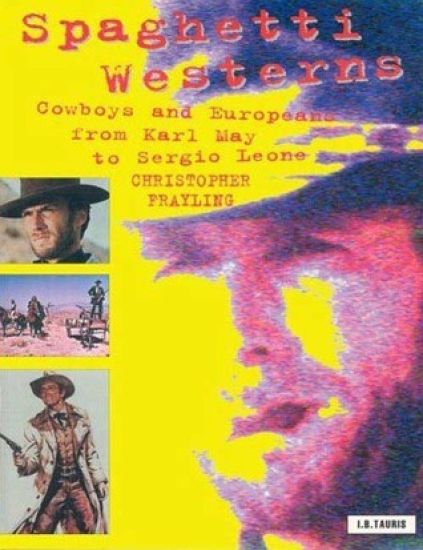
Spaghetti Westerns

Spaghetti Westerns

Christopher Frayling

I.B. Tauris
2009
nidottu
“Christopher Frayling’s Spaghetti Westerns is a particularly entertaining and enjoyably readable book. Frayling is obviously both a film buff and film critic, so he is able to appreciate Spaghetti Westerns as popular entertainments, to celebrate their cinematic stylishness, while simultaneously knowledgeably exploring their many social and political dimensions.” – Gary Crowdus, Cineaste “Unquestionably the single best book written about the Western.” – Journal of Popular Film and Television
Mad, Bad and Dangerous?

Mad, Bad and Dangerous?

Christopher Frayling

Reaktion Books
2006
nidottu
Since its origin cinema has had an uneasy relationship with science and technology: scientists are almost always impossibly mad or impossibly saintly, and technology is nearly always very bad for you. In "Mad, Bad and Dangerous", Christopher Frayling explores the genealogy of the film scientist in films made in Western Europe, and especially in Hollywood after the 1930s, showing how in film the scientist has often been used to represent the prevailing phobias of the time. In the 1950s, for example, films were dominated by the fear of botched atomic research, and were a showcase of mutated, outsized creatures and radioactive zombies. Since Hitchcock's "The Birds", however, the role of the scientist has been less straightforward, and by the 1970s damage to the environment and the spread of diseases were the predominant consequences of science gone wrong. Scientists - and the corporations that controlled them - became the 'baddies'. The author also examines in parallel the portrayal of real-life scientists in the movies, noting how they are in the main depicted as misfits, immersed in their work, sacrificing any normal life to the interests of science, yet distrusted by the scientific establishment. Interestingly, the cinematic portrayal of fictional and real-life scientists follow very similar dramatic conventions, and Frayling concludes that the mad scientist and the saintly one are two sides of the same Hollywood coin.
Frankenstein: The First Two Hundred Years

Frankenstein: The First Two Hundred Years

Christopher Frayling

Reel Art Press
2017
sidottu
Frankenstein lives 200 years of the book, the movies and the monster in pop culture and beyondOn New Year's Day 1818, Mary Shelley's novel Frankenstein was first published in an anonymous three-volume edition of 500 copies. Some thought the book was too radical in its implications; a few found the central theme intriguing; no-one predicted its success.Since then, there have been many, many adaptations--120 films alone, at the last count--on screen, stage, in novels, comics and graphic novels, in advertisements and even on cereal packets. From a Regency nightmare, Frankenstein became a cuddly childhood companion--thoroughly munstered, so to speak. The story has been interpreted as a feminist allegory of birthing, an ecological reading of mother earth, an attack on masculinist science, the origin of science fiction, an example of "female gothic," a reaction to the rise of the industrial proletariat and much else besides. Frankenstein lives The F word has been applied, since the 1950s, to test-tube babies, heart transplants, prosthetics, robotics, cosmetic surgery, genetic engineering, genetically modified crops and numerous other public anxieties arising from scientific research. Today, Frankenstein has taken over from Adam and Eve as the creation myth for the age of genetic engineering.This book, celebrating the 200th birthday of Frankenstein, traces the journey of Shelley's Frankenstein from limited-edition literature into the bloodstream of contemporary culture. With text by renowned Gothic scholar Sir Christopher Frayling, it includes new research on the novel's origins; a facsimile reprint of the earliest-known manuscript version of the creation scene; visual material on adaptations for the stage, in magazines, on playbills, in prints and in book publications of the 19th century; visual essays on many of the film versions and their inspirations in the history of art; and Frankenstein in popular culture--on posters, advertisements, packaging, in comics and graphic novels.
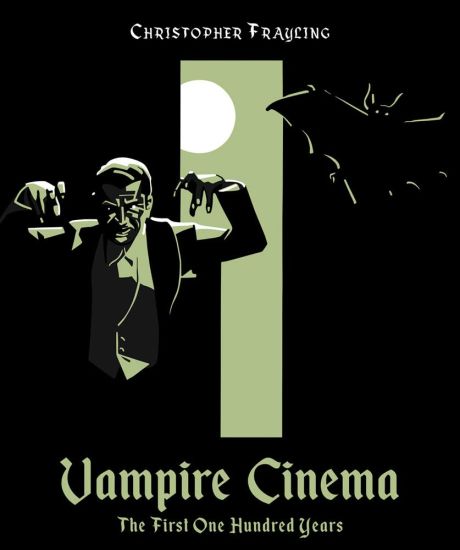
Vampire Cinema

Vampire Cinema

Christopher Frayling

Reel Art Press
2022
sidottu
A century of classic vampire cinema--in posters, stills and artwork--from Murnau to True Blood and beyondThis visual feast celebrates classic vampire cinema--mainstream and niche--through the many colorful ways in which the key films have been marketed and consumed.F.W. Murnau's haunting film Nosferatu had its premiere in Berlin in March 1922. Bram Stoker's widow, Florence, tried hard to sue the production company for breach of copyright but had to settle in the end for a court order to destroy all prints and negatives. The film kept resurrecting, though, and is now considered the first, and one of the greatest, of all vampire movies--the founder of a dynasty of prints of darkness.The bloodline has spread from Nosferatu to Hollywood's Dracula and progeny (1931-48); from Hammer's Dracula/Horror of Dracula and sequels (1958-74) to versions of Sheridan Le Fanu's story "Carmilla" and other lesbian vampires (1970-2020); from the bestselling novels 'Salem's Lot and Interview with the Vampire to vampires who have shed their capes, hereditary titles and period trappings to become assorted smalltown oddballs, addicts, delinquents, psychopaths, rednecks, fashionistas, gay icons, comedians and even comic-book heroes (1975-2022).This book is dripping with stills, posters, artworks, press books--many of which have not seen the light of day for a very long time--and is authored by cultural historian and connoisseur of the Gothic Christopher Frayling, who has been called "the Van Helsing de nos jours."Christopher Frayling (born 1946) is a recognized authority on Gothic fiction and horror movies. His study Vampyres (1978, 1990, 2016) and his classic four-part television series Nightmare: The Birth of Horror (1996) have helped to move Gothic horror from margin to mainstream. He is the author of Frankenstein and Once upon a Time in the West.
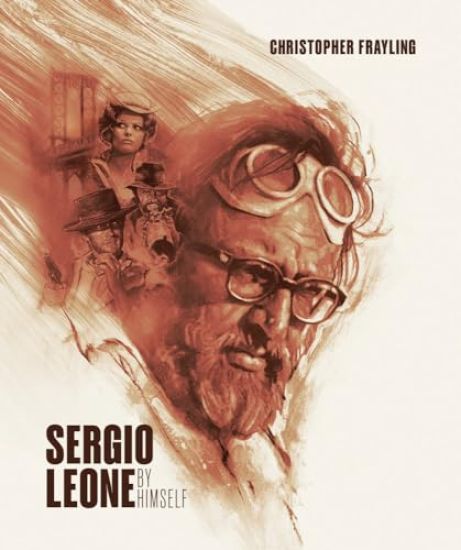
Sergio Leone: By Himself

Sergio Leone: By Himself

Christopher Frayling

Reel Art Press
2024
sidottu
Compiled writings and interviews from the director who pioneered the "spaghetti Western" film genreBetween the worldwide box-office success of his Dollars trilogy and his untimely death in April 1989 at the age of 60, Sergio Leone gave several interviews to selected film journalists. He also wrote a series of thoughtful essays about his cinematic influences such as Charlie Chaplin, Federico Fellini, Henry Fonda, Robert Aldrich and John Ford. To accompany his final film, Once Upon a Time in America (1984), he published several articles about his obsessive quest to make the film and how it eventually happened. Most of these writings have never before appeared in English; as a collection they have never before appeared anywhere. Sergio Leone by Himself, compiled by Leone's acclaimed biographer Christopher Frayling, gathers all his significant interviews, essays and articles to create a director's-eye view of a body of work that over the past half century has had a decisive influence on world cinema. The book is illustrated with previously unseen photographs, posters and related ephemera from the Leone family collection and the Angelo Novi archive, both now housed in the Cineteca in Bologna.The architect of cinema's American West, Sergio Leone (1929-89) did not speak English. His "spaghetti Westerns" were filmed in Italy and Spain and received both critique and acclaim for their violence, grittiness and camera work. Leone is best remembered for his two "trilogies'' of films: the Dollars trilogy starring Clint Eastwood and his Once Upon a Time films.Christopher Frayling is the leading scholar on the life and legacy of Sergio Leone and is the author of his bestselling biography, Something to Do with Death. He served as rector of the Royal College of Art from 1996 to 2009 and as chairman of Arts Council England from 2005 to 2009. As Sergio Leone once said to him, "it took an Englishman to take my films seriously."