Kirjojen hintavertailu. Mukana 12 016 292 kirjaa ja 12 kauppaa.

Kirjahaku

Etsi kirjoja tekijän nimen, kirjan nimen tai ISBN:n perusteella.

9 kirjaa tekijältä Christopher Gill

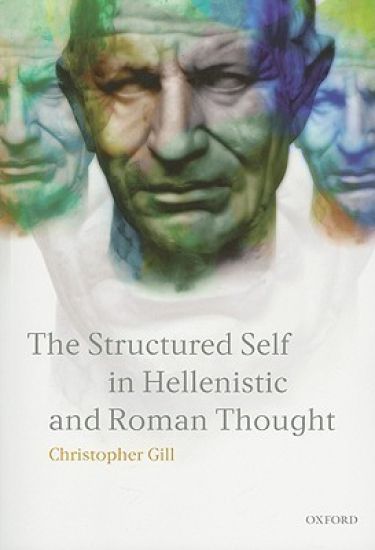
The Structured Self in Hellenistic and Roman Thought

The Structured Self in Hellenistic and Roman Thought

Christopher Gill

Oxford University Press
2006
sidottu
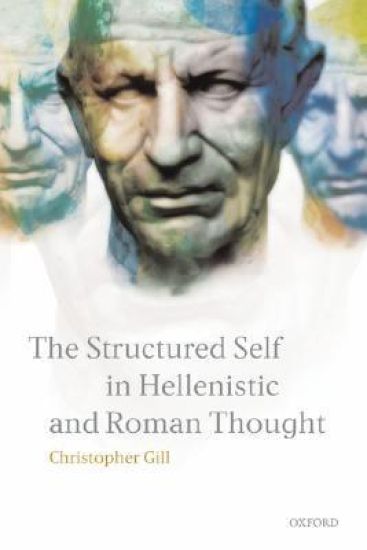
Christopher Gill offers a new analysis of what is innovative in Hellenistic - especially Stoic and Epicurean - philosophical thinking about selfhood and personality. His wide-ranging discussion of Stoic and Epicurean ideas is illustrated by a more detailed examination of the Stoic theory of the passions and a new account of the history of this theory. His study also tackles issues about the historical study of selfhood and the relationship between philosophy and literature, especially the presentation of the collapse of character in Plutarch's Lives, Senecan tragedy, and Virgil's Aeneid. As all Greek and Latin is translated, this book presents original ideas about ancient concepts of personality to a wide range of readers.
Learning to Live Naturally

Learning to Live Naturally

Christopher Gill

Oxford University Press
2022
sidottu
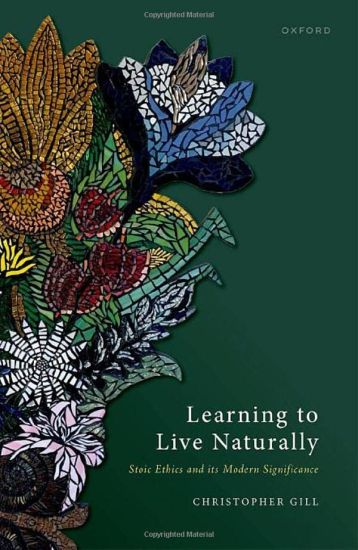
At a time of unprecedented interest in Stoicism among scholars and the general public, this book offers a sustained examination of the core Stoic ethical claims and their significance for modern moral theory. The first part considers the Stoic ideas of happiness as the life according to nature and virtue as expertise in leading a happy life and explores the senses of 'nature' (both human and universal) relevant for ethics. The second part studies Stoic thinking on ethical development (learning to live naturally), bringing out the interconnections between growth in ethical understanding, forming social relationships, and emotional responses. The third part discusses how Stoic ethics, as interpreted here, can contribute to contemporary moral theory, especially virtue ethics. It suggests that Stoic thinking on the virtue-happiness relationship offers a cogent alternative to Aristotle, currently the main ancient prototype for virtue ethical theory, and it explores ways in which Stoic ideas on human and universal nature can contribute to modern ethical debates, notably on how to respond effectively to the pressing challenge of climate breakdown. It also highlights the value of Stoic guidance for virtue ethics as well as contemporary 'life-guidance'. A further distinctive feature of the book is the close and extended study of key sources for Stoic ethics, including Cicero's On Ends and On Duties, which enables readers of different kinds to interpret these source for themselves.
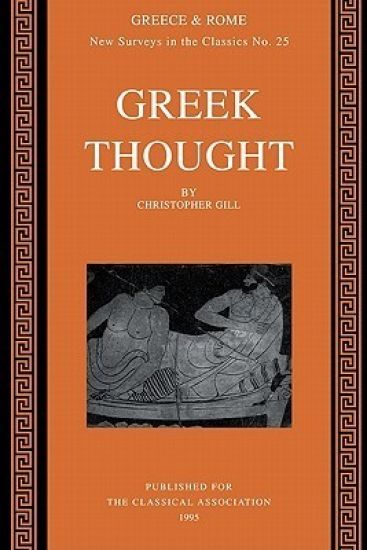
Greek Thought

Greek Thought

Christopher Gill

Oxford University Press
1995
pokkari
Four related themes in Greek thought are examined in this book: (1) personality and self, (2) ethics and values (3) individuals and communities, and (4) the idea of nature as a moral norm. Although the focus is on Greek philosophy (the Presocratics, Plato, Aristotle, and the Hellenistic period), links between philosophy and literature or the wider culture are also explored. The book combines a survey of recent scholarship on these topics with the author's own interpretations. It can be used by students or teachers of classical studies or philosophy as an introduction to key themes and issues in Greek ethics or psychology. One aspect of the subject given special emphasis is the relationship between ancient and modern ideas on the issues treated here. The book closes with a selective bibliography on modern work on Greek philosophy.
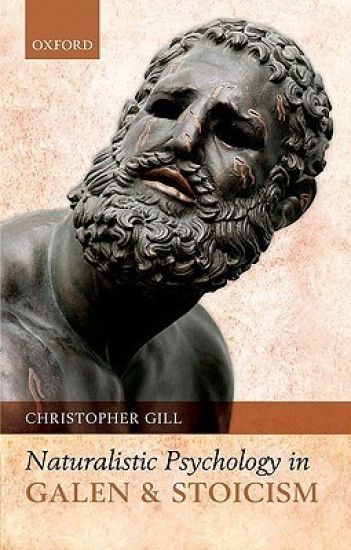
Naturalistic Psychology in Galen and Stoicism

Naturalistic Psychology in Galen and Stoicism

Christopher Gill

Oxford University Press
2010
sidottu
This is a study of the psychological ideas of Galen (AD 129-c.210, the most important medical writer in antiquity) and Stoicism (a major philosophical theory in the Hellenistic and Roman periods), which Galen discussed extensively. Christopher Gill's main topics are psychology and bodily form, psychological functions, especially reason and emotion, and the therapy of emotions, and his aim is to provide both an informative scholarly discussion and an original analysis of this material. He claims that the two theories are complementary in ways not recognized in antiquity and that the combination of their ideas would have produced a powerful account of psychology that still merits the attention of modern readers.
The Structured Self in Hellenistic and Roman Thought

The Structured Self in Hellenistic and Roman Thought

Christopher Gill

Oxford University Press
2009
nidottu
Christopher Gill offers a new analysis of what is innovative in Hellenistic - especially Stoic and Epicurean - philosophical thinking about selfhood and personality. His wide-ranging discussion of Stoic and Epicurean ideas is illustrated by a more detailed examination of the Stoic theory of the passions and a new account of the history of this theory. His study also tackles issues about the historical study of selfhood and the relationship between philosophy and literature, especially the presentation of the collapse of character in Plutarch's Lives, Senecan tragedy, and Virgil's Aeneid. As all Greek and Latin is translated, this book presents original ideas about ancient concepts of personality to a wide range of readers.
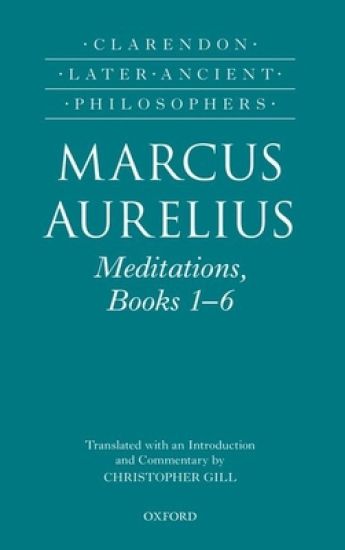
Marcus Aurelius: Meditations, Books 1-6

Marcus Aurelius: Meditations, Books 1-6

Christopher Gill

Oxford University Press
2013
sidottu
Christopher Gill provides a new translation and commentary on the first half of Marcus Aurelius' Meditations, and a full introduction to the Meditations as a whole. The Meditations constitute a unique and remarkable work, a reflective diary or notebook by a Roman emperor, that is based on Stoic philosophy but presented in a highly distinctive way. Gill focuses on the philosophical content of the work, especially the question of how far it is consistent with Stoic theory as we know this from other sources. He argues that the Meditations are largely consistent with Stoic theory--more than has been often supposed. The work draws closely on core themes in Stoic ethics and also reflects Stoic thinking on the links between ethics and psychology or the study of nature. To make sense of the Meditations, it is crucial to take into account its overall aim, which seems to be to help Marcus himself take forward his own ethical development by creating occasions for reflection on key Stoic themes that can help to guide his life. This new edition will help students and scholars of ancient philosophy make sense of a work whose intellectual content and status have often been found puzzling. Along with volumes in the Clarendon Later Ancient Philosophers series on Epictetus and Seneca, it will help to chart the history of Stoic philosophy in the first and second century AD. The translation is designed to be accessible to modern readers and all Greek and Latin are translated in the introduction and commentary.
Plato's Atlantis Story

Plato's Atlantis Story

Christopher Gill

Liverpool University Press
2017
nidottu
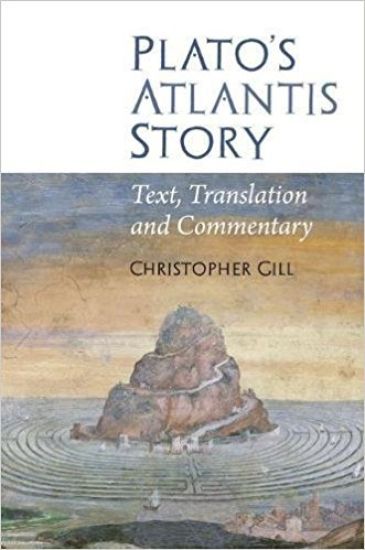
This book aims to bring together all the evidence relevant for understanding Plato’s Atlantis Story, providing the Greek text of the relevant Platonic texts (the start of Plato’s Timaeus and the incomplete Critias), together with a commentary on language and content, and a full vocabulary of Greek words. This essential work also offers a new translation of these texts and a full introduction. The book has two special objectives. The introduction offers a full-scale interpretative reading of the Atlantis story, focused on the philosophical meaning of the story and the significance of Plato’s presentation, and responding to recent scholarly discussion of these questions. In conjunction with the new translation, this introduction provides a point of entry to a fascinating story for a wide range of readers. The introduction also discusses the question whether the story had a factual basis, and assesses possible links with Minoan Crete. Secondly, the Greek text (the Oxford Classical text) and commentary are juxtaposed and presented in ‘bite-size’ chunks making it easy to use and helpful especially for students using the book to improve their Greek. The notes provide full grammatical and linguistic help as well as pointers on the philosophical content and presentation, supported by the translation and complete vocabulary of Greek terms. The book is a second edition of one published in 1980. This edition has a new translation, a much fuller introduction, revised and updated notes and a new commentary format.
Plato's Atlantis Story

Plato's Atlantis Story

Christopher Gill

Liverpool University Press
2017
sidottu
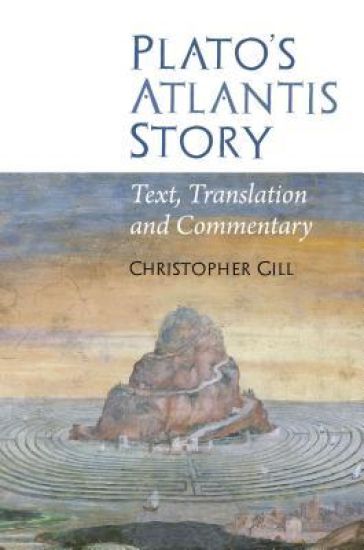
This book aims to bring together all the evidence relevant for understanding Plato’s Atlantis Story, providing the Greek text of the relevant Platonic texts (the start of Plato’s Timaeus and the incomplete Critias), together with a commentary on language and content, and a full vocabulary of Greek words. This essential work also offers a new translation of these texts and a full introduction. The book has two special objectives. The introduction offers a full-scale interpretative reading of the Atlantis story, focused on the philosophical meaning of the story and the significance of Plato’s presentation, and responding to recent scholarly discussion of these questions. In conjunction with the new translation, this introduction provides a point of entry to a fascinating story for a wide range of readers. The introduction also discusses the question whether the story had a factual basis, and assesses possible links with Minoan Crete. Secondly, the Greek text (the Oxford Classical text) and commentary are juxtaposed and presented in ‘bite-size’ chunks making it easy to use and helpful especially for students using the book to improve their Greek. The notes provide full grammatical and linguistic help as well as pointers on the philosophical content and presentation, supported by the translation and complete vocabulary of Greek terms. The book is a second edition of one published in 1980. This edition has a new translation, a much fuller introduction, revised and updated notes and a new commentary format.