In 1939, Christopher Isherwood and W H Auden emigrated together to the United States. This title describes Isherwood's search for a new life in California; his work as a screenwriter in Hollywood, his pacifism during World War II and his friendships with such gifted artists and intellectuals as Garbo, Chaplin, Thomas Mann, and more.
Best known for The Berlin Stories--the inspiration for the Tony and Academy Award-winning musical Cabaret--Christopher Isherwood (1904-1986) was a major figure in twentieth-century fiction and the gay rights movement. Where Joy Resides is the perfect introduction to the author's essential writings. This collection presents two complete novels, Prater Violet and A Single Man; episodes from three other novels, Goodbye to Berlin, Down There on a Visit, and Lions and Shadows; along with excerpts from Isherwood's nonfiction works, Exhumations, Kathleen and Frank, and My Guru and His Disciple.
The love story between Christopher Isherwood and Don Bachardy--in their own words The English novelist and screenwriter Christopher Isherwood was already famous as the author of Goodbye to Berlin when he met Don Bachardy, a California teenager, on the beach in Santa Monica in 1952. Within a year, they began to live together as an openly gay couple, defying convention in the closeted world of Hollywood. Isherwood was forty-eight; Bachardy was eighteen. The Animals is the testimony in letters to their extraordinary partnership, which lasted until Isherwood's death in 1986--despite the thirty year age gap, affairs and jealousy (on both sides), the pressures of increasing celebrity, and the disdain of twentieth-century America for love between two men. The letters reveal the private world of the Animals: Isherwood was "Dobbin," a stubborn old workhorse; Bachardy was the rash, playful "Kitty." Isherwood had a gift for creating a safe and separate domestic milieu, necessary for a gay man in mid-twentieth-century America. He drew Bachardy into his semi-secret realm, nourished Bachardy's talent as a painter, and launched him into the artistic career that was first to threaten and eventually to secure their life together. The letters also tell of public achievements--the critical acclaim for A Single Man, the commercial success of Cabaret--and the bohemian whirl of friendships in Los Angeles, London, and New York with such stars as Truman Capote, Julie Harris, David Hockney, Vanessa Redgrave, Gore Vidal, and Tennessee Williams. Bold, transgressive, and playful, The Animals articulates the devotion, in tenderness and in storms, between two uniquely original spirits.
The love story between Christopher Isherwood and Don Bachardy--in their own words The English novelist and screenwriter Christopher Isherwood was already famous as the author of Goodbye to Berlin when he met Don Bachardy, a California teenager, on the beach in Santa Monica in 1952. Within a year, they began to live together as an openly gay couple, defying convention in the closeted world of Hollywood. Isherwood was forty-eight; Bachardy was eighteen. The Animals is the testimony in letters to their extraordinary partnership, which lasted until Isherwood's death in 1986--despite the thirty year age gap, affairs and jealousy (on both sides), the pressures of increasing celebrity, and the disdain of twentieth-century America for love between two men. The letters reveal the private world of the Animals: Isherwood was "Dobbin," a stubborn old workhorse; Bachardy was the rash, playful "Kitty." Isherwood had a gift for creating a safe and separate domestic milieu, necessary for a gay man in mid-twentieth-century America. He drew Bachardy into his semi-secret realm, nourished Bachardy's talent as a painter, and launched him into the artistic career that was first to threaten and eventually to secure their life together. The letters also tell of public achievements--the critical acclaim for A Single Man, the commercial success of Cabaret--and the bohemian whirl of friendships in Los Angeles, London, and New York with such stars as Truman Capote, Julie Harris, David Hockney, Vanessa Redgrave, Gore Vidal, and Tennessee Williams. Bold, transgressive, and playful, The Animals articulates the devotion, in tenderness and in storms, between two uniquely original spirits.
In November 1929, Christopher Isherwood - determined to become a 'permanent foreigner' - packed a rucksack and two suitcases and left England on a one-way ticket for Berlin. With incredible candour and wit, Isherwood recalls the decadence of Berlin's night scene and his route to sexual liberation.
An indispensable memoir by one of the most prominent writers of his generationOriginally published in 1976, Christopher and His Kind covers the most memorable ten years in the writer's life--from 1928, when Christopher Isherwood left England to spend a week in Berlin and decided to stay there indefinitely, to 1939, when he arrived in America. His friends and colleagues during this time included W. H. Auden, Stephen Spender, and E. M. Forster, as well as colorful figures he met in Germany and later fictionalized in his two Berlin novels--and who appeared again, fictionalized to an even greater degree, in I Am a Camera and Cabaret. What most impressed the first readers of this memoir, however, was the candor with which he describes his life in gay Berlin of the 1930s and his struggles to save his companion, a German man named Heinz, from the Nazis. An engrossing and dramatic story and a fascinating glimpse into a little-known world, Christopher and His Kind remains one of Isherwood's greatest achievements.
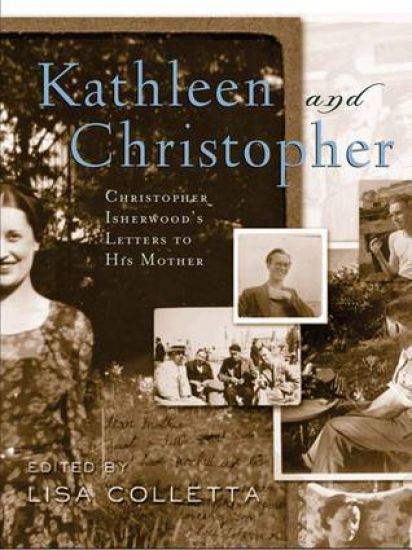
Opening a window into the most fascinating and, in many ways, most mysterious period in Christopher Isherwood's life, Kathleen and Christopher collects more than one hundred previously unpublished letters the young author wrote to his mother between 1935 and 1940. Composed while he was still a struggling writer, they offer a brilliant eyewitness account of Europe on the brink of war and an intimate look at the early career of a major literary figure. Because Isherwood destroyed his diaries from these years, these letters—published for the first time and edited and introduced by Lisa Colletta—provide one of the few records of this part of his life not filtered through the lens of time and memory. They contain requests for money and books, descriptions of his travels, stories of his friends W. H. Auden and Stephen Spender, reactions to the critical reception of his Berlin Stories, and a tense account of his failed attempt to save his lover Heinz from conscription into the Nazi military. The final letters in this volume document Isherwood's journey to Los Angeles, where he permanently settled. Also included are thirty images from Isherwood's personal photo album and reproductions of postcards from his international travels. Warm, confiding, and sometimes quite caustic, the letters also reveal a closer affection between the young Isherwood and his mother than his biographers have portrayed. While Isherwood acknowledged that it took him a long time to come to terms with his mother's influence on his life, the letters in Kathleen and Christopher dispute the prevalent idea that theirs was a relationship rife with conflict. Isherwood's everyday correspondence, written in extraordinary times, reveals a complex yet wholly recognizable and very close bond between mother and son. She was for him, in turns, an agent, a sounding board, and an unbreakable connection to England. Lisa Colletta is assistant professor of English at Babson College. She is the author of Dark Humor and Social Satire in the Modern British Novel.
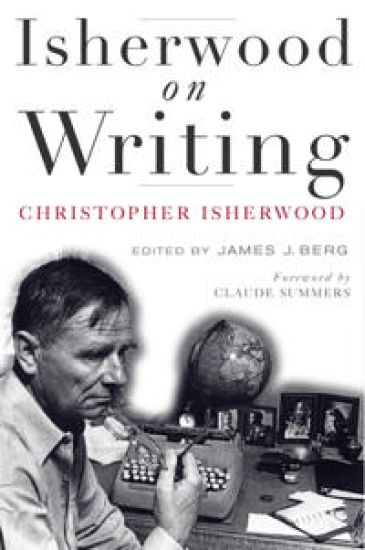
In the 1960s, Christopher Isherwood gave an unprecedented series of lectures at California universities on the theme “A Writer and His World.” During this time Isherwood, who would liberate the memoir and become the founding father of modern gay writing, spoke openly for the first time about his craft—on writing for film, theater, and novels—and on spirituality. Isherwood on Writing brings these public addresses together to reveal a distinctly—and surprisingly—American Isherwood. Given at a critical time in Isherwood’s career, these lectures mark the era when he turned from fiction to memoir. In free-flowing, wide-ranging discussions, he reflects on such topics as why writers write, what makes a novel great, and what influenced his own work. Isherwood talks about his working relationship with W. H. Auden; his literary friendships with E. M. Forster, Virginia Woolf, Stephen Spender, Aldous Huxley, and Somerset Maugham; and his work in the film industry in London and Hollywood. He also explores uncharted territory in candid comments on his own work, something not contained in his diaries. Isherwood on Writing uncovers an important and often-misunderstood time in Isherwood’s life in America. The lectures present, in James J. Berg’s words, “an example of a man, comfortable in his own sexuality and self, trying to talk about himself and his own life in a society that is not yet ready to hear the whole story.” A major figure in twentieth-century fiction and the gay rights movement, Christopher Isherwood (1904–1986) is the author of many books, including A Single Man and Down There on a Visit, available from Minnesota. James J. Berg is dean of liberal arts and sciences at Lake Superior College in Duluth, Minnesota. He is editor, with Chris Freeman, of The Isherwood Century: Essays on the Life and Work of Christopher Isherwood (winner of the Lambda Award) and Conversations with Christopher Isherwood. Claude Summers is professor emeritus of English at the University of Michigan, Dearborn and author of many works, including Gay Fictions: Wilde to Stonewall.
Candid and revealing, the final volume of Christopher Isherwood's diaries brings together his thoughts on life, love, and death. Beginning in the period of his life when he wrote Kathleen and Frank, his first intensely personal book, Liberation: Diaries 1970-1983 intimately and wittily records Isherwood's immersion in the 1970s art scene in Los Angeles, New York, and London--a world peopled by the likes of Robert Rauschenberg, Ed Ruscha, Andy Warhol, and David Hockney, as well as his Broadway writing career, which brought him in touch with John Huston, Merchant and Ivory, John Travolta, John Voight, Elton John, David Bowie, Joan Didion, and Armistead Maupin. With a preface by Edmund White, Liberation is a rich and engaging final memoir by one of the most celebrated writers of his generation.
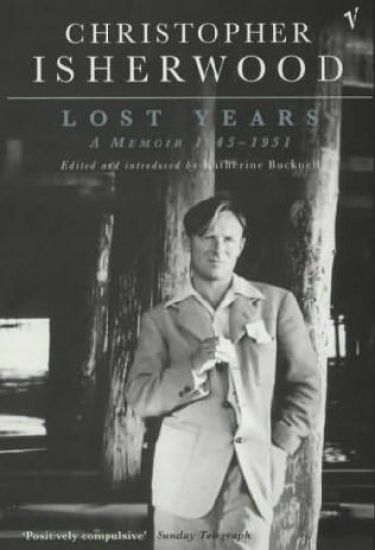
Christopher Isherwood settled in California in 1939 and spent the war years writing for Hollywood, but by 1945 he had all but ceased to write fiction and even abandoned his habit of keeping a diary. Looking back from the 1970s, Isherwood recreated these years from personal memories to form a remarkably honest mixture of private and social history.
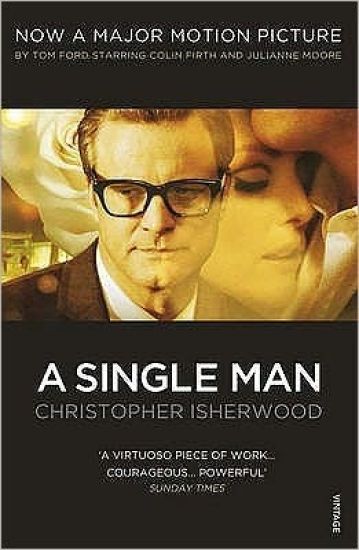
Isherwood's short, poignant novel is a tender and wistful love story Celebrated as a masterpiece from its first publication, A Single Man is the story of George, an English professor in suburban California left heartbroken after the death of his lover, Jim.
In this brilliantly perceptive novel, a middle aged professor living in California is alienated from his students by differences in age and nationality, and from the rest of society by his homosexuality. Isherwood explores the depths of the human soul and its ability to triumph over loneliness, alienation and loss.
The scene is 1920s Kensington and Philip and Joan are testing the very limits of politeness and restraint as they fight to expunge the oppression of their mother - by whatever means necessary.
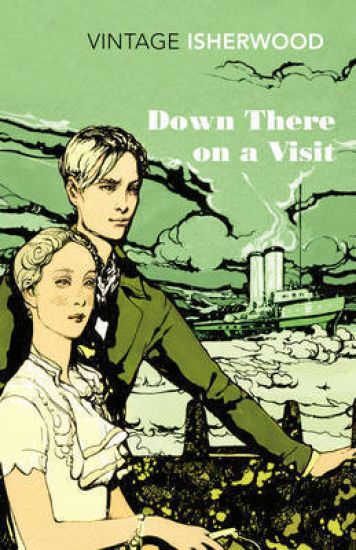
Four portraits, four settings, four narrators, all known as 'Christopher Isherwood'. Often regarded as the best of his novels, Down There on a Visit tells the vivid stories of Isherwood's life that, together with The Berlin Novels, were to have comprised his great unfinished epic novel.
The First World War is over. Tall, bony and awkward he finds himself torn between a desire to emulate his heroic father, who led a life of quiet sacrifice, and resentment toward his father's roguish friend Edward Blake, who survived the war only to throw himself into gay life in Berlin.
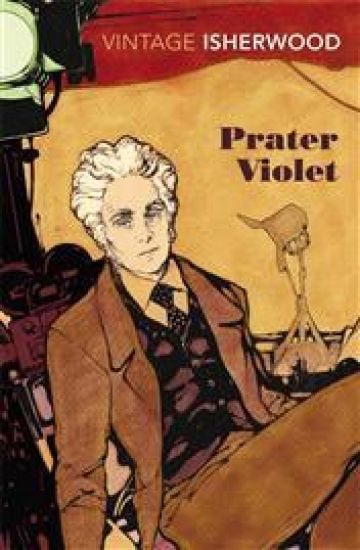
Prater Violet resembles episodes in Goodbye to Berlin and keeps up the same high level of excellence' - Edmund WilsonAn impatient phone call from the temperamental Austrian director, Friedrich Bergmann, introduces a young Christopher Isherwood to the film industry.
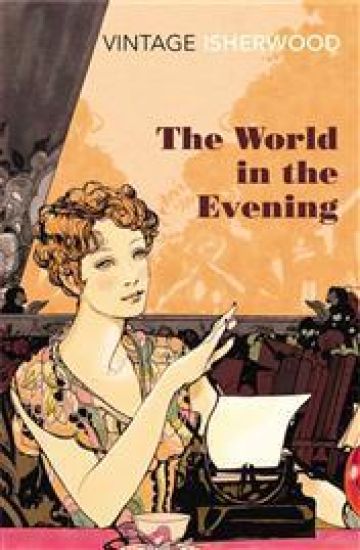
At a party in the Hollywood Hills, Stephen Monk finds his wife in the arms of another man. Betrayed and furious, he packs his belongings and returns to the home he was born in. But most of all, the memory of his lost love, Elizabeth Rydal, haunts him. Can he forgive his wife, and most importantly, himself?
WITH AN INTRODUCTION BY PICO IYERIn September 1947, long before mass tourism and with no knowledge of Spanish, Christopher Isherwood and William Caskey left for a six-month tour of Colombia, Ecuador, Peru, Bolivia, and Argentina.
This is the story of Christopher Isherwood's parents - their meeting in 1895, marriage in 1903 after his father had returned from the Boer War, and his father's death in an assault on Ypres in 1915, which left his mother a widow until her own death in 1960.