Kirjojen hintavertailu. Mukana 11 342 296 kirjaa ja 12 kauppaa.

Kirjahaku

Etsi kirjoja tekijän nimen, kirjan nimen tai ISBN:n perusteella.

8 kirjaa tekijältä Christopher J. Lee

Kwame Anthony Appiah

Kwame Anthony Appiah

Christopher J. Lee

Routledge
2021
sidottu
This clear and engaging introduction is the first book to assess the ideas of Kwame Anthony Appiah, the Ghanaian-British philosopher who is a leading public intellectual today. The book focuses on the theme of ‘identity’ and is structured around five main topics, corresponding to the subjects of his major works: race, culture, liberalism, cosmopolitanism, and moral revolutions. This helpful book:• Teaches students about the sources, opportunities, and dilemmas of personal and social identity—whether on the basis of race, gender, sexuality, or class, among others—in the purview of Appiah. • Locates Appiah within a broader tradition of intellectual engagement with these issues—involving such thinkers as W. E. B. Du Bois, John Stuart Mill, and Martha Nussbaum—and, thus, how Appiah is both an inheritor and innovator of preceding ideas. • Seeks to inspire students on how to approach and negotiate identity politics in the present. This book ultimately imparts a more diverse and wider-reaching geographic sense of philosophy through the lens of Appiah and his intellectual contributions, as well as emphasizing the continuing social relevance of philosophy and critical theory more generally to everyday life today.
Kwame Anthony Appiah

Kwame Anthony Appiah

Christopher J. Lee

Routledge
2021
nidottu
This clear and engaging introduction is the first book to assess the ideas of Kwame Anthony Appiah, the Ghanaian-British philosopher who is a leading public intellectual today. The book focuses on the theme of ‘identity’ and is structured around five main topics, corresponding to the subjects of his major works: race, culture, liberalism, cosmopolitanism, and moral revolutions. This helpful book:• Teaches students about the sources, opportunities, and dilemmas of personal and social identity—whether on the basis of race, gender, sexuality, or class, among others—in the purview of Appiah. • Locates Appiah within a broader tradition of intellectual engagement with these issues—involving such thinkers as W. E. B. Du Bois, John Stuart Mill, and Martha Nussbaum—and, thus, how Appiah is both an inheritor and innovator of preceding ideas. • Seeks to inspire students on how to approach and negotiate identity politics in the present. This book ultimately imparts a more diverse and wider-reaching geographic sense of philosophy through the lens of Appiah and his intellectual contributions, as well as emphasizing the continuing social relevance of philosophy and critical theory more generally to everyday life today.
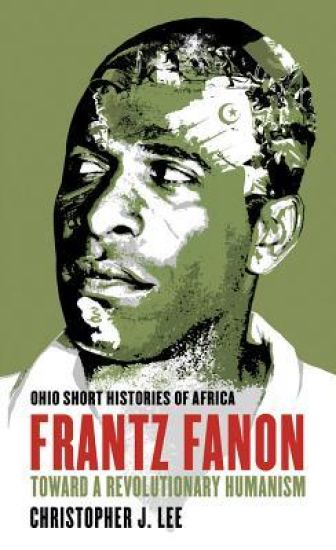
Frantz Fanon

Frantz Fanon

Christopher J. Lee

Ohio University Press
2015
pokkari
Psychiatrist, philosopher, and revolutionary, Frantz Fanon is one of the most important intellectuals of the twentieth century. He presented powerful critiques of racism, colonialism, and nationalism in his classic books, Black Skin, White Masks (1952) and The Wretched of the Earth (1961). This biography reintroduces Fanon for a new generation of readers, revisiting these enduring themes while also arguing for those less appreciated—namely, his anti-Manichean sensibility and his personal ethic of radical empathy, both of which underpinned his utopian vision of a new humanism. Written with clarity and passion, Christopher J. Lee's account ultimately argues for the pragmatic idealism of Frantz Fanon and his continued importance today.
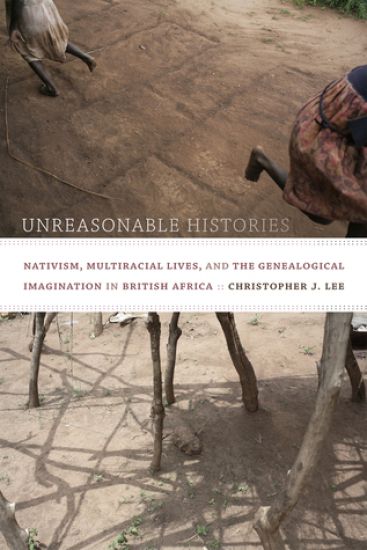
Unreasonable Histories

Unreasonable Histories

Christopher J. Lee

Duke University Press
2014
sidottu
In Unreasonable Histories, Christopher J. Lee unsettles the parameters and content of African studies as currently understood. At the book's core are the experiences of multiracial Africans in British Central Africa-contemporary Malawi, Zimbabwe, and Zambia-from the 1910s to the 1960s. Drawing on a spectrum of evidence-including organizational documents, court records, personal letters, commission reports, popular periodicals, photographs, and oral testimony-Lee traces the emergence of Anglo-African, Euro-African, and Eurafrican subjectivities which constituted a grassroots Afro-Britishness that defied colonial categories of native and non-native. Discriminated against and often impoverished, these subaltern communities crafted a genealogical imagination that reconfigured kinship and racial descent to make political claims and generate affective meaning. But these critical histories equally confront a postcolonial reason that has occluded these experiences, highlighting uneven imperial legacies that still remain. Based on research in five countries, Unreasonable Histories ultimately revisits foundational questions in the field, to argue for the continent's diverse heritage and to redefine the meanings of being African in the past and present-and for the future.
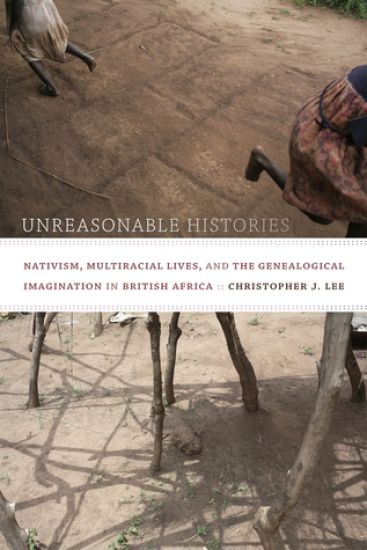
Unreasonable Histories

Unreasonable Histories

Christopher J. Lee

Duke University Press
2014
pokkari
In Unreasonable Histories, Christopher J. Lee unsettles the parameters and content of African studies as currently understood. At the book's core are the experiences of multiracial Africans in British Central Africa-contemporary Malawi, Zimbabwe, and Zambia-from the 1910s to the 1960s. Drawing on a spectrum of evidence-including organizational documents, court records, personal letters, commission reports, popular periodicals, photographs, and oral testimony-Lee traces the emergence of Anglo-African, Euro-African, and Eurafrican subjectivities which constituted a grassroots Afro-Britishness that defied colonial categories of native and non-native. Discriminated against and often impoverished, these subaltern communities crafted a genealogical imagination that reconfigured kinship and racial descent to make political claims and generate affective meaning. But these critical histories equally confront a postcolonial reason that has occluded these experiences, highlighting uneven imperial legacies that still remain. Based on research in five countries, Unreasonable Histories ultimately revisits foundational questions in the field, to argue for the continent's diverse heritage and to redefine the meanings of being African in the past and present-and for the future.
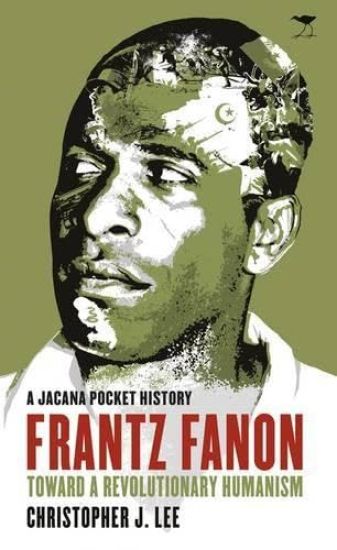
Frantz Fanon

Frantz Fanon

Christopher J. Lee

JACANA MEDIA (PTY) LTD
2016
nidottu
Psychiatrist, revolutionary, writer and philosopher, Frantz Fanon (1925-1961) played many roles during his brief life. Born on the island of Martinique, he died in the United States from cancer, following a meteoric career that took him to France, Algeria, Tunisia, and numerous places in between. Best known for Black Skin, White Masks (1952) and The Wretched of the Earth (1961), Fanon drew upon psychology, European philosophy, and his own experience to articulate radical critiques of racism, colonialism, and nationalism that still vitally inform understandings of these issues. Yet Fanon remains controversial, given his advocacy of violent struggle, and, consequently, is often misunderstood. This biography - the most succinct and straightforward to date - demythologises Fanon by situating his life and ideas within the historical circumstances he encountered. Synthesising a range of secondary literature with readings of his work, it elevates enduring aspects of Fanon's legacy, while also countering interpretations of his writing that have granted uncritical omniscience to his views. Written with clarity and passion, Christopher J. Lee's account ultimately argues for the complexity of Frantz Fanon and his continued importance today.
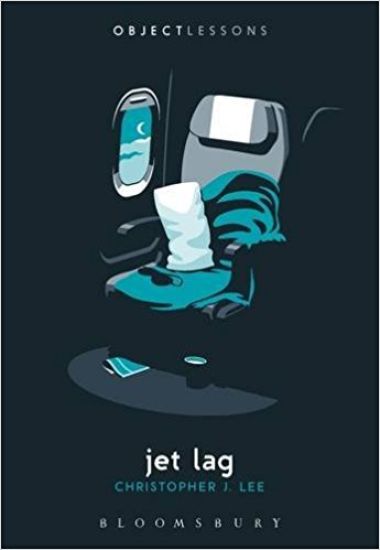
Jet Lag

Jet Lag

Christopher J. Lee

Bloomsbury Academic USA
2017
nidottu
Object Lessons is a series of short, beautifully designed books about the hidden lives of ordinary things. Jet lag is a momentary condition resulting from the human body and its inner clock being pitched against the time-leaping effects of modern aviation. But more than that, it is a situation that explains time, technology, and the human body. Jet lag epitomizes the accelerated world we live in. It makes the speed and discomfort of globalization tangible on a personal level. Tracing physiological, temporal, technological, and cultural meanings, Christopher J. Lee’s Jet Lag ponders our intrinsic human limits in the face of modern innovation, revealing the latent costs of global cosmopolitanism today.Object Lessons is published in partnership with an essay series in The Atlantic.