Kirjahaku
Etsi kirjoja tekijän nimen, kirjan nimen tai ISBN:n perusteella.
29 kirjaa tekijältä Christopher Lee
Five people on a hot summer evening train to Bath: a stout matron, a kilted Scot and his fiancee, a scantily-clad publicist and a drowsy book-reading bachelor.Before the weekend is done, one of them will be dead, killed without motive and without reason. Radiating out from the murder is a web of deception, high-class prostitution, vanity, adultery, ambition and death. Stepping carefully from one lie to another comes Detective Inspector James Boswell Hodge Leonard and his sergeant, the intriguing Madelaine Jack. To Leonard, this is much more than a murder case. For he was the fifth person on that train...
The Killing of Cinderella is the third in Christopher Lee's well-received series of Bath Detective Mysteries starring Inspector James Boswell Hodge Leonard. To Bath for the Christmas panto comes former Bond girl Lynda Elström - all curves and blond hair, though these days mostly famous for being famous. And yet she fails to appear for the panto's photo-call. The following morning she does show up, centre-stage, but hanging from the Fairy Godmother's wire. Irritating Lynda might have been... but who would want to kill her? Inspector Leonard has no shortage of people to interview. 'Prince Charming', played by Jason Williams, the ageless balladeer who bought his mum a bungalow with his first gold disc; Maurice Poulson, the director, scathing, cruel and brilliant; Curly Weekes from Saturday morning TV, the first black Buttons Bath has ever seen; Rudi Sharpe and the Rostow twins, the ugliest of Ugly Sisters; and Lynda's first husband, who just happened to be in Bath on the night in question ... 'Christopher Lee brings the actors and agents to life with an eye for detail, realistic dialogue and an intimate knowledge of Bath... Bang up to date, a good read for any crime fans and if you know Bath it's even more absorbing.'Philip Horton, Bath Chronicle.

Horatio Nelson is Britain's greatest naval hero; Trafalgar, in 1805, her greatest naval victory. Nelson and Napoleon, first published in 2005, is the story of how Britannia came to rule the waves for more than a hundred years. Christopher Lee re-examines the myths of Trafalgar, plotting Napoleon's overweening ambition to invade England and Nelson's single-minded dedication to seeking glory. He shows how Villeneuve had worked out Nelson's famous plan of attack, and demonstrates how the battle could easily have turned the other way. Lee also paints a vivid picture of the protagonists: particularly of the creation of a national hero in Nelson and his intense rivalry with Napoleon. 'Christopher Lee's vivid and painstaking account cuts through the folklore, replacing it with wonderful insights into early nineteenth-century Britain and Europe.' Daily Express
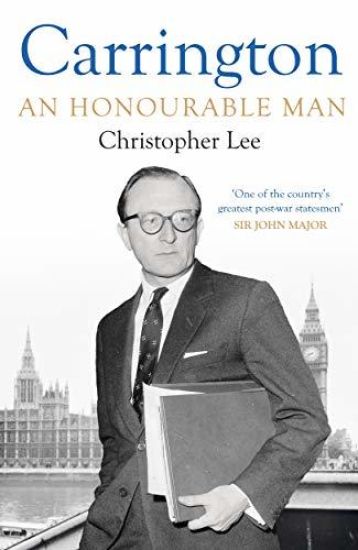
"One of the country's greatest post-war statesmen" Sir John MajorLord Carrington was Margaret Thatcher's Foreign Secretary when the Argentinians invaded the Falklands in 1982. Absent in Israel on the eve of the invasion, he promptly resigned since it was, he said, a point of honour. He is seen by many today as the last of his breed in politics, an honourable man committed to public service.The descendant of a famous banking family, Carrington served as a minister in every Conservative government from Churchill to Thatcher. In this full biography, authorised but not read by the subject, author of This Sceptred Isle Christopher Lee offers a fascinating portrait of a Tory icon whose career is a window into post-war British politics and life as a politician and diplomat.He could be viewed as a typical Tory grandee, yet he disliked the Party, claiming late in his life that he was no longer a member, and could be fiercely independent. And there were recurring oddities in his career. He was forced to offer his resignation to Churchill for bad judgement over the Crichel Down Affair. As Navy Minister he was caught in the glare of a spy ring, and, though Defence Secretary, kept out of the loop of the military operation which culminated in Bloody Sunday.Margaret Thatcher said there was something innately reassuring walking into a room where Carrington stood. Was this a barbed compliment? Did he in fact lack the steel required of a modern politician? He certainly represents a bygone era, as this vivid and expert biography shows.
The history of Asian American literature reveals the ongoing attempt to work through the fraught relationship between identity politics and literary representation. This relationship is especially evident in literary works which claim that their content represents the socio-historical world. The Semblance of Identityargues that the reframing of the field as a critical, rather than identity-based, project nonetheless continues to rely on the logics of identity. Drawing on the writings of philosopher and literary critic Georg Lukacs, Christopher Lee identifies a persistent composite figure that he calls the "idealized critical subject," which provides coherence to oppositional knowledge projects and political practices. He reframes identity as an aesthetic figure that tries to articulate the subjective conditions for knowledge. Harnessing Theodor Adorno's notion of aesthetic semblance, Lee offers an alternative account of identity as a figure akin to modern artwork. Like art, Lee argues, identity provides access to imagined worlds that in turn wage a critique of ongoing histories and realities of racialization. This book assembles a transnational archive of literary texts by Eileen Chang, Frank Chin, Maxine Hong Kingston, Chang-rae Lee, Michael Ondaatje, and Jose Garcia Villa, revealing the intersections of subjectivity and representation, and drawing our attention to their limits.
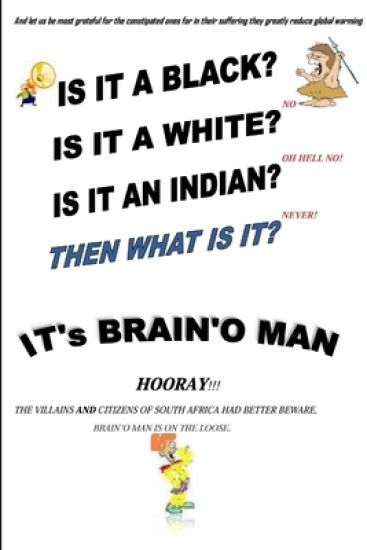
Brain'O Man is a COMEDY about a Mixed-Race young adult who parades as a superhero in his town. His belief in his abilities are so sincere and powerful that he is eventually taken seriously, despite his eccentricities. The main characters are Brain'O Man the Superhero, Chudna, the villain, the local Police Minister, as well the main characters' mothers, to a lesser extent. The setting is in South Africa, with terminology ideal for local readers who can identify with the local jargon OR those who wish to familiarize themselves with such. Hyperbole is used often in order to provide over the top humor. In addition, the author pokes playful fun at all races while careful to be politically sensitive. The book also gives a glimpse into the political and social mind-set of the various races in South Africa, from the author's viewpoint. It is also intended that, in this Google age, it will be easy for readers to search up on words or jargon they are not familiar with.
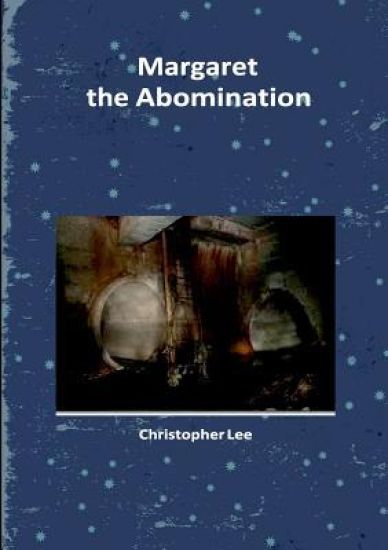
Worlds collide when, deep in the dark tunnels of an abandoned sewer a scenario of unimaginable proportions unfolds. A child killer, Hector Pike, pursued by Detective Mervin Daniels is traced to the sewer where a gunfight ensues. However, an Underworld High Spirit is also keen on tracing Hector Pike so that he may possess him. Out of the ensuing chaos Margaret the Abomination is born. The events that follow draw in the leaders of Matrix Earth, Third Heaven, and the Underworld as mankind is dragged into a spine chilling nightmare rained down on them by the Abomination. Will Detective Daniels, Abigail Okafor, Captain Gounden and Colonel Rage, along with their Third Heaven counterparts stop the horde of Underworld warriors, led by the Super-Beast who has instructions to annihilate the Abomination, and anyone who stands in his way? A fast paced Supernatural Thriller that takes the reader on an imaginative journey across the various dimensions of existence.
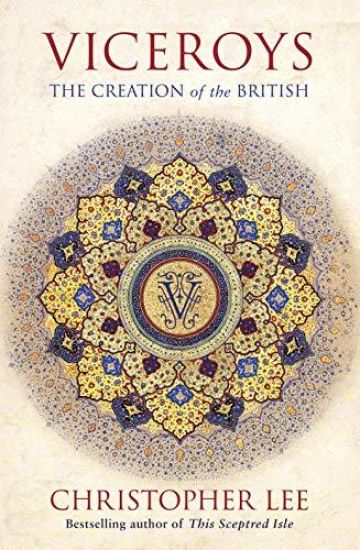
Viceroys tells the important story of the British aristocracy sent to govern India during the reigns of five British monarchs and the role it played in the shaping of the modern British identity.
Between 1858 and 1947, twenty British men ruled millions of some of the most remarkable people of the nineteenth and twentieth centuries.From the Indian Mutiny to the cruel religious partition of India and the newly formed and named Pakistan, the Viceroy had absolute power, more than the monarch who had sent him. Selected from that exclusive class of English, Scottish and Irish breeding, the aristocracy, the Viceroys were plumed, rode elephants, shot tigers. Even their wives stood when they entered the room. Nevertheless, many of them gave everything for India. The first Viceroy, Canning, exhausted by the Mutiny, buried his wife in Calcutta before he left the subcontinent to die shortly afterwards.The average Viceroy lasted five years and was granted an earldom but rarely a sense of triumph. Did these Viceroys behave as badly as twenty-first century moralists would have us believe? When the Raj was over, the legacy of Empire continued, as the new rulers slipped easily into the offices and styles of the British who had gone. Being 'British' was now a caste.Viceroys is the tale of the British Raj, the last fling of British aristocracy. It is the supreme view of the British in India, portraying the sort of people who went out and the sort of people they were on their return. It is the story of utter power and what men did with it. Moreover, it is also the story of how modern British identity was established and in part the answer to how it was that such a small offshore European island people believed themselves to have the right to sit at the highest institutional tables and judge what was right and unacceptable in other nations and institutions.

Between 1858 and 1947, twenty British men ruled millions of some of the most remarkable people of the nineteenth and twentieth centuries.From the Indian Mutiny to the cruel religious partition of India and the newly formed and named Pakistan, the Viceroy had absolute power, more than the monarch who had sent him. Selected from that exclusive class of English, Scottish and Irish breeding, the aristocracy, the Viceroys were plumed, rode elephants, shot tigers. Even their wives stood when they entered the room. Nevertheless, many of them gave everything for India. The first Viceroy, Canning, exhausted by the Mutiny, buried his wife in Calcutta before he left the subcontinent to die shortly afterwards.The average Viceroy lasted five years and was granted an earldom but rarely a sense of triumph. Did these Viceroys behave as badly as twenty-first century moralists would have us believe? When the Raj was over, the legacy of Empire continued, as the new rulers slipped easily into the offices and styles of the British who had gone. Being 'British' was now a caste.Viceroys is the tale of the British Raj, the last fling of British aristocracy. It is the supreme view of the British in India, portraying the sort of people who went out and the sort of people they were on their return. It is the story of utter power and what men did with it. Moreover, it is also the story of how modern British identity was established and in part the answer to how it was that such a small offshore European island people believed themselves to have the right to sit at the highest institutional tables and judge what was right and unacceptable in other nations and institutions.

Clio and Cy: The Apocalypse
Christopher Lee
Createspace Independent Publishing Platform
2014
nidottu
A thousand years into the future - what would you do? Alone in an unforgiving and vicious planet, World War III starts and finds twelve-year-old Clio caught in the middle. Crumbling on a global scale, fire spits in epic destruction, the height of civilization is cast into darkness. The few remaining Resistance forces battle against machine and monsters. Cy, a lone cyborg is mankind's closest thing to perfection. With flesh and graphene, he fights his own demons. Evil would watch the last lights of a once great people smolder out and trail up in a gray smoke. Clio and Cy and the Resistance must battle to save the ones they love, to save the world.