Kirjojen hintavertailu. Mukana 11 699 587 kirjaa ja 12 kauppaa.

Kirjahaku

Etsi kirjoja tekijän nimen, kirjan nimen tai ISBN:n perusteella.

9 kirjaa tekijältä Christopher Long

The Molecularisation of Security

The Molecularisation of Security

Christopher Long

Routledge
2021
sidottu
This book investigates the way that the molecular sciences are shaping contemporary security practices in relation to the governance of biological threats.In response to biological threats, such as pandemics and bioterrorism, governments around the world have developed a range of new security technologies, called medical countermeasures, to protect their populations. This book argues that the molecular sciences’ influence has been so great that security practices have been molecularised. Focusing on the actions of international organisations and governments in the past two decades, this book identifies two contrasting conceptions of the nature or inherent workings of molecular life as driving this turn. On the one hand, political notions of insecurity have been shaped by the contingent or random nature of molecular life. On the other, the identification of molecular life’s constant biological dynamics supports and makes possible the development and stockpiling of effective medical countermeasures. This study is one of the few to take seriously the conceptual implications that the detailed empirical workings of biotechnology have on security practices today.This book will be of much interest to students of security studies, bio-politics, life sciences, global governance, and International Relations in general.
The Molecularisation of Security

The Molecularisation of Security

Christopher Long

TAYLOR FRANCIS LTD
2023
nidottu
This book investigates the way that the molecular sciences are shaping contemporary security practices in relation to the governance of biological threats.In response to biological threats, such as pandemics and bioterrorism, governments around the world have developed a range of new security technologies, called medical countermeasures, to protect their populations. This book argues that the molecular sciences’ influence has been so great that security practices have been molecularised. Focusing on the actions of international organisations and governments in the past two decades, this book identifies two contrasting conceptions of the nature or inherent workings of molecular life as driving this turn. On the one hand, political notions of insecurity have been shaped by the contingent or random nature of molecular life. On the other, the identification of molecular life’s constant biological dynamics supports and makes possible the development and stockpiling of effective medical countermeasures. This study is one of the few to take seriously the conceptual implications that the detailed empirical workings of biotechnology have on security practices today.This book will be of much interest to students of security studies, bio-politics, life sciences, global governance, and International Relations in general.
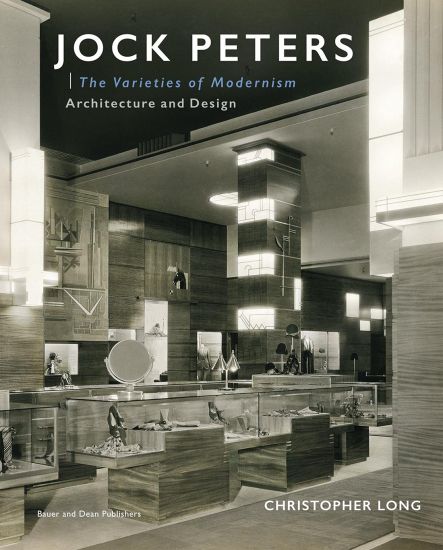
Jock Peters, Architecture and Design

Jock Peters, Architecture and Design

Christopher Long

Bauer and Dean Publishers Inc
2021
sidottu
"An important document that should be included in any library of design and architecture." - Daniella Ohad "A masterful blend of émigré biography and architecture and design history, proving that the twentieth century fostered more than one modernism." - Donald Albrecht Christopher Long, author of seminal monographs on Adolf Loos, Kem Weber, and Paul T. Frankel, turns his attention to the little-known architect and designer Jock Peters, a largely forgotten figure of early Los Angeles modernism. This visually rich study is also an intimate portrait of an architect who, like too many, struggled to establish a career during the early decades of the 20th century, years ravished by World War I and the Great Depression. Among Peters's early works in Germany are designs for the Levantehaus and Karstadt department stores, an innovative design dated 1916 for a magnificent glass pavilion, and his work for Peter Behrens after the war, but the architect's most accomplished and compelling work came after 1922 when he settled in Southern California. Most notable are the strikingly lavish and elegant commercial interiors Peters designed for the iconic Bullock's Wilshire store in Los Angeles and the tragically forgotten Hollander department store in New York City; both projects brought him international recognition. The breathtaking scope of his short-lived career includes modern film sets for Famous Players-Lasky, later Paramount Pictures, while working under the legendary art director Hans Dreier; a dynamic sales office for the trendsetting Maddux Air Lines, which later became TWA; and modern residences, including the still extant homes he built for cinematographer Alfred Gilks, who would later win an Academy Award for An American in Paris, and art gallerist and developer William Lingenbrink for whom Peters also designed stores and a vibrantly colourful sidewalk for the Silver Strand beach development north of Los Angeles. Lingenbrink, a major supporter of the burgeoning modernism, also commissioned Jock Peters, alongside Schindler, to design houses for Park Moderne, the legendary avant-garde modernist retreat for artists in Calabasas. Peters also designed the retreat's Streamline Moderne pump house, clubhouse, and zigzag fountain, which still stands. This important study on early modernism includes never before published material from the architect's personal archive, still in family hands. These remarkable and inspiring images-more than 250 historic photographs, etchings, watercolours, and drawings-alongside Long's insightful narrative, demonstrate how Peters, despite his early death, managed to leave his mark on the modernist landscape in Southern California at a time when the new style was just emerging.
Adolf Loos: Meaning, Context, Reception: Essays
Christopher Long's latest volume of essays on the prestigious 19th-century architect, essayist and progenitor of modernismArchitectural historian and leading voice on Adolf Loos, Christopher Long returns with another commentary on the Austrian pioneer of modern architecture. Adolf Loos (1870-1933), an opponent of ornamentation on buildings, designed buildings in Vienna that contrasted with the popular Art Nouveau and Secession styles. In this anthology of eight essays, Long takes on the meanings of Loos' writings and design work, the cultural world in which he was embedded, and how he was regarded by the critics and public. Long exposes and explodes old myths about Loos, fostering in the process a new, brilliant and compelling view of one of modern architecture's key protagonists.Christopher Long is the author of Adolf Loos on Trial and Essays on Adolf Loos. He is a professor in the Architectural History program at the University of Texas School of Architecture.
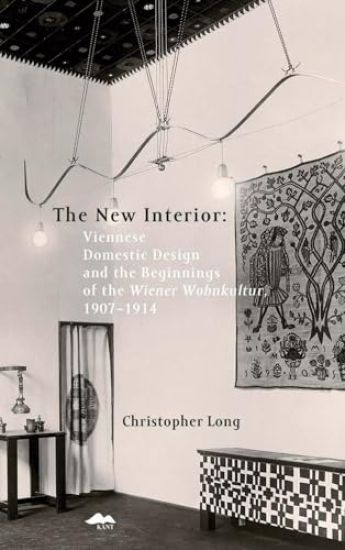
The New Interior: Viennese Domestic Design and the Beginnings of the Wiener Wohnkultur: 1907-1914
How the architects of the Vienna Secession turned their principles inward, creating a new trend in interior designIn The New Interior, architectural historian Christopher Long examines how, over the course of the seven years preceding World War I, three leading Viennese modernists--Josef Hoffmann, Adolf Loos and Oskar Strnad--redefined the idea of the modern interior. While their building designs shaped Vienna's urban landscape and exemplified the famous Secession movement, these three architects also applied their eclectic principles to domestic interiors, or Wohnkultur (meaning "living" or "dwelling culture"). This book follows the progress of their debates and works, and how each designer sought to frame his own distinctive vision of living. The result was a split between the imperatives of style, function and livability that is still in play today.Christopher Long is the Martin S. Kermacy Centennial Professor in the School of Architecture at the University of Texas at Austin.
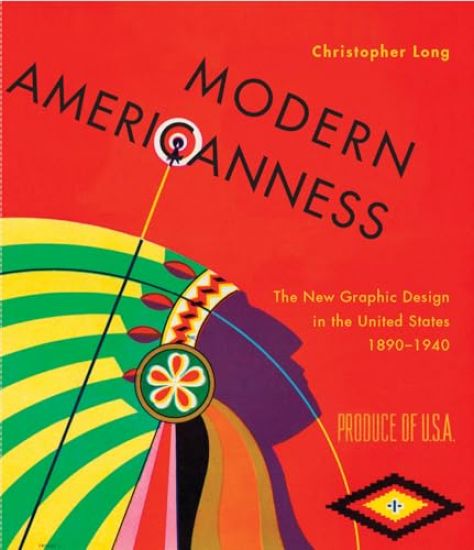
Modern Americanness: The New Graphic Design in the United States 1890-1940
Tracing the development and evolution of graphic design in the United States and its inextricable ties to American culture and visual identityVenturing across five decades of American culture, this landmark book explores how modern graphic design emerged in the United States and how it became an intrinsic feature of the country's identity. Author and design professor Christopher Long tells this story in a wholly new way, exposing many long-forgotten figures and movements and resurrecting the debates and conceptions that were integral to the new art. In a series of deeply involving portraits of American artists and innovators who helped shape the very look of the modern age, Modern Americannesss offers a sweeping story of the country's visual culture and its distinctiveness across a variety of designed objects: magazine covers, food labels, event posters, chapbooks, advertisements, propaganda and much more.Christopher Long is the Martin S. Kermacy Centennial Professor in the School of Architecture at the University of Texas at Austin.
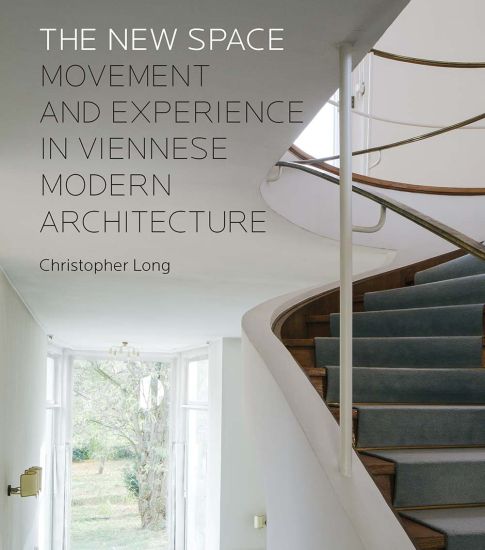
The New Space

The New Space

Christopher Long

Yale University Press
2017
sidottu
Scholars have long stressed the problem of ornament and expression when considering Viennese modernism. By the first decade of the 20th century, however, the avant-garde had shifted its focus from the surface to the interior. Adolf Loos (1870–1933), together with Josef Frank (1885–1967) and Oskar Strnad (1879–1935), led this generation of architects to interpret modernism through culture and lifestyle. They were interested in the experience of architectural space: how it could be navigated, inhabited, and designed to reflect the modern way of life while also offering respite from it. The New Space traces the theoretical conversation about space carried out in the writings and built works of Loos, Frank, and Strnad over four decades. The three ultimately explored what Le Corbusier would later—independently—term the architectural promenade. Lavishly illustrated with new photography and architectural plans, this important book enhances our understanding of the development of modernism and of architectural theory and practice.
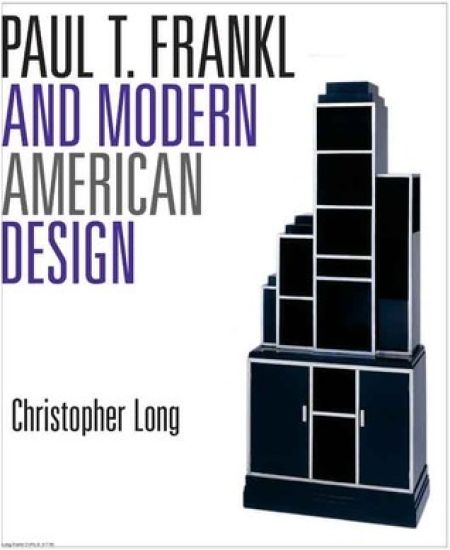
Paul T. Frankl and Modern American Design

Paul T. Frankl and Modern American Design

Christopher Long

Yale University Press
2007
sidottu
A comprehensive view of the life, work, and ideas of one of the creative giants of modern American design Arriving in the United States in 1914, Viennese-born Paul T. Frankl (1886–1958) brought with him an outsider’s fresh perspective and an enthusiasm for forging a uniquely American design aesthetic. In the years between the two world wars he, more than any other designer, helped shape the distinctive look of American modernism. This authoritative book draws on an extensive collection of unpublished documents and family papers and photographs to provide the first full account of Frankl’s life and ideas. The book also explores the history of modern American design and the extent of Frankl’s influence on its trajectory. In the early 1920s, Frankl opened a New York City shop that became an epicenter of American modernism. Over the next decades, his work encompassed everything from individual pieces of furniture and decorative accessories to entire interiors, and his style continuously evolved, from early “Skyscraper” furniture to relaxed and casual designs favored by the Hollywood elite in the 1930s to manufactured pieces for the mass market in the 1950s. The book charts the impact of Frankl’s ideas on merchants and consumers, on his fellow designers, and on the changing look of American homes and workplaces. With close to 170 illustrations, Paul T. Frankl and Modern American Design is an essential reference on 20th-century design.