Kirjojen hintavertailu. Mukana 12 016 292 kirjaa ja 12 kauppaa.

Kirjahaku

Etsi kirjoja tekijän nimen, kirjan nimen tai ISBN:n perusteella.

53 kirjaa tekijältä Christopher Norris

Quantum Theory and the Flight from Realism
This book is a critical introduction to the long-standing debate concerning the conceptual foundations of quantum mechanics and the problems it has posed for physicists and philosophers from Einstein to the present. Quantum theory has been a major infulence on postmodernism, and presents significant problems for realists. Keeping his own realist position in check, Christopher Norris subjects a wide range of key opponents and supporters of realism to a high and equal level of scrutiny. With a characteristic combination of rigour and intellectual generosity, he draws out the merits and weaknesses from opposing arguments. In a sequence of closely argued chapters, Norris examines the premises of orthodox quantum theory, as developed most influentially by Bohr and Heisenberg, and its impact on varous philosophical developments. These include the ideas developed by W.V Quine, Thomas Kuhn, Michael Dummett, Bas van Fraassen, and Hilary Puttnam. In each case, Norris argues, these thinkers have been influenced by the orthodox construal of quantum mechanics as requiring drastic revision of principles which had hitherto defined the very nature of scientific method, causal explanati and rational enquiry. Putting the case for a realist approach which adheres to well-tried scientific principles of causal reasoning and inference to the best explanation, Christopher Norris clarifies these debates to a non-specialist readership and scholars of philosophy, science studies and the philosophy of science alike. Quantum Theory and the Flight From Realism suggests that philosophical reflection can contribute to a better understanding of these crucial, current issues.
Deconstruction

Deconstruction

Christopher Norris

Routledge
2002
sidottu
Deconstruction: Theory and Practice has been acclaimed as by far the most readable, concise and authoritative guide to this topic. Without oversimplifying or glossing over the challenges, Norris makes deconstruction more accessible to the reader. The volume focuses on the works of Jacques Derrida which caused this seismic shift in critical thought, as well as the work of North American critics Paul de Man, Geoffrey Hartman, J. Hillis Miller and Harold Bloom.In this third, revised edition, Norris builds on his 1991 Afterword with an entirely new Postscript, reflecting upon recent critical debate. The Postscript includes an extensive list of recommended reading, complementing what was already one of the most useful bibliographies available.
Deconstruction

Deconstruction

Christopher Norris

Routledge
2002
nidottu
Deconstruction: Theory and Practice has been acclaimed as by far the most readable, concise and authoritative guide to this topic. Without oversimplifying or glossing over the challenges, Norris makes deconstruction more accessible to the reader. The volume focuses on the works of Jacques Derrida which caused this seismic shift in critical thought, as well as the work of North American critics Paul de Man, Geoffrey Hartman, J. Hillis Miller and Harold Bloom.In this third, revised edition, Norris builds on his 1991 Afterword with an entirely new Postscript, reflecting upon recent critical debate. The Postscript includes an extensive list of recommended reading, complementing what was already one of the most useful bibliographies available.
Philosophy of Language and the Challenge to Scientific Realism
In this book Christopher Norris develops the case for scientific realism by tackling various adversary arguments from a range of anti-realist positions. Through a close critical reading he shows how they fail to make adequate sense on any rational, consistent, and scientifically-informed survey of the evidence. Along the way he incorporates a number of detailed case-studies from the history and philosophy of science. Norris devotes much of his discussion to some of the most prominent and widely influential source-texts of anti-realism. Also included are the sophisticated versions of verificationism developed - albeit in very different ways - by thinkers such as Michael Dummett and Bas van Fraassen. Central to Norris's argument is a prolonged engagement with the once highly influential but nowadays neglected work of Norwood Russell Hanson. This book will be welcomed especially by readers who possess some knowledge of the background debate and who wish to deepen and extend their understanding of these issues beyond an introductory level.
Philosophy of Language and the Challenge to Scientific Realism
In this book Christopher Norris develops the case for scientific realism by tackling various adversary arguments from a range of anti-realist positions. Through a close critical reading he shows how they fail to make adequate sense on any rational, consistent, and scientifically-informed survey of the evidence. Along the way he incorporates a number of detailed case-studies from the history and philosophy of science. Norris devotes much of his discussion to some of the most prominent and widely influential source-texts of anti-realism. Also included are the sophisticated versions of verificationism developed - albeit in very different ways - by thinkers such as Michael Dummett and Bas van Fraassen. Central to Norris's argument is a prolonged engagement with the once highly influential but nowadays neglected work of Norwood Russell Hanson. This book will be welcomed especially by readers who possess some knowledge of the background debate and who wish to deepen and extend their understanding of these issues beyond an introductory level.
Contest of Faculties (Routledge Revivals)

Contest of Faculties (Routledge Revivals)

Christopher Norris

Routledge
2009
sidottu
This Routledge Revival, first published in 1985, gives detailed attention to the bearing of literary theory on questions of truth, meaning and reference. On the one hand, deconstruction brings a vigilant awareness of the figural and narrative tropes that make up the discourse of philosophic reason. On the other it insists that argumentative rigour cannot be divorced from the kind of close reading that has come to characterize literary theory in its more advanced or speculative forms. This present-day ‘contest of faculties’ has large implications for philosophers and critics, many of whom will welcome the reissue of such a clear-headed statement of the impact of deconstruction.
The Deconstructive Turn (Routledge Revivals)
What might be the outcome for philosophy if its texts were subjected to the powerful techniques of rhetorical close-reading developed by current deconstructionist literary critics? When first published in 1983, Christopher Norris’ book was the first to explore such questions in the context of modern analytic and linguistic philosophy, opening up a new and challenging dimension of inter-disciplinary study and creating a fresh and productive dialogue between philosophy and literary theory.
Contest of Faculties (Routledge Revivals)

Contest of Faculties (Routledge Revivals)

Christopher Norris

Routledge
2009
nidottu
This Routledge Revival, first published in 1985, gives detailed attention to the bearing of literary theory on questions of truth, meaning and reference. On the one hand, deconstruction brings a vigilant awareness of the figural and narrative tropes that make up the discourse of philosophic reason. On the other it insists that argumentative rigour cannot be divorced from the kind of close reading that has come to characterize literary theory in its more advanced or speculative forms. This present-day ‘contest of faculties’ has large implications for philosophers and critics, many of whom will welcome the reissue of such a clear-headed statement of the impact of deconstruction.
The Deconstructive Turn (Routledge Revivals)
What might be the outcome for philosophy if its texts were subjected to the powerful techniques of rhetorical close-reading developed by current deconstructionist literary critics? When first published in 1983, Christopher Norris’ book was the first to explore such questions in the context of modern analytic and linguistic philosophy, opening up a new and challenging dimension of inter-disciplinary study and creating a fresh and productive dialogue between philosophy and literary theory.
Paul de Man (Routledge Revivals)

Paul de Man (Routledge Revivals)

Christopher Norris

Routledge
2010
sidottu
Paul de Man - literary critic, literary philosopher, "American deconstructionist" - changed the landscape of criticism through his rigorous theories and writings. Upon its original publication in 1988, Christopher Norris' book was the first full-length introduction to de Man, a reading that offers a much-needed corrective to the pattern of extreme antithetical response which marked the initial reception to de Man's writings.Norris addresses de Man's relationship to philosophical thinking in the post-Kantian tradition, his concern with "aesthetic ideology" as a potent force of mystification within and beyond that tradition, and the vexed issue of de Man's politics. Norris brings out the marked shift of allegiance in de Man's thinking, from the thinly veiled conservative implications of the early essays to the engagement with Marx and Foucault on matters of language and politics in the late, posthumous writing. At each stage, Norris raises these questions through a detailed close reading of individual texts which will be welcomed by those who lack any specialised knowledge of de Man's work.
Paul de Man (Routledge Revivals)

Paul de Man (Routledge Revivals)

Christopher Norris

Routledge
2010
nidottu
Paul de Man - literary critic, literary philosopher, "American deconstructionist" - changed the landscape of criticism through his rigorous theories and writings. Upon its original publication in 1988, Christopher Norris' book was the first full-length introduction to de Man, a reading that offers a much-needed corrective to the pattern of extreme antithetical response which marked the initial reception to de Man's writings.Norris addresses de Man's relationship to philosophical thinking in the post-Kantian tradition, his concern with "aesthetic ideology" as a potent force of mystification within and beyond that tradition, and the vexed issue of de Man's politics. Norris brings out the marked shift of allegiance in de Man's thinking, from the thinly veiled conservative implications of the early essays to the engagement with Marx and Foucault on matters of language and politics in the late, posthumous writing. At each stage, Norris raises these questions through a detailed close reading of individual texts which will be welcomed by those who lack any specialised knowledge of de Man's work.
Deconstruction and the Unfinished Project of Modernity

Deconstruction and the Unfinished Project of Modernity

Christopher Norris

Continuum International Publishing Group Ltd.
2000
nidottu
Deconstruction and postmodernism have been misunderstood. In this provocative book, Christopher Norris challenges the widespread idea of deconstruction as merely an offshoot of the various trends and cultural phenomena grouped under the label of "postmodernism". Through an analysis of the key theorists in the field - Derrida, Foucault, De Man, Habermas and Levinas - Norris argues that deconstruction is the "unfinished project" of modernity, a project whose interests and values it upholds precisely by continuing to question them in a spirit of enlightened self-critical enquiry. Assessing the impact of postmodernist theorizing across a range of disciplines, the book presents a lucid analysis and guide to the future of critical theory.
Spinoza and the Origins of Modern Critical Theory

Spinoza and the Origins of Modern Critical Theory

Christopher Norris

Blackwell Publishers
1990
nidottu
This book offers a detailed account of Spinoza's influence on various schools of present-day critical thought. That influence extends from Althusserian Marxism to hermeneutics, deconstruction, narrative poetics, new historicism, and the unclassifiable writings of a thinker like Giles Deleuze. The author combines a close exegesis of Spinoza's texts with a series of chapters that trace the evolution of literary theory from its period of high scientific rigour in the mid-1960s to its latest "postmodern", neopragmatist or anti-theoretical phase. He examines the thought of Althusser, Macherey and Deleuze as well as others (including the new historicists) who have registered the impact of his pioneering work without any overt acknowledgement. On the one hand, theorists like Althusser and Macherey could celebrate Spinoza as the first philosopher before Marx to understand the need for a riorous distinction between science (or "theoretical practice") and ideology (or the realm of lived experience subject to various forms of imaginary error of misrecognition). On the other, Deleuze makes Spinoza the hero of his crusade against theories of whatever kind - Kantian, Marxist, Freudian, post structuralist - which always end up by imposing some abstract order of concepts and categories on the libidinal flux of "desiring production", or the "body-without-organs" of anarchic instinctual drives.
The Truth about Postmodernism

The Truth about Postmodernism

Christopher Norris

Blackwell Publishers
1993
nidottu
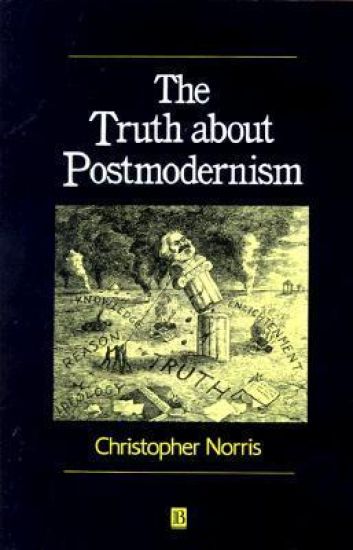
This book was written with a view to sorting our some of the muddles and misreadings - especially misreadings of Kant - that have charaterized recent postmodernist and post-structuralist thought. For these issues have a relevance, as Norris argues, far beyond the academic enclaves of philosophy, literary theory, and cultural criticism. Thus he makes large claims for the importance of getting Kant right on the relation between epistemology, ethics and aesthetics; for pursuing the Kantian question 'What is Enlightenment?' as raised in Foucault's late essays; or again, for recalling William Empson's spirited attempt to reassert the values of reason and truth against the orthodox 'lit crit' wisdom of his time. These are specialized concerns. But for better or worse it has been largely in the context of 'theory'- that capacious though ill-defined genre- that such issues have received their most scrutiny over the past two decades. As its title suggests, The Truth About Postmodernism disputes a good deal of what currently passes for advance theoretical wisdom. Above all it mounts a challenge to those fashionable doctrines - variants of the 'end-of-ideology' theme - that assimilate truth to some existing range of language-games, discourses, or in-place consensus beliefs. Norris's book will be welcomed for its clarity of style, its depth of philosophical engagement, and its refusal to endorse the more facile varieties of present-day textualist thought. It will also serve as a timely reminder that the 'politics of theory' cannot be practised in safe isolation from the politics (and ethics) of activist social concern.
Against Relativism

Against Relativism

Christopher Norris

Blackwell Publishers
1997
nidottu
This book offers a vigorous and constructive challenge to relativism by examining a wide range of anti-realist theories, and in response offering a variety of arguments amounting to a strong defence of critical realism in the natural and social sciences.
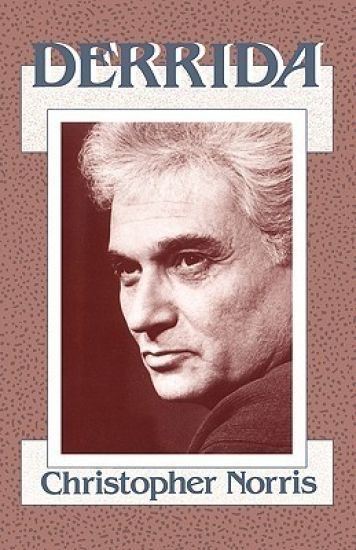
Derrida

Derrida

Christopher Norris

HARVARD UNIVERSITY PRESS
1988
nidottu
Jacques Derrida (born 1930) is undoubtedly the single most influential figure in current Anglo-American literary theory. Yet many scholars and students, not to mention general readers, would be hard put to give an account of Derrida's own writings. In this admirably clear and intelligent introduction, Christopher Norris demonstrates that Derrida's texts should be understood as belonging more to philosophy than to literature. Norris explains the significance of Derrida's writing on texts in the Western philosophical tradition, from Plato to Kant, Hegel, and Husserl, placing him squarely within that tradition. He also discusses some of the reasons for the massive institutional resistance that has so far prevented philosophers from engaging seriously with Derrida's work. This book will be welcomed by readers in search of an introduction to Derrida's work that neither underrates its difficulties nor invests his ideas with a kind of protective mystique.
Truth Matters

Truth Matters

Christopher Norris

Edinburgh University Press
2005
nidottu
Truth Matters is the first full-length introduction to response-dependence, a topic that has become a main focus of interest for philosophers across a wide range of disciplines and subject areas. The response-dependence claim, in brief, is to provide a 'third way' between the realist (or objectivist) conception of truth as always potentially transcending the limits of human ascertainment and the anti-realist (or verificationist) case that truth cannot possibly transcend those limits since then we could never acquire or manifest a knowledge of it. While setting out the issues clearly and concisely, Norris also provides some relevant background history to this current debate, including discussion of its sources and analogues in Plato, Locke, Kant and Wittgenstein. His book offers invaluable guidance for student readers in search of a reliable introductory survey of the field. Among those with a more specialist interest it may sometimes provoke disagreement, as when Norris argues that the response-dependence approach often goes along with a disguised anti-realist bias and hence fails to make good on its 'third-way' promise. However, its combination of wide-ranging coverage with clarity of focus and depth of philosophical treatment will be welcomed. Key Features: *Clear, accessible account of some complex philosophical issues; *First book-length study of the response-dependence debate; *Informative discussion of its pre-history in philosophers from Plato to Hume, Locke and Kant; *Aimed at readers seeking a reliable, well-informed introductory account while relevant to those with a more specialist knowledge of the topic.
Philosophy Outside-In

Philosophy Outside-In

Christopher Norris

Edinburgh University Press
2013
sidottu
This is a sustained critique of present-day academic philosophy combined with a practical agenda for change. Christopher Norris raises some basic questions about the way that analytic philosophy has been conducted over the past 25 years. In doing so, he offers an alternative to what he sees as an over-specialisation of a lot of recent academic work. Arguing that analytic philosophy has led to a narrowing of sights to the point where other approaches that might be more productive are blocked from view, he goes against the grain to claim that Continental philosophy holds the resources for a creative renewal of analytic thought. It draws on a wide range of examples to shine light on one topic: philosophy's current condition and how we can move beyond it. It addresses issues of interest to students and teachers of philosophy in both the analytic and the Continental traditions: speculative realism, the 'extended mind' hypothesis, experimental philosophy, the ontology of political song, linguistic philosophy, anti-realism and epistemological scepticism. It interrogates the analytical zeitgeist through a vigorous critique of the prevailing modes of thought.
Epistemology: Key Concepts in Philosophy

Epistemology: Key Concepts in Philosophy

Christopher Norris

Continuum International Publishing Group Ltd.
2005
nidottu
Key Concepts in Philosophy is a series of concise, accessible and engaging introductions to the core ideas and topics encountered in the study of philosophy. Specially written to meet the needs of students and those with little prior knowledge of the subject, these books open up a whole range of important, yet often difficult ideas. The series builds to give a solid grounding in philosophy and each book is also ideal as a companion to further study. Epistemology - inquiry into the nature, possibility and scope of human knowledge - has been at the heart of the philosophy from ancient Greek times to the present. Christopher Norris provides a lucid survey and analysis of the issues that have shaped that enterprise and continue to dominate present-day discussion. He also brings out with exceptional clarity the ways in which certain 'technical' issues in epistemology can have a decisive bearing on matters of practical concern. The text highlights continuities and contrasts between early and contemporary approaches, and between the sorts of thinking that have typified the mainstream analytic and the modern 'continental' lines of descent. Norris introduces the main topics of debate, among them arguments for and against adopting a realist position with regard to various fields of knowledge, from mathematics to the physical sciences and history. Philosophy undergraduates will find this an invaluable aid to study, one that goes beyond simple definitions and summaries to open up a new and stimulating range of ideas.
On Truth and Meaning

On Truth and Meaning

Christopher Norris

Continuum International Publishing Group Ltd.
2006
nidottu
As one of the world's leading and most highly-acclaimed contemporary theorists, Christopher Norris has spent much of the last twenty years trying to promote better relations and mutual understanding between the divisive analytic and continental philosophical traditions. In his new book, "On Truth and Meaning", Norris examines key issues in the philosophy of logic, mind and language those that have defined the agenda of current debate in analytic philosophy. Among the book's central themes are a number of much-rehearsed, but as yet unresolved questions that have preoccupied many leading analytic philosophers. In a fresh and provocative examination of recent debates, Norris shows certain features of the analytic enterprise in a sharp and revealing light, and proposes that those who approach such debates from an analytic viewpoint might profit by reflecting on the challenge posed to their accustomed modes of thought by certain distinctly 'continental' themes. Arguing that, contra to the orthodox view, philosophers in the continental line of descent, from Husserl to Derrida, have long engaged with the same sorts of issues that preoccupy their analytic counterparts, Norris explores both traditions alongside one another in order to point up certain contrasts or communities of interest. In this timely and provocative book, Norris proposes grounds for a new era of cooperation and mutual interrogative exchange between the two schools of thought in a narrative that will engage and influence those from both philosophical camps.