Kirjojen hintavertailu. Mukana 11 244 527 kirjaa ja 12 kauppaa.

Kirjahaku

Etsi kirjoja tekijän nimen, kirjan nimen tai ISBN:n perusteella.

6 kirjaa tekijältä Christopher O. Tollefsen

Biomedical Research and Beyond

Biomedical Research and Beyond

Christopher O. Tollefsen

Routledge
2010
nidottu
What is the relationship between scientific research and ethics? Some think that science should be free from ethical and political considerations. Biomedical Research and Beyond argues that ethical guidance is essential for all forms of inquiry, including biomedical and scientific research. By addressing some of the most controversial questions of biomedical research, such as embryonic research, animal research, and genetic enhancement research, the author argues for a rich moral framework for the ethics of inquiry, based on the ideal of human flourishing. He then looks at other areas of inquiry, such as journalistic ethics, and military investigation, to see how similar they are to the ethics of scientific research. Finally, he looks at the virtues that must play a role in any life that is devoted to research and inquiry as a vocational commitment.
Biomedical Research and Beyond

Biomedical Research and Beyond

Christopher O. Tollefsen

Routledge
2007
sidottu
What is the relationship between scientific research and ethics? Some think that science should be free from ethical and political considerations. Biomedical Research and Beyond argues that ethical guidance is essential for all forms of inquiry, including biomedical and scientific research. By addressing some of the most controversial questions of biomedical research, such as embryonic research, animal research, and genetic enhancement research, the author argues for a rich moral framework for the ethics of inquiry, based on the ideal of human flourishing. He then looks at other areas of inquiry, such as journalistic ethics, and military investigation, to see how similar they are to the ethics of scientific research. Finally, he looks at the virtues that must play a role in any life that is devoted to research and inquiry as a vocational commitment.
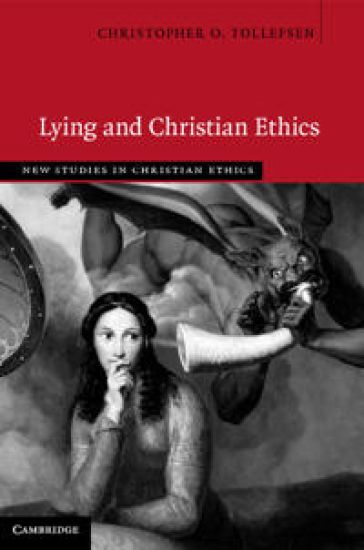
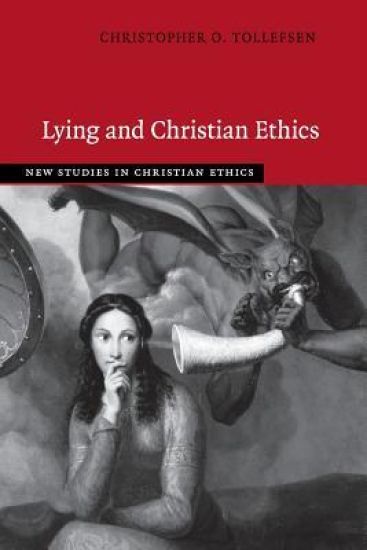
Lying and Christian Ethics

Lying and Christian Ethics

Christopher O. Tollefsen

Cambridge University Press
2014
sidottu
This book defends the controversial 'absolute view' of lying, which maintains that an assertion contrary to the speaker's mind is always wrong, regardless of the speaker's intentions. Whereas most people believe that a lie told for a good cause, such as protecting Jews from discovery by Nazis, is morally acceptable, Christopher Tollefsen argues that Christians should support the absolute view. He looks back to the writings of Augustine and Aquinas to illustrate that lying violates the basic human goods of integrity and sociality and severely compromises the values of religion and truth. He critiques the comparatively permissive views espoused by Cassian, Bonhoeffer, and Niebuhr and argues that lies often jeopardize the good causes for which they are told. Beyond framing a moral absolute against lying, this book explores the questions of to whom we owe the truth and when, and what steps we may take when we should not give it.
Lying and Christian Ethics

Lying and Christian Ethics

Christopher O. Tollefsen

Cambridge University Press
2018
pokkari
This book defends the controversial 'absolute view' of lying, which maintains that an assertion contrary to the speaker's mind is always wrong, regardless of the speaker's intentions. Whereas most people believe that a lie told for a good cause, such as protecting Jews from discovery by Nazis, is morally acceptable, Christopher Tollefsen argues that Christians should support the absolute view. He looks back to the writings of Augustine and Aquinas to illustrate that lying violates the basic human goods of integrity and sociality and severely compromises the values of religion and truth. He critiques the comparatively permissive views espoused by Cassian, Bonhoeffer, and Niebuhr and argues that lies often jeopardize the good causes for which they are told. Beyond framing a moral absolute against lying, this book explores the questions of to whom we owe the truth and when, and what steps we may take when we should not give it.
Killing and Christian Ethics

Killing and Christian Ethics

Christopher O. Tollefsen

Cambridge University Press
2026
sidottu
Everyone recognizes that it is, in general, wrong to intentionally kill a human being. But are there exceptions to that rule? In Killing and Christian Ethics, Christopher Tollefsen argues that there are no exceptions: the rule is absolute. The absolute view on killing that he defends has important implications for bioethical issues at the beginning and end of life, such as abortion and euthanasia. It has equally important implications for the morality of capital punishment and the morality of killing in war. Tollefsen argues that a lethal act is morally permissible only when it is an unintended side effect of one's action. In this way, some lethal acts of force, such as personal self-defense, or defense of a polity in a defensive war, may be justified -- but only if they involve no intension of causing death. Even God, Tollefsen argues, neither intends death, nor commands the intentional taking of life.
Killing and Christian Ethics

Killing and Christian Ethics

Christopher O. Tollefsen

Cambridge University Press
2026
nidottu
Everyone recognizes that it is, in general, wrong to intentionally kill a human being. But are there exceptions to that rule? In Killing and Christian Ethics, Christopher Tollefsen argues that there are no exceptions: the rule is absolute. The absolute view on killing that he defends has important implications for bioethical issues at the beginning and end of life, such as abortion and euthanasia. It has equally important implications for the morality of capital punishment and the morality of killing in war. Tollefsen argues that a lethal act is morally permissible only when it is an unintended side effect of one's action. In this way, some lethal acts of force, such as personal self-defense, or defense of a polity in a defensive war, may be justified -- but only if they involve no intension of causing death. Even God, Tollefsen argues, neither intends death, nor commands the intentional taking of life.