Kirjojen hintavertailu. Mukana 11 244 527 kirjaa ja 12 kauppaa.

Kirjahaku

Etsi kirjoja tekijän nimen, kirjan nimen tai ISBN:n perusteella.

28 kirjaa tekijältä Christopher Phillips

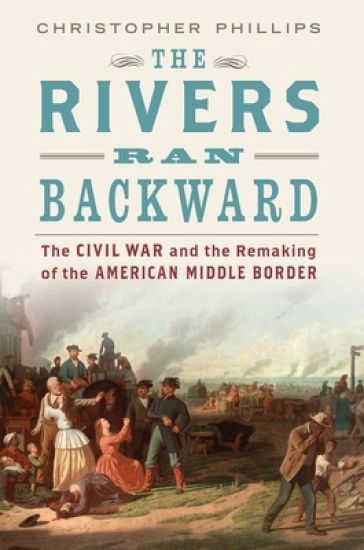
The Rivers Ran Backward: The Civil War and the Remaking of the American Middle Border
Most Americans imagine the Civil War in terms of clear and defined boundaries of freedom and slavery: a straightforward division between the slave states of Kentucky and Missouri and the free states of Illinois, Indiana, Ohio, and Kansas. However, residents of these western border states, Abraham Lincoln's home region, had far more ambiguous identities-and contested political loyalties-than we commonly assume. In The Rivers Ran Backward, Christopher Phillips sheds light on the fluid political cultures of the "Middle Border" states during the Civil War era. Far from forming a fixed and static boundary between the North and South, the border states experienced fierce internal conflicts over their political and social loyalties. White supremacy and widespread support for the existence of slavery pervaded the "free" states of Ohio, Indiana, and Illinois, which had much closer economic and cultural ties to the South, while those in Kentucky and Missouri held little identification with the South except over slavery. Debates raged at every level, from the individual to the state, in parlors, churches, schools, and public meeting places, among families, neighbors, and friends. Ultimately, the pervasive violence of the Civil War and the cultural politics that raged in its aftermath proved to be the strongest determining factor in shaping these states' regional identities, leaving an indelible imprint on the way in which Americans think of themselves and others in the nation. The Rivers Ran Backward reveals the complex history of the western border states as they struggled with questions of nationalism, racial politics, secession, neutrality, loyalty, and even place-as the Civil War tore the nation, and themselves, apart. In this major work, Phillips shows that the Civil War was more than a conflict pitting the North against the South, but one within the West that permanently reshaped American regions.
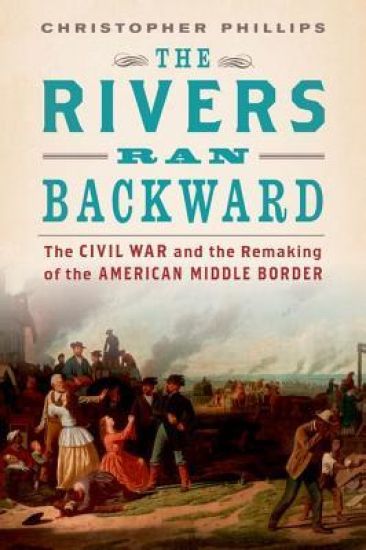
The Rivers Ran Backward

The Rivers Ran Backward

Christopher Phillips

Oxford University Press Inc
2016
sidottu
Most Americans believe that the Ohio River was a clearly defined and static demographic and political boundary between North and South, an extension of the Mason-Dixon Line. Once settled, the new states west of the Appalachians -- the slave states of Kentucky and Missouri and of the free states of Illinois, Indiana, Ohio, and Kansas -- formed a fixed boundary between freedom and slavery, extending the border that inevitably produced the war. None of this is true, except perhaps the outcome of war. But the centrality of the Civil War and its outcome in the making of these tropes is undeniable. Historian Christopher Phillips contests the assumption that regional identities throughout the "Middle Border" states were stable in the era of the Civil War. States such as Missouri and Kentucky tended to identify as more western than southern during the first half of the nineteenth century. Conversely, much of the population of the lower Midwestern states of Ohio, Illinois, and Indiana had stronger cultural, economic, and political ties to slave states than to New England or the Middle Atlantic. But across the region the Civil War left an indelible imprint on the way in which residents thought of themselves and other Americans, proving as much a shaper as a product of regional identities. A sweeping argument employing a strong narrative, telling vignettes, and the voices of regional and national figures, this book makes a major contribution to Civil War history and to American history on a broader scale.
Freedom's Port

Freedom's Port

Christopher Phillips

University of Illinois Press
1997
nidottu
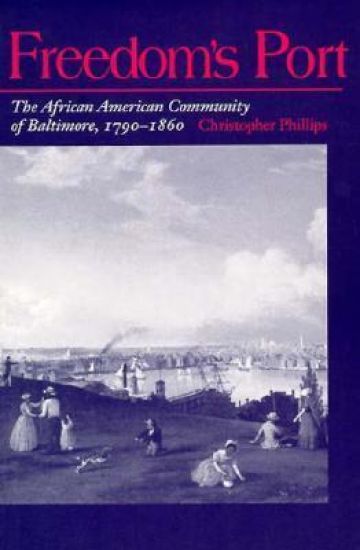
Baltimore's African-American population--nearly 27,000 strong and more than 90 percent free in 1860--was the largest in the nation at that time. Christopher Phillips's Freedom's Port, the first book-length study of an urban black population in the antebellum Upper South, chronicles the growth and development of that community. He shows how it grew from a transient aggregate of individuals, many fresh from slavery, to a strong, overwhelmingly free community less wracked by class and intraracial divisions than were other cities. Almost from the start, Phillips states, Baltimore's African Americans forged their own freedom and actively defended it--in a state that maintained slavery and whose white leadership came to resent the liberties the city's black people had achieved.
The Civil War in the Border South

The Civil War in the Border South

Christopher Phillips

Praeger Publishers Inc
2013
sidottu
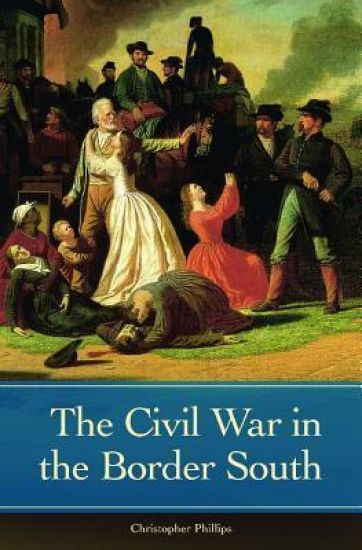
The border states during the Civil War have long been ignored or misunderstood in general histories. This book corrects that oversight, explaining how many border state residents used wartime realities to redefine their politics and culture as "Southern."By studying the characteristics of those positioned along this fault line during the Civil War, the centrality of the war issue of slavery, which border residents long eschewed as being divisive, became apparent. This book explains how the process of Southernization occurred during and after the Civil War—a phenomenon largely unexplained by historians.Beyond the broader, more traditional narrative of the clash of arms, within these border slave states raged an inner civil war that shaped the military and political outcomes of the war as well as these states' cultural landscapes. Author Christopher Phillips describes how the Civil War experience in the border states served to form new loyalties and communities of identity that both deeply divided these states and distorted the meaning of the war for postwar generations.
The Battle for Syria

The Battle for Syria

Christopher Phillips

Yale University Press
2020
pokkari
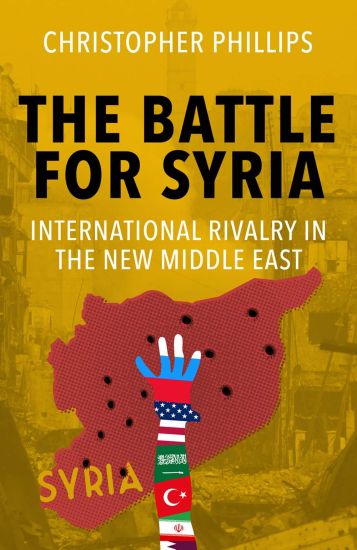
An unprecedented analysis of the crucial but underexplored roles the United States and other nations have played in shaping Syria’s ongoing civil war“One of the best informed and non-partisan accounts of the Syrian tragedy yet published.”—Patrick Cockburn, Independent Syria’s brutal, long-lasting civil war is widely viewed as a domestic contest that began in 2011 and only later drew foreign nations into the fray. But in this book Christopher Phillips shows the crucial roles that were played by the United States, Russia, Iran, Saudi Arabia, Turkey, and Qatar in Syria’s war right from the start. Phillips untangles the international influences on the tragic conflict and illuminates the West’s strategy against ISIS, the decline of U.S. power in the region, and much more. Originally published in 2016, the book has been updated with two new chapters.
Battleground

Battleground

Christopher Phillips

YALE UNIVERSITY PRESS
2024
sidottu
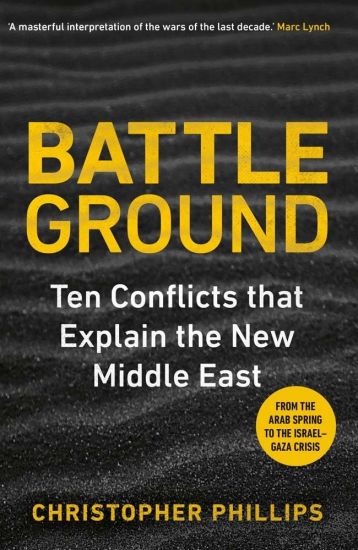
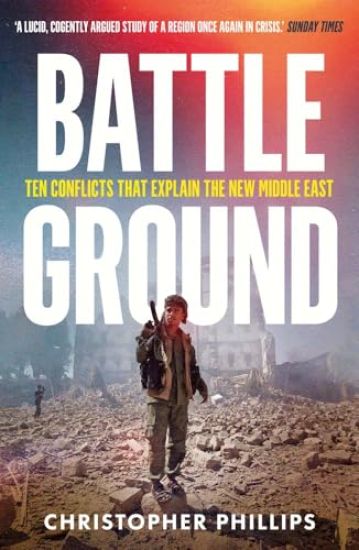
The essential guide to geopolitics in the modern Middle East The Middle East is in crisis. The shocking events of the war in Gaza have rocked the entire region. More than a decade ago, the Arab Spring had raised hopes of a new beginning but instead ushered in a series of civil wars, coups, and even harsher autocracies. Tensions were exacerbated by the meddling of outsiders, as regional and global powers sought to further their interests. The United States, for so long the dominant actor, had stepped back, leaving a vacuum behind it to be fought over. Christopher Phillips explores geopolitical rivalries in the region, and the major external powers vying for influence: Russia, China, the EU, and the US. Moving through ten key flashpoints, from Syria to Palestine, Phillips argues that the United States’ overextension after the Cold War, and retreat in the 2010s, has imbalanced the region. Today, the Middle East remains blighted by conflicts of unprecedented violence and a post-American scramble for power – leaving its fate in the balance.
Battleground

Battleground

Christopher Phillips

YALE UNIVERSITY PRESS
2025
pokkari
The essential guide to geopolitics in the modern Middle East The Middle East is in crisis. The shocking events of the war in Gaza have rocked the entire region. More than a decade ago, the Arab Spring had raised hopes of a new beginning but instead ushered in a series of civil wars, coups, and even harsher autocracies. Tensions were exacerbated by the meddling of outsiders, as regional and global powers sought to further their interests. The United States, for so long the dominant actor, had stepped back, leaving a vacuum behind it to be fought over. Christopher Phillips explores geopolitical rivalries in the region, and the major external powers vying for influence: Russia, China, the EU, and the US. Moving through ten key flashpoints, from Syria to Palestine, Phillips argues that the United States’ overextension after the Cold War, and retreat in the 2010s, has imbalanced the region. Today, the Middle East remains blighted by conflicts of unprecedented violence and a post-American scramble for power – leaving its fate in the balance.
Socrates in Love

Socrates in Love

Christopher Phillips

WW Norton Co
2007
sidottu
In a philosophical study and Socratic discourse, the author of Socrates Caf examines the concept of love in all its rich varieties--from a love of family and neighbor to a love of country, God, life, and wisdom--bringing together his commentary on the work of the great philosophers and writers with firsthand anecdotes about how various individuals experience love.
Constitution Cafe

Constitution Cafe

Christopher Phillips

WW Norton Co
2012
sidottu
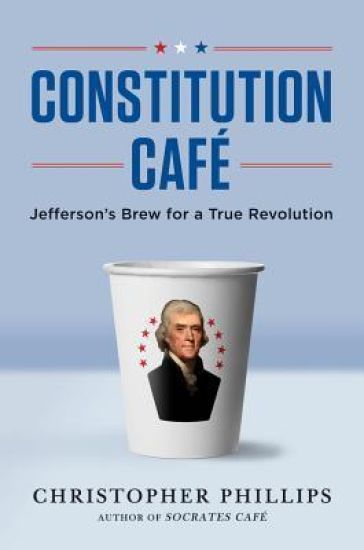
Energized by the initial optimism surrounding Obama's presidency and, conversely, the fierce partisanship in Congress, Christopher Phillips has set out to engage Americans in discussions surrounding our must fundamental rights and freedoms, with some help from Thomas Jefferson. A radical in his own day, Jefferson believed that the Constitution should be revised periodically to keep up with the changing times. Instead, it has become a sacred, immutable text-and in Phillips's opinion, it's in need of some shaking up. From a high school in West Virginia to People's Park in Berkeley, California; from Burning Man to the Mall of America, Phillips gathered together Americans from all walks of life, moderating dialogues inspired by Jefferson's own populist political philosophy, formulating new Constitutional articles. With contagious passion and conviction, Philips has taken up Jefferson's cause for a truly participatory democracy at a time when our country needs it most.
Socrates Cafe

Socrates Cafe

Christopher Phillips

WW Norton Co
2002
nidottu
Christopher Phillips is a man on a mission: to revive the love of questions that Socrates inspired long ago in ancient Athens. "Like a Johnny Appleseed with a master's degree, Phillips has gallivanted back and forth across America, to cafés and coffee shops, senior centers, assisted-living complexes, prisons, libraries, day-care centers, elementary and high schools, and churches, forming lasting communities of inquiry" (Utne Reader). Phillips not only presents the fundamentals of philosophical thought in this "charming, Philosophy for Dummies-type guide" (USA Today); he also recalls what led him to start his itinerant program and re-creates some of the most invigorating sessions, which come to reveal sometimes surprising, often profound reflections on the meaning of love, friendship, work, growing old, and others among Life's Big Questions. "How to Start Your Own Socrates Café" guide included.
Six Questions of Socrates

Six Questions of Socrates

Christopher Phillips

WW Norton Co
2005
nidottu
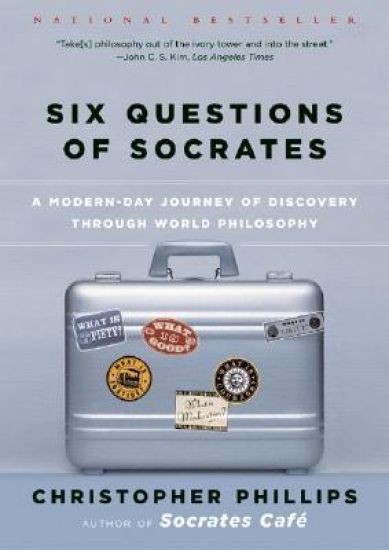
The author of Socrates Café explores the various ways in which people around the world--from different cultures and backgrounds--interpret six important questions originally posed by the ancient Greek philosopher Socrates, including their diverse interpretations of virtue, moderation, justice, courage, good, and piety. Reprint. 30,000 first printing.
Socrates in Love

Socrates in Love

Christopher Phillips

WW Norton Co
2008
nidottu
Christopher Phillips goes to the heart of philosophy and Socratic discourse to discover what we’re all looking for: the kind of love that makes life worthwhile. That is, love not defined only as eros, or erotic love, but in all its classical varieties. Love of neighbor, love of country, love of God, love of life, and love of wisdom—each is clarified and invigorated in Phillips’s Socratic dialogues with people from all walks of life and from all over the world.
Constitution Café

Constitution Café

Christopher Phillips

WW Norton Co
2012
nidottu
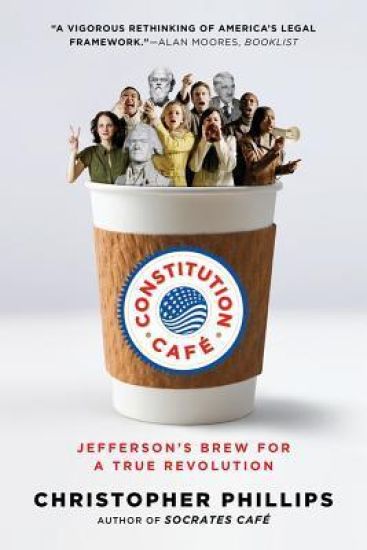
Thomas Jefferson believed that every generation of Americans should rewrite our Constitution from scratch—to mirror the progress of the human mind and, most of all, to maintain the revolutionary spirit. He would be dismayed that it’s considered untouchable these days. Taking up Jefferson’s cause, Christopher Phillips leads a motley group of Americans across the fruited plain in an offbeat Constitutional Convention. His Constitution Café project is sparking a much-needed conversation about our founding document and forging common ground at a time when our country needs it most.
Everyday Arab Identity

Everyday Arab Identity

Christopher Phillips

Routledge
2012
sidottu
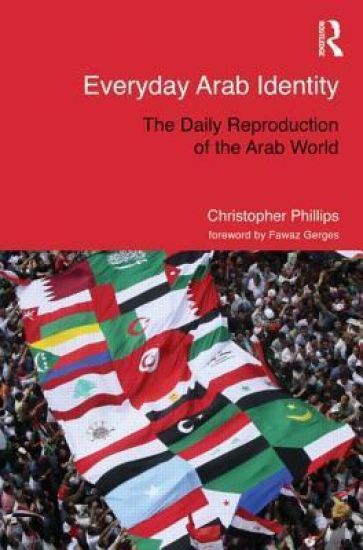
Whether through government propaganda or popular transnational satellite television channels, Arab citizens encounter a discourse that reinforces a sense of belonging to their own state and a broader Arab world on a daily basis. Looking through the lens of nationalism theory, this book examines how and why Arab identity continues to be reproduced in today’s Middle East, and how that Arab identity interacts with strengthening ties to religion and the state.Drawing on case studies of two ideologically different Arab regimes, Syria and Jordan, Christopher Phillips explores both the implications this everyday Arab identity will have on western policy towards the Middle East and its real life impact on international relations. Offering an original perspective on this topical issue, this book will be of interest to academics and practitioners working on the Arab world and political affairs, as well as students of International Relations, Political Science and the Middle East, notably Syria and Jordan, and policymakers in the region.
Damned Yankee

Damned Yankee

Christopher Phillips

Louisiana State University Press
1996
nidottu
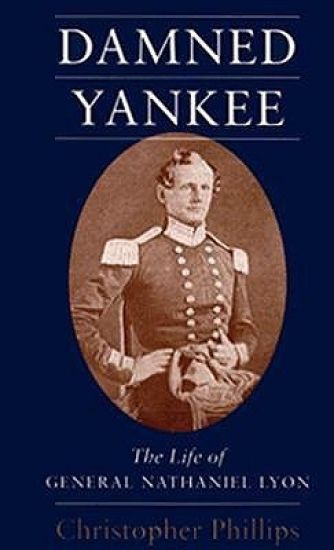
Nathaniel Lyon (1818-1861) was the first Union general to die in the Civil War. Killed at the Battle of Wilson's Creek, Missouri, he became the North's first war hero, famed as the man who saved Missouri for the Union. In Damned Yankee, chosen by Choice as an Outstanding Academic Book in 1991, Christopher Phillips portrays Lyon not as the savior of a border state threatened by secessionist extremists but as an unbalanced, monomaniacal Unionist zealot who purposely, and perhaps unnecessarily, brought war to a fragile state whose populace had voted overwhelmingly to stay out of the conflict.Phillips meticulously examines Lyon's role in the Camp Jackson affair, his quest to oust the pro-southern governor of Missouri, and his campaign to eliminate the secessionist element in the state. He contends that Lyon's actions in Missouri in 1861 were congruent with his dogmatic personality and troubled past. Damned Yankee is a complex, often shocking, portrait of one of the most controversial figures of the Civil War and a sobering study of how the faults of men may greatly affect history.
The Making of a Southerner

The Making of a Southerner

Christopher Phillips

University of Missouri Press
2009
nidottu
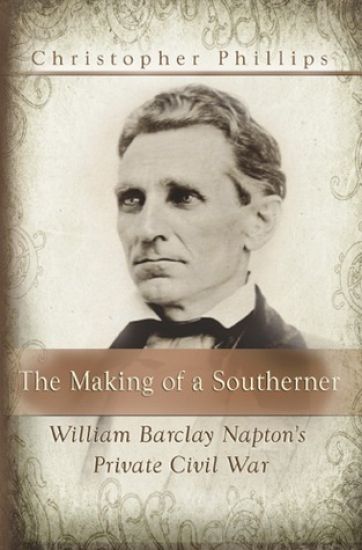
Christopher Phillips has brought to life a man, a story, and a voice lost in the din of competing post - Civil War narratives that each claim a timeless divide between North and South. William Barclay Napton (1808-1883) was an editor, lawyer, and state supreme court justice who lived in Missouri during the tumultuous American nineteenth century. He was a keen observer of the nation's sectional politics just as he was a participant in those of his border state, the most divided of any in the nation, in the decades surrounding the Civil War. This book tells the story of one man's civil war, lived and waged within the broader conflict, and the long shadows both cast.But Napton's story moves beyond the Civil War just as it transcends the formal political realm. His is a fascinating tale of identity politics and their shifting currents, by which the highly educated former New Jerseyite became the owner or trustee of nearly fifty slaves and one of the most committed and thoughtful of the nation's proslavery ideologues. That a ""northerner"" could make such a life transition in the Border West suggests more than the powerful nature of slavery in antebellum American society. Napton's story offers provocative insights into the process of southernization, one driven more by sectional ideology and politics than by elements of a distinctive southern culture.Although Napton's tragic Civil War experience was a watershed in his southern evolution, it was only completed after he had constructed a politicized memory of the bitter conflict, one that was suffered nowhere worse than in Missouri. This war-driven transformation ultimately defined him and his family, just as it would his border state and region for decades to come. By suffering for the South, losing family and property in his defense of its ideals and principles, he claimed by right what he could not by birth. Napton became a southerner by choice.Drawn from incomparable personal journals kept for more than fifty years and from voluminous professional and family correspondence, Napton's life story offers a thoughtful and important perspective on the key issues and events that turned this northerner first into an avowed proslavery ideologue and then into a full southerner. As a prominent jurist who sat on Missouri's high bench for more than a quarter century, he used his politicized position to give birth to the New South in the Old West. Students, teachers, and general readers of southern history, western history, and Civil War history will find this book of particular interest.
Missouri's Confederate

Missouri's Confederate

Christopher Phillips

University of Missouri Press
2021
nidottu
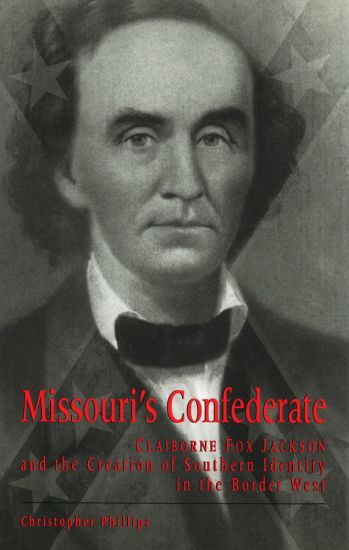
Claiborne Fox Jackson (1806-1862) remains one of Missouri's most controversial historical figures. Elected Missouri's governor in 1860 after serving as a state legislator and Democratic party chief, Jackson was the force behind a movement for the neutral state's secession before a federal sortie exiled him from office. Although Jackson's administration was replaced by a temporary government that maintained allegiance to the Union, he led a rump assembly that drafted an ordinance of secession in October 1861 and spearheaded its acceptance by the Confederate Congress. Despite the fact that the majority of the state's populace refused to recognize the act, the Confederacy named Missouri its twelfth state the following month. A year later Jackson died in exile in Arkansas, an apparent footnote to the war that engulfed his region and that consumed him.In this first full-length study of Claiborne Fox Jackson, Christopher Phillips offers much more than a traditional biography. His extensive analysis of Jackson's rise to power through the tangle that was Missouri's antebellum politics and of Jackson's complex actions in pursuit of his state's secession complete the deeper and broader story of regional identity--one that began with a growing defense of the institution of slavery and which crystallized during and after the bitter, internecine struggle in the neutral border state during the American Civil War. Placing slavery within the realm of western democratic expansion rather than of plantation agriculture in border slave states such as Missouri, Philips argues that southern identity in the region was not born, but created. While most rural Missourians were proslavery, their "southernization" transcended such boundaries, with southern identity becoming a means by which residents sought to reestablish local jurisdiction in defiance of federal authority during and after the war. This identification, intrinsically political and thus ideological, centered—and still centers—upon the events surrounding the Civil War, whether in Missouri or elsewhere. By positioning personal and political struggles and triumphs within Missourians' shifting identity and the redefinition of their collective memory, Phillips reveals the complex process by which these once Missouri westerners became and remain Missouri southerners.Missouri's Confederate not only provides a fascinating depiction of Jackson and his world but also offers the most complete scholarly analysis of Missouri's maturing antebellum identity. Anyone with an interest in the Civil War, the American West, or the American South will find this important new biography a powerful contribution to our understanding of nineteenth-century America and the origins—as well as the legacy—of the Civil War.
Everyday Arab Identity

Everyday Arab Identity

Christopher Phillips

Routledge
2016
nidottu
Whether through government propaganda or popular transnational satellite television channels, Arab citizens encounter a discourse that reinforces a sense of belonging to their own state and a broader Arab world on a daily basis. Looking through the lens of nationalism theory, this book examines how and why Arab identity continues to be reproduced in today’s Middle East, and how that Arab identity interacts with strengthening ties to religion and the state.Drawing on case studies of two ideologically different Arab regimes, Syria and Jordan, Christopher Phillips explores both the implications this everyday Arab identity will have on western policy towards the Middle East and its real life impact on international relations. Offering an original perspective on this topical issue, this book will be of interest to academics and practitioners working on the Arab world and political affairs, as well as students of International Relations, Political Science and the Middle East, notably Syria and Jordan, and policymakers in the region.