
Kirjojen hintavertailu. Mukana 11 717 486 kirjaa ja 12 kauppaa.

Kirjahaku

Etsi kirjoja tekijän nimen, kirjan nimen tai ISBN:n perusteella.

3 kirjaa tekijältä Christopher R. Madan

Memories That Matter

Memories That Matter

Christopher R. Madan

TAYLOR FRANCIS LTD
2024
sidottu
What makes some experiences more memorable than others? How can you better remember specific information later? Memories That Matter addresses these questions and more.The book is divided into three main parts, with each part focusing on a different aspect of memory. After the introductory first part, Part II discusses everyday uses of memory and why we remember, establishing a foundation for how memory is structured and stored in the brain. Part III dives into what makes us remember. Emotional and rewarding experiences are both more memorable than mundane experiences but are often studied using different approaches. Self-relevance and objects we can interact with are remembered better than less relevant information. The author explores these motivation-related influences on memory and considers whether a common mechanism underlies them all. Part IV changes the focus, discussing how we sometimes want to remember specific information that does not automatically capture our attention. The book considers evidence-based learning strategies and memory strategies, whilst also exploring real-world applications, with discussion of professions that accomplish amazing memory feats daily. The book concludes with a reflection on how the role of memory is changing as our world makes information increasingly accessible, particularly with the ever-expanding influence of the internet.Drawing from a variety of literatures and perspectives, this important book will be relevant for all students of memory from psychology, cognitive neuroscience, and related health backgrounds.

Memories That Matter

Memories That Matter

Christopher R. Madan

TAYLOR FRANCIS LTD
2024
nidottu
What makes some experiences more memorable than others? How can you better remember specific information later? Memories That Matter addresses these questions and more.The book is divided into three main parts, with each part focusing on a different aspect of memory. After the introductory first part, Part II discusses everyday uses of memory and why we remember, establishing a foundation for how memory is structured and stored in the brain. Part III dives into what makes us remember. Emotional and rewarding experiences are both more memorable than mundane experiences but are often studied using different approaches. Self-relevance and objects we can interact with are remembered better than less relevant information. The author explores these motivation-related influences on memory and considers whether a common mechanism underlies them all. Part IV changes the focus, discussing how we sometimes want to remember specific information that does not automatically capture our attention. The book considers evidence-based learning strategies and memory strategies, whilst also exploring real-world applications, with discussion of professions that accomplish amazing memory feats daily. The book concludes with a reflection on how the role of memory is changing as our world makes information increasingly accessible, particularly with the ever-expanding influence of the internet.Drawing from a variety of literatures and perspectives, this important book will be relevant for all students of memory from psychology, cognitive neuroscience, and related health backgrounds.
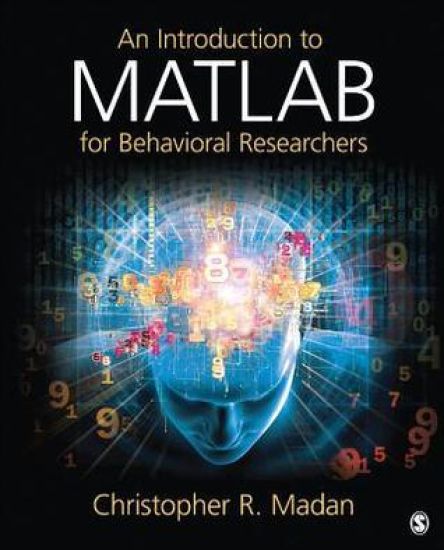
An Introduction to MATLAB for Behavioral Researchers

An Introduction to MATLAB for Behavioral Researchers

Christopher R. Madan

SAGE Publications Inc
2014
nidottu
MATLAB is a powerful data analysis program, but many behavioral science researchers find it too daunting to learn and use. An Introduction to MATLAB for Behavioral Researchers is an easy-to-understand, hands-on guide for behavioral researchers who have no prior programming experience. Written in a conversational and non-intimidating style, the author walks students—step by step—through analyzing real experimental data. Topics covered include the basics of programming, the implementation of simple behavioral analyses, and how to make publication-ready figures. More advanced topics such as pseudo-randomization of trial sequences to meet specified criteria and working with psycholinguistic data are also covered. Interesting behavioral science examples and datasets from published studies, such as visualizing fixation patterns in eye-tracking studies and animal search behavior in two-dimensional space, help develop an intuition for data analysis, which is essential and can only be developed when working with real research problems and real data.