Kirjojen hintavertailu. Mukana 11 244 527 kirjaa ja 12 kauppaa.

Kirjahaku

Etsi kirjoja tekijän nimen, kirjan nimen tai ISBN:n perusteella.

7 kirjaa tekijältä Christopher Steed

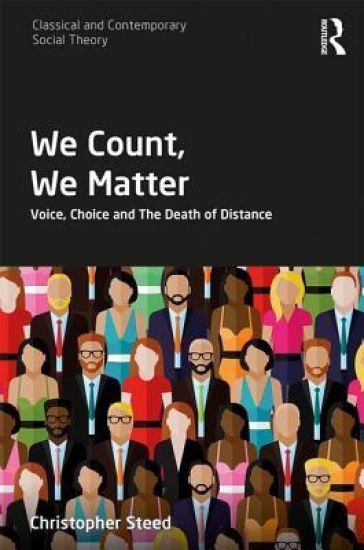
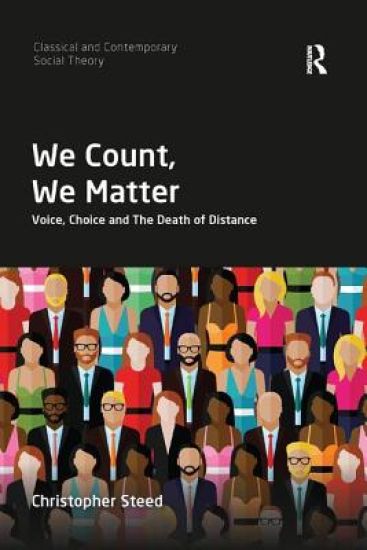
We Count, We Matter

We Count, We Matter

Christopher Steed

Routledge
2019
nidottu
This book examines the meaning of Brexit, the election of Trump and the rising tide of populist revolt on the right amidst the collapse of the left. Exploring the reaction against the establishment or ‘the system’, the author contends that we are witnessing a new divide between those who wish to see an interconnected world and those who seek distance: as transport and technology shrink the world, we witness a backlash that favours protectionism and opposes immigration. Distance is the new frontier: for some, remote players are rejected in favour of identities closer to home. This divide plays out in relation to the notion of ‘face’, as individuals react to ‘faceless’ organisations and processes such as globalisation and automation, responding to a sense of alienation on social media and developing a conception of themselves as networked individuals. Thus, we move towards a type of society characterised not by honour and dishonour, or right and wrong, but by voice and choice. A fascinating and very accessible analysis of the divisions and transformations that have come to dominate the contemporary landscape, this book will appeal to political leaders and social scientists with interests in globalisation, social movements and social theory.
Smart Leadership – Wise Leadership

Smart Leadership – Wise Leadership

Christopher Steed

Routledge
2017
nidottu
There is a strong link between organisational culture and profit after all a happy workforce is a productive workforce. Yet a culture of inertia rather than innovation prevails in many organisations. Wise leaders, however, know how to work with the grain of human value and worth, harnessing it, so as to add shared value both for the organisation and for the good of society. So, how can astute leaders set the right conditions for creativity and cultivate non-economic goods, such as time and relationships, that make for a happy, effective workforce? The author proposes the notion of organisational culture as ’environments of value’ wherein inner value translated into external value is embedded within the triple bottom line and indeed an awareness of how an organisation is like a force field: it exercises power and leaves a footprint. This construct informs the emerging concept of Shared Value as requiring five literacies about: ¢ Shareholder value and return for risk ¢ Value for the social environment linked to respect for the natural environment ¢ Inner value of those in the enterprise, which, when unlocked, releases energies and adds value ¢ Nurture of non-quantifiable qualities that promote human flourishing ¢ Understandings of how power relations distort the way organisations operate He clearly signposts the link between promoting an environment of value within which these literacies flourish and the added value for the organisation arising from such a culture.
A Question of Inequality

A Question of Inequality

Christopher Steed

I.B. Tauris
2020
nidottu
Inequality is widening. In the twenty-first century, the gap between those who have more and those who have less is growing: 1 per cent of the world owns as much as the other 99 per cent. Should we be worried? Christopher Steed, author of the acclaimed A Question of Worth, argues that inequality does indeed matter: that economic fairness is one of the defining issues of our time. In a world conditioned by social media, enabling intensified social comparison, the anxieties and effects of contemporary inequality are a cause for huge concern.Despite a wealth of research around inequality most studies have concentrated on its quantitative aspects. In A Question of Inequality, Christopher Steed is concerned with exploring why inequality matters, what it means for those who find themselves victims of it, and what can be done about it. He probes what it means to experience inequality, drawing out case studies on the effects of poverty. In proposing a theory of social relativity the author provides new insights into the effects and meaning of inequality and makes an original and important contribution to a key issue facing the world today.
We Count, We Matter

We Count, We Matter

Christopher Steed

Routledge
2018
sidottu
This book examines the meaning of Brexit, the election of Trump and the rising tide of populist revolt on the right amidst the collapse of the left. Exploring the reaction against the establishment or ‘the system’, the author contends that we are witnessing a new divide between those who wish to see an interconnected world and those who seek distance: as transport and technology shrink the world, we witness a backlash that favours protectionism and opposes immigration. Distance is the new frontier: for some, remote players are rejected in favour of identities closer to home. This divide plays out in relation to the notion of ‘face’, as individuals react to ‘faceless’ organisations and processes such as globalisation and automation, responding to a sense of alienation on social media and developing a conception of themselves as networked individuals. Thus, we move towards a type of society characterised not by honour and dishonour, or right and wrong, but by voice and choice. A fascinating and very accessible analysis of the divisions and transformations that have come to dominate the contemporary landscape, this book will appeal to political leaders and social scientists with interests in globalisation, social movements and social theory.
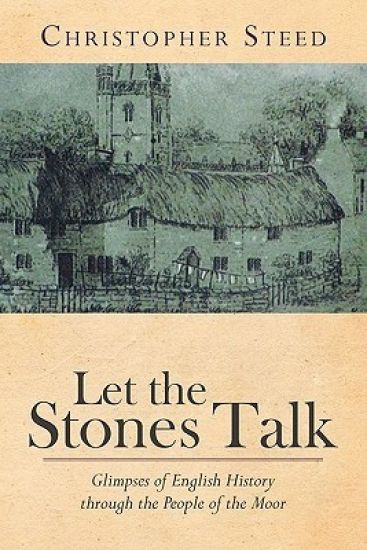
Let the Stones Talk

Let the Stones Talk

Christopher Steed

AuthorHouse
2011
pokkari
Who were the People of the Moor? Sixty generations have lived here since the Roman Second Legion descended from the skyline. What is the significance of the spirit-road....or a beautiful pavement in a villa buried by the soil of centuries? Who were the mysterious hill-fort people who established a high-status society on an ancient site? We encounter Norman lords and the lives of the miserable, a Mayor of Bristol who lost his wife when Black Death swept the people away, a senior Judge but also the common people, determined to build a magnificent structure as a sign of faith and hope for the future. What would it have been like to go to church in 1460? We read of the irrepressible way that the late medieval life of Merry England spills over into the church; of payments to minstrels and skilled craftsmen. The People of the Moor have to face up to religion-shock as a reform movement rocks their foundations. They contend with a tsunami, pirates and soldiers. As the generations roll by, we experience life in an 18th century village and witness a remarkable experiment by Hannah and her sisters. An in-depth look at the mid-Victorians holds up a mirror to social transformation on wheels and the challenge of educating and providing for the poor. Some intriguing characters pass each other in the street in 1840. Who is the village tailor, a yeoman farmer with relatives sentenced to death or transportation to Australia, a Quaker girl and the old gypsy who will die next year in the workhouse? In time new forms of power take hold and rural communities between the wars experience rapid social change. This story of small communities on their journey through time is a microcosm of English history. The march of 60 generations is our story too.
Smart Leadership – Wise Leadership

Smart Leadership – Wise Leadership

Christopher Steed

Routledge
2017
sidottu
There is a strong link between organisational culture and profit after all a happy workforce is a productive workforce. Yet a culture of inertia rather than innovation prevails in many organisations. Wise leaders, however, know how to work with the grain of human value and worth, harnessing it, so as to add shared value both for the organisation and for the good of society. So, how can astute leaders set the right conditions for creativity and cultivate non-economic goods, such as time and relationships, that make for a happy, effective workforce? The author proposes the notion of organisational culture as ’environments of value’ wherein inner value translated into external value is embedded within the triple bottom line and indeed an awareness of how an organisation is like a force field: it exercises power and leaves a footprint. This construct informs the emerging concept of Shared Value as requiring five literacies about: ¢ Shareholder value and return for risk ¢ Value for the social environment linked to respect for the natural environment ¢ Inner value of those in the enterprise, which, when unlocked, releases energies and adds value ¢ Nurture of non-quantifiable qualities that promote human flourishing ¢ Understandings of how power relations distort the way organisations operate He clearly signposts the link between promoting an environment of value within which these literacies flourish and the added value for the organisation arising from such a culture.
A Question of Inequality

A Question of Inequality

Christopher Steed

I.B. Tauris
2018
sidottu
Inequality is widening. In the twenty-first century, the gap between those who have more and those who have less is growing: 1 per cent of the world owns as much as the other 99 per cent. Should we be worried? Christopher Steed, author of the acclaimed A Question of Worth, argues that inequality does indeed matter: that economic fairness is one of the defining issues of our time. In a world conditioned by social media, enabling intensified social comparison, the anxieties and effects of contemporary inequality are a cause for huge concern.Despite a wealth of research around inequality most studies have concentrated on its quantitative aspects. In A Question of Inequality, Christopher Steed is concerned with exploring why inequality matters, what it means for those who find themselves victims of it, and what can be done about it. He probes what it means to experience inequality, drawing out case studies on the effects of poverty. In proposing a theory of social relativity the author provides new insights into the effects and meaning of inequality and makes an original and important contribution to a key issue facing the world today.