Kirjojen hintavertailu. Mukana 12 016 292 kirjaa ja 12 kauppaa.

Kirjahaku

Etsi kirjoja tekijän nimen, kirjan nimen tai ISBN:n perusteella.

19 kirjaa tekijältä Christopher Tilley

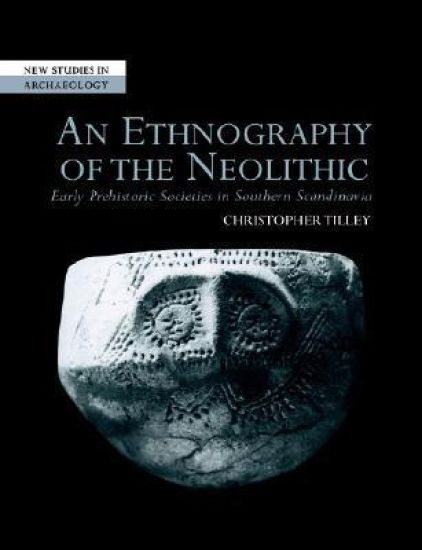
An Ethnography of the Neolithic

An Ethnography of the Neolithic

Christopher Tilley

Cambridge University Press
2003
pokkari
Archaeological research in Sweden and Denmark has uncovered a startling array of evidence over the last 150 years, but until now there has been no comprehensive synthesis and interpretation of the material. An Ethnography of the Neolithic bridges this gap, giving an accessible and up-to-date analysis of a wide range of evidence, from landscapes to monumental tombs to portable artifacts. Christopher Tilley also uses this material as a basis for a provocative and novel reconstruction of late Mesolithic and earlier Neolithic societies in southern Scandinavia, over a period of 3,000 years. His skilful integration of archaeological evidence with new anthropological approaches makes this book an original contribution to an important topic, whose significance stretches outside Scandinavia, and beyond the Neolithic.
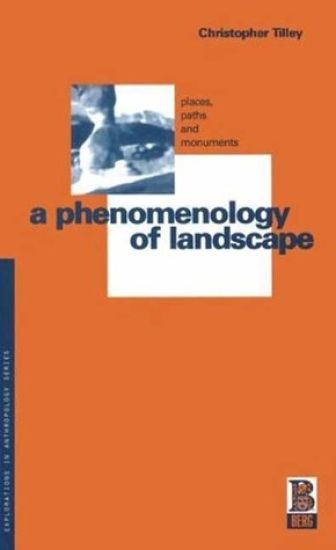
A Phenomenology of Landscape

A Phenomenology of Landscape

Christopher Tilley

BLOOMSBURY PUBLISHING PLC
1994
sidottu
Offers a new approach to landscape perception.This book is an extended photographic essay about topographic features of the landscape. It integrates philosophical approaches to landscape perception with anthropological studies of the significance of the landscape in small-scale societies. This perspective is used to examine the relationship between prehistoric sites and their topographic settings. The author argues that the architecture of Neolithic stone tombs acts as a kind of camera lens focussing attention on landscape features such as rock outcrops, river valleys, mountain spurs in their immediate surroundings. These monuments played an active role in socializing the landscape and creating meaning in it.A Phenomenology of Landscape is unusual in that it links two types of publishing which have remained distinct in archaeology: books with atmospheric photographs of monuments with a minimum of text and no interpretation; and the academic text in which words provide a substitute for visual imagery. Attractively illustrated with many photographs and diagrams, it will appeal to anyone interested in prehistoric monuments and landscape as well as students and specialists in archaeology, anthropology and human geography. 'Reception, perception and interpretation are key to understanding landscapes. This book provides a useful starting point for comprehension of these topics.'Dr. Stuart Prior, University of Bristol
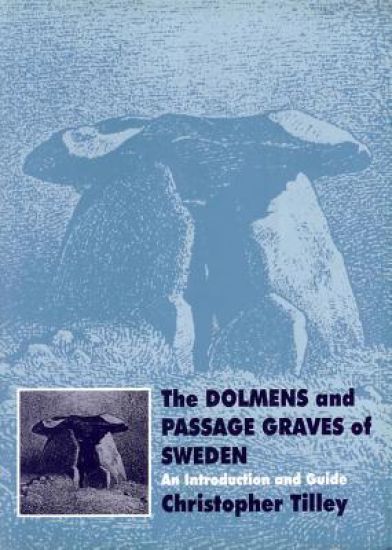
The Dolmens and Passage Graves of Sweden

The Dolmens and Passage Graves of Sweden

Christopher Tilley

University of London Institute of Archaeology
2009
nidottu
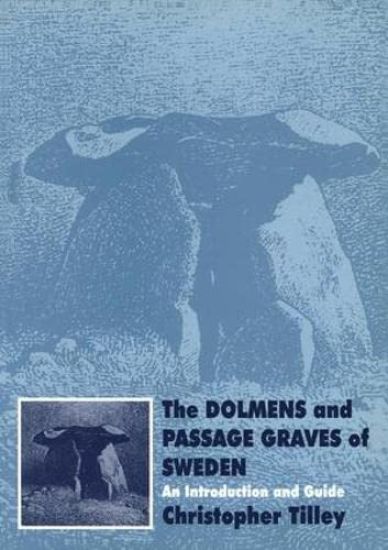
This book is the first comprehensive introduction and guide to Sweden’s most spectacular Stone Age monuments: the dolmens and passage graves, which began to be constructed over 5000 years ago. The introduction provides a detailed social interpretation of these monuments outlining how and why they were built and the ways in which they related to economy and landscape, politics, ceremony, symbolism and belief. This is followed by a systematic regional guide to all the major monuments in Skåne, Halland, Västergotland, Öland and Bohuslän, illustrated by numerous photographs, plans and maps.
The Dolmens and Passage Graves of Sweden

The Dolmens and Passage Graves of Sweden

Christopher Tilley

Routledge
2017
sidottu
This book is the first comprehensive introduction and guide to Sweden‘s most spectacular Stone Age monuments: the dolmens and passage graves, which began to be constructed over 5000 years ago. The introduction provides a detailed social interpretation of these monuments outlining how and why they were built and the ways in which they related to economy and landscape, politics, ceremony, symbolism and belief. This is followed by a systematic regional guide to all the major monuments in Sk Halland, V ergotland,and and Bohusl illustrated by numerous photographs, plans and maps.
Material Culture and Text

Material Culture and Text

Christopher Tilley

Routledge
2014
sidottu
Originally published in 1991, this is the first book-length exploration of post-structuralist discourse theory in archaeology. It tackles the most basic problem of historical and archaeological analysis - the relationship between text and artefact – in an analysis of prehistoric art fusing theory and the practice of interpretation to create a fresh framework for understanding the relationship between past and present. Focusing on a collection of rock carvings from northern Sweden, the author shows how alternative conceptualizations of the material from structuralist, hermeneutic and structural-Marxist frameworks substantially alter our understanding of their meaning and significance. Engaging readers in an interpretive process, this book is for specialists in archaeology, anthropology, art history and cultural studies.
Material Culture and Text

Material Culture and Text

Christopher Tilley

Routledge
2016
nidottu
Originally published in 1991, this is the first book-length exploration of post-structuralist discourse theory in archaeology. It tackles the most basic problem of historical and archaeological analysis - the relationship between text and artefact – in an analysis of prehistoric art fusing theory and the practice of interpretation to create a fresh framework for understanding the relationship between past and present. Focusing on a collection of rock carvings from northern Sweden, the author shows how alternative conceptualizations of the material from structuralist, hermeneutic and structural-Marxist frameworks substantially alter our understanding of their meaning and significance. Engaging readers in an interpretive process, this book is for specialists in archaeology, anthropology, art history and cultural studies.
Body and Image

Body and Image

Christopher Tilley

Left Coast Press Inc
2008
sidottu
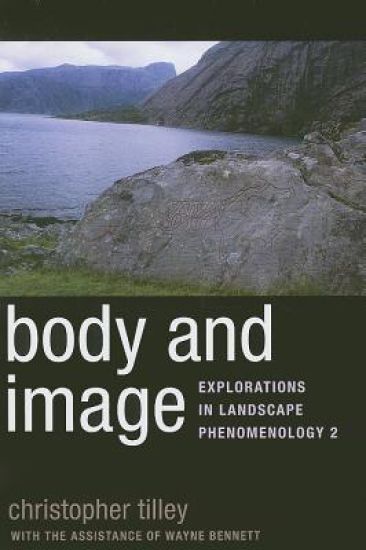
The understanding and interpretation of ancient architecture, landscapes, and art has always been viewed through an iconographic lens—a cognitive process based on traditional practices in art history. But ancient people did not ascribe their visions on canvas, rather on hills, stones, and fields. Thus, Chris Tilley argues, the iconographic approach falls short of understanding how ancient people interacted with their imagery. A kinaesthetic approach, one that uses the full body and all the senses, can better approximate the meaning that these artifacts had for their makers and today’s viewers. The body intersects the landscape in a myriad of ways—through the effort to reach the image, the angles that one can use to view, the multiple senses required for interaction. Tilley outlines the choreographic basis of understanding ancient landscapes and art phenomenologically, and demonstrates the power of his thesis through examples of rock art and megalithic architecture in Norway, Ireland, and Sweden. This is a powerful new model from one of the leading contemporary theorists in archaeology.
Body and Image

Body and Image

Christopher Tilley

Left Coast Press Inc
2008
nidottu
The understanding and interpretation of ancient architecture, landscapes, and art has always been viewed through an iconographic lens—a cognitive process based on traditional practices in art history. But ancient people did not ascribe their visions on canvas, rather on hills, stones, and fields. Thus, Chris Tilley argues, the iconographic approach falls short of understanding how ancient people interacted with their imagery. A kinaesthetic approach, one that uses the full body and all the senses, can better approximate the meaning that these artifacts had for their makers and today’s viewers. The body intersects the landscape in a myriad of ways—through the effort to reach the image, the angles that one can use to view, the multiple senses required for interaction. Tilley outlines the choreographic basis of understanding ancient landscapes and art phenomenologically, and demonstrates the power of his thesis through examples of rock art and megalithic architecture in Norway, Ireland, and Sweden. This is a powerful new model from one of the leading contemporary theorists in archaeology.
Interpreting Landscapes

Interpreting Landscapes

Christopher Tilley

Left Coast Press Inc
2010
sidottu
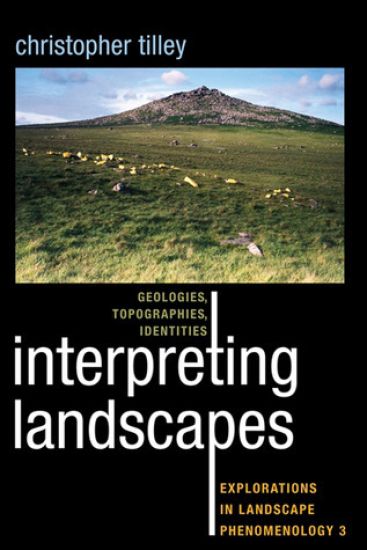
This book takes a new approach to writing about the past. Instead of studying the prehistory of Britain from Mesolithic to Iron Age times in terms of periods or artifact classifications, Tilley examines it through the lens of their geology and landscapes, asserting the fundamental significance of the bones of the land in the process of human occupation over the long durée. Granite uplands, rolling chalk downlands, sandstone moorlands, and pebbled hilltops each create their own potentialities and symbolic resources for human settlement and require forms of social engagement. Taking his findings from years of phenomenological fieldwork experiencing different landscapes with all senses and from many angles, Tilley creates a saturated and historically imaginative account of the landscapes of southern England and the people who inhabited them. This work is also a key theoretical statement about the importance of landscapes for human settlement.
Interpreting Landscapes

Interpreting Landscapes

Christopher Tilley

Left Coast Press Inc
2017
nidottu
This book takes a new approach to writing about the past. Instead of studying the prehistory of Britain from Mesolithic to Iron Age times in terms of periods or artifact classifications, Tilley examines it through the lens of their geology and landscapes, asserting the fundamental significance of the bones of the land in the process of human occupation over the long durée. Granite uplands, rolling chalk downlands, sandstone moorlands, and pebbled hilltops each create their own potentialities and symbolic resources for human settlement and require forms of social engagement. Taking his findings from years of phenomenological fieldwork experiencing different landscapes with all senses and from many angles, Tilley creates a saturated and historically imaginative account of the landscapes of southern England and the people who inhabited them. This work is also a key theoretical statement about the importance of landscapes for human settlement.
Thinking Through Images

Thinking Through Images

Christopher Tilley

Oxbow Books
2021
nidottu
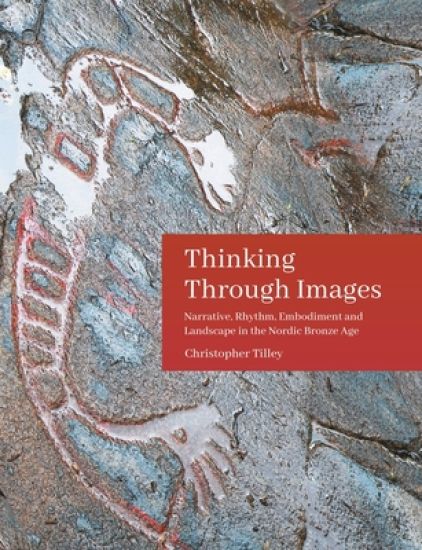
This book provides a general self-reflexive review and critical analysis of Scandinavian rock art from the standpoint of Chris Tilley’s research in this area over the last thirty years. It offers a novel alternative theoretical perspective stressing the significance of visual narrative structure and rhythm, using musical analogies, putting particular emphasis on the embodied perception of images in a landscape context.Part I reviews the major theories and interpretative perspectives put forward to understand the images, in historical perspective, and provides a critique discussing each of the main types of motifs occurring on the rocks. Part II outlines an innovative theoretical and methodological perspective for their study stressing sequence and relationality in bodily movement from rock to rock. Part III is a detailed case study and analysis of a series of rocks from northern Bohuslän in western Sweden. The conclusions reflect on the theoretical and methodological approach being taken in relation to the disciplinary practices involved in rock art research, and its future.
A Phenomenology of Landscape

A Phenomenology of Landscape

Christopher Tilley

Berg Publishers
1997
nidottu
Offers a new approach to landscape perception.This book is an extended photographic essay about topographic features of the landscape. It integrates philosophical approaches to landscape perception with anthropological studies of the significance of the landscape in small-scale societies. This perspective is used to examine the relationship between prehistoric sites and their topographic settings. The author argues that the architecture of Neolithic stone tombs acts as a kind of camera lens focussing attention on landscape features such as rock outcrops, river valleys, mountain spurs in their immediate surroundings. These monuments played an active role in socializing the landscape and creating meaning in it.A Phenomenology of Landscape is unusual in that it links two types of publishing which have remained distinct in archaeology: books with atmospheric photographs of monuments with a minimum of text and no interpretation; and the academic text in which words provide a substitute for visual imagery. Attractively illustrated with many photographs and diagrams, it will appeal to anyone interested in prehistoric monuments and landscape as well as students and specialists in archaeology, anthropology and human geography.
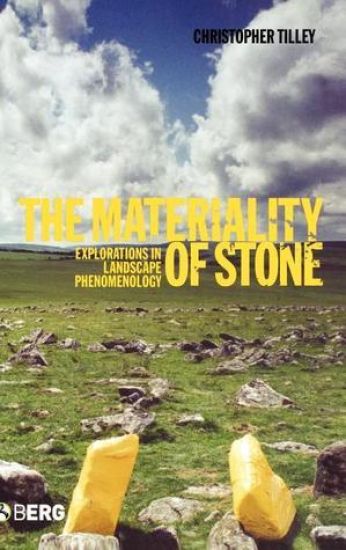
The Materiality of Stone

The Materiality of Stone

Christopher Tilley

Berg Publishers
2020
sidottu
With Wayne Bennett From the silky wax qualities of the surfaces of some quartz menhirs to the wood-grain textures of others, to the golden honeycombed limestones of Malta, to the icy frozen waves of the Cambrian sandstone of south-east Sweden, this book investigates the sensuous material qualities of stone. Tactile sensations, sonorous qualities, colour, and visual impressions are all shown to play a vital part in our understanding of the power and significance of prehistoric monuments in relation to their landscapes. In The Materiality of Stone, Christopher Tilley presents a radically new way of analyzing the significance of both 'cultural' and 'natural' stone in prehistoric European landscapes. Tilley's groundbreaking approach is to interpret human experience in a multidimensional and sensuous human way, rather than through an abstract analytical gaze. The studies range widely from the menhirs of prehistoric Brittany to Maltese Neolithic temples to Bronze Age rock carvings and cairns in southern Sweden. Tilley leaves no stone unturned as he also considers how the internal spaces and landscape settings are interpreted in relation to artifacts, substances, and related places that were deeply meaningful to the people who inhabited them and remain no less evocative today. In its innovative approach to understanding human experience through the tangible rocks and stone of our past, The Materiality of Stone is both a major theoretical and substantive contribution to the field of material culture studies and the study of European prehistory.
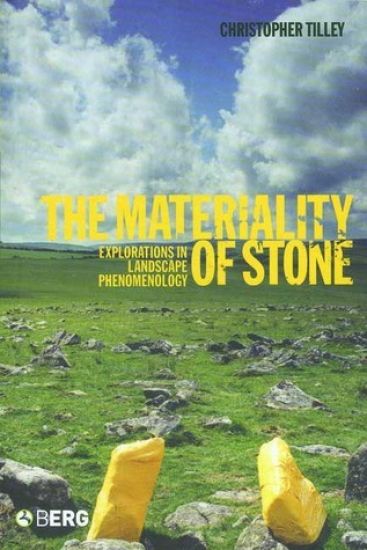
The Materiality of Stone

The Materiality of Stone

Christopher Tilley

Berg Publishers
2004
nidottu
With Wayne Bennett From the silky wax qualities of the surfaces of some quartz menhirs to the wood-grain textures of others, to the golden honeycombed limestones of Malta, to the icy frozen waves of the Cambrian sandstone of south-east Sweden, this book investigates the sensuous material qualities of stone. Tactile sensations, sonorous qualities, colour, and visual impressions are all shown to play a vital part in our understanding of the power and significance of prehistoric monuments in relation to their landscapes. In The Materiality of Stone, Christopher Tilley presents a radically new way of analyzing the significance of both 'cultural' and 'natural' stone in prehistoric European landscapes. Tilley's groundbreaking approach is to interpret human experience in a multidimensional and sensuous human way, rather than through an abstract analytical gaze. The studies range widely from the menhirs of prehistoric Brittany to Maltese Neolithic temples to Bronze Age rock carvings and cairns in southern Sweden. Tilley leaves no stone unturned as he also considers how the internal spaces and landscape settings are interpreted in relation to artifacts, substances, and related places that were deeply meaningful to the people who inhabited them and remain no less evocative today. In its innovative approach to understanding human experience through the tangible rocks and stone of our past, The Materiality of Stone is both a major theoretical and substantive contribution to the field of material culture studies and the study of European prehistory.