Long 'on' the Tooth: Dental Evidence of Diet addresses human dental macroscopic and microscopic wear, as well as dental disease, as indicators of diet. The book focuses primarily on 350 pre-contact humans from North America dating from approximately 5,500 to 600 years ago. These populations had subsistence strategies ranging from terrestrial foraging to intensive maize agriculture. The study makes intra- and intergroup comparisons to elucidate dietary nuances that are largely beyond the reach of other means of dietary reconstruction. Finally, the book discusses the importance of using multiple dietary indicators in unison in order to provide paleodietary insights.
On February 1, 1960, four African American college students entered the Woolworth department store in Greensboro, North Carolina, and sat down at the lunch counter. This lunch counter, like most in the American South, refused to serve black customers. The four students remained in their seats until the store closed. In the following days, they returned, joined by growing numbers of fellow students. These "sit-in" demonstrations soon spread to other southern cities, drawing in thousands of students and coalescing into a protest movement that would transform the struggle for racial inequality. The Sit-Ins tells the story of the student lunch counter protests and the national debate they sparked over the meaning of the constitutional right of all Americans to equal protection of the law. Christopher W. Schmidt describes how behind the now-iconic scenes of African American college students sitting in quiet defiance at "whites only" lunch counters lies a series of underappreciated legal dilemmas--about the meaning of the Constitution, the capacity of legal institutions to remedy different forms of injustice, and the relationship between legal reform and social change. The students' actions initiated a national conversation over whether the Constitution's equal protection clause extended to the activities of private businesses that served the general public. The courts, the traditional focal point for accounts of constitutional disputes, played an important but ultimately secondary role in this story. The great victory of the sit-in movement came not in the Supreme Court, but in Congress, with the passage of the Civil Rights Act of 1964, landmark legislation that recognized the right African American students had claimed for themselves four years earlier. The Sit-Ins invites a broader understanding of how Americans contest and construct the meaning of their Constitution.
On February 1, 1960, four African American college students entered the Woolworth department store in Greensboro, North Carolina, and sat down at the lunch counter. This lunch counter, like most in the American South, refused to serve black customers. The four students remained in their seats until the store closed. In the following days, they returned, joined by growing numbers of fellow students. These "sit-in" demonstrations soon spread to other southern cities, drawing in thousands of students and coalescing into a protest movement that would transform the struggle for racial inequality. The Sit-Ins tells the story of the student lunch counter protests and the national debate they sparked over the meaning of the constitutional right of all Americans to equal protection of the law. Christopher W. Schmidt describes how behind the now-iconic scenes of African American college students sitting in quiet defiance at "whites only" lunch counters lies a series of underappreciated legal dilemmas--about the meaning of the Constitution, the capacity of legal institutions to remedy different forms of injustice, and the relationship between legal reform and social change. The students' actions initiated a national conversation over whether the Constitution's equal protection clause extended to the activities of private businesses that served the general public. The courts, the traditional focal point for accounts of constitutional disputes, played an important but ultimately secondary role in this story. The great victory of the sit-in movement came not in the Supreme Court, but in Congress, with the passage of the Civil Rights Act of 1964, landmark legislation that recognized the right African American students had claimed for themselves four years earlier. The Sit-Ins invites a broader understanding of how Americans contest and construct the meaning of their Constitution.
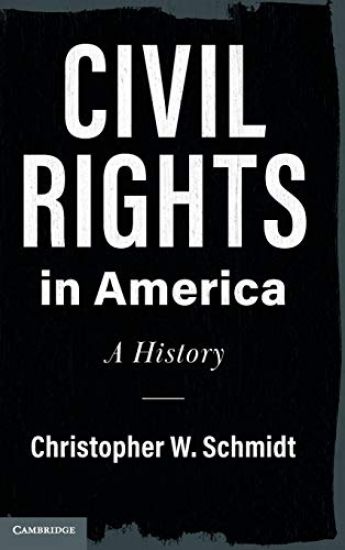
The term 'civil rights' has such a familiar presence in discussions about American politics and law that we tend to use it reflexively and intuitively, but rarely do we stop to think about what exactly we mean when we use the term and why certain uses strike us as right or wrong. In this book, Professor Christopher W. Schmidt tells the story of how Americans have fought over the meaning of civil rights from the Civil War through today. Through their struggles over what it means to live in a nation dedicated to protecting civil rights, each generation has given the label new life and new meaning. Civil Rights in America shows how the words we use to understand our world become objects of contestation and points of leverage for social, political, and legal action.
The term 'civil rights' has such a familiar presence in discussions about American politics and law that we tend to use it reflexively and intuitively, but rarely do we stop to think about what exactly we mean when we use the term and why certain uses strike us as right or wrong. In this book, Professor Christopher W. Schmidt tells the story of how Americans have fought over the meaning of civil rights from the Civil War through today. Through their struggles over what it means to live in a nation dedicated to protecting civil rights, each generation has given the label new life and new meaning. Civil Rights in America shows how the words we use to understand our world become objects of contestation and points of leverage for social, political, and legal action.