Kirjojen hintavertailu. Mukana 12 016 292 kirjaa ja 12 kauppaa.

Kirjahaku

Etsi kirjoja tekijän nimen, kirjan nimen tai ISBN:n perusteella.

13 kirjaa tekijältä Christopher W. Tindale

The Anthropology of Argument

The Anthropology of Argument

Christopher W. Tindale

Routledge
2020
nidottu
This innovative text reinvigorates argumentation studies by exploring the experience of argument across cultures, introducing an anthropological perspective into the domains of rhetoric, communication, and philosophy. The Anthropology of Argument fills an important gap in contemporary argumentation theory by shifting the focus away from the purely propositional element of arguments and onto how they emerge from the experiences of peoples with diverse backgrounds, demonstrating how argumentation can be understood as a means of expression and a gathering place of ideas and styles. Confronting the limitations of the Western tradition of logic and searching out the argumentative roles of place, orality, myth, narrative, and audience, it examines the nature of multi-modal argumentation. Tindale analyzes the impacts of colonialism on the field and addresses both optimistic and cynical assessments of contextual differences. The results have implications for our understanding of contemporary argumentative discourse in areas marked by deep disagreement, like politics, law, and social policy. The book will interest scholars and upper-level students in communication, philosophy, argumentation theory, anthropology, rhetoric, linguistics, and cultural studies.
The Anthropology of Argument

The Anthropology of Argument

Christopher W. Tindale

Routledge
2020
sidottu
This innovative text reinvigorates argumentation studies by exploring the experience of argument across cultures, introducing an anthropological perspective into the domains of rhetoric, communication, and philosophy. The Anthropology of Argument fills an important gap in contemporary argumentation theory by shifting the focus away from the purely propositional element of arguments and onto how they emerge from the experiences of peoples with diverse backgrounds, demonstrating how argumentation can be understood as a means of expression and a gathering place of ideas and styles. Confronting the limitations of the Western tradition of logic and searching out the argumentative roles of place, orality, myth, narrative, and audience, it examines the nature of multi-modal argumentation. Tindale analyzes the impacts of colonialism on the field and addresses both optimistic and cynical assessments of contextual differences. The results have implications for our understanding of contemporary argumentative discourse in areas marked by deep disagreement, like politics, law, and social policy. The book will interest scholars and upper-level students in communication, philosophy, argumentation theory, anthropology, rhetoric, linguistics, and cultural studies.
Fallacies and Argument Appraisal

Fallacies and Argument Appraisal

Christopher W. Tindale

Cambridge University Press
2007
sidottu
Fallacies and Argument Appraisal presents an introduction to the nature, identification, and causes of fallacious reasoning, along with key questions for evaluation. Drawing from the latest work on fallacies as well as some of the standard ideas that have remained relevant since Aristotle, Christopher Tindale investigates central cases of major fallacies in order to understand what has gone wrong and how this has occurred. Dispensing with the approach that simply assigns labels and brief descriptions of fallacies, Tindale provides fuller treatments that recognize the dialectical and rhetorical contexts in which fallacies arise. This volume analyzes major fallacies through accessible, everyday examples. Critical questions are developed for each fallacy to help the student identify them and provide considered evaluations.
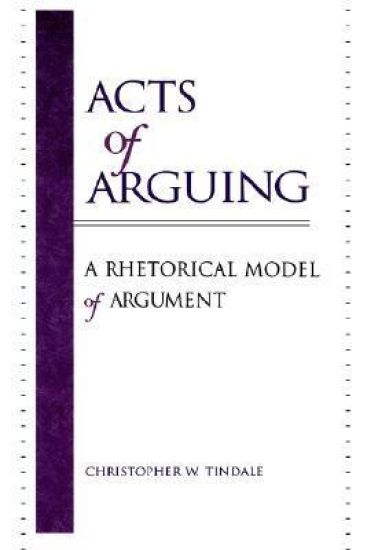
Acts of Arguing

Acts of Arguing

Christopher W. Tindale

State University of New York Press
1999
pokkari
Approaches recent innovations in argumentation theory from a primarily rhetorical perspective.The revival of argumentation theory in the past few decades has focused on its logical and dialectical dimensions, with less attention paid to rhetorical features. This book explores and then redresses this imbalance. Tindale examines important logical and dialectical innovations in recent argumentation theory and shows that they depend implicitly upon rhetorical features of argument that have been suppressed in the account. This is illustrated using two extended case studies, one looking at Shell International's defense of its actions in Nigeria after the death of Ken Saro-Wiwa, and the other exploring the uses of character-based argument and testimony in a Holocaust-denial text and legal trial.In addition to the case studies, two chapters treat serious problems that plague current argumentation theory. The first concerns the nature of fallacy; the second concerns the ties between traditional argumentation and a model of rationality that has been seriously critiqued by feminist and postmodernist scholars. In both instances, the discussion indicates how a rhetorical approach to argumentation offers fresh insights and suggests responses to the questions raised.
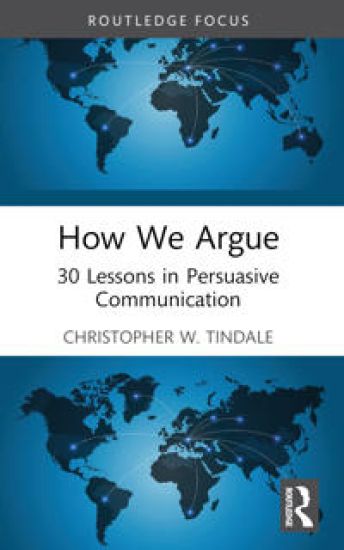
How We Argue

How We Argue

Christopher W. Tindale

TAYLOR FRANCIS LTD
2022
sidottu
This accessible book provides a practical discussion of the main elements of argumentation as illustrated by 30 public arguments from a recent year on a wide variety of social, cultural, and scientific topics. Arguing is an important form of communication in any society and a principal way in which ideas are exposed, discussed, and modified. The real-life examples examined in this book reflect the different considerations that go into composing arguments and the range of strategies that can be chosen as vehicles for our positions. They demonstrate the roles that emotion can play along with other modes of conveying evidence, from the use of images to the use of gestures. They show the power of threats, comparisons, and consequences. What emerges is an instructive discussion that illustrates the way we argue and that shows argument, invention, and evaluation in action.This book is a stimulating read for anyone interested in argument and public discourse and can be used as a supplemental text for courses in argumentation, persuasive communication, critical thinking, composition, and informal logic.
How We Argue

How We Argue

Christopher W. Tindale

TAYLOR FRANCIS LTD
2024
nidottu
This accessible book provides a practical discussion of the main elements of argumentation as illustrated by 30 public arguments from a recent year on a wide variety of social, cultural, and scientific topics. Arguing is an important form of communication in any society and a principal way in which ideas are exposed, discussed, and modified. The real-life examples examined in this book reflect the different considerations that go into composing arguments and the range of strategies that can be chosen as vehicles for our positions. They demonstrate the roles that emotion can play along with other modes of conveying evidence, from the use of images to the use of gestures. They show the power of threats, comparisons, and consequences. What emerges is an instructive discussion that illustrates the way we argue and that shows argument, invention, and evaluation in action.This book is a stimulating read for anyone interested in argument and public discourse and can be used as a supplemental text for courses in argumentation, persuasive communication, critical thinking, composition, and informal logic.
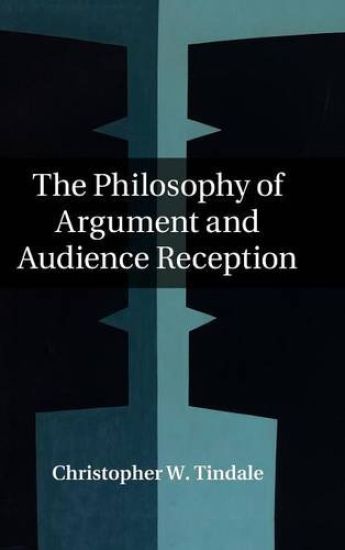
The Philosophy of Argument and Audience Reception

The Philosophy of Argument and Audience Reception

Christopher W. Tindale

Cambridge University Press
2015
sidottu
Recent work in argumentation theory has emphasized the nature of arguers and arguments along with various theoretical perspectives. Less attention has been given to the third feature of any argumentative situation - the audience. This book fills that gap by studying audience reception to argumentation and the problems that come to light as a result of this shift in focus. Christopher W. Tindale advances the tacit theories of several earlier thinkers by addressing the central problems connected with audience considerations in argumentation, problems that earlier philosophical theories overlook or inadequately accommodate. The main tools employed in exploring the central issues are drawn from contemporary philosophical research on meaning, testimony, emotion and agency. These are then combined with some of the major insights of recent rhetorical work in argumentation to advance our understanding of audiences and suggest avenues for further research.
The Philosophy of Argument and Audience Reception

The Philosophy of Argument and Audience Reception

Christopher W. Tindale

Cambridge University Press
2018
pokkari
Recent work in argumentation theory has emphasized the nature of arguers and arguments along with various theoretical perspectives. Less attention has been given to the third feature of any argumentative situation - the audience. This book fills that gap by studying audience reception to argumentation and the problems that come to light as a result of this shift in focus. Christopher W. Tindale advances the tacit theories of several earlier thinkers by addressing the central problems connected with audience considerations in argumentation, problems that earlier philosophical theories overlook or inadequately accommodate. The main tools employed in exploring the central issues are drawn from contemporary philosophical research on meaning, testimony, emotion and agency. These are then combined with some of the major insights of recent rhetorical work in argumentation to advance our understanding of audiences and suggest avenues for further research.
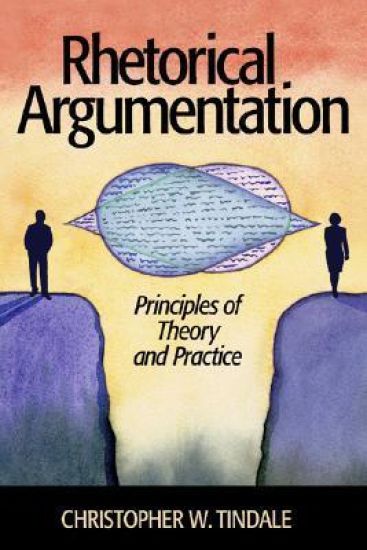
Rhetorical Argumentation

Rhetorical Argumentation

Christopher W. Tindale

SAGE Publications Inc
2004
sidottu
The study of argumentation has primarily focused on logical and dialectical approaches, with minimal attention given to the rhetorical facets of argument. Rhetorical Argumentation: Principles of Theory and Practice approaches argumentation from a rhetorical point of view and demonstrates how logical and dialectical considerations depend on the rhetorical features of the argumentative situation. Throughout this text, author Christopher W. Tindale identifies how argumentation as a communicative practice can best be understood by its rhetorical features. Rhetorical Argumentation uniquely presents argumentation through the idea of an invitational rhetoric by encouraging readers to think about the ways in which they encounter arguments. The book explores the processes involved in the argumentative exchanges between arguers and audiences-thus, emphasizing the collaborative nature of the arguer-audience relationship in the argumentative situation. That is, argument is presented not as a set of ideas imposed upon a passive audience, but rather as a dynamic exchange wherein the audience is involved in self-persuasion.Key Features: Explores the ancient foundations of rhetoric, from Aristotle to the relatively contemporary works of Perelman and Olbrechts-Tytecta, Toulmin, and Bakhtin Includes numerous examples illustrating the ways in which the reasoning within arguments involves the audience from premise through to conclusion Presents the idea of "dialogism" drawn from the theories of Mikhail Bakhtin to create a more dynamic and interactive sense of the argumentative context Examines current theory as well as the historical relationship between argument and rhetoric Provides detailed discussions of topics such as nature of the dialogical, rhetorical context, audiences, and standards of appraisal. Rhetorical Argumentation is designed to provide advanced undergraduate and graduate students with a clear understanding of the rhetorical view of argumentation and how it can be effective in contemporary society. The book is an ideal text for courses in Communication, Rhetoric, Argumentation, Informal Logic, Critical Thinking, and Conflict Resolution.
Rhetorical Argumentation

Rhetorical Argumentation

Christopher W. Tindale

SAGE Publications Inc
2004
nidottu
The study of argumentation has primarily focused on logical and dialectical approaches, with minimal attention given to the rhetorical facets of argument. Rhetorical Argumentation: Principles of Theory and Practice approaches argumentation from a rhetorical point of view and demonstrates how logical and dialectical considerations depend on the rhetorical features of the argumentative situation. Throughout this text, author Christopher W. Tindale identifies how argumentation as a communicative practice can best be understood by its rhetorical features. Rhetorical Argumentation uniquely presents argumentation through the idea of an invitational rhetoric by encouraging readers to think about the ways in which they encounter arguments. The book explores the processes involved in the argumentative exchanges between arguers and audiences-thus, emphasizing the collaborative nature of the arguer-audience relationship in the argumentative situation. That is, argument is presented not as a set of ideas imposed upon a passive audience, but rather as a dynamic exchange wherein the audience is involved in self-persuasion.Key Features: Explores the ancient foundations of rhetoric, from Aristotle to the relatively contemporary works of Perelman and Olbrechts-Tytecta, Toulmin, and Bakhtin Includes numerous examples illustrating the ways in which the reasoning within arguments involves the audience from premise through to conclusion Presents the idea of "dialogism" drawn from the theories of Mikhail Bakhtin to create a more dynamic and interactive sense of the argumentative context Examines current theory as well as the historical relationship between argument and rhetoric Provides detailed discussions of topics such as nature of the dialogical, rhetorical context, audiences, and standards of appraisal. Rhetorical Argumentation is designed to provide advanced undergraduate and graduate students with a clear understanding of the rhetorical view of argumentation and how it can be effective in contemporary society. The book is an ideal text for courses in Communication, Rhetoric, Argumentation, Informal Logic, Critical Thinking, and Conflict Resolution.
Plato's Reasons

Plato's Reasons

Christopher W. Tindale

STATE UNIVERSITY OF NEW YORK PRESS
2023
sidottu
Studies Plato's approach to argumentation, exploring his role as logician, rhetorician, and dialectician in a way that sees these three aspects working together.This book explores Plato's implicit understanding of argumentation by reviewing his standing as a logician, rhetorician, and dialectician. The question of his "standing" on these matters is approached on his terms (gleaned from the dialogues) rather than simply from the judgments of commentators. Traditionally, arguments are distinguished as logical, rhetorical, or dialectical, and the source of these distinctions is taken to be Aristotle. This book proceeds on the assumption that Aristotle's tripartite theory of argumentation did not arise in a vacuum and explores the different degrees to which substantive antecedents of parts of that model can be traced to Plato.
Plato's Reasons

Plato's Reasons

Christopher W. Tindale

STATE UNIVERSITY OF NEW YORK PRESS
2024
pokkari
Studies Plato's approach to argumentation, exploring his role as logician, rhetorician, and dialectician in a way that sees these three aspects working together.This book explores Plato's implicit understanding of argumentation by reviewing his standing as a logician, rhetorician, and dialectician. The question of his "standing" on these matters is approached on his terms (gleaned from the dialogues) rather than simply from the judgments of commentators. Traditionally, arguments are distinguished as logical, rhetorical, or dialectical, and the source of these distinctions is taken to be Aristotle. This book proceeds on the assumption that Aristotle's tripartite theory of argumentation did not arise in a vacuum and explores the different degrees to which substantive antecedents of parts of that model can be traced to Plato.
Grundkurs Informelle Logik: Begründen Und Argumentieren Im Alltag Und in Den Wissenschaften Übersetzt Von Thomas Keutner
Der Gegenstand der Informellen Logik ist das Hervorbringen, die Analyse und die Kritik von Begr ndungen und Argumenten im Alltag und in den Wissenschaften. Hierf r bedient sie sich eines Instrumentariums, das nicht nur der klassischen Schlusslehre, sondern ebenso auch der Rhetorik und Argumentationslehre entstammt. Daher liefert sie sowohl eine Lehre der Schl sse und Fehlschl sse, als auch eine Charakterisierung des Argumentierenden und seines Auditoriums. Das Werkzeug der Informellen Logik wird vorgef hrt am Beispiel von Techniken zur Identifizierung von Thesen, Begr ndungen und Argumenten. Eine Betrachtung der Unterscheidungskriterien guter und schlechter Argumente erlaubt sodann die Bewertung von Begr ndungen wie auch die Produktion starker eigener Argumente. Eine paradigmatische Analyse gesellschaftlich-politischer und wissenschaftlicher Argumentationstypen und -strategien veranschaulicht den weiten Anwendungsbereich der Informellen Logik. Jedem Kapitel sind zahlreiche bungsaufgaben angeh ngt, den Abschluss dieser Einf hrung bildet die Analyse eines Fallbeispiels f r politisches Argumentieren und stellt so eine Zusammenf hrung der zuvor pr sentierten Instrumente dar.