Kirjojen hintavertailu. Mukana 11 244 527 kirjaa ja 12 kauppaa.

Kirjahaku

Etsi kirjoja tekijän nimen, kirjan nimen tai ISBN:n perusteella.

22 kirjaa tekijältä Chuck Klosterman

Chuck Klosterman X: A Highly Specific, Defiantly Incomplete History of the Early 21st Century
New York Times-bestselling author and cultural critic Chuck Klosterman's articles and essays covering the past decade, including keystone pieces about Breaking Bad, Lou Reed, Jimmy Page, KISS, Stephen Malkmus, Jonathan Franzen, Tim Tebow, Kobe Bryant, Taylor Swift, Tom Brady, and many more cultural figures and phenomena. Chuck Klosterman has created an incomparable body of work in books, magazines, newspapers, and on the Web. Ten years and four books into his atypical career, Klosterman released a collection of his previously published journalism, essays, and columns titled Chuck Klosterman IV. The volume solidified his reputation as a cultural critic who can span the realms of pop culture and sports, but who can also address interpersonal issues, social quandaries, and ethical boundaries. Since then, Klosterman has written five more bestsellers, helped found and establish Grantland, served as the New York Times Magazine Ethicist, and worked on film and television productions, all while maintaining a consistent stream of writing in outlets such as GQ, Billboard, The Believer, The A.V. Club, and The Guardian. Chuck Klosterman X collects those many pieces along with fresh introductions and new footnotes throughout. The pieces are organized in categories (e.g. White Dudes Holding Guitars ) and Klosterman presents many of the articles in original form, before they were trimmed down for space, so they feature previously unpublished structures, passages, and signature digressions. The final part of the book includes Klosterman's epic 10,000-word KISS retrospective, which proved once and for all that no one knows KISS like Chuck Klosterman -- an entertaining return to his Fargo Rock City roots. Chuck Klosterman X is the culmination and celebration of two decades in journalism and books from one of the sharpest and most prolific observers and chroniclers of our unusual times.
Chuck Klosterman IV: A Decade of Curious People and Dangerous Ideas
Coming off the breakthrough success of Sex, Drugs, and Cocoa Puffs and Killing Yourself to Live, bestselling pop culture guru Chuck Klosterman assembles his best work previously unavailable in book form--including the groundbreaking 1996 piece about his chicken McNuggets experiment, his uncensored profile of Britney Spears, and a previously unpublished short story--all recontextualized in Chuck's unique voice with new intros, outros, segues, and masterful footnotes. Chuck Klosterman IV consists of three parts: Things That Are True--Profiles and trend stories: Britney Spears, Radiohead, Billy Joel, Metallica, Val Kilmer, Bono, Wilco, the White Stripes, Steve Nash, Morrissey, Robert Plant--all with new introductions and footnotes. Things That Might Be True--Opinions and theories on everything from monogamy to pirates to robots to super people to guilt, and (of course) Advancement--all with new hypothetical questions and footnotes. Something That Isn't True At All--This is old fiction. There's a new introduction, but no footnotes. Well, there's a footnote in the introduction, but none in the story.
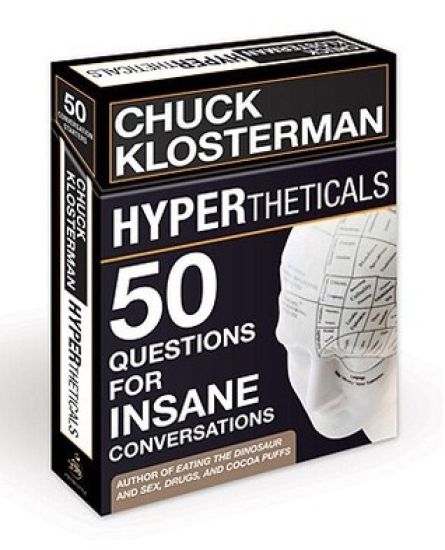
Hypertheticals: 50 Questions for Insane Conversations
This addictive collection of outlandish hypothetical questions from an acclaimed pop-culture journalist is sure to stimulate unconventional conversations and unexpected debates. - You are in an unfortunate situation in which you must consider cannibalism in order to stay alive. Would you rather eat babies or elderly people? - You are offered a Brain Pill that will make you feel 10 percent more intelligent, but you will seem 20 percent less intelligent to everyone else. Would you take the pill? - You wake up inhabiting Bruce Springsteen's body. Your voice sounds just like Bruce's, but your musical abilities are still entirely your own. You are scheduled to perform a huge concert that night. What would you do? How do you think your mother would answer these questions? Your best friend? Your significant other? Get ready for some insane conversations
But What If We're Wrong?: Thinking about the Present as If It Were the Past
"Full of intelligence and insights, as the author gleefully turns ideas upside down to better understand them. . . Replete with lots of nifty, whimsical footnotes, this clever, speculative book challenges our beliefs with jocularity and perspicacity." --Kirkus (starred review) "Klosterman's trademark humor and unique curiosity propel the reader through the book. He remains one of the most insightful critics of pop culture writing today and this is his most thought-provoking and memorable book yet." --Publishers Weekly (starred review) The tremendously well-received New York Times bestseller by cultural critic Chuck Klosterman, exploring the possibility that our currently held beliefs and assumptions about the world will eventually be proven wrong--now in paperback. But What If We're Wrong? is a book of original, reported, interconnected pieces, which speculate on the likelihood that many universally accepted, deeply ingrained cultural and scientific beliefs will someday seem absurd. Covering a spectrum of objective and subjective topics, the book attempts to visualize present-day society the way it will be viewed in a distant future. Klosterman cites original interviews with a wide variety of thinkers and experts--including George Saunders, David Byrne, Jonathan Lethem, Alex Ross, Kathryn Schulz, Neil deGrasse Tyson, Brian Greene, Junot D az, Amanda Petrusich, Ryan Adams, Dan Carlin, Nick Bostrom, and Richard Linklater. Klosterman asks straightforward questions that are profound in their simplicity, and the answers he explores and integrates with his own analysis generate the most thought-provoking and propulsive book of his career.
Killing Yourself to Live

Killing Yourself to Live

Chuck Klosterman

Faber Faber
2007
pokkari
For 6,557 miles, from New York to Mississippi to Seattle, Chuck Klosterman decided to chase rock n roll and death across a continent. 21 days later, after three relationships, an encounter with various cottonmouth snakes, and a night spent snorting cocaine in a graveyard, Klosterman started to order his thoughts on American culture and the meaning of celebrity.
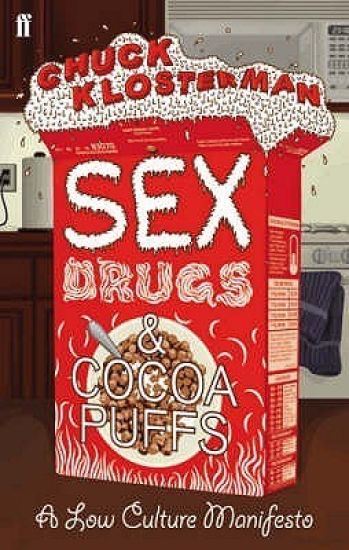
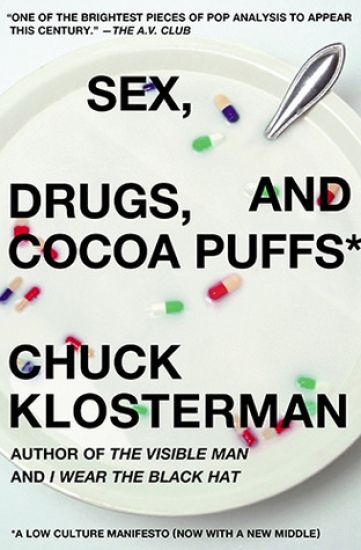
Sex, Drugs, and Cocoa Puffs

Sex, Drugs, and Cocoa Puffs

Chuck Klosterman

Faber Faber
2008
pokkari
With an exhaustive knowledge of popular culture and an effortless ability to spin brilliant prose out of unlikely subject matter, Klosterman attacks the entire spectrum of postmodern America: reality TV, Internet porn, breakfast cereal, serial killers, Pamela Anderson, literary Jesus freaks, and the real difference between apples and oranges (of which there is none). Sex, Drugs and Coca Puffs is ostensibly about movies, sport, television, music, books, video games and kittens, but really it's about us. All of us.
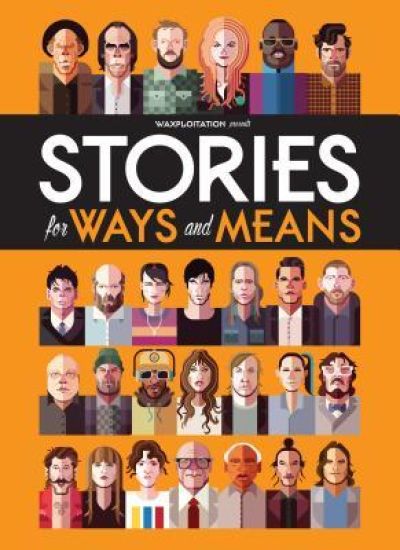
Stories for Ways and Means

Stories for Ways and Means

Chuck Klosterman

Bookbaby
2019
sidottu
Stories for Ways and Means features original grown up story collaborations by some of this era's most compelling storytellers from the worlds of music and contemporary art. Ten years ago Jeff Antebi, the founder of music publisher Waxploitation, had an idea to ask his favorite music artists and favorite contemporary painters to come together and collaborate on original children's stories for a benefit project. The resulting 350-page book includes stories from Tom Waits, Nick Cave, Frank Black, Justin Vernon, Laura Marling, Devendra Banhart, Alison Mosshart and Kathleen Hanna as well as painters/illustrators like Anthony Lister, Dan Baldwin, Swoon, Will Barras, James Jean, Ronzo, Kai & Sunny, and more. Guest narrators came along for fun as featured voices in short promo films: Danny Devito, Zach Galifianakis, Nick Offerman, Phil LaMarr, King Krule, and Lauren Lapkus. The project supports NGOs and nonprofit organizations advancing children's causes around the world, including Room to Read, Pencils of Promise, 826 National, and many more.
Stories for Ways and Means

Stories for Ways and Means

Chuck Klosterman

Waxploitation Books
2019
pokkari
Stories for Ways and Means features original "grown up" story collaborations by some of this era's most compelling storytellers from the worlds of music and contemporary art. Ten years ago Jeff Antebi, the founder of music publisher Waxploitation, had an idea to ask his favorite music artists and favorite contemporary painters to come together and collaborate on original children’s stories for a benefit project. The resulting 350-page book includes stories from Tom Waits, Nick Cave, Frank Black, Justin Vernon, Laura Marling, Devendra Banhart, Alison Mosshart and Kathleen Hanna as well as painters/illustrators like Anthony Lister, Dan Baldwin, Swoon, Will Barras, James Jean, Ronzo, Kai & Sunny, and more. Guest narrators came along for fun as featured voices in short promo films: Danny Devito, Zach Galifianakis, Nick Offerman, Phil LaMarr, King Krule, and Lauren Lapkus. The project supports NGOs and nonprofit organizations advancing children's causes around the world, including Room to Read, Pencils of Promise, 826 National, and many more.
Raised In Captivity

Raised In Captivity

Chuck Klosterman

Prentice Hall Press
2019
sidottu
Microdoses of the straight dope, stories so true they had to be wrapped in fiction for our own protection, from the best-selling author of But What if We're Wrong? A man flying first class discovers a puma in the lavatory. A new coach of a small-town Oklahoma high school football team installs an offense comprised of only one, very special, play. A man explains to the police why he told the employee of his local bodega that his colleague looked like the lead singer of Depeche Mode, a statement that may or may not have led in some way to a violent crime. A college professor discusses with his friend his difficulties with the new generation of students. An obscure power pop band wrestles with its new-found fame when its song "Blizzard of Summer" becomes an anthem for white supremacists. A couple considers getting a medical procedure that will transfer the pain of childbirth from the woman to her husband. A woman interviews a hit man about killing her husband but is shocked by the method he proposes. A man is recruited to join a secret government research team investigating why coin flips are no longer exactly 50/50. A man sees a whale struck by lightning, and knows that everything about his life has to change. A lawyer grapples with the unintended side effects of a veterinarian's rabies vaccination. Fair warning: Raised in Captivity does not slot into a smooth preexisting groove. If Saul Steinberg and Italo Calvino had adopted a child from a Romanian orphanage and raised him on Gary Larsen and Thomas Bernhard, he would still be nothing like Chuck Klosterman. They might be good company, though. Funny, wise and weird in equal measure, Raised in Captivity bids fair to be one of the most original and exciting story collections in recent memory, a fever graph of our deepest unvoiced hopes, fears and preoccupations. Ceaselessly inventive, hostile to corniness in all its forms, and mean only to the things that really deserve it, it marks a cosmic leap forward for one of our most consistently interesting writers.
Raised In Captivity

Raised In Captivity

Chuck Klosterman

Prentice Hall Press
2020
nidottu
Microdoses of the straight dope, stories so true they had to be wrapped in fiction for our own protection, from the best-selling author of But What if We're Wrong?A man flying first class discovers a puma in the lavatory. A new coach of a small-town Oklahoma high school football team installs an offense comprised of only one, very special, play. A man explains to the police why he told the employee of his local bodega that his colleague looked like the lead singer of Depeche Mode, a statement that may or may not have led in some way to a violent crime. A college professor discusses with his friend his difficulties with the new generation of students. An obscure power pop band wrestles with its new-found fame when its song "Blizzard of Summer" becomes an anthem for white supremacists. A couple considers getting a medical procedure that will transfer the pain of childbirth from the woman to her husband. A woman interviews a hit man about killing her husband but is shocked by the method he proposes. A man is recruited to join a secret government research team investigating why coin flips are no longer exactly 50/50. A man sees a whale struck by lightning, and knows that everything about his life has to change. A lawyer grapples with the unintended side effects of a veterinarian's rabies vaccination.Fair warning: Raised in Captivity does not slot into a smooth preexisting groove. If Saul Steinberg and Italo Calvino had adopted a child from a Romanian orphanage and raised him on Gary Larsen and Thomas Bernhard, he would still be nothing like Chuck Klosterman. They might be good company, though. Funny, wise and weird in equal measure, Raised in Captivity bids fair to be one of the most original and exciting story collections in recent memory, a fever graph of our deepest unvoiced hopes, fears and preoccupations. Ceaselessly inventive, hostile to corniness in all its forms, and mean only to the things that really deserve it, it marks a cosmic leap forward for one of our most consistently interesting writers.
The Nineties

The Nineties

Chuck Klosterman

Penguin Putnam Inc
2022
sidottu
From the New York Times bestselling author of But What if We're Wrong, a wise and funny reckoning with the decade that gave us slacker/grunge irony about the sin of trying too hard, during the greatest shift in human consciousness of any decade in American history. It was long ago, but not as long as it seems: The Berlin Wall fell and the Twin Towers collapsed. In between, one presidential election was allegedly decided by Ross Perot while another was plausibly decided by Ralph Nader. In the beginning, almost every name and address was listed in a phone book, and everyone answered their landlines because you didn't know who it was. By the end, exposing someone's address was an act of emotional violence, and nobody picked up their new cell phone if they didn't know who it was. The 90s brought about a revolution in the human condition we're still groping to understand. Happily, Chuck Klosterman is more than up to the job. Beyond epiphenomena like Cop Killer and Titanic and Zima, there were wholesale shifts in how society was perceived: the rise of the internet, pre-9/11 politics, and the paradoxical belief that nothing was more humiliating than trying too hard. Pop culture accelerated without the aid of a machine that remembered everything, generating an odd comfort in never being certain about anything. On a 90's Thursday night, more people watched any random episode of Seinfeld than the finale of Game of Thrones. But nobody thought that was important; if you missed it, you simply missed it. It was the last era that held to the idea of a true, hegemonic mainstream before it all began to fracture, whether you found a home in it or defined yourself against it. In The Nineties, Chuck Klosterman makes a home in all of it: the film, the music, the sports, the TV, the politics, the changes regarding race and class and sexuality, the yin/yang of Oprah and Alan Greenspan. In perhaps no other book ever written would a sentence like, "The video for 'Smells Like Teen Spirit' was not more consequential than the reunification of Germany" make complete sense. Chuck Klosterman has written a multi-dimensional masterpiece, a work of synthesis so smart and delightful that future historians might well refer to this entire period as Klostermanian.
Sex, Drugs, And Cocoa Puffs

Sex, Drugs, And Cocoa Puffs

Chuck Klosterman

Simon Schuster
2004
nidottu
The author of Fargo Rock City explores a range of modern cultural phenomena, including Internet pornography, tribute bands, baseball rivalries, and reality television, as he explores the role of the media in American life. Reprint. 100,000 first printing.
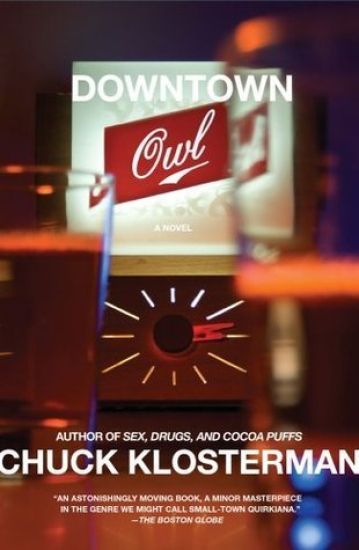
Downtown Owl

Downtown Owl

Chuck Klosterman

Scribner
2009
pokkari
New York Times bestselling author and "one of America's top cultural critics" (Entertainment Weekly) Chuck Klosterman's debut novel brilliantly captures the charm and dread of small town life-now available in trade paperback. Somewhere in rural North Dakota, there is a fictional town called Owl. They don't have cable. They don't really have pop culture, but they do have grain prices and alcoholism. People work hard and then they die. But that's not nearly as awful as it sounds; in fact, sometimes it's perfect. Mitch Hrlicka lives in Owl. He plays high school football and worries about his weirdness, or lack thereof. Julia Rabia just moved to Owl. A history teacher, she gets free booze and falls in love with a self-loathing bison farmer. Widower and local conversationalist Horace Jones has resided in Owl for seventy-three years. They all know each other completely, except that they've never met. But when a deadly blizzard- based on an actual storm that occurred in 1984-hits the area, their lives are derailed in unexpected and powerful ways.An unpretentious, darkly comedic story of how it feels to exist in a community where local mythology and violent reality are pretty much the same thing, Downtown Owl is "a satisfying character study and strikes a perfect balance between the funny and the pro- found" (Publishers Weekly).
Eating the Dinosaur

Eating the Dinosaur

Chuck Klosterman

Scribner
2010
pokkari
This collection is an exploration of pop culture and sports that takes a Klostermaniacal look at expectations, reality, media, and fans. Some of Chuck's questions are these: Why does a given band's most ardent fans always hate that band's most recent album? What makes the game of football appear outwardly conservative while it is inwardly radical? Why is pop culture obsessed with time travel? What do Kurt Cobain and David Koresh have in common? Why do artists, athletes, celebrities, and just about everyone else respond when interviewed, even when they should keep their mouths shut? What makes voyeurism so interesting, and what makes it so boring? And, just what the hell is irony anyway? In Klosterman's new collection, the answers are hilarious and entertaining, and the way he gets to them even more so.
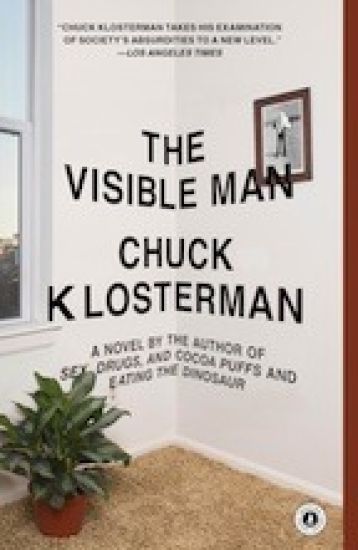
The Visible Man

The Visible Man

Chuck Klosterman

Scribner
2013
pokkari
Austin, Texas, therapist Victoria Vick is contacted by a cryptic, unlikable manwho insists his situation is unique and unfathomable. As he slowly reveals himself, Vick becomes convinced that he suffers from a complex set of delusions: Y__, as she refers to him, claims to be a scientist who has stolen cloaking technology from an aborted government project in order to render himself nearly invisible. He says he uses this ability to observe random individuals, usually when they are alone and vulnerable. Unsure of his motives or honesty, Vick becomes obsessed with her patient and the disclosure of his increasingly bizarre and disturbing tales. Over time, it threatens her career, her marriage, and her own identity. "Chuck Klosterman takes his examination of society's absurdities to a new level…richly drawn and dryly funny" (Los Angeles Times), The Visible Man touches on all of Klosterman's favorite themes: the consequence of culture, the influence of media, the complexity of voyeurism, and the existential contradiction of normalcy. Is this comedy, criticism, or horror? Not even Y__ seems to know for sure.
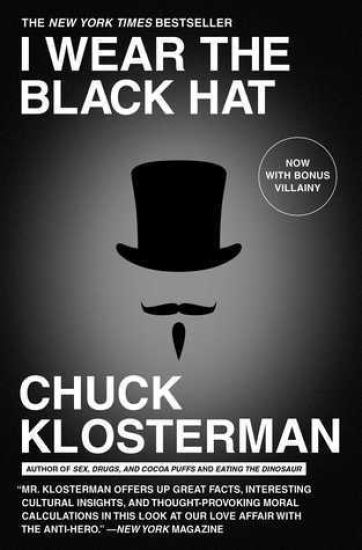
I Wear the Black Hat: Grappling with Villains (Real and Imagined)
One-of-a-kind cultural critic and New York Times bestselling author Chuck Klosterman "offers up great facts, interesting cultural insights, and thought-provoking moral calculations in this look at our love affair with the anti-hero" (New York magazine). Chuck Klosterman, "The Ethicist" for The New York Times Magazine, has walked into the darkness. In I Wear the Black Hat, he questions the modern understanding of villainy. When we classify someone as a bad person, what are we really saying, and why are we so obsessed with saying it? How does the culture of malevolence operate? What was so Machiavellian about Machiavelli? Why don't we see Bernhard Goetz the same way we see Batman? Who is more worthy of our vitriol--Bill Clinton or Don Henley? What was O.J. Simpson's second-worst decision? And why is Klosterman still haunted by some kid he knew for one week in 1985? Masterfully blending cultural analysis with self-interrogation and imaginative hypotheticals, I Wear the Black Hat delivers perceptive observations on the complexity of the antihero (seemingly the only kind of hero America still creates). As the Los Angeles Times notes: "By underscoring the contradictory, often knee-jerk ways we encounter the heroes and villains of our culture, Klosterman illustrates the passionate but incomplete computations that have come to define American culture--and maybe even American morality." I Wear the Black Hat is a rare example of serious criticism that's instantly accessible and really, really funny.