Kirjojen hintavertailu. Mukana 11 717 486 kirjaa ja 12 kauppaa.

Kirjahaku

Etsi kirjoja tekijän nimen, kirjan nimen tai ISBN:n perusteella.

6 kirjaa tekijältä Cindy Weinstein

Family, Kinship, and Sympathy in Nineteenth-Century American Literature
In Family, Kinship, and Sympathy in Nineteenth-Century American Literature Cindy Weinstein radically revises our understanding of nineteenth-century sentimental literature in the United States. She argues that these novels are far more complex than critics have suggested. Rather than confirming the power of the bourgeois family, Weinstein argues, sentimental fiction used the destruction of the biological family as an opportunity to reconfigure the family in terms of love rather than consanguinity. Their texts intervened in debates about slavery, domestic reform and other social issues of the time. Weinstein shows how canonical texts, such as Melville's Pierre and works by Stowe and Twain, can take on new meaning when read in the context of nineteenth-century sentimental fiction. Through intensive close readings of a wide range of novels, this groundbreaking study demonstrates the aesthetic and political complexities in this important and influential genre.
The Literature of Labor and the Labors of Literature

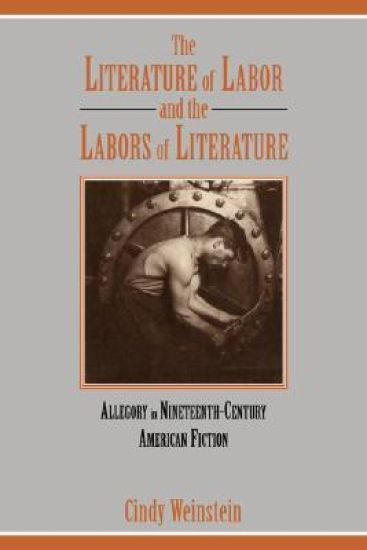
The Literature of Labor and the Labors of Literature

Cindy Weinstein

Cambridge University Press
2008
pokkari
The Literature of Labor and the Labors of Literature juxtaposes representations of labour in fictional texts and non-fictional texts in order to trace the intersections between aesthetic and economic discourse in nineteenth-century America. Both allegory and the new forms of labour produced a version of personhood that seemed frighteningly flat, a flatness that attacked the substance of the work ethic and, indeed, the very foundations of American individualism. Using this contextualized model of allegory, Weinstein argues that texts by Hawthorne, Melville, Twain and Adams are best understood both as allegories of labour (that is, the allegorical representations of the nature and cost of being a labouring being) and labours of allegory (that is, the visibility of the author's work of representation). Weinstein revolutionizes the notion of allegorical narrative, which is exposed as a literary medium of greater depth and consequence than has previously been implied - a working authorial vehicle for engaged and at times socially turbulent thought.
Family, Kinship, and Sympathy in Nineteenth-Century American Literature
In Family, Kinship, and Sympathy in Nineteenth-Century American Literature Cindy Weinstein radically revises our understanding of nineteenth-century sentimental literature in the United States. She argues that these novels are far more complex than critics have suggested. Rather than confirming the power of the bourgeois family, Weinstein argues, sentimental fiction used the destruction of the biological family as an opportunity to reconfigure the family in terms of love rather than consanguinity. Their texts intervened in debates about slavery, domestic reform and other social issues of the time. Weinstein shows how canonical texts, such as Melville's Pierre and works by Stowe and Twain, can take on new meaning when read in the context of nineteenth-century sentimental fiction. Through intensive close readings of a wide range of novels, this groundbreaking study demonstrates the aesthetic and political complexities in this important and influential genre.
Time, Tense, and American Literature

Time, Tense, and American Literature

Cindy Weinstein

Cambridge University Press
2015
sidottu
In Time, Tense, and American Literature, Cindy Weinstein examines canonical American authors who employ a range of tenses to tell a story that has already taken place. This book argues that key texts in the archive of American literature are inconsistent in their retrospective status, ricocheting between past, present and future. Taking 'The Narrative of Arthur Gordon Pym' as her point of departure, Weinstein shows how Poe's way of representing time involves careening tenses, missing chronometers and inoperable watches, thus establishing a vocabulary of time that is at once anticipated in the fiction of Charles Brockden Brown and further articulated in works by Elizabeth Stuart Phelps, Theodore Dreiser and Edward P. Jones. Each chapter examines the often strange narrative fabric of these novels and presents an opportunity to understand how especially complicated historical moments, from the founding of the new nation to the psychic consequences of the Civil War, find contextual expression through a literary uncertainty about time.
Time, Tense, and American Literature

Time, Tense, and American Literature

Cindy Weinstein

Cambridge University Press
2023
pokkari
In Time, Tense, and American Literature, Cindy Weinstein examines canonical American authors who employ a range of tenses to tell a story that has already taken place. This book argues that key texts in the archive of American literature are inconsistent in their retrospective status, ricocheting between past, present and future. Taking 'The Narrative of Arthur Gordon Pym' as her point of departure, Weinstein shows how Poe's way of representing time involves careening tenses, missing chronometers and inoperable watches, thus establishing a vocabulary of time that is at once anticipated in the fiction of Charles Brockden Brown and further articulated in works by Elizabeth Stuart Phelps, Theodore Dreiser and Edward P. Jones. Each chapter examines the often strange narrative fabric of these novels and presents an opportunity to understand how especially complicated historical moments, from the founding of the new nation to the psychic consequences of the Civil War, find contextual expression through a literary uncertainty about time.
Finding the Right Words

Finding the Right Words

Cindy Weinstein

Johns Hopkins University Press
2021
sidottu
The moving story of an English professor studying neurology in order to understand and come to terms with her father's death from Alzheimer's.Winner of the Memoir Prize for Books by the Memoir MagazineIn 1985, when Cindy Weinstein was a graduate student at UC Berkeley, her beloved father, Jerry, was diagnosed with early-onset Alzheimer's disease. He was fifty-eight years old. Twelve years later, at age seventy, he died having lost all of his memories—along with his ability to read, write, and speak. Finding the Right Words follows Weinstein's decades-long journey to come to terms with her father's dementia as both a daughter and an English professor. Although her lifelong love of language and literature gave her a way to talk about her grief, she realized that she also needed to learn more about the science of dementia to make sense of her father's death. To write her story, she collaborated with Dr. Bruce L. Miller, neurologist and director of the Memory and Aging Center at the University of California, San Francisco, combining personal memoir, literature, and the science and history of brain health into a unique, educational, and meditative work. Finding the Right Words is an invaluable guide for families dealing with a life-changing diagnosis. In chapters of profound and sometimes humorous remembrance, Weinstein relies on literature to describe the shock of her father's diagnosis and his loss of language and identity. Writing in response to Weinstein's deeply personal narrative, Dr. Miller describes the neurological processes responsible for the symptoms displayed by her father. He also reflects upon his own personal and professional experiences. In a final chapter about memory, Weinstein is able to remember her father before the diagnosis, and Miller explains how the brain creates memories while sharing some of his own. Their two perspectives give readers a fuller understanding of Alzheimer's than any one voice could.