Kirjojen hintavertailu. Mukana 11 699 587 kirjaa ja 12 kauppaa.

Kirjahaku

Etsi kirjoja tekijän nimen, kirjan nimen tai ISBN:n perusteella.

7 kirjaa tekijältä Claes G. Ryn

Democracy and the Ethical Life

Democracy and the Ethical Life

Claes G. Ryn

The Catholic University of America Press
1990
nidottu
This study goes to the heart of ethics and politics. Strongly argued and lucidly written, the book makes a crucial distinction between two forms of democracy. The author defends constitutional democracy as potentially supportive of the ethical life, while he criticizes the plebiscitary form of democracyas undermiining man's moral nature. The book includes an extensive interpretation and refutation of the ideas of Jean-Jacques Rousseau and offers a new perspective on the American Constitution and the relationship between moral community and self-interest. This edition includes an important new section on the common good and the state of Western democracy.PRAISE FOR THE BOOK: "One of the best books on the terrain where politics and morality precariously overlap, recommended vigorously to all who are concerned with the loss of political morality."--Peter Viereck "An excellent and much needed analysis, and synthesis, of the relation of man's moral life to democratic, constitutional self rule."--Vera Lex
A Common Human Ground

A Common Human Ground

Claes G. Ryn

University of Missouri Press
2019
nidottu
A great challenge of the twenty-first century is the danger of conflict between persons, peoples, and cultures, among and within societies. In A Common Human Ground, Claes Ryn explores the nature of this problem and sets forth a theory about what is necessary for peaceful relations to be possible.Many in the Western world trust in 'democracy,' 'capitalism,' 'liberal tolerance,' 'scientific progress,' or 'general enlightenment' to handle this problem. Although each of these, properly defined, may contribute toward alleviating disputes, Ryn argues that the problem is much more complex and demanding than is usually recognized. He reasons that, most fundamentally, good relations among individuals and nations have moral and cultural preconditions.What can predispose them to mutual respect and peace? One Western philosophical tradition, for which Plato set the pattern, maintains that the only way to genuine unity is for historical diversity to yield to universality. The implication of this view for a multicultural world would be a peace that requires that cultural distinctiveness be effaced as far as possible and replaced with a universal culture. A very different Western philosophical tradition denies the existence of universality altogether. It is represented today by postmodernist multiculturalism-a view that leaves unanswered the question as to how conflict between diverse groups might be averted.Ryn questions both of these traditions, arguing for the potential union of universality and particularity. He contends that the two need not be enemies, but in fact need each other. Cultivating individual and national particularities is potentially compatible with strengthening and enriching our common humanity. This volume embraces the notion of universality, while at the same time historicizing it.Using wide-ranging examples, Ryn presents a firmly sustained and systematic argument centering on this central issue. His approach is interdisciplinary, discussing not only political ideas, but also fiction, drama, and other arts. Scholarly and philosophical, but not specialized, this book will appeal to general readers as well as intellectuals.
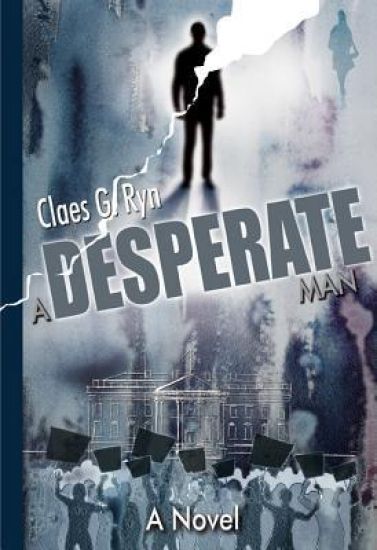
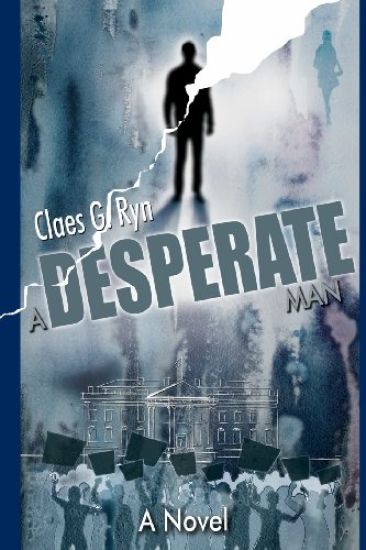
A Desperate Man

A Desperate Man

Claes G. Ryn

Athena Books of Fairview
2013
sidottu
A riveting thriller, a haunting picture of America.Could two people be more enviable than Richard and Helen Bittenberg? They love each other, have two healthy, intelligent children, and are financially comfortable. Richard is at the top of his profession. Their home is in a desirable Washington, D.C., neighborhood. The culturally rich, cosmopolitan atmosphere of the capital of the most powerful nation in the world forms part of their privileged existence. But to Richard it seems that perverse, irresponsible forces are destroying the country he loves. He feels compelled to resist. But how? Deeply troubled by his powerlessness, he seizes a daunting opportunity that he could never have foreseen. His life changes drastically. He is drawn into tension-filled, sometimes harrowing circumstances. They tax his moral conscience, courage, and endurance to the utmost. Helen worries about his increasingly fraught and stressed condition and tries to make him change his ways, but she does not know their real cause. Then, when she least expects it, she finds herself in the middle of a nightmare of her own. She has to muster all her willpower and wile. Helen and Richard must independently handle daunting ordeals, one involving secret, nerve-racking political machinations, one involving an agonizing police investigation. The milieus of the novel are Washington, D.C., Paris and environs, and Charleston, South Carolina. This is a political and psychological thriller that sneaks up on the reader and then only tightens its grip. It also has the fully developed characters and the trenchant, nuanced narrative of a serious work of fiction. Telling the story of the existential crises that Richard and Helen must face, the novel becomes a disquieting and thought-provoking commentary on the state of America and the Western world. Does the novel's poignant picture of contemporary society suggest merely fictional possibilities? A Desperate Man deeply engages the reader, raising profound moral and cultural questions.
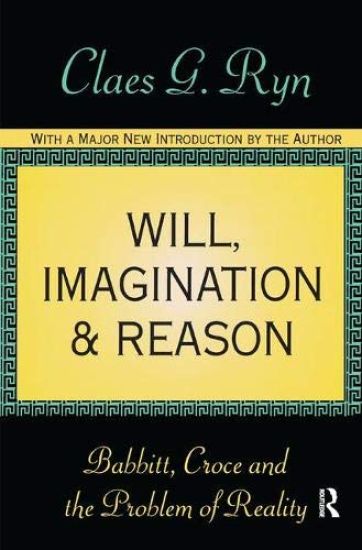
Will, Imagination, and Reason

Will, Imagination, and Reason

Claes G. Ryn

Routledge
2018
sidottu
Will, Imagination, and Reason sets forth a new understanding of reality and knowledge with far-reaching implications for the study of man and society. Employing a systematic approach, Claes Ryn goes to the philosophical depths to rethink and reconstitute the epistemology of the humanities and social sciences. He shows that will and imagination, together, constitute our basic outlook on life and that reason derives its material and general orientation from the interaction between them.The imaginative master-minds novelists, poets, composers, painters, and others powerfully affect the sensibility and direction of society. Sometimes a distorting, self-serving willfulness at the base of their visions draws civilization, including reason, into dangerous illusion. More penetrating and balanced vision and rationality spring from a different quality of will. Ryn explains the kind of interplay between will, imagination, and reason that is conducive to a deepened sense of reality and to intellectual understanding. He argues that human life and self-knowledge are inescapably historical. In developing his dialectical view of intellect, he draws from Irving Babbitt, Benedetto Croce, and other philosophers to refute positivistic, formalistic, and ahistorical theories of knowledge and to develop his alternative.Advancing a systematic epistemological argument, Ryn throws much new light on the nature of reason but also on central issues of ethics and aesthetics. This trenchant and original work is indispensable to philosophers, social, political and cultural theorists, literary scholars, and historians.
Will, Imagination, and Reason

Will, Imagination, and Reason

Claes G. Ryn

Transaction Publishers
1997
nidottu
Will, Imagination, and Reason sets forth a new understanding of reality and knowledge with far-reaching implications for the study of man and society. Employing a systematic approach, Claes Ryn goes to the philosophical depths to rethink and reconstitute the epistemology of the humanities and social sciences. He shows that will and imagination, together, constitute our basic outlook on life and that reason derives its material and general orientation from the interaction between them.The imaginative master-minds—novelists, poets, composers, painters, and others—powerfully affect the sensibility and direction of society. Sometimes a distorting, self-serving willfulness at the base of their visions draws civilization, including reason, into dangerous illusion. More penetrating and balanced vision and rationality spring from a different quality of will. Ryn explains the kind of interplay between will, imagination, and reason that is conducive to a deepened sense of reality and to intellectual understanding. He argues that human life and self-knowledge are inescapably historical. In developing his dialectical view of intellect, he draws from Irving Babbitt, Benedetto Croce, and other philosophers to refute positivistic, formalistic, and ahistorical theories of knowledge and to develop his alternative.Advancing a systematic epistemological argument, Ryn throws much new light on the nature of reason but also on central issues of ethics and aesthetics. This trenchant and original work is indispensable to philosophers, social, political and cultural theorists, literary scholars, and historians.
The Failure of American Conservatism

The Failure of American Conservatism

Claes G. Ryn

Republic Book Publishers
2023
sidottu
A natural outsider to the American political realm, Ryn puts forth a perspective that major conservative voices and think tanks often ignore, and analyzes where American post-World-War II intellectual Conservatism succeeds, why it struggles, and how the movement has evolved from its original roots to the recent rise in nationalism and the “America First” perspective. A long-time critic of the conservative movement’s attitude toward cultural advances, its obsession with party politics, and narrowly conceived policy issues, Ryn’s writing points to the overarching need for more rigorous intellectual discourse regarding traditional conservative values and beliefs. As a result, American Conservatism views a variety of topics—like history, philosophy, morality, culture, religion, and society—through the lens of the modern conservative movement. While the book serves as a paean to conservative ideology and its champions, it also takes a bold approach in criticizing the weaknesses of Straussianism and neoconservatism, a stance that Ryn took long before other leaders of American post-world war II intellectual conservatism ever did.