Kirjojen hintavertailu. Mukana 11 627 625 kirjaa ja 12 kauppaa.

Kirjahaku

Etsi kirjoja tekijän nimen, kirjan nimen tai ISBN:n perusteella.

16 kirjaa tekijältä Claire Raymond

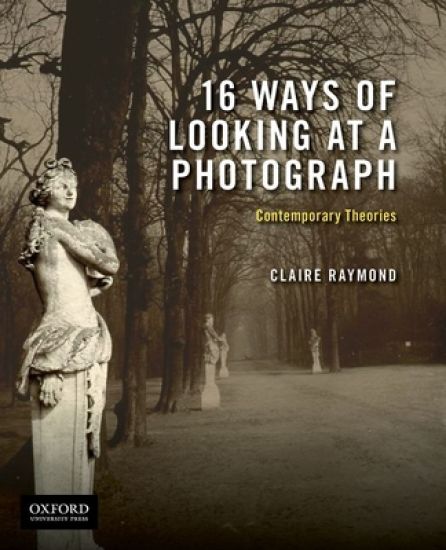
16 Ways of Looking at a Photograph: Contemporary Theories
Featuring an accessible and engaging writing style, 16 Ways of Looking at a Photograph: Contemporary Theories explores key concepts that have shaped the interpretation of photography and photography itself. It begins with two important inventions--the development of the photographic negative and the capability to produce multiple prints--and then considers various theories from the nineteenth, twentieth, and twenty-first centuries. The book concludes with an excursion into "post-photography" theory: the argument that in the digital era, photography as such is altered.
Francesca Woodman's Dark Gaze

Francesca Woodman's Dark Gaze

Claire Raymond

TAYLOR FRANCIS LTD
2021
nidottu
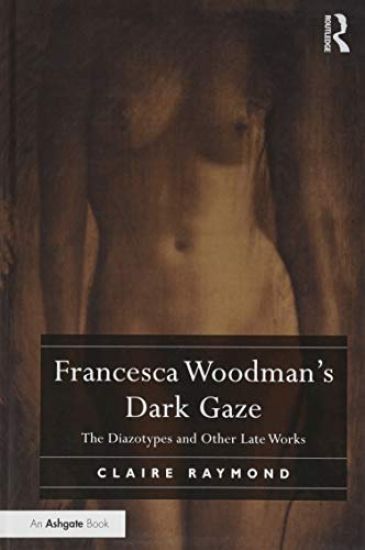
Focusing on the later work of the American photographer Francesca Woodman (1958-1981), Claire Raymond takes up the question of the disintegrative condition of the art she produced in the last year of her life. Departing from the techniques of her earlier compositions, Woodman worked in the diazotype process for many of these late pieces, most importantly the monumental Blueprint for a Temple. Raymond shows that through her use of diazotype, a medium that breaks down when exposed to light, Woodman created art that is both supremely evocative aesthetically and inherently unstable physically. Woodman, Raymond contends, was imaginatively responding to the end of the durable image, a historical reality acknowledged in the way her work plays the ephemeral and evanescent against the monumental and enduring. Raymond focuses on the theoretical and the curatorial issues surrounding Woodman's diazotypes, a thematic and practical distress that haunts much of her later art, especially the artist's book and photo series Some Disordered Interior Geometries and Portrait of a Reputation. Rather than conceiving of Woodman herself as fragile, an artist chronicling and seeming to yearn for her own disappearance, Raymond juxtaposes Woodman's career-spanning documentation of her own image against other post-war witnesses of trauma - an artist standing in the museum ruins where she emerges most distinctly as a figure of postmodernity.
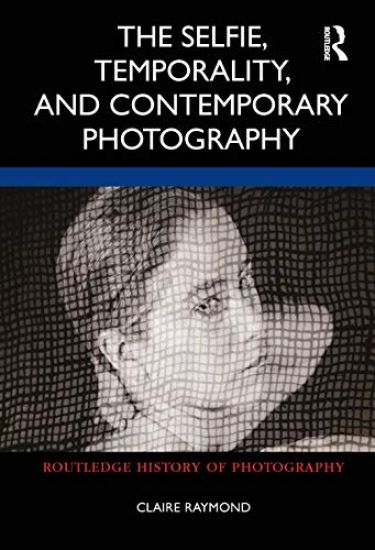
The Selfie, Temporality, and Contemporary Photography
This book is a theoretical examination of the relationship between the face, identity, photography, and temporality, focusing on the temporal episteme of selfie practice.Claire Raymond investigates how the selfie’s involvement with time and self emerges from capitalist ideologies of identity and time. The book leverages theories from Katharina Pistor, Jacques Lacan, Rögnvaldur Ingthorsson, and Hans Belting to explore the ways in which the selfie imposes a dominant ideology on subjectivity by manipulating the affect of time. The selfie is understood in contrast to the self-portrait. Artists discussed include James Tylor, Shelley Niro, Ellen Carey, Graham MacIndoe, and LaToya Ruby Frazier.The book will be of interest to scholars working in visual culture, history of photography, and critical theory. It will also appeal to scholars of philosophy and, in particular, of the intersection of aesthetic theory and theories of ontology, epistemology, and temporality.
The Selfie, Temporality, and Contemporary Photography
This book is a theoretical examination of the relationship between the face, identity, photography, and temporality, focusing on the temporal episteme of selfie practice.Claire Raymond investigates how the selfie’s involvement with time and self emerges from capitalist ideologies of identity and time. The book leverages theories from Katharina Pistor, Jacques Lacan, Rögnvaldur Ingthorsson, and Hans Belting to explore the ways in which the selfie imposes a dominant ideology on subjectivity by manipulating the affect of time. The selfie is understood in contrast to the self-portrait. Artists discussed include James Tylor, Shelley Niro, Ellen Carey, Graham MacIndoe, and LaToya Ruby Frazier.The book will be of interest to scholars working in visual culture, history of photography, and critical theory. It will also appeal to scholars of philosophy and, in particular, of the intersection of aesthetic theory and theories of ontology, epistemology, and temporality.
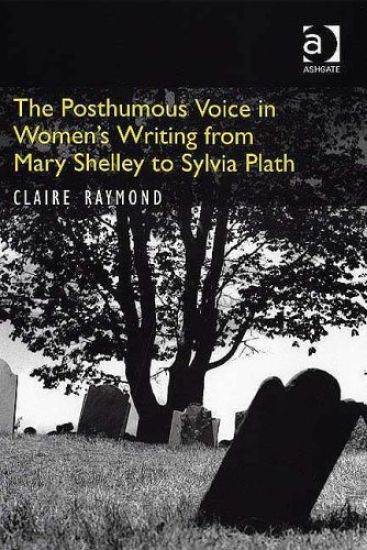
The Posthumous Voice in Women's Writing from Mary Shelley to Sylvia Plath
This provocative book posits a new theory of women's writing characterized by what Claire Raymond calls 'the posthumous voice.'This suggestive term evokes the way that women's writing both forefronts and hides the author's implied body within and behind the written work. Tracing the use of the disembodied posthumous voice in fiction and poetry by Mary Shelley, Emily Brontë, Emily Dickinson, and Sylvia Plath, Raymond's study sounds out the ways that the trope of the posthumous voice succeeds in negotiating the difficult cultural space between the concept of woman's body and the production of canonical literature. Arguing that the nineteenth-century cult of mourning opens to women's writing the possibility of a post-Romantic 'self-elegy,' Raymond explores how the woman writer's appropriation and alteration of elegiac conventions signifies and revises her disrupted relationship to audience. Theorizing the posthumous voice as a gesture by which the woman writer claims, and in some cases gains, canonicity, Raymond contends that the elegy posed as if written by a dead woman for herself both describes and subverts the woman writer's secondary status in the English canon. For the woman writer, the self-elegy permits access to a topos central to canonical literature, with the implementation of the trope of the posthumous voice marking a crucial site of woman's interaction with the English canon.
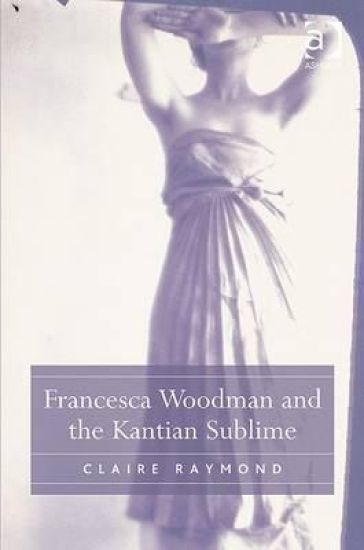
Francesca Woodman and the Kantian Sublime

Francesca Woodman and the Kantian Sublime

Claire Raymond

Ashgate Publishing Limited
2010
sidottu
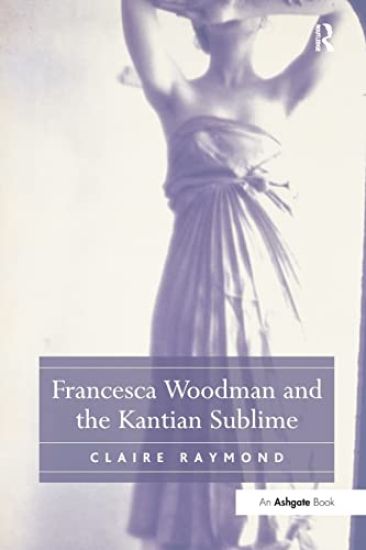
In her feminist inquiry into aesthetics and the sublime, Claire Raymond reinterprets the work of the American photographer Francesca Woodman (1958-1981). Placing Woodman in a lineage of women artists beginning with nineteenth-century photographers Julia Margaret Cameron and Clementina, Viscountess Hawarden, Raymond compels a reconsideration of Woodman's achievement in light of the gender dynamics of the sublime. Raymond argues that Woodman's photographs of decrepit architecture allegorically depict the dissolution of the frame, a dissolution Derrida links to theories of the sublime in Kant's Critique of Judgement. Woodman's self-portraits, Raymond contends, test the parameters of the gaze, a reading that departs from the many analyses of Woodman's work that emphasize her dramatic biography. Woodman is here revealed as a conceptually sophisticated artist whose deployment of allegory and allusion engages a broader debate about Enlightenment aesthetics, and the sublime.
Witnessing Sadism in Texts of the American South

Witnessing Sadism in Texts of the American South

Claire Raymond

TAYLOR FRANCIS LTD
2024
nidottu
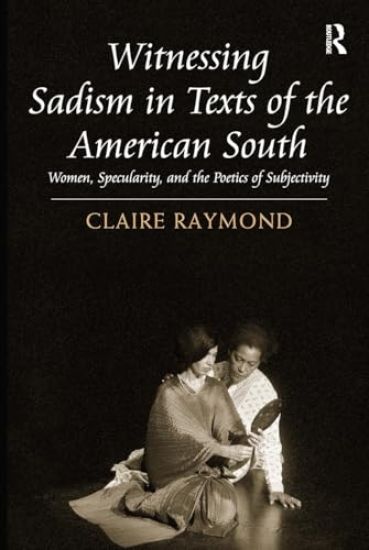
Looking at works by Carrie Mae Weems, Toni Morrison, Emily Dickinson, Flannery O'Connor, Dorothy Allison, Carson McCullers, and Zora Neale Hurston, Claire Raymond uncovers a pattern of femininity constructed around representations of sadistic violence in American women's literature and photography from the late nineteenth and twentieth centuries. Dickinson's poetry is read through its relationship to the Southern Agrarian critics who championed her work. While the representations of violence found in Carrie Mae Weems's installation From Here I Saw What Happened and I Cried, Morrison's Beloved, Dickinson’s poetry, O'Connor's 'A View of the Woods' and 'A Good Man Is Hard to Find,' Allison's Bastard Out of Carolina, McCullers' Ballad of the Sad Café, and Hurston's Mules and Men are diverse in terms of artistic presentation, all allude to or are set in the antebellum and Jim Crow South. In addition, all involve feminine characters whose subjectivity is shaped by the practice of seeing acts of violence inflicted where there can be no effective resistance. While not proposing an equivalence between representing violence in visual images and written text, Raymond does suggest that visual images of violence can be interpreted in context with written evocations of violent imagery. Invoking sadism in its ethical sense of violence enacted on a victim for whom self-defense and recourse of any kind are impossible, Raymond's study is ultimately an exploration of the idea that a femininity constructed by the positioning of feminine characters as witnesses to sadistic acts is a phenomenon distinctly of the American South that is linked to the culture's history of racism.
Francesca Woodman and the Kantian Sublime
In her feminist inquiry into aesthetics and the sublime, Claire Raymond reinterprets the work of the American photographer Francesca Woodman (1958-1981). Placing Woodman in a lineage of women artists beginning with nineteenth-century photographers Julia Margaret Cameron and Clementina, Viscountess Hawarden, Raymond compels a reconsideration of Woodman's achievement in light of the gender dynamics of the sublime. Raymond argues that Woodman's photographs of decrepit architecture allegorically depict the dissolution of the frame, a dissolution Derrida links to theories of the sublime in Kant's Critique of Judgement. Woodman's self-portraits, Raymond contends, test the parameters of the gaze, a reading that departs from the many analyses of Woodman's work that emphasize her dramatic biography. Woodman is here revealed as a conceptually sophisticated artist whose deployment of allegory and allusion engages a broader debate about Enlightenment aesthetics, and the sublime.
Women Photographers and Feminist Aesthetics
Women Photographers and Feminist Aesthetics makes the case for a feminist aesthetics in photography by analysing key works of twenty-two women photographers, including cis- and trans-woman photographers.Claire Raymond provides close readings of key photographs spanning the history of photography, from nineteenth-century Europe to twenty-first century Africa and Asia. She offers original interpretations of well-known photographers such as Diane Arbus, Sally Mann, and Carrie Mae Weems, analysing their work in relation to gender, class, and race. The book also pays close attention to the way in which indigenous North Americans have been represented through photography and the ways in which contemporary Native American women photographers respond to this history.Developing the argument that through aesthetic force emerges the truly political, the book moves beyond polarization of the aesthetic and the cultural. Instead, photographic works are read for their subversive political and cultural force, as it emerges through the aesthetics of the image.This book is ideal for students of Photography, Art History, Art and Visual Culture, and Gender.
Women Photographers and Feminist Aesthetics
Women Photographers and Feminist Aesthetics makes the case for a feminist aesthetics in photography by analysing key works of twenty-two women photographers, including cis- and trans-woman photographers.Claire Raymond provides close readings of key photographs spanning the history of photography, from nineteenth-century Europe to twenty-first century Africa and Asia. She offers original interpretations of well-known photographers such as Diane Arbus, Sally Mann, and Carrie Mae Weems, analysing their work in relation to gender, class, and race. The book also pays close attention to the way in which indigenous North Americans have been represented through photography and the ways in which contemporary Native American women photographers respond to this history.Developing the argument that through aesthetic force emerges the truly political, the book moves beyond polarization of the aesthetic and the cultural. Instead, photographic works are read for their subversive political and cultural force, as it emerges through the aesthetics of the image.This book is ideal for students of Photography, Art History, Art and Visual Culture, and Gender.
Witnessing Sadism in Texts of the American South

Witnessing Sadism in Texts of the American South

Claire Raymond

Ashgate Publishing Limited
2014
sidottu
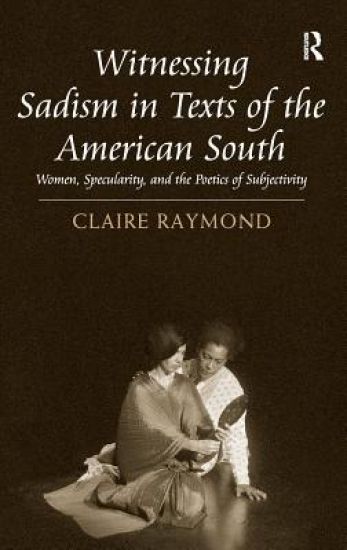
Looking at works by Carrie Mae Weems, Toni Morrison, Emily Dickinson, Flannery O'Connor, Dorothy Allison, Carson McCullers, and Zora Neale Hurston, Claire Raymond uncovers a pattern of femininity constructed around representations of sadistic violence in American women's literature and photography from the late nineteenth and twentieth centuries. Dickinson's poetry is read through its relationship to the Southern Agrarian critics who championed her work. While the representations of violence found in Carrie Mae Weems's installation From Here I Saw What Happened and I Cried, Morrison's Beloved, Dickinson’s poetry, O'Connor's 'A View of the Woods' and 'A Good Man Is Hard to Find,' Allison's Bastard Out of Carolina, McCullers' Ballad of the Sad Café, and Hurston's Mules and Men are diverse in terms of artistic presentation, all allude to or are set in the antebellum and Jim Crow South. In addition, all involve feminine characters whose subjectivity is shaped by the practice of seeing acts of violence inflicted where there can be no effective resistance. While not proposing an equivalence between representing violence in visual images and written text, Raymond does suggest that visual images of violence can be interpreted in context with written evocations of violent imagery. Invoking sadism in its ethical sense of violence enacted on a victim for whom self-defense and recourse of any kind are impossible, Raymond's study is ultimately an exploration of the idea that a femininity constructed by the positioning of feminine characters as witnesses to sadistic acts is a phenomenon distinctly of the American South that is linked to the culture's history of racism.
Francesca Woodman's Dark Gaze

Francesca Woodman's Dark Gaze

Claire Raymond

Routledge
2016
sidottu
Focusing on the later work of the American photographer Francesca Woodman (1958-1981), Claire Raymond takes up the question of the disintegrative condition of the art she produced in the last year of her life. Departing from the techniques of her earlier compositions, Woodman worked in the diazotype process for many of these late pieces, most importantly the monumental Blueprint for a Temple. Raymond shows that through her use of diazotype, a medium that breaks down when exposed to light, Woodman created art that is both supremely evocative aesthetically and inherently unstable physically. Woodman, Raymond contends, was imaginatively responding to the end of the durable image, a historical reality acknowledged in the way her work plays the ephemeral and evanescent against the monumental and enduring. Raymond focuses on the theoretical and the curatorial issues surrounding Woodman's diazotypes, a thematic and practical distress that haunts much of her later art, especially the artist's book and photo series Some Disordered Interior Geometries and Portrait of a Reputation. Rather than conceiving of Woodman herself as fragile, an artist chronicling and seeming to yearn for her own disappearance, Raymond juxtaposes Woodman's career-spanning documentation of her own image against other post-war witnesses of trauma - an artist standing in the museum ruins where she emerges most distinctly as a figure of postmodernity.
The Photographic Uncanny

The Photographic Uncanny

Claire Raymond

Springer Nature Switzerland AG
2019
sidottu
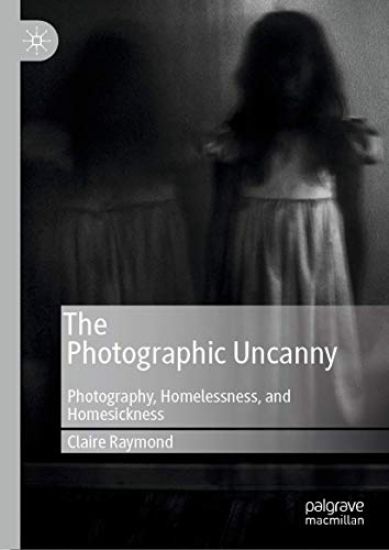
This book argues for a renewed understanding of the fundamentally uncanny quality of the medium of photography. It especially makes the case for the capacity of certain photographs—precisely through their uncanniness—to contest structures of political and social dominance. The uncanny as a quality that unsettles the perception of home emerges as a symptom of modern and contemporary society and also as an aesthetic apparatus by which some key photographs critique the hegemony of capitalist and industrialist domains. The book’s historical scope is large, beginning with William Henry Fox Talbot and closing with contemporary indigenous photographer Bear Allison and contemporary African American photographer Devin Allen. Through close readings, exegesis, of individual photographs and careful deployment of contemporary political and aesthetic theory, The Photographic Uncanny argues for a re-envisioning of the political capacity of photography to expose the haunted, homeless,condition of modernity.
The Photographic Uncanny

The Photographic Uncanny

Claire Raymond

Springer Nature Switzerland AG
2020
nidottu
This book argues for a renewed understanding of the fundamentally uncanny quality of the medium of photography. It especially makes the case for the capacity of certain photographs—precisely through their uncanniness—to contest structures of political and social dominance. The uncanny as a quality that unsettles the perception of home emerges as a symptom of modern and contemporary society and also as an aesthetic apparatus by which some key photographs critique the hegemony of capitalist and industrialist domains. The book’s historical scope is large, beginning with William Henry Fox Talbot and closing with contemporary indigenous photographer Bear Allison and contemporary African American photographer Devin Allen. Through close readings, exegesis, of individual photographs and careful deployment of contemporary political and aesthetic theory, The Photographic Uncanny argues for a re-envisioning of the political capacity of photography to expose the haunted, homeless,condition of modernity.
Photography and Resistance

Photography and Resistance

Claire Raymond

Springer Nature Switzerland AG
2022
sidottu
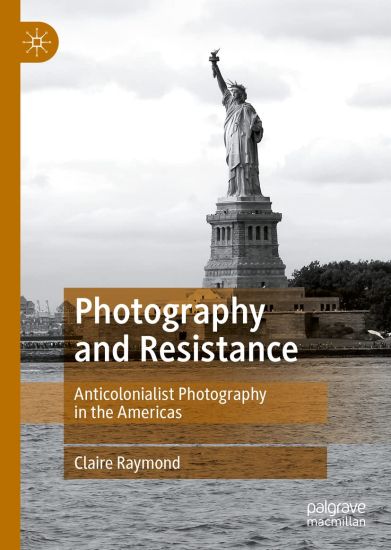
This book argues that photography, with its inherent connection to the embodied material world and its ease of transmissibility, operates as an implicitly political medium. It makes the case that the right to see is fundamental to the right to be. Limning the paradoxical links between photography as a medium and the conditions of political, social, and epistemological disappearance, the book interprets works by African American, Indigenous American, Latinx, and Asian American photographers as acts of political activism in the contemporary idiom. Placing photographic praxis at the crux of 21st-century crises of political equity and sociality, the book uncovers the discursive visual movements through which photography enacts reappearances, bringing to visibility erased and elided histories in the Americas. Artists discussed in-depth include Shelley Niro, Carrie Mae Weems, Paula Luttringer, LaToya Ruby Frazier, Matika Wilbur, Martine Gutiérrez, Ana Mendieta, An-My Lê, and Rebecca Belmore. The book makes visible the American land as a site of contestation, an as-yet not fully recognized battlefield.
Photography and Resistance

Photography and Resistance

Claire Raymond

Springer Nature Switzerland AG
2023
nidottu
This book argues that photography, with its inherent connection to the embodied material world and its ease of transmissibility, operates as an implicitly political medium. It makes the case that the right to see is fundamental to the right to be. Limning the paradoxical links between photography as a medium and the conditions of political, social, and epistemological disappearance, the book interprets works by African American, Indigenous American, Latinx, and Asian American photographers as acts of political activism in the contemporary idiom. Placing photographic praxis at the crux of 21st-century crises of political equity and sociality, the book uncovers the discursive visual movements through which photography enacts reappearances, bringing to visibility erased and elided histories in the Americas. Artists discussed in-depth include Shelley Niro, Carrie Mae Weems, Paula Luttringer, LaToya Ruby Frazier, Matika Wilbur, Martine Gutiérrez, Ana Mendieta, An-My Lê, and Rebecca Belmore. The book makes visible the American land as a site of contestation, an as-yet not fully recognized battlefield.