Kirjojen hintavertailu. Mukana 11 699 587 kirjaa ja 12 kauppaa.

Kirjahaku

Etsi kirjoja tekijän nimen, kirjan nimen tai ISBN:n perusteella.

14 kirjaa tekijältä Clare Carlisle

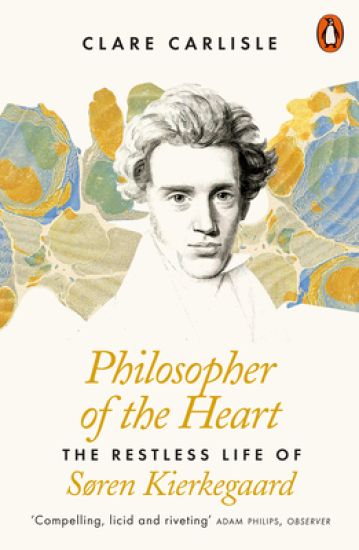
Philosopher of the Heart

Philosopher of the Heart

Clare Carlisle

Penguin Books Ltd
2020
pokkari
Selected as a Book of the Year in The Times Literary Supplement'This lucid and riveting new biography at once rescuses Kierkegaard from the scholars and shows why he is such an intriguing and useful figure' ObserverSøren Kierkegaard, one of the most passionate and challenging of modern philosophers, is now celebrated as the father of existentialism - yet his contemporaries described him as a philosopher of the heart. Over about a decade in the 1840s and 1850s, writings poured from his pen analysing love and suffering, courage and anxiety, religious longing and defiance, and forging a new philosophical style rooted in the inward drama of being human.As Christianity seemed to sleepwalk through a changing world, Kierkegaard dazzlingly revealed its spiritual power while exposing the poverty of official religion. His restless creativity was spurred on by his own failures: his relationship with the young woman whom he promised to marry, then left to devote himself to writing, haunted him throughout his life.Though tormented by the pressures of celebrity, he deliberately lived amidst the crowds in Copenhagen, known by everyone but, he felt, understood by no one. When he collapsed exhausted at the age of 42, he was still pursuing the question of existence: how to be a human being in this world?Clare Carlisle's innovative and moving biography writes Kierkegaard's remarkable life as far as possible from his own perspective, conveying what it was like to be this Socrates of Christendom - as he put it, living life forwards yet only understanding it backwards.
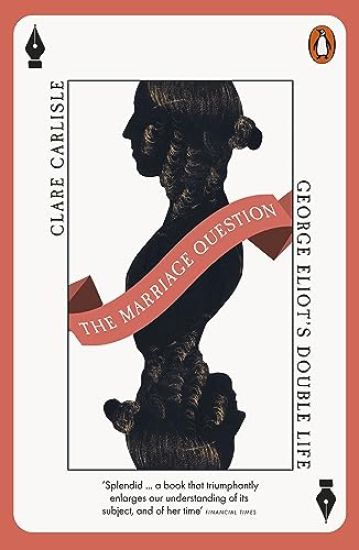
The Marriage Question

The Marriage Question

Clare Carlisle

PENGUIN BOOKS LTD
2024
pokkari
*A Times, Telegraph, TLS and Prospect Book of the Year**Winner of the 2024 PEN/ Jacqueline Bograd Weld Award for Biography*‘The best book I've read on George Eliot’ John Carey, Sunday TimesAn exceptional new biography that shows how George Eliot wrestled with the question of marriage, in art and lifeWhen she was in her mid-thirties, Marian Evans transformed herself into George Eliot - an author celebrated for her genius as soon as she published her debut novel. During those years she also found her life partner, George Lewes - writer, philosopher and married father of three. After 'eloping' to Berlin in 1854 they lived together for twenty-four years: Eliot asked people to call her 'Mrs Lewes' and dedicated each novel to her 'Husband'. Though they could not legally marry, she felt herself initiated into the 'great experience' of marriage - 'this double life, which helps me to feel and think with double strength'. The relationship scandalized her contemporaries yet she grew immeasurably within it. Living at once inside and outside marriage, Eliot could experience this form of life - so familiar yet also so perplexing - from both sides.In The Marriage Question Clare Carlisle reveals Eliot to be not only a great artist but a brilliant philosopher who probes the tensions and complexities of a shared life. Through the immense ambition and dark marriage plots of her novels we see Eliot wrestling - in art and in life - with themes of desire and sacrifice, motherhood and creativity, trust and disillusion, destiny and chance. Reading them afresh, Carlisle's searching new biography explores how marriage questions grow and change, and joins Eliot in her struggle to marry thought and feeling.
The Marriage Question: George Eliot's Double Life

The Marriage Question: George Eliot's Double Life

Clare Carlisle

Farrar, Straus and Giroux
2023
sidottu
Winner of the PEN/Jacqueline Bograd Weld Award for Biography Named one of the ten Best Reviewed Nonfiction Books of 2023 by Literary Hub A startling new portrait of George Eliot, the beloved novelist and a rare philosophical mind who explored the complexities of marriage. In her mid-thirties, Marian Evans transformed herself into George Eliot--an author celebrated for her genius as soon as she published her debut novel. During those years she also found her life partner, George Lewes--writer, philosopher, and married father of three. After "eloping" to Berlin in 1854, they lived together for twenty-four years: Eliot asked people to call her "Mrs Lewes" and dedicated each novel to her "Husband." Though they could not legally marry, she felt herself initiated into the "great experience" of marriage--"this double life, which helps me to feel and think with double strength." The relationship scandalized her contemporaries yet she grew immeasurably within it. Living at once inside and outside marriage, Eliot could experience this form of life--so familiar yet also so perplexing--from both sides. In The Marriage Question, Clare Carlisle reveals Eliot to be not only a great artist but also a brilliant philosopher who probes the tensions and complexities of a shared life. Through the immense ambition and dark marriage plots of her novels, we see Eliot wrestling--in art and in life--with themes of desire and sacrifice, motherhood and creativity, trust and disillusion, destiny and chance. Carlisle's searching new biography explores how marriage questions grow and change, and joins Eliot in her struggle to marry thought and feeling. Includes black-and-white images
On Habit

On Habit

Clare Carlisle

Routledge
2014
sidottu
For Aristotle, excellence is not an act but a habit, and Hume regards habit as ‘the great guide of life’. However, for Proust habit is problematic: ‘if habit is a second nature, it prevents us from knowing our first.’What is habit? Do habits turn us into machines or free us to do more creative things? Should religious faith be habitual? Does habit help or hinder the practice of philosophy? Why do Luther, Spinoza, Kant, Kierkegaard and Bergson all criticise habit? If habit is both a blessing and a curse, how can we live well in our habits?In this thought-provoking book Clare Carlisle examines habit from a philosophical standpoint. Beginning with a lucid appraisal of habit’s philosophical history she suggests that both receptivity and resistance to change are basic principles of habit-formation. Carlisle shows how the philosophy of habit not only anticipates the discoveries of recent neuroscience but illuminates their ethical significance. She asks whether habit is a reliable form of knowledge by examining the contrasting interpretations of habitual thinking offered by Spinoza and Hume. She then turns to the role of habit in the good life, tracing Aristotle’s legacy through the ideas of Joseph Butler, Hegel, and Félix Ravaisson, and assessing the ambivalent attitudes to habit expressed by Nietzsche and Proust.She argues that a distinction between habit and practice helps to clarify this ambivalence, particularly in the context of habit and religion, where she examines both the theology of habit and the repetitions of religious life. She concludes by considering how philosophy itself is a practice of learning to live well with habit.
On Habit

On Habit

Clare Carlisle

Routledge
2014
nidottu
For Aristotle, excellence is not an act but a habit, and Hume regards habit as ‘the great guide of life’. However, for Proust habit is problematic: ‘if habit is a second nature, it prevents us from knowing our first.’What is habit? Do habits turn us into machines or free us to do more creative things? Should religious faith be habitual? Does habit help or hinder the practice of philosophy? Why do Luther, Spinoza, Kant, Kierkegaard and Bergson all criticise habit? If habit is both a blessing and a curse, how can we live well in our habits?In this thought-provoking book Clare Carlisle examines habit from a philosophical standpoint. Beginning with a lucid appraisal of habit’s philosophical history she suggests that both receptivity and resistance to change are basic principles of habit-formation. Carlisle shows how the philosophy of habit not only anticipates the discoveries of recent neuroscience but illuminates their ethical significance. She asks whether habit is a reliable form of knowledge by examining the contrasting interpretations of habitual thinking offered by Spinoza and Hume. She then turns to the role of habit in the good life, tracing Aristotle’s legacy through the ideas of Joseph Butler, Hegel, and Félix Ravaisson, and assessing the ambivalent attitudes to habit expressed by Nietzsche and Proust.She argues that a distinction between habit and practice helps to clarify this ambivalence, particularly in the context of habit and religion, where she examines both the theology of habit and the repetitions of religious life. She concludes by considering how philosophy itself is a practice of learning to live well with habit.
Spinoza's Religion

Spinoza's Religion

Clare Carlisle

PRINCETON UNIVERSITY PRESS
2021
sidottu
A bold reevaluation of Spinoza that reveals his powerful, inclusive vision of religion for the modern ageSpinoza is widely regarded as either a God-forsaking atheist or a God-intoxicated pantheist, but Clare Carlisle says that he was neither. In Spinoza’s Religion, she sets out a bold interpretation of Spinoza through a lucid new reading of his masterpiece, the Ethics. Putting the question of religion centre-stage but refusing to convert Spinozism to Christianity, Carlisle reveals that “being in God” unites Spinoza’s metaphysics and ethics. Spinoza’s Religion unfolds a powerful, inclusive philosophical vision for the modern age—one that is grounded in a profound questioning of how to live a joyful, fully human life.Like Spinoza himself, the Ethics doesn’t fit into any ready-made religious category. But Carlisle shows how it wrestles with the question of religion in strikingly original ways, responding both critically and constructively to the diverse, broadly Christian context in which Spinoza lived and worked. Philosophy itself, as Spinoza practiced it, became a spiritual endeavor that expressed his devotion to a truthful, virtuous way of life. Offering startling new insights into Spinoza’s famously enigmatic ideas about eternal life and the intellectual love of God, Carlisle uncovers a Spinozist religion that integrates self-knowledge, desire, practice, and embodied ethical life to reach toward our “highest happiness”—to rest in God.Seen through Carlisle’s eyes, the Ethics prompts us to rethink not only Spinoza but also religion itself.
Spinoza's Religion

Spinoza's Religion

Clare Carlisle

PRINCETON UNIVERSITY PRESS
2023
pokkari
A bold reevaluation of Spinoza that reveals his powerful, inclusive vision of religion for the modern ageSpinoza is widely regarded as either a God-forsaking atheist or a God-intoxicated pantheist, but Clare Carlisle says that he was neither. In Spinoza’s Religion, she sets out a bold interpretation of Spinoza through a lucid new reading of his masterpiece, the Ethics. Putting the question of religion centre-stage but refusing to convert Spinozism to Christianity, Carlisle reveals that “being in God” unites Spinoza’s metaphysics and ethics. Spinoza’s Religion unfolds a powerful, inclusive philosophical vision for the modern age—one that is grounded in a profound questioning of how to live a joyful, fully human life.Like Spinoza himself, the Ethics doesn’t fit into any ready-made religious category. But Carlisle shows how it wrestles with the question of religion in strikingly original ways, responding both critically and constructively to the diverse, broadly Christian context in which Spinoza lived and worked. Philosophy itself, as Spinoza practiced it, became a spiritual endeavor that expressed his devotion to a truthful, virtuous way of life. Offering startling new insights into Spinoza’s famously enigmatic ideas about eternal life and the intellectual love of God, Carlisle uncovers a Spinozist religion that integrates self-knowledge, desire, practice, and embodied ethical life to reach toward our “highest happiness”—to rest in God.Seen through Carlisle’s eyes, the Ethics prompts us to rethink not only Spinoza but also religion itself.
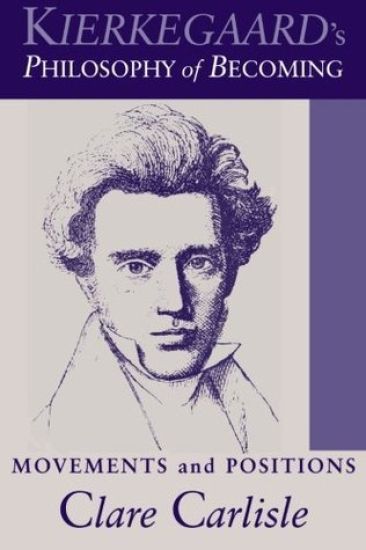
Kierkegaard's Philosophy of Becoming

Kierkegaard's Philosophy of Becoming

Clare Carlisle

State University of New York Press
2006
pokkari
An accessible and original exploration of the theological and philosophical significance of Kierkegaard's religious thought. Søren Kierkegaard's proposal of "repetition" as the new category of truth signaled the beginning of existentialist thought, turning philosophical attention from the pursuit of objective knowledge to the movement of becoming that characterizes each individual's life. Focusing on the theme of movement in his 1843 pseudonymous texts Either/Or, Repetition, and Fear and Trembling, Clare Carlisle presents an original and illuminating interpretation of Kierkegaard's religious thought, including newly translated material, that emphasizes equally its philosophical and theological significance. Kierkegaard complained of a lack of movement not only in Hegelian philosophy but also in his own "dreadful still life," and his heroes are those who leap, dance, and make journeys-but what do these movements signify, and how are they accomplished? How can we be true to ourselves, let alone to others if we are continually becoming? Carlisle explores these questions to uncover both the philosophical and the literary coherence of Kierkegaard's notoriously enigmatic authorship.
Kierkegaard: A Guide for the Perplexed

Kierkegaard: A Guide for the Perplexed

Clare Carlisle

Continuum International Publishing Group Ltd.
2006
nidottu
Continuum's Guides for the Perplexed are clear, concise and accessible introductions to thinkers, writers and subjects that students and readers can find especially challenging. Concentrating specifically on what it is that makes the subject difficult to fathom, these books explain and explore key themes and ideas, guiding the reader towards a thorough understanding of demanding material. Soren Kierkegaard was the progenitor of existentialism, as well as a major literary figure and philosopher of ethics and religion. As such, he is a key figure in modern Western philosophy, one whose poetic, though complex, works - including the seminal Fear and Trembling - require close and careful study. Kierkegaard: A Guide for the Perplexed offers a cogent, comprehensive and authoritative account of Kierkegaard's philosophy, ideal for students and readers coming to his work for the first time and who want to reach a full and detailed understanding of this major thinker and writer. The book explores the relationship - particularly important in Kierkegaard's case - between his life and work. It covers the literary and philosophical challenges raised by Kierkegaard's 'direct' and 'indirect' forms of communication; considers Kierkegaard's important critique of Hegel; opens up his ideas on subjectivity and truth; and provides illuminating commentaries on both Fear and Trembling and Philosophical Fragments. Valuably, the guide shows how Kierkegaard's philosophical, religious, social, literary and personal concerns are integrated and unified in his works. It also assesses his influence on later philosophers, including Heidegger, Wittgenstein and Sartre.
Philosopher of the Heart: The Restless Life of Søren Kierkegaard
Philosopher of the Heart is the groundbreaking biography of renowned existentialist S ren Kierkegaard's life and creativity, and a searching exploration of how to be a human being in the world. S ren Kierkegaard is one of the most passionate and challenging of all modern philosophers, and is often regarded as the founder of existentialism. Over about a decade in the 1840s and 1850s, writings poured from his pen pursuing the question of existence--how to be a human being in the world?--while exploring the possibilities of Christianity and confronting the failures of its institutional manifestation around him. Much of his creativity sprang from his relationship with the young woman whom he promised to marry, then left to devote himself to writing, a relationship which remained decisive for the rest of his life. He deliberately lived in the swim of human life in Copenhagen, but alone, and died exhausted in 1855 at the age of 42, bequeathing his remarkable writings to his erstwhile fianc e. Clare Carlisle's innovative and moving biography writes Kierkegaard's life as far as possible from his own perspective, to convey what it was like actually being this Socrates of Christendom--as he put it, living life forwards yet only understanding it backwards.
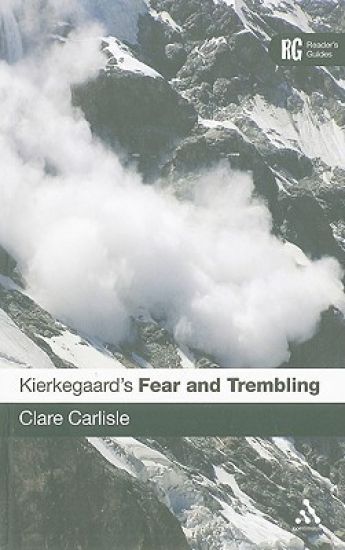
Kierkegaard's 'Fear and Trembling'

Kierkegaard's 'Fear and Trembling'

Clare Carlisle

Continuum International Publishing Group Ltd.
2010
sidottu
A concise and accessible introduction, this Reader's Guide takes students through Kierkegaard's most important work and a key nineteenth century philosophical text. Soren Kierkegaard was without question one of the most important and influential thinkers of the nineteenth century. "Fear and Trembling" is a classic text in the history of both philosophical and religious thought that still challenges readers with its original philosophical perspective and idiosyncratic literary style. Kierkegaard's "Fear and Trembling: A Reader's Guide" offers a concise and accessible introduction to this hugely important and notoriously demanding work. Written specifically to meet the needs of students coming to Kierkegaard for the first time, the book offers guidance on: philosophical and historical context; key themes; reading the text; reception and influence; and, further reading. "Continuum Reader's Guides" are clear, concise and accessible introductions to key texts in literature and philosophy. Each book explores the themes, context, criticism and influence of key works, providing a practical introduction to close reading, guiding students towards a thorough understanding of the text. They provide an essential, up-to-date resource, ideal for undergraduate students.
Kierkegaard's 'Fear and Trembling'

Kierkegaard's 'Fear and Trembling'

Clare Carlisle

Continuum International Publishing Group Ltd.
2010
nidottu
A concise and accessible introduction, this "Reader's Guide" takes students through Kierkegaard's most important work and a key nineteenth century philosophical text. Soren Kierkegaard was without question one of the most important and influential thinkers of the nineteenth century. "Fear and Trembling" is a classic text in the history of both philosophical and religious thought that still challenges readers with its original philosophical perspective and idiosyncratic literary style. Kierkegaard's "Fear and Trembling: A Reader's Guide" offers a concise and accessible introduction to this hugely important and notoriously demanding work. Written specifically to meet the needs of students coming to Kierkegaard for the first time, the book offers guidance on: philosophical and historical context; key themes - reading the text; reception and influence; and, further reading. "Continuum Reader's Guides" are clear, concise and accessible introductions to key texts in literature and philosophy. Each book explores the themes, context, criticism and influence of key works, providing a practical introduction to close reading, guiding students towards a thorough understanding of the text. They provide an essential, up-to-date resource, ideal for undergraduate students.