Designed to help students and interested general readers to interpret the abstract expressionist paintings of Jackson Pollock, this survey of Pollock's life and art provides insight into the origins and meanings of individual works and analyzes the influences upon Pollock. Also included are discussions of the many issues raised by Pollock's work above and beyond his intentions, and how they intersected with the work of his contemporaries as well as other intellectual currents of the time.
Designed to help students and interested general readers to interpret the abstract expressionist paintings of Jackson Pollock, this survey of Pollock's life and art provides insight into the origins and meanings of individual works and analyzes the influences upon Pollock. Also included are discussions of the many issues raised by Pollock's work above and beyond his intentions, and how they intersected with the work of his contemporaries as well as other intellectual currents of the time.
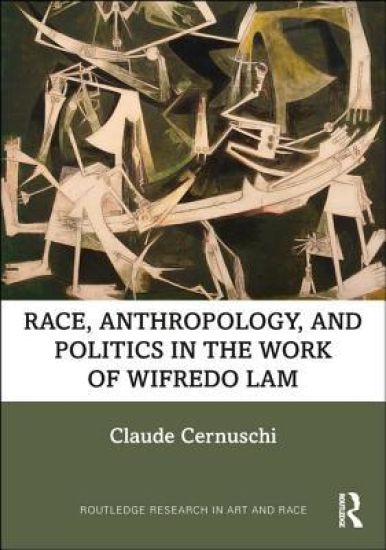
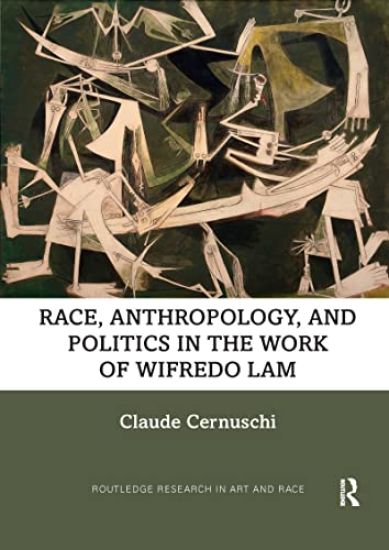
This book reinterprets Wifredo Lam’s work with particular attention to its political implications, focusing on how these implications emerge from the artist’s critical engagement with 20th-century anthropology. Field work conducted in Cuba, including the witnessing of actual Afro-Cuban religious ritual ceremonies and information collected from informants, enhances the interpretive background against which we can construe the meanings of Lam's art. In the process, Claude Cernuschi argues that Lam hoped to fashion a new hybrid style to foster pride and dignity in the Afro-Cuban community, as well as counteract the acute racism of Cuban culture.
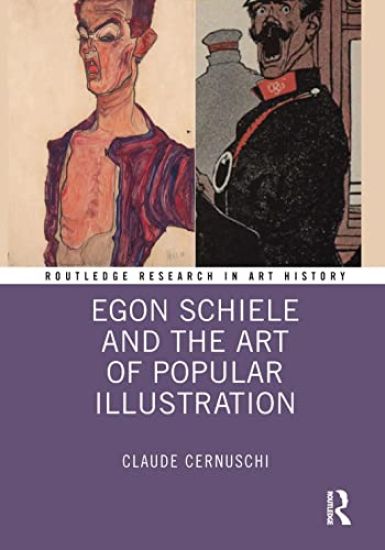
Presenting a radically different picture of Egon Schiele’s work, this study documents (in one-to-one comparisons) the extent of the artist’s visual borrowings from the Viennese humoristic journal, Die Muskete. Claude Cernuschi analyzes each comparison on a case-by-case basis, primarily because the interpretation of cartoons and caricatures is highly contingent on their specific historical and cultural context. Although this connection has gone unnoticed in the literature, in retrospect, this correlation makes perfect sense. Not only was Schiele’s artistic production frequently compared to caricature (and derided for being “grotesque”), but Expressionism and caricature are natural allies. One may belong to “high” art and the other to “popular” culture, yet both presuppose similar assumptions and deploy a similar rhetorical position: namely, that the exaggeration of human physiognomy allows deeper psychological “truths” to emerge. The book will be of interest to scholars working in art history, visual culture, popular culture, and politics.
Presenting a radically different picture of Egon Schiele’s work, this study documents (in one-to-one comparisons) the extent of the artist’s visual borrowings from the Viennese humoristic journal, Die Muskete. Claude Cernuschi analyzes each comparison on a case-by-case basis, primarily because the interpretation of cartoons and caricatures is highly contingent on their specific historical and cultural context. Although this connection has gone unnoticed in the literature, in retrospect, this correlation makes perfect sense. Not only was Schiele’s artistic production frequently compared to caricature (and derided for being “grotesque”), but Expressionism and caricature are natural allies. One may belong to “high” art and the other to “popular” culture, yet both presuppose similar assumptions and deploy a similar rhetorical position: namely, that the exaggeration of human physiognomy allows deeper psychological “truths” to emerge. The book will be of interest to scholars working in art history, visual culture, popular culture, and politics.
This book reinterprets Wifredo Lam’s work with particular attention to its political implications, focusing on how these implications emerge from the artist’s critical engagement with 20th-century anthropology. Field work conducted in Cuba, including the witnessing of actual Afro-Cuban religious ritual ceremonies and information collected from informants, enhances the interpretive background against which we can construe the meanings of Lam's art. In the process, Claude Cernuschi argues that Lam hoped to fashion a new hybrid style to foster pride and dignity in the Afro-Cuban community, as well as counteract the acute racism of Cuban culture.
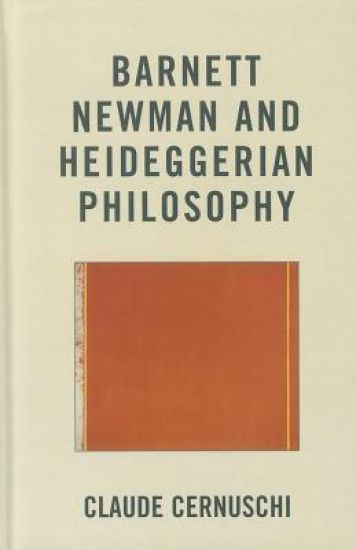
As a major member of the New York School, Barnett Newman is celebrated for his radical explorations of color and scale and, as a precursor to the Minimalist movement, for his significant contribution to the development of twentieth-century American art. But if his reputation and place in history have grown progressively more secure, the work he produced remains highly resistant to interpretation. His paintings are rigorously abstract, and his writings full of references to arcane metaphysical concepts. Frustrated over their inability to reconcile the works with what the artist said about them, some critics have dismissed the paintings as impenetrable. The art historian Yve-Alain Bois called Newman “the most difficult artist” he could name, and the philosopher Jean-François Lyotard declared that “there is almost nothing to ‘consume’ [in his work], or if there is, I do not know what it is.” In order to advance interpretation, this book investigates both Newman’s writings and paintings in light of ideas articulated by one of Germany’s most important and influential philosophers: Martin Heidegger. Many of the themes explored in Newman’s statements, and echoed in the titles of his paintings, betray numerous points of intersection with Heidegger’s philosophy: the question of origins, the distinctiveness of human presence, a person’s sense of place, the sensation of terror, the definition of freedom, the importance of mood to existence, the particularities of art and language, the impact of technology on modern life, the meaning of time, and the human being’s relationship to others and to the divine. When examined in the context of Heideggerian thought, these issues acquire greater concreteness, and, in turn, their relation to the artist’s paintings becomes clearer. It is the contention of this book that, at the intersection of art history and philosophy, an interdisciplinary framework emerges wherein the artist’s broader motivations and the specific meanings of his paintings prove more amenable to elucidation.