Kirjojen hintavertailu. Mukana 11 342 296 kirjaa ja 12 kauppaa.

Kirjahaku

Etsi kirjoja tekijän nimen, kirjan nimen tai ISBN:n perusteella.

40 kirjaa tekijältä Claude McKay

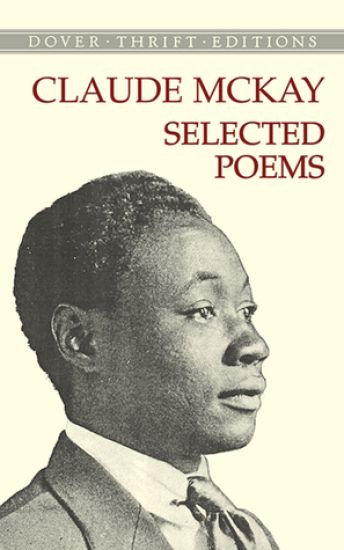
Claude Mckay: Selected Poems

Claude Mckay: Selected Poems

Claude McKay

Dover Publications Inc.
2003
nidottu
Jamaican-American poet Claude McKay (1889–1948) came to the U.S. in 1912 and became an important figure in the Harlem Renaissance. This inexpensive edition includes a representative sample of his Jamaican dialect verse, but concentrates on poems from Harlem Shadows (1922) and uncollected verse. Edited and with an introduction by Joan R. Sherman.
The Collected Articles of Claude McKay
Festus Claudius "Claude" McKay OJ (1890-1948) was a Jamaican-born American poet and writer famous for his central role in the Harlem Renaissance. After travelling to America to attend college, he came across W. E. B. Du Bois's "The Souls of Black Folk", which inspired in him an interest in politics. In 1914 he moved to New York City and five years later wrote his most famous work, "If We Must Die", a sonnet dealing with the spate of white-on-black race riots and lynchings that succeeded the First World War. McKay's political and literary endeavours eventually took him to Russia, where he collaborated on "The Negroes of America" (1923) and "Trial by Lynching" (1925), which explored American black-white racism from a Marxist class-conflict perspective. After coming to terms with the Authoritarianism of the Soviet Union, McKay left for Western Europe in 1923. This book contains a fantastic collection of McKay's most influential articles on race and politics, not to be missed by those with an interest in American history and global politics during the twentieth century. Contents include: "Claude Mckay by Robert Thomas Kerlin", "Socialism and the Negro", "The Capitalist Way: Lettow-Vorbeck", "A Black Man Replies", "Review of First Principles of Working Class Education", "Communists and the Local Councils of Action", "The Revolution in Currency", "The Yellow Peril and the Dockers", "How Black Sees Green and Red", etc. Other notable works by this author include: "Gingertown" (1932), "A Long Way from Home" (1937) and "My Green Hills of Jamaica" (1979). Read & Co. Books are proudly publishing this brand new collection of classic articles, now complete with an introductory biography from Robert Thomas Kerlin's "Negro Poets and their Poems" (1923).
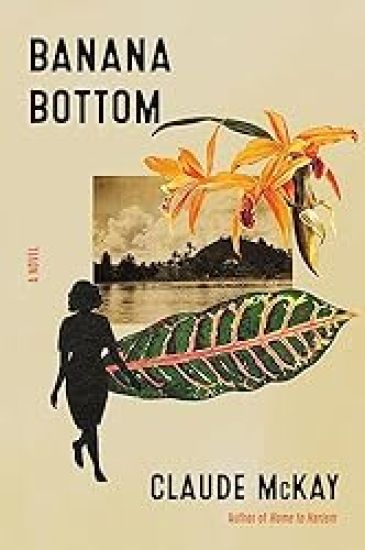
Banana Bottom

Banana Bottom

Claude McKay

Ecco Press
2023
nidottu
"There is an abundant humor to this book and pathos; there is melodrama and the quiet charm of introspective analysis, and above all there is entertainment."--Saturday ReviewA novel of love and war, from the author of Home to HarlemBita Plant is adopted and sent to England from Jamaica by white missionary benefactors and returns to her home village of Banana Bottom seven years later a beautiful, cultured young lady. Despite the evangelical guidance of her foster parents and friendship with a white squire, Bita is increasingly drawn to the vitality of her more natural culture with its festivals, superstitions, revival meetings, and passionate courtships. Among her many suitors she chooses to marry the quiet, humble man who allows her to be most true to herself.
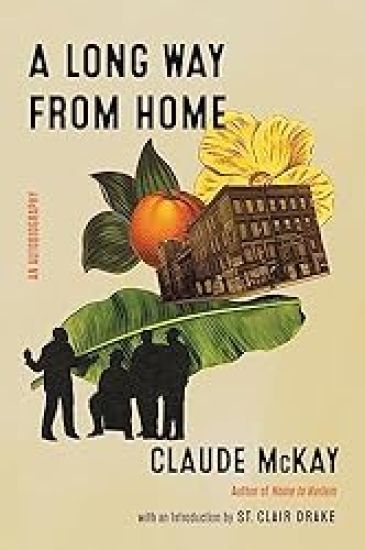
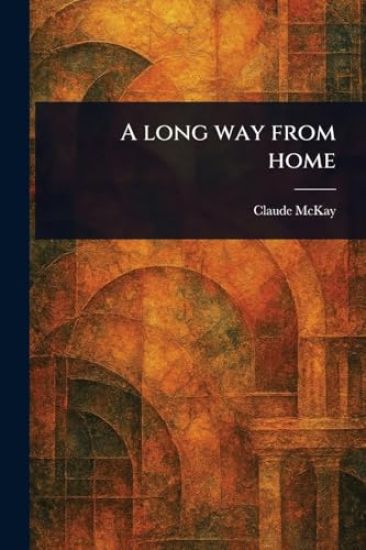
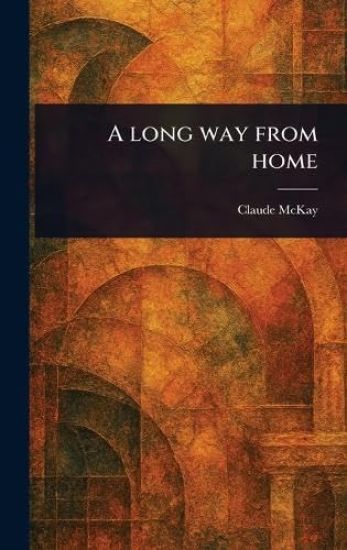
A Long Way from Home

A Long Way from Home

Claude McKay

Ecco Press
2023
nidottu
From one of the most significant figures of the Harlem Renaissance comes a narrative defining book chronicling his life from Jamaica to New York CityClaude McKay's long odyssey from Jamaica to Harlem, Europe, North Africa, Russia, and back to America is chronicled in this autobiography of the most militant writers to emerge from the New Negro movement following World War I. Whether in the intellectual circles of Harlem and Greenwich Village, the docks of Marseilles, or the inner circles of post-revolutionary Russia, McKay's contact with such figures as Frank Harris, Max Eastman, George Bernard Shaw, W.E.B Dubois, James Weldon Johnson, Charles Chaplin, H.G Wells, Sinclair Lewis, Trotsky, and Radek all served to advance those views which would be so widely accepted in the 1960--Black Pride, self-determination, and the necessity for Black culture to define itself.
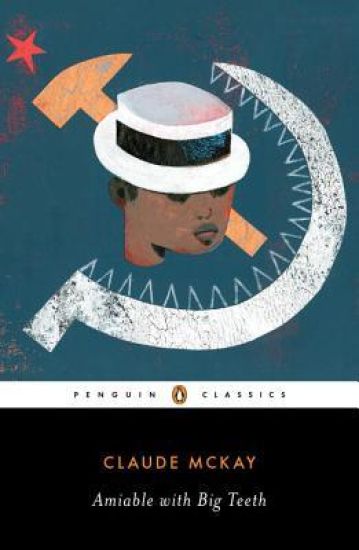
Amiable with Big Teeth

Amiable with Big Teeth

Claude McKay

Penguin USA
2018
pokkari
A monumental literary event: the newly discovered final novel by seminal Harlem Renaissance writer Claude McKay, a rich and multilayered portrayal of life in 1930s Harlem and a historical protest for black freedomThis colourful, dramatic novel centres on the efforts by Harlem intelligentsia to organize support for the liberation of fascist-controlled Ethiopia, a crucial but largely forgotten event in American history. At once a penetrating satire of political machinations in Depression-era Harlem and a far-reaching story of global intrigue and romance, Amiable with Big Teeth plunges into the concerns, anxieties, hopes and dreams of African-Americans at a moment of crisis for the soul of Harlem - and America.
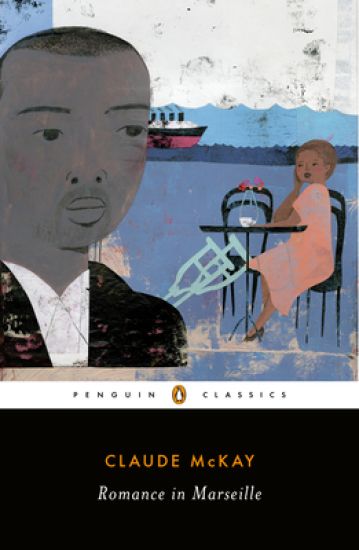
Romance in Marseille

Romance in Marseille

Claude McKay

Penguin Classics
2020
pokkari
While stowed away on a transatlantic freighter, Lafala is discovered and locked away in an icy-cold closet, resulting in the loss of his frostbitten legs. When his successful lawsuit against the shipping company brings big bucks, Lafala returns to Marseille to resume his affair with Aslima, a Moroccan prostitute. With its scenes of black bodies seeking pleasure and fighting for freedom even when stolen, shipped, and sold for parts, Romance in Marseille explores the heritage of slavery amid a predatory modern economy.
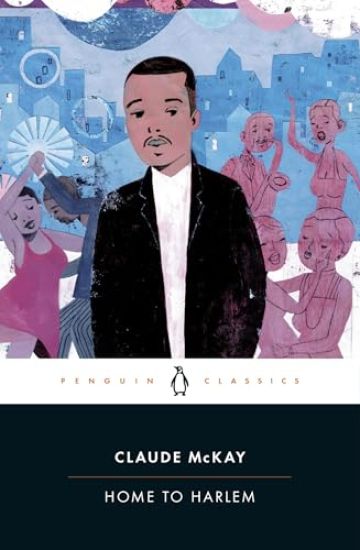
Home to Harlem

Home to Harlem

Claude McKay

PENGUIN BOOKS LTD
2025
pokkari
Claude McKay’s first novel, Home to Harlem, was published in 1928 during the height of the Harlem Renaissance. McKay portrays Harlem post-WWI, through Jake, an African American longshoreman who deserts the U.S. army and returns to his home in Harlem, and Ray, a Haitian intellectual expatriate. With his use of dialect, McKay portrays these men and other working-class characters who try to stay afloat in a complex world of isolation, racial discrimination, and excitement drawn from Harlem’s jazz nightlife. Home to Harlem sparked controversy among Black middle-class critics, such as W.E.B. Du Bois, who considered it reductive and stereotypical, while other critics such as Langston Hughes embraced it for its frankness and for the relevance of McKay’s reflections on the Black working-class experience and the social and racial inequalities of the day. This debate within the Harlem Renaissance literary world and curiosity about Harlem from white readers drove Home to Harlem to become the first commercial bestseller by an African American novelist.
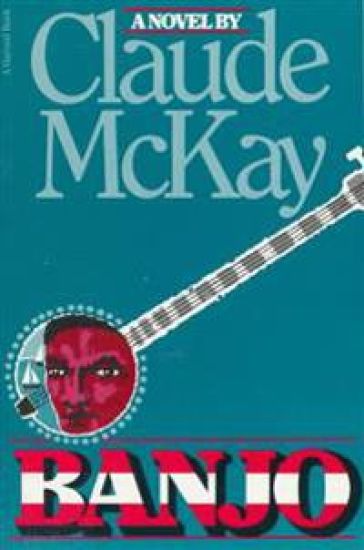
Banjo

Banjo

Claude McKay

Ecco Press
2023
nidottu
From the author of Home to Harlem, a novel about dreams, diaspora, and drifting back homeLincoln Agrippa Daily, known to his drifter cohorts on the 1920s Marseilles waterfront as "Banjo," passes his days panhandeling and dreaming of starting his own little band. At night, Banjo, Malty, Ginger, Dengel, Bugsy, Taloufa, Goosey, and even Jake of Home to Harlem prowl the rough waterfront bistros, drinking, looking for women, playing music, fighting, loving, and talking--about their homes in Sengal, the West Indies, or the American South; about Garvey's Back-to-Africa Movement; about being Black. When Ray, a writer, joins the group, it triggers his rediscovery of his African roots and his feeling that, at last, he belongs to a race, "weighted, tested, and poised in the universal scheme."
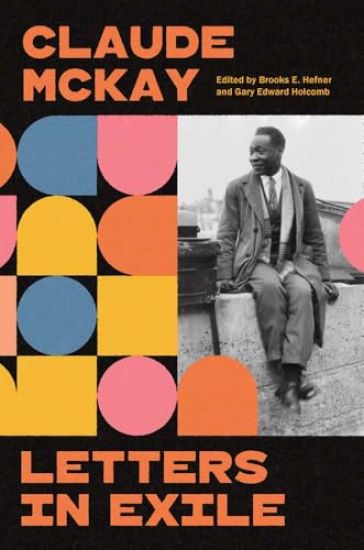
Letters in Exile

Letters in Exile

Claude McKay

YALE UNIVERSITY PRESS
2025
sidottu
A collection of private correspondence from one of the Harlem Renaissance’s brightest and most radical voices The Jamaican-born, queer author Claude McKay (1890–1948) was a central figure of the Harlem Renaissance. His 1919 poem “If We Must Die” expressed a revolutionary vision for militant Black protest art, while his novels, including Home to Harlem, Banjo, and Banana Bottom, described ordinary Black life in lyrical prose. Yet for all that McKay connected himself to Harlem, he was a restless world traveler who sought spiritual, artistic, and political sustenance in France, Spain, Moscow, and Morocco. Brooks E. Hefner and Gary Edward Holcomb bring together two decades of McKay’s never-before-published dispatches from the road with correspondents including W. E. B. Du Bois, Langston Hughes, Alain Locke, Max Eastman, and Louise Bryant. With wit, wisdom, insight, and sometimes irascible temper, McKay describes how he endured harassment from British authorities in London and worked alongside Leon Trotsky and Alexander Kerensky in Bolshevik Moscow. He reflects on Paris’s Lost Generation, immerses himself in the Marseille dockers’ noir subculture, and observes French colonialism in Morocco. Providing a new perspective on a unique figure of American modernism, this collection reveals McKay gossiping, cajoling, and confiding as he engages in spirited debates and challenges the political and artistic questions of the day.
A Long Way From Home

A Long Way From Home

Claude McKay

Rutgers University Press
2007
nidottu
Claude McKay (1889–1948) was one of the most prolific and sophisticated African American writers of the early twentieth century. A Jamaican-born author of poetry, short stories, novels, and nonfiction, McKay has often been associated with the “New Negro” or Harlem Renaissance, a movement of African American art, culture, and intellectualism between World War I and the Great Depression. But his relationship to the movement was complex. Literally absent from Harlem during that period, he devoted most of his time to traveling through Europe, Russia, and Africa during the 1920s and 1930s. His active participation in Communist groups and the radical Left also encouraged certain opinions on race and class that strained his relationship to the Harlem Renaissance and its black intelligentsia. In his 1937 autobiography, A Long Way from Home, McKay explains what it means to be a black “rebel sojourner” and presents one of the first unflattering, yet informative, exposés of the Harlem Renaissance. Reprinted here with a critical introduction by Gene Andrew Jarrett, this book will challenge readers to rethink McKay’s articulation of identity, art, race, and politics and situate these topics in terms of his oeuvre and his literary contemporaries between the world wars.
Romance in Marseille

Romance in Marseille

Claude McKay

University of Exeter Press
2022
sidottu
This is a full-length novel written by Claude McKay in 1933-34, in the same key as the episodic "Banjo", but for which he was never able to find a publisher. Richard Bradbury, who discovered the manuscript in New York, provides a critical introduction.
Romance in Marseille

Romance in Marseille

Claude McKay

University of Exeter Press
2022
nidottu
This is a full-length novel written by Claude McKay in 1933-34, in the same key as the episodic "Banjo", but for which he was never able to find a publisher. Richard Bradbury, who discovered the manuscript in New York, provides a critical introduction.