In Jane Austen's Cults and Cultures, Claudia L. Johnson shows how Jane Austen became "Jane Austen," a figure intensely-sometimes even wildly-venerated, and often for markedly different reasons. Johnson begins by exploring the most important monuments and portraits of Austen, then passes through the four critical phases of Austen's reception - the Victorian era, the First and Second World Wars, and the establishment of the Austen House and Museum in 1949 - and ponders what the adoration of Austen has meant to readers over the past two centuries. By respecting the intelligence of past commentary about Austen, Johnson shows, we are able to revisit her work and unearth fresh insights and new critical possibilities.
"The best (and the best written) book about Austen that has appeared in the last three decades."—Nina Auerbach, Journal of English and Germanic Philology"By looking at the ways in which Austen domesticates the gothic in Northanger Abbey, examines the conventions of male inheritance and its negative impact on attempts to define the family as a site of care and generosity in Sense and Sensibility, makes claims for the desirability of 'personal happiness as a liberating moral category' in Pride and Prejudice, validates the rights of female authority in Emma, and stresses the benefits of female independence in Persuasion, Johnson offers an original and persuasive reassessment of Jane Austen's thought."—Kate Fullbrook, Times Higher Education Supplement
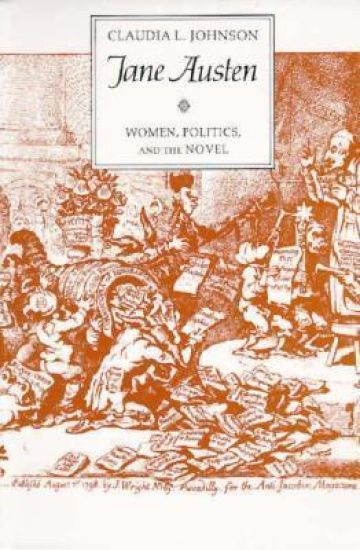
In the wake of the French Revolution, Edmund Burke argued that civil order depended upon the masculine cultivation of traditionally feminine qualities such as sentiment, tenderness, veneration, awe and gratitude. Writers as diverse as Sterne, Goldsmith, Burke and Rousseau were politically motivated to represent authority figures as men of feeling, but denied women comparable authority by representing their feelings as inferior, pathological or criminal. Focusing on Mary Wollstonecraft, Ann Radcliffe, Frances Burney and Jane Austen, this work examines the legacy male sentimentality left for women of various political persuasions. Demonstrating the interrelationships among politics, gender and feeling in the fiction of this period, it provides detailed readings of Wollstonecraft, Radcliffe and Burney, and treats the qualities that were once thought to mar their work - grotesqueness, strain and excess - as indices of ideological conflict and as strategies of representation during a period of profound political conflict. The author maintains that the reactionary reassertion of male sentimentality as a political duty displaced customary gender roles, rendering women, in Wollstonecraft's words, "equivocal beings."
Jane Austen completed only six novels, but enduring passion for the author and her works has driven fans to read these books repeatedly, in book clubs or solo, while also inspiring countless film adaptations, sequels, and even spoofs involving zombies and sea monsters. Austen's lasting appeal to both popular and elite audiences has lifted her to legendary status. In "Jane Austen's Cults and Cultures", Claudia L. Johnson shows how Jane Austen became "Jane Austen," a figure intensely - sometimes even wildly - venerated, and often for markedly different reasons. Johnson begins by exploring the most important monuments and portraits of Austen, considering how these artifacts point to an author who is invisible and yet whose image is inseparable from the characters and fictional worlds she created. She then passes through the four critical phases of Austen's reception-the Victorian era, the First and Second World Wars, and the establishment of the Austen House and Museum in 1949-and ponders what the adoration of Austen has meant to readers over the past two centuries. For her fans, the very concept of "Jane Austen" encapsulates powerful ideas and feelings about history, class, manners, intimacy, language, and the everyday. By respecting the intelligence of past commentary about Austen, Johnson shows, we are able to revisit her work and unearth fresh insights and new critical possibilities. An insightful look at how and why readers have cherished one of our most beloved authors, "Jane Austen's Cults and Cultures" will be a valuable addition to the library of any fan of the divine Jane.
A fascinating look into the myths that continue to shape our understanding and appreciation of Jane Austen. Was Jane Austen the best-selling novelist of her time? Are all her novels romances? Did they depict the traditional world of the aristocracy? Is Austen's writing easy to understand? Well into the 21st century, Jane Austen continues to be one of the most compelling novelists in all English literature. Many of her ideas about class, family, history, intimacy, manners, love, desire, and society, have inspired "myths" that are often contradictory — she was a Tory who was also a liberal feminist, or, her novels are at once sharply satirical and unapologetically romantic. Myths, like Austen's works, are dynamic, changing over time and impacting how we read and interpret literature. 30 Great Myths about Jane Austen examines the accepted beliefs — both true and untrue —that have most influenced our readings of Austen. Rather than simply de-bunking, or validating, commonly-held views about Austen, authors Claudia L. Johnson and Clara Tuite explore how these myths can be used to engage with the life, work, and reception of Jane Austen. Applying the most up-to-date scholarship to better understand how myths shape our appreciation of Jane Austen, this fascinating volume: Introduces readers to the history of Austen reception, both in academic scholarship and in the general publicExamines Jane Austen’s life and letters, her historical contexts, her texts, and their afterlivesDiscusses Austen’s influence on the development of literary criticism as a discipline Explores each of Austen’s main novels, as well as relatively obscure texts such as Sanditon and The Watsons Offering engaging narrative and original insights, 30 Great Myths about Jane Austen is a must-read for scholars, instructors, and students of English and Romantic literature, as well as general readers with interest in the life and works of Jane Austen.
One of Jane Austen’s most charming youthful “novels”-in-miniature—presented in a deluxe illustrated edition that will delight all Austen fansMost people think Jane Austen wrote only six novels. Fortunately for us, she wrote several others, though very short ones, while still a young girl.Austen was only twelve or thirteen when she wrote The Beautifull Cassandra, an irreverent and humorous little masterpiece. Weighing in at 465 occasionally misspelled words, it is a complete and perfect novel-in-miniature, made up of a dedication to her older sister Cassandra and twelve chapters, each consisting of a sentence or two.Narrating the slightly criminal adventures of the sixteen-year-old title character, The Beautifull Cassandra gives us Austen’s most irrepressible heroine, who, after stealing a hat, leaves her mother’s shop to flounce around London, eating ice cream (without paying), taking coach rides (without paying), and encountering handsome young ladies and gentlemen (without speaking)—all to return home hours later with whispered joy: “This is a day well spent.”This charming edition features elegant and edgy watercolor drawings by Leon Steinmetz and is edited by leading Austen scholar Claudia L. Johnson. In her illuminating afterword, Johnson calls The Beautifull Cassandra “among the most brilliant and polished” of Austen’s youthful writings—a precocious work written for the amusement of her family but already anticipating her mature irony, sense of the absurd, gift for parody, and, above all, stylistic mastery.The result is a marvelous edition of a literary treasure that is sure to delight.