Kirjojen hintavertailu. Mukana 11 244 527 kirjaa ja 12 kauppaa.

Kirjahaku

Etsi kirjoja tekijän nimen, kirjan nimen tai ISBN:n perusteella.

2 kirjaa tekijältä Claudia Mesch

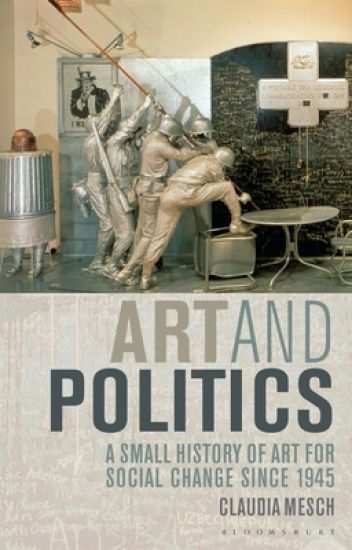
Art and Politics

Art and Politics

Claudia Mesch

Bloomsbury Visual Arts
2020
nidottu
Contemporary art is increasingly concerned with swaying the opinions of its viewier. To do so, the art employs various strategies to convey a political message. This book provides readers with the tools to decode and appreciate political art, a crucial and understudied direction in post-war art. From the postwar works of Pablo Picasso and Alexander Deineka to thie Border Film Project and web-based works of Beatriz da Costa, Art and Politics: a Small History of Art for Social Change after 1945 considers how artists visual or otherwise have engaged with major political and grassroots movements, particularly after 1960. With its broad definition of the political, this book features chapters on postcolonialism, feminism, the anti-war movement, environmentalism, gay rights and anti-globiliaztion. It charts how individual artworks reverberated with enormous idealogical shifts. While emphasising the West, Art and Politics takes global developments into account as well - looking at art production practiced by postcolonial African, Latin American and Middle Eastern artists. Its case-study approach to the subject provides the reader with an overview of a most complex subject.This book will also challenge its readers to consider often devalued and marginalised political artworks as properly part of the history of modern and contemporary art.
Joseph Beuys

Joseph Beuys

Claudia Mesch

Reaktion Books
2017
nidottu
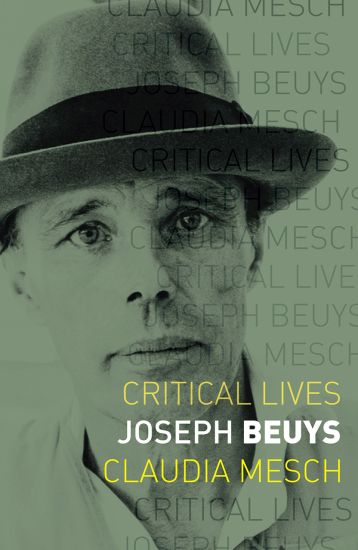
Joseph Beuys is arguably the most important and most controversial German artist of the late twentieth century, not least because his persona is interwoven with Germany’s fascist past. This book illuminates two defining threads in Beuys’s life and art: the centrality of trauma, and his sustained investigation of the very notion of art itself.In addition to the materials of fat and felt that Beuys used widely in his oeuvre, numerous Beuys artworks are autobiogra­ph­ical in content. His self-woven legend of rescue and redemption still strikes many as a highly inappropriate fantasy, or even an outright lie, located as it is in the harrowing context of the Second World War as it was lived by a German soldier or ‘Nazi’. Nevertheless, Beuys’s self-mythology confronted the post-traumatic, foregrounding his struggle for psychic recovery. Perhaps most importantly, this led to his major efforts to expand Western art, freeing artists after him to work in a thoroughly interdisciplinary way and toembrace anthropological conclusions about art and culture. Beuys’s lived experience determined a consistent commitment to peaceful change and positive transformation not only through his work, but in the discussions and institutions he initiated. His notion of activism-as-art has not only become a widespread practice, but is predominant in contemporary art of the twenty-first century.Exploring Beuys’s expansive conception of art and following him into the realms of science, politics and spirituality, this book, in contrast to many other accounts of Beuys’s life, attributes extraordinary importance to his own myth-making as a positive force in the post-war confrontation of Germany’s past.