Kirjojen hintavertailu. Mukana 11 244 527 kirjaa ja 12 kauppaa.

Kirjahaku

Etsi kirjoja tekijän nimen, kirjan nimen tai ISBN:n perusteella.

5 kirjaa tekijältä Claudian

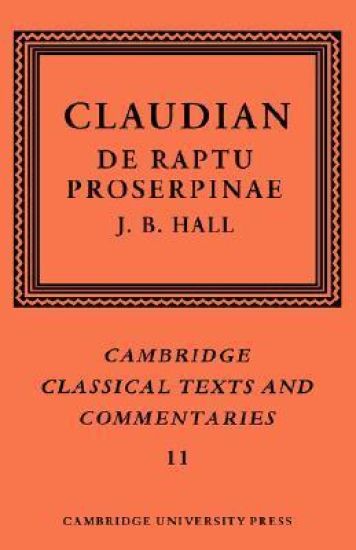
Claudian: De Raptu Proserpinae

Claudian: De Raptu Proserpinae

Claudian

Cambridge University Press
2004
pokkari
An exhaustive study of Claudian's unfinished mythological epic, with a text, apparatus criticus, and commentary. The long introduction begins with a catalogue of manuscripts; and this leads to an investigation into the manuscript tradition and the history of the poem's transmission. Dr Hall then surveys the most important printed editions of the poem. He examines various theories of dating and discusses the sources of the story. He concludes the introduction with a brief critical assessment of the form and style of the poem. Dr Hall establishes his text after an examination of all the extant manuscripts. The apparatus, though very full, is selective in that it records readings of younger manuscripts only when they offer something new. It also ignores trifling corruptions. The commentary is similarly selective. In general, it discusses everything relevant to the establishing of the text and ignores points of purely mythological and literary interest.
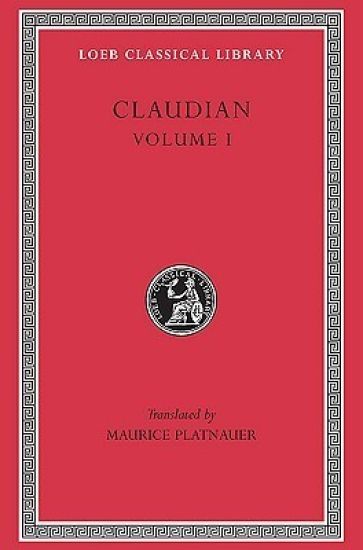
Claudian, Volume I

Claudian, Volume I

Claudian

LOEB
1922
sidottu
Late antique court poetry.Claudius Claudianus, Latin poet of great affairs, flourished during the joint reigns (AD 394–5 onwards) of the brothers Honorius (Emperor in the West) and Arcadius (in the East). Apparently a native of Greek Alexandria in Egypt, he was, to judge by his name, of Roman descent, though his first writings were in Greek, and his pure Latin may have been learned as a foreign language. About AD 395 he moved to Italy (Milan and Rome) and though really a pagan, became a professional court poet composing for Christian rulers works which give us important knowledge of Honorius’ time. A panegyric on the brothers Probinus and Olybrius (consuls together in 395) was followed in the subsequent ten years by other poems (mostly epics in hexameters): in praise of consulships of Honorius (AD 395, 398, 404); against the Byzantine ministers Rufinus (396) and Eutropius (399); in praise of the consulship (400) of Stilicho (Honorius’ guardian, general, and minister); in praise of Stilicho’s wife Serena; mixed metres on the marriage of Honorius to their daughter Maria; on the war with the rebel Gildo in Africa (398); on the Getic or Gothic war (402); on Stilicho’s success against the Goth Alaric (403); on the consulship of Manlius Theodorus (399); and on the wedding of Palladius and Celerina. He also composed non-official poems such as the three books of a mythological epic on the Rape of Proserpina, unfinished as was also a Battle of Giants (in Greek). Noteworthy are Phoenix, Senex Veronensis, elegiac prefaces, and the epistles, epigrams, and idylls. Through the patronage of Stilicho or through Serena, Claudius in 404 married well in Africa and was granted a statue in Rome. Nothing is known of him after 404. In his works can be found true poetic as well as rhetorical skill, command of language, polished style, diversity, vigor, satire, dignity, bombast, artificiality, flattery, and other virtues and faults of the age. The Loeb Classical Library edition of Claudian is in two volumes.
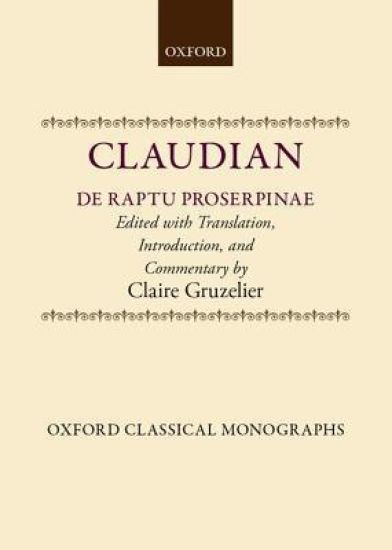
De Raptu Prosperpinae

De Raptu Prosperpinae

Claudian

Clarendon Press
1993
sidottu
Claudian was one of the last great Latin poets of the classical tradition, writing in the fourth century AD. J. B. Hall has already produced two editions of his poem De Raptu Proserpinae which deal exhaustively with the complicated manuscript traditions of the work. But he self-confessedly leaves aside literary questions which are the subject of this commentary. With the current upsurge of research into late antiquity, Claudian is of great interest as one of the foremost poets of the age who has been undeservedly neglected as a creative artist with an immense knowledge of classical literature and a distinctive literary style. His works have been mined for what they can tell us about the history of the late fourth-early fifth century AD, as he largely wrote political propaganda for members of the court circle, but the De Raptu Proserpinae is fascinating for the longest glimpse of him working with subject matter of more personal choice. In addition to the commentary, the book includes a text designed to simplify Hall's apparatus, and a translation to make the work more accessible to non-specialists.
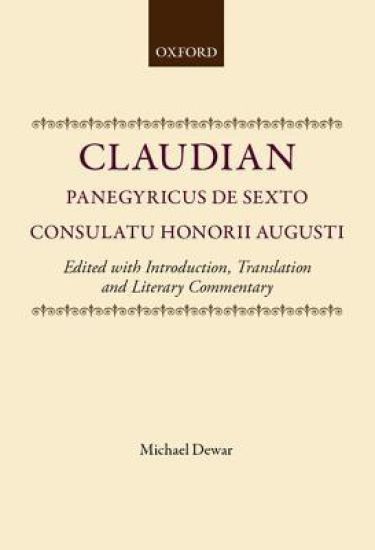
Panegyricus de Sexto Consulatu Honorii Augusti
Claudian is often called the last poet of the classical tradition. This is the first ever English edition of his last extant work, with a full introduction, newly edited text, facing English translation, and commentary. It shows Claudian at the height of his considerable powers. A superb example of the literature of late antiquity, it records in exquisite and glittering verse the splendour of the western imperial court; but it is also a unique historical witness to the events and attitudes of the last years of the Roman empire. The poem celebrates the defeat of Alaric the Visigoth's first invasion of Italy (AD 402), and, ironically, predicts that he will never trouble the Romans again. Only a few years later (in 410), Alaric went on to capture Rome itself - the first capture of the city by a foreign army in eight centuries - shaking the ancient world's perception of Rome's imperial destiny to the foundations. This book provides a detailed analysis not only of the historical background but above all of Claudian's language, style, imagery, and impressive use of a wide range of other Greek and Latin sources.
On Stilicho’s Consulship 2–3. Panegyric on the Sixth Consulship of Honorius. The Gothic War. Shorter Poems. Rape of Proserpina
Late antique court poetry.Claudius Claudianus, Latin poet of great affairs, flourished during the joint reigns (AD 394–5 onwards) of the brothers Honorius (Emperor in the West) and Arcadius (in the East). Apparently a native of Greek Alexandria in Egypt, he was, to judge by his name, of Roman descent, though his first writings were in Greek, and his pure Latin may have been learned as a foreign language. About AD 395 he moved to Italy (Milan and Rome) and though really a pagan, became a professional court poet composing for Christian rulers works which give us important knowledge of Honorius’ time. A panegyric on the brothers Probinus and Olybrius (consuls together in 395) was followed in the subsequent ten years by other poems (mostly epics in hexameters): in praise of consulships of Honorius (AD 395, 398, 404); against the Byzantine ministers Rufinus (396) and Eutropius (399); in praise of the consulship (400) of Stilicho (Honorius’ guardian, general, and minister); in praise of Stilicho’s wife Serena; mixed metres on the marriage of Honorius to their daughter Maria; on the war with the rebel Gildo in Africa (398); on the Getic or Gothic war (402); on Stilicho’s success against the Goth Alaric (403); on the consulship of Manlius Theodorus (399); and on the wedding of Palladius and Celerina. He also composed non-official poems such as the three books of a mythological epic on the Rape of Proserpina, unfinished as was also a Battle of Giants (in Greek). Noteworthy are Phoenix, Senex Veronensis, elegiac prefaces, and the epistles, epigrams, and idylls. Through the patronage of Stilicho or through Serena, Claudius in 404 married well in Africa and was granted a statue in Rome. Nothing is known of him after 404. In his works can be found true poetic as well as rhetorical skill, command of language, polished style, diversity, vigor, satire, dignity, bombast, artificiality, flattery, and other virtues and faults of the age. The Loeb Classical Library edition of Claudian is in two volumes.