This biography of polar explorer Sir Leopold McClintock (his name is also spelled M'Clintock) was published in 1909 by his 'old messmate' Sir Clements Markham (1830–1916), later more famous as a historian. (Several works by both men have been reissued in the Cambridge Library Collection.) McClintock (1819–1907) gained experience of Arctic voyages on the expeditions of James Clark Ross and Edward Belcher, during which he undertook several arduous sledge journeys over the ice. In 1854, he took leave from the navy to command the Fox, a ship paid for by Lady Franklin to investigate the fate of her husband's expedition. He found the memorandum, written by his second-in-command, which confirmed Franklin's death in June 1847. McClintock was knighted for his services on his return, and he stayed in the navy, serving on different stations around the world, until his retirement with the rank of admiral in 1884.
In 1880, the Royal Geographical Society commissioned Sir Clements R. Markham, a noted British geographer and the Society's secretary, to write a history of its formation, and of the many expeditions it had supported since 1830, to celebrate its fiftieth anniversary. Published in 1881, The Fifty Years' Work of the Royal Geographical Society consists of twelve chapters. The first five are a condensed history of the original group of geographers who called themselves the Raleigh Club, and the events leading up to the Society's official formation. Chapters 6 and 7 recount the activities of past presidents, secretaries and leading members of the Society, with the rest of the book detailing the fascinating scientific expeditions the Society sponsored financially from the Arctic to Antarctica, the explorers who took part in them, and the various publications the Society published to advance natural science and exploration.
Sir Clements Robert Markham (1830–1916) had a lifelong interest in Peru. Having already travelled there in his early twenties, he was commissioned to return ten years later to supervise the collection of sufficient specimens of the cinchona tree for its introduction to India. The bark of the tree yielded quinine, by then a well-known febrifuge and one of the few effective treatments for malaria. This book, originally published in 1862, is Markham's personal account of his travels. His story moves from the misty heights of the Peruvian mountains, where he suffered from altitude sickness, to the Malabar coastline and its complex, remarkable caste system. Markham also includes a detailed history of the use of cinchona bark, both by Europeans and aboriginal Peruvians, and a discussion of Incan culture since the arrival of the Spanish. His work is still a valuable resource for students of scientific and colonial history.
Clement Robert Markham (1830–1916) was a geographer who took part in one of the many Arctic expeditions launched to search for missing explorer John Franklin (1786–1847). This account, published in 1853, was written in response to criticism of the expedition. They had found some evidence of Franklin's route - he had set off in May 1845 to find the North-West Passage - but returned to Britain without any of the survivors. Markham gives a brief history of Arctic exploration, but the majority of the book recounts the expedition's efforts to find Franklin. The crew endured a harsh winter and sailed in iceberg-laden waters along the coast of Greenland, looking for clues of Franklin's whereabouts. They also spent some time exploring the Parry Islands (the present-day Queen Elizabeth Islands). Markham's account of the rescue mission provides insight into the little-known and often dangerous world of Arctic explorers.
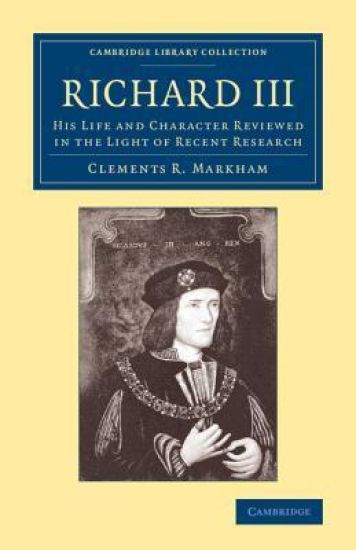
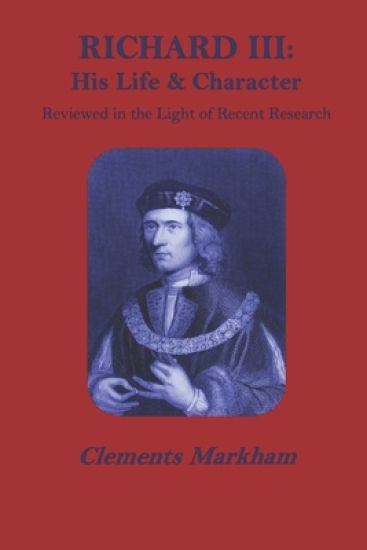
First published in 1906, this work was one of the first and most important Ricardian apologias for a general readership. A distinguished geographer, whose long career had involved voyaging to the Arctic in search of Sir John Franklin, as well as travels in Peru and India, Sir Clements Markham (1830–1916) had played a crucial role in launching Scott's first expedition to Antarctica in 1901. Markham also had a long-standing interest in the reputation of England's last Plantagenet king. The first part of this book presents the life of Richard, while the second half is devoted to a thorough examination of the charges laid against the monarch by the Tudors and later historians. Markham seeks to expose these charges as unfair and unfounded. The work also includes genealogical tables and a map of the Battle of Bosworth Field.
In this 1895 survey of the life and works of James Rennell (1742–1830), the geographer and historian Clements R. Markham (1830–1916) describes him as 'the greatest geographer that Great Britain has yet produced'. The book was published in the 'Century Science Series', which narrated the lives and works of exemplars in each area of science, and Markham goes on to explain why Rennell should be the chosen representative of geography. 'He was an explorer both by sea and land, a map compiler, a physical geographer, a critical and comparative geographer, and a hydrographer.' Rennell is probably best remembered for the surveys of western Asia (also reissued in this series) in which he attempted to match modern to classical sites, but his professional career was spent as an army surveyor in India and Africa. Markham's account of Rennell's life concludes with an examination of his geographical legacy.
Sir Clements R. Markham (1830–1916) had succumbed to smoke after accidentally igniting his bedclothes while reading by candlelight; the task of completing this history therefore fell to his friend and fellow geographer F. H. H. Guillemard (1852–1933), who published it in 1921. In the course of his long career, Markham had sailed to the Arctic in search of Sir John Franklin, jeopardised his job in the India Office by joining the British attempt to reach the North Pole in 1875–6, and served as president of the Royal Geographical Society, sending Robert Falcon Scott on his first expedition to Antarctica. His extensive knowledge of the prominent polar explorers and expeditions of his day lends this publication an especial interest and authority. Enhanced by a number of maps and illustrations, the book also considers certain scientific and economic developments, notably the growth of the whaling industry.
Clements R. Markham (1830–1916) began his career in the Royal Navy, sailing to South America, learning Spanish, and participating in the Arctic search for Sir John Franklin. In 1852, determined to succeed as an explorer and geographer, he travelled to Peru and visited the site of the ancient city of Cuzco, previously little known in Europe. Published in 1856, this is Markham's lively account of his travels. In his description of arriving in Panama we see a picture of the mid-nineteenth-century eagerness to explore (or exploit) Latin America. Markham's stay in Cuzco allowed him ample time to study the ruins and research the lost Inca civilisation, and also gave him his introduction to the properties of the cinchona plant, a source of quinine, which he later returned to collect and introduce to India, as described in his 1862 Travels in Peru and India (also reissued in the Cambridge Library Collection).
Sir Clements R. Markham (1830–1916), the doyen of historical geography in the late nineteenth century, published this comprehensive work on British surveys of India in 1871, at the request of the Indian Office. As he states in his preface, the object of his book is 'to furnish a general view of all the surveying and other geographical operations in India from their first commencement', so that there was a ready source of information on work already done, both for readers of current surveys and also for the surveyors themselves. Markham begins with the earliest European exploration of the Indian Ocean, including the earliest voyages of the East India Company. Systematic land surveying in India, begun by Major James Rennell, remained in military hands through the period of the trigonometric and topographical surveys, and Markham also covers the geological, archaeological and astronomical surveys of the subcontinent in the nineteenth century.
Very little is known for certain of one of the most important events in the history of the world, the coming of the Englishmen to England. It took a long time, fully a century, from 450 A.D. to 550 A.D., and they came constantly, in small detachments for the most part, landing on the coast, in all directions, from the Forth to the Isle of Wight. They came amidst the ruins of the mighty Roman Empire, a new race of empire-founders, with all the germs of a still mightier future. The new-comers from the older Angeln or England, now called Sleswig, came in the greatest numbers. We know not why, but it certainly was a wholesale movement. They kept launching their small fleets of dragon ships, and crossing the North Sea with their gods, their doorposts, and their beautiful golden-haired wives and children, until none were left. They brought with them all the deep religious feeling, all the imaginative mythology, all the heroic tales of the old land. They first disembarked on the coast between the Forth and the Tees, driving back the natives into Strathclyde, after a struggle which lasted for many years. Among them came Ida the son of Eoppa, with twelve sons, in forty dragon ships full of English warriors. He founded the castle of Bambrough on the coast, which was at first surrounded with a hedge and afterwards with a wall; and in 547 A.D. he became king of the country of Bernicia, between the Forth and the Tees. Ida was surnamed the "Flame-bearer." He reigned for twelve years in Bernicia, when Ethelric his son succeeded him. Many more warriors landed on the coast between the Tees and the Humber. In 559 A.D. their Eolderman, named Ella, the son of Iffi, the son of Wuscfrea, and 12th in descent from Woden, became king of the more southern Northumbrian kingdom of Deira. When they were settled in their kingdom of Deira, with Ella as their king, and Elfric as their leader in war, the sea-rovers became farmers, ready to defend their possessions and to fight for the acquisition of more territory for their countrymen. They were the ceorls or freemen assembling in communities of families, within a boundary or mark, and known by a common name with the addition of the patronymic ing. The ceorl owned a hide of land, bore arms, had a vote, and took part in the thing, or general assembly of his mark. The union of marks formed a wapentake (Vopnatak), from the custom of touching the chief's spear in token of fealty. The union of Wapentakes formed the Scire or Shire with its Shirem t. The Ceorl was the freeman, while the Eorl was the nobleman or chief in peace and war, and the Eolderman was a prince of the family of the Cyning (from cyne, generous) or king, who wore the cynehelm or circlet of gold. The Englishmen came with their immemorial gods, and their grand old traditions. Woden was their All-father and Creator, Thor the mighty enemy of giants and trolls, Tyr the god of war. They invoked Balder the bright and fair of aspect; Freyr, who presided over rain and sunshine; Niord, who ruled the winds; gir, god of the ocean; and many more. "Our forefathers derived comfort in affliction, support in difficulty, from the belief that the gods watched over them. They bent in gratitude for the blessings they conferred, and were guided and directed in the daily business of life by the conviction of their responsibility to higher powers than any which they recognised in the world around them." A religious feeling was the basis of their respect for law-of their loyalty, of their free institutions, and of those customs and habits of thought which were the foundation-stones of the edifice of English liberty. These old warriors brought with them to their new homes all those germs which were fertilised by their virtues, and watered with the lifeblood of their valour, until, in the course of centuries, they grew up to form the greatest nation this earth has ever seen, a fruitful and beneficent tree, spreading its branches far and wide round the world.
Very little is known for certain of one of the most important events in the history of the world, the coming of the Englishmen to England. It took a long time, fully a century, from 450 A.D. to 550 A.D., and they came constantly, in small detachments for the most part, landing on the coast, in all directions, from the Forth to the Isle of Wight. They came amidst the ruins of the mighty Roman Empire, a new race of empire-founders, with all the germs of a still mightier future. The new-comers from the older Angeln or England, now called Sleswig, came in the greatest numbers. We know not why, but it certainly was a wholesale movement. They kept launching their small fleets of dragon ships, and crossing the North Sea with their gods, their doorposts, and their beautiful golden-haired wives and children, until none were left. They brought with them all the deep religious feeling, all the imaginative mythology, all the heroic tales of the old land. They first disembarked on the coast between the Forth and the Tees, driving back the natives into Strathclyde, after a struggle which lasted for many years. Among them came Ida the son of Eoppa, with twelve sons, in forty dragon ships full of English warriors. He founded the castle of Bambrough on the coast, which was at first surrounded with a hedge and afterwards with a wall; and in 547 A.D. he became king of the country of Bernicia, between the Forth and the Tees. Ida was surnamed the "Flame-bearer." He reigned for twelve years in Bernicia, when Ethelric his son succeeded him. Many more warriors landed on the coast between the Tees and the Humber. In 559 A.D. their Eolderman, named Ella, the son of Iffi, the son of Wuscfrea, and 12th in descent from Woden, became king of the more southern Northumbrian kingdom of Deira. When they were settled in their kingdom of Deira, with Ella as their king, and Elfric as their leader in war, the sea-rovers became farmers, ready to defend their possessions and to fight for the acquisition of more territory for their countrymen. They were the ceorls or freemen assembling in communities of families, within a boundary or mark, and known by a common name with the addition of the patronymic ing. The ceorl owned a hide of land, bore arms, had a vote, and took part in the thing, or general assembly of his mark. The union of marks formed a wapentake (Vopnatak), from the custom of touching the chief's spear in token of fealty. The union of Wapentakes formed the Scire or Shire with its Shirem t. The Ceorl was the freeman, while the Eorl was the nobleman or chief in peace and war, and the Eolderman was a prince of the family of the Cyning (from cyne, generous) or king, who wore the cynehelm or circlet of gold. The Englishmen came with their immemorial gods, and their grand old traditions. Woden was their All-father and Creator, Thor the mighty enemy of giants and trolls, Tyr the god of war. They invoked Balder the bright and fair of aspect; Freyr, who presided over rain and sunshine; Niord, who ruled the winds; gir, god of the ocean; and many more. "Our forefathers derived comfort in affliction, support in difficulty, from the belief that the gods watched over them. They bent in gratitude for the blessings they conferred, and were guided and directed in the daily business of life by the conviction of their responsibility to higher powers than any which they recognised in the world around them." A religious feeling was the basis of their respect for law-of their loyalty, of their free institutions, and of those customs and habits of thought which were the foundation-stones of the edifice of English liberty. These old warriors brought with them to their new homes all those germs which were fertilised by their virtues, and watered with the lifeblood of their valour, until, in the course of centuries, they grew up to form the greatest nation this earth has ever seen, a fruitful and beneficent tree, spreading its branches far and wide round the world.
Sir Clements Markham's biography of Richard III, first published in 1906, has since remained one of the most important revisionist biographies in defence of the King. It maintained that his character and reputation had been grossly blackened by Tudor chroniclers and subsequent hsitorians, and that with regard to the various deaths attributed to him, he should be acquitted.This new edition includes an introduction by John Van der Kiste