Kirjojen hintavertailu. Mukana 11 342 296 kirjaa ja 12 kauppaa.

Kirjahaku

Etsi kirjoja tekijän nimen, kirjan nimen tai ISBN:n perusteella.

28 kirjaa tekijältä Clive Bell

Development Policy as Public Finance

Development Policy as Public Finance

Clive Bell

Oxford University Press
2003
sidottu
This work is written out of a conviction that development economics needs to draw more heavily and systematically on recent advances in knowledge made in public economics - especially where the formulation and analysis of development policy are concerned. The central questions - how to raise and spend revenues well, in the sense of promoting development - are surely normative; but whether something is done "well" must also be judged in relation to what is actually feasible. With unrestricted lump-sum transfers ruled out in practice, the design of policy is inherently concerned with considerations of the second-best. This awkward fact besets the analysis of interventions in all areas of economic activity, from international trade to small-scale finance. Debates over whether and how to promote particular sectors or activities at the expense of others, when viewed from this perspective, draw attention away from the humdrum, but decidedly more important goal of raising revenue efficiently and with due regard for equity.
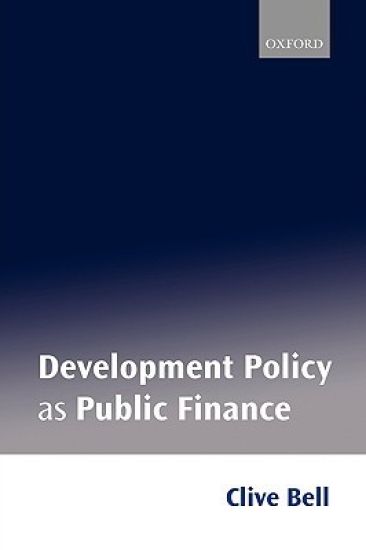
Development Policy as Public Finance

Development Policy as Public Finance

Clive Bell

Oxford University Press
2003
nidottu
This book is written out of a conviction that development economics needs to draw more heavily and systematically on recent advances in knowledge made in public economics, especially where the formulation and analysis of development policy are concerned. The central questions - how to raise and spend revenues well, in the sense of promoting development - are surely normative; but whether something is done 'well' must also be judged in relation to what is actually feasible. With unrestricted lump-sum transfers ruled out in practice, the design of policy is inherently concerned with considerations of the second-best. This awkward fact besets the analysis of interventions in all areas of economic activity, from international trade to small-scale finance. Debates over whether and how to promote particular sectors or activities at the expense of others, when viewed from this perspective, draw attention away from the humdrum, but decidedly more important goal of raising revenue efficiently and with due regard for equity. This stricture applies to international trade, industry, and agriculture, as well as to the familiar choice among different forms of taxes, seigniorage, and debt. At the same time, all proposals to spend public funds, introduce or change regulations, and reform policy should be subjected to a rigorous and uniform system of appraisal, especially when there is a substantial premium on public funds. The methods of social cost-benefit analysis, based on shadow prices, provide just the apparatus that is needed for this purpose. This apparatus and its many applications are developed at length, in the hope of promoting its use as a matter of course. Development Policy as Public Finance will be of interest to graduate students, academics, and advanced undergraduates in economics, development studies, and political science; government agencies and NGOs.
Atouts: AQA AS French Student Book and CDROM

Atouts: AQA AS French Student Book and CDROM

Clive Bell

pearson education limited
2008
muu
Atouts matches the new 2008 AQA GCE specification and has been designed to promote independent learning. Written by chief examiners, you can be confident it covers everything students need to succeed at AS Level.This Student Book contains: topical and relevant content, reflecting young people's interests and the new AQA specification; a comprehensive Transition Section that refreshes students' learning and helps them make the important leap from GCSE to A Level; AQA specific exam practice at the end of every module to support revision; invaluable vocabulary lists relevant to each module; and, it comes with its own listening practice CD-ROM.
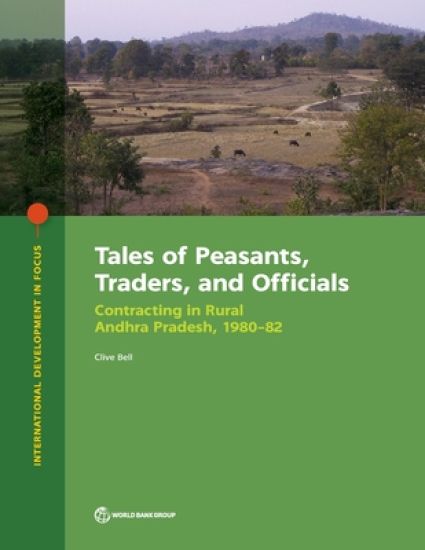
Tales of Peasants, Traders, and Officials

Tales of Peasants, Traders, and Officials

Clive Bell

World Bank Publications
2020
nidottu
Tales of Peasants, Traders, and Officials: Contracting in Rural Andhra Pradesh, 1980–82 stems from a research project in the subfield of rural economic organization, with a focus on credit and irrigation, and on how public policy in these domains influenced agricultural development. The fieldwork was carried out in three states of the Indian Union between 1980 to 1982, including 14 villages in Andhra Pradesh. The survey covered villagers' dealings in the markets for labor, tenancies, credit, and crops. It revealed not only diverse contractual forms in those markets, but also their interplay with access to credit and its terms. Understanding what motivates agents to contract in a particular way—or not at all—is essential in such a study. At the beginning and toward the close of the survey work, the principal investigators conducted interviews with focus groups, some respondents in the household sample, and various public officials, who were encouraged to speak freely. The first part of the monograph comprises an introductory chapter and two long travelogues, which provide structured accounts of the proceedings of those interviews. Next are formal analyses of various alternative contractual arrangements and the villagers' choices among them. These are partly inductive; they draw on what respondents had to say about their options and decisions as well as received theory. Four topics are treated in detail: (1) the choice between employment as a casual laborer and as an attached farm servant; (2) the choice between sharecropping and fixed-rents paid in kind, with special reference to land irrigated by percolation wells; (3) the closely related matter of loans, subsidies, and corruption in connection with the profitability of investments in wells; and (4) the tying of loans for the cultivation of commercial crops to the arrangements for marketing them. The central importance of villagers' outside options and access to credit emerges clearly.