Kirjojen hintavertailu. Mukana 11 244 527 kirjaa ja 12 kauppaa.

Kirjahaku

Etsi kirjoja tekijän nimen, kirjan nimen tai ISBN:n perusteella.

9 kirjaa tekijältä Clive Finlayson

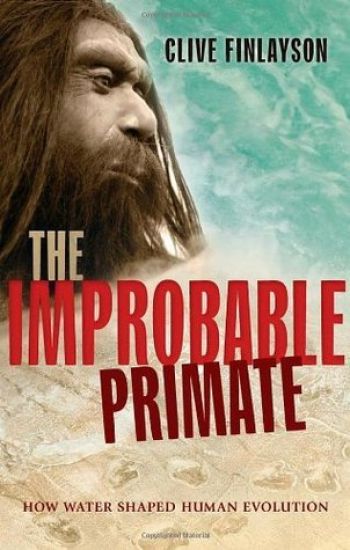
The Improbable Primate

The Improbable Primate

Clive Finlayson

Oxford University Press
2016
nidottu
Taking an ecological approach to our evolution, Clive Finlayson considers the origins of modern humans within the context of a drying climate and changing landscapes. Finlayson argues that environmental change, particularly availability of water, played a critical role in shaping the direction of human evolution, contributing to our spread and success. He argues that our ancestors carved a niche for themselves by leaving the forest and forcing their way into a long-established community of carnivores in a tropical savannah as climate changes opened up the landscape. They took their chance at high noon, when most other predators were asleep. Adapting to this new lifestyle by shedding their hair and developing an active sweating system to keep cool, being close to fresh water was vital. As the climate dried, our ancestors, already bipedal, became taller and slimmer, more adept at travelling farther in search of water. The challenges of seeking water in a drying landscape moulded the minds and bodies of early humans, and directed their migrations and eventual settlements. In this fresh and provocative view of a seven-million-year evolutionary journey, Finlayson demonstrates the radical implications for the interpretation of fossils and technologies and shows that understanding humans within an ecological context provides insights into the emergence and spread of Homo sapiens sapiens worldwide.

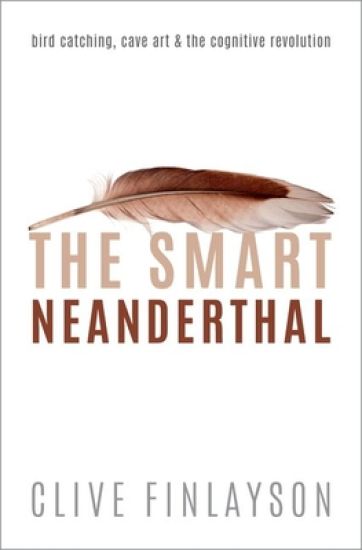
The Smart Neanderthal

The Smart Neanderthal

Clive Finlayson

Oxford University Press
2019
sidottu
Since the late 1980s the dominant theory of human origins has been that a 'cognitive revolution' (C.50,000 years ago) led to the advent of our species, Homo sapiens. As a result of this revolution our species spread and eventually replaced all existing archaic Homo species, ultimately leading to the superiority of modern humans. Or so we thought. As Clive Finlayson explains, the latest advances in genetics prove that there was significant interbreeding between Modern Humans and the Neanderthals. All non-Africans today carry some Neanderthal genes. We have also discovered aspects of Neanderthal behaviour that indicate that they were not cognitively inferior to modern humans, as we once thought, and in fact had their own rituals and art. Finlayson, who is at the forefront of this research, recounts the discoveries of his team, providing evidence that Neanderthals caught birds of prey, and used their feathers for symbolic purposes. There is also evidence that Neanderthals practised other forms of art, as the recently discovered engravings in Gorham's Cave Gibraltar indicate. Linking all the recent evidence, The Smart Neanderthal casts a new light on the Neanderthals and the 'Cognitive Revolution'. Finlayson argues that there was no revolution and, instead, modern behaviour arose gradually and independently among different populations of Modern Humans and Neanderthals. Some practices were even adopted by Modern Humans from the Neanderthals. Finlayson overturns classic narratives of human origins, and raises important questions about who we really are.
The Smart Neanderthal

The Smart Neanderthal

Clive Finlayson

Oxford University Press
2021
nidottu
Since the late 1980s the dominant theory of human origins has been that a 'cognitive revolution' (C.50,000 years ago) led to the advent of our species, Homo sapiens. As a result of this revolution our species spread and eventually replaced all existing archaic Homo species, ultimately leading to the superiority of modern humans. Or so we thought. As Clive Finlayson explains, the latest advances in genetics prove that there was significant interbreeding between Modern Humans and the Neanderthals. All non-Africans today carry some Neanderthal genes. We have also discovered aspects of Neanderthal behaviour that indicate that they were not cognitively inferior to modern humans, as we once thought, and in fact had their own rituals and art. Finlayson, who is at the forefront of this research, recounts the discoveries of his team, providing evidence that Neanderthals caught birds of prey, and used their feathers for symbolic purposes. There is also evidence that Neanderthals practised other forms of art, as the recently discovered engravings in Gorham's Cave Gibraltar indicate. Linking all the recent evidence, The Smart Neanderthal casts a new light on the Neanderthals and the "Cognitive Revolution". Finlayson argues that there was no revolution and, instead, modern behaviour arose gradually and independently among different populations of Modern Humans and Neanderthals. Some practices were even adopted by Modern Humans from the Neanderthals. Finlayson overturns classic narratives of human origins, and raises important questions about who we really are.
The Improbable Primate

The Improbable Primate

Clive Finlayson

Oxford University Press
2014
sidottu
In this fresh and provocative view of a seven-million-year evolutionary journey, Finlayson demonstrates the radical implications for the interpretation of fossils and technologies and shows that understanding humans within an ecological context provides insights into the emergence and spread of Homo sapiens worldwide. Finlayson argues that environmental change, particularly availability of water, played a critical role in shaping the direction of human evolution, contributing to our spread and success. He argues that our ancestors carved a niche for themselves by leaving the forest and forcing their way into a long-established community of carnivores in a tropical savannah as climate changes opened up the landscape. They took their chance at high noon, when most other predators were asleep. Adapting to this new lifestyle by shedding their hair and developing an active sweating system to keep cool, being close to fresh water was vital. As the climate dried, our ancestors, already bipedal, became taller and slimmer, more adept at travelling farther in search of water. The challenges of seeking water in a drying landscape moulded the minds and bodies of early humans, and directed their migrations and eventual settlements.
Neanderthals and Modern Humans

Neanderthals and Modern Humans

Clive Finlayson

Cambridge University Press
2009
pokkari
Neanderthals and Modern Humans develops the theme of the close relationship between climate change, ecological change and biogeographical patterns in humans during the Pleistocene. In particular, it challenges the view that Modern Human 'superiority' caused the extinction of the Neanderthals between 40 and 30 thousand years ago. Clive Finlayson shows that to understand human evolution, the spread of humankind across the world and the extinction of archaic populations, we must move away from a purely theoretical evolutionary ecology base and realise the importance of wider biogeographic patterns including the role of tropical and temperate refugia. His proposal is that Neanderthals became extinct because their world changed faster than they could cope with, and that their relationship with the arriving Modern Humans, where they met, was subtle.
Neanderthals and Modern Humans

Neanderthals and Modern Humans

Clive Finlayson

Cambridge University Press
2004
sidottu
Neanderthals and Modern Humans develops the theme of the close relationship between climate change, ecological change and biogeographical patterns in humans during the Pleistocene. In particular, it challenges the view that Modern Human 'superiority' caused the extinction of the Neanderthals between 40 and 30 thousand years ago. Clive Finlayson shows that to understand human evolution, the spread of humankind across the world and the extinction of archaic populations, we must move away from a purely theoretical evolutionary ecology base and realise the importance of wider biogeographic patterns including the role of tropical and temperate refugia. His proposal is that Neanderthals became extinct because their world changed faster than they could cope with, and that their relationship with the arriving Modern Humans, where they met, was subtle.
Avian survivors

Avian survivors

Clive Finlayson

T AD Poyser
2011
sidottu
Using a fresh approach that classifies birds according to their bioclimatic characteristics, Clive Finlayson views the history and distribution of Palearctic birds from a radical new angle.History and chance events play a central role in a story that has its origins before the asteroid impact that finished off the dinosaurs. In this book, Finlayson shows that the avifauna of the Palearctic long predates the glaciations of the last two million years, and had established itself gradually during the turbulent times of the Miocene and Pliocene, the lifting of Tibet and the drying of the continents having a major influence on these birds. Those that made it to the start of the glaciations were equipped to deal with whatever the climate could throw at them. They were the avian survivors, and they are still here with us today. Packed with figures and with a rich colour section, Avian Survivors tells the definitive story of the birds of the Palearctic, across space and time.
Birds of the Strait of Gibraltar

Birds of the Strait of Gibraltar

Clive Finlayson

Poyser
2010
sidottu
The Strait of Gibraltar is famous as a major point of passage for Palaearctic birds migrating between their European breeding grounds and their winter quarters in Africa. Clive Finlayson, a native of the Rock and a trained ornithologist, presents a fascinating account of the region and its resident and transitory bird life. The first chapter of the book describes the area, which broadly defined includes the Coto Donana in the north and the Merja Zerga in the south, and the geographic and climatological characteristics which make it a suitable crossing place. In scope this book goes beyond the strict definition of the Strait and, following Irby's 19th Century work, examines the rich area where Europe meets Africa. The chapters which follow describe in detail the migration patterns of the principal passage species including their origins, destinations and overall numbers, showing how the precise conditions of weather and visibility affect the specific choice of route and timing of the crossing. The breeding and wintering bird communities are then considered and the ornithology of the entire region summarized. Whether or not you have ever witnessed the thousands of raptors, storks and other birds that may make this legendary crossing in a single day, this book will conjure the spirit of this extraordinary place. Delightful illustrations by lan Willis complete an important and entertaining book. Illustrated by lan Willis