Kirjojen hintavertailu. Mukana 11 627 220 kirjaa ja 12 kauppaa.

Kirjahaku

Etsi kirjoja tekijän nimen, kirjan nimen tai ISBN:n perusteella.

2 kirjaa tekijältä Clive Foxell

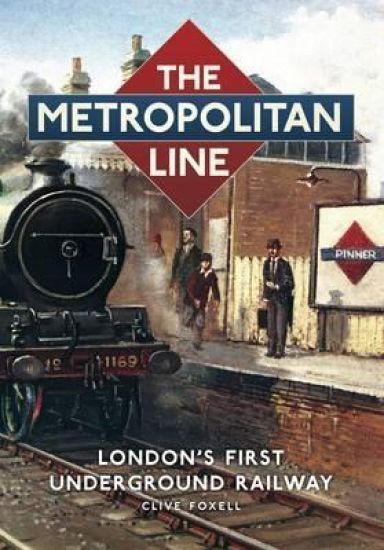
The Metropolitan Line

The Metropolitan Line

Clive Foxell

The History Press Ltd
2010
nidottu
The Metropolitan Railway can claim to have had an influence on the evolution of our railway system out of all proportion to its tracks reaching just forty-seven miles from London. However it was the world’s first underground passenger railway, built in 1863 to ease the traffic congestion of a growing London and thus creating the first metro system. Embraced by the notorious Victorian entrepreneur Sir Edward Watkin as part of his ultimately unsuccessful ambition to link Manchester and Paris by rail, the Metropolitan decided to use Watkin’s land to create the iconic ‘Metro-land’, an Arcadian form of suburbia embracing affordable housing with easy commuting to London. The brand soon became accepted as the generic description of a lifestyle and by the end of the First World War Metro-land represented the appealing factors of aspiration and affordability. This fascinating history of London’s first tube line and the people involved in its evolution brings us up to date with the latest plans for this idiosyncratic railway in line with the coming 2012 Olympics. Featuring many previously unpublished photographs, it is a must for all railway enthusiasts and social historians.
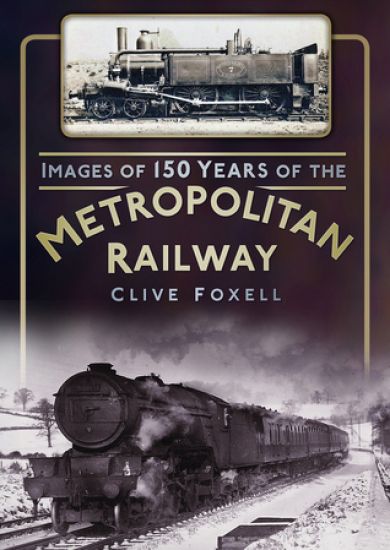
Images of 150 Years of the Metropolitan Railway

Images of 150 Years of the Metropolitan Railway

Clive Foxell

The History Press Ltd
2012
nidottu
To celebrate its 150th anniversary, this book endeavours to capture in pictures the beguiling character of the Metropolitan Railway, which started as the world’s first underground railway between Paddington and Farringdon, but grew to create iconic Metro-Land, later immortalised by John Betjeman. However, this evolution was influenced by the notorious Victorian entrepreneur, Edward Watkin, which resulted in the ‘Met’ having to share some of its routes with a mainline railway – indeed it still does so. The other major change was the reluctant absorption in 1933 into the new London Transport, which sought to make it adopt their standard practices. Although this was suspended due to the Second World War, in which bombing took a heavy toll on the vital cross-London lines, by 1961 LT was able to replace most of the Met steam services with electrification. Now these trains are themselves being replaced by new stock, marking another facet in the complex story of the idiosyncratic ‘Met’ cherished by millions of travellers.