Kirjojen hintavertailu. Mukana 11 244 527 kirjaa ja 12 kauppaa.

Kirjahaku

Etsi kirjoja tekijän nimen, kirjan nimen tai ISBN:n perusteella.

6 kirjaa tekijältä Clive Gamble

Making Deep History

Making Deep History

Clive Gamble

Oxford University Press
2021
sidottu
One afternoon in late April 1859 two geologically minded businessmen, John Evans and Joseph Prestwich, found and photographed the proof for great human antiquity. Their evidence -- small, hand-held stone tools found in the gravel quarries of the Somme among the bones of ancient animals -- shattered the timescale of Genesis and kicked open the door for a time revolution in human history. In the space of a calendar year, and at a furious pace, the relationship between humans and time was forever changed. This interpretation of deep human history was shaped by the optimistic decade of the 1850s, the Victorian Heyday in the age of equipoise. Proving great human antiquity depended on matching the principles of geology with the personal values of scientific zeal and perseverance; qualities which time-revolutionaries such as Evans and Prestwich had in abundance. Their revolution was driven by a small group of weekend scientists rather than some great purpose, and it proved effective because of its bonds of friendship stiffened by scientific curiosity and business acumen. Clive Gamble explores the personalities of these time revolutionaries and their scientific co-collaborators and adjudicators -- Darwin, Falconer, Lyell, Huxley, and the French antiquary Boucher de Perthes -- as well as their sisters, wives, and nieces Grace McCall, Civil Prestwich, and Fanny Evans. As with all scientific discoveries getting there was often circuitous and messy; the revolutionaries changed their minds and disagreed with those who should have been allies. Gamble's chronological narrative reveals each step from discovery to presentation, reception, consolidation, and widespread acceptance, and considers the impact of their work on the scientific advances of the next 160 years and on our fascination with the shaping power of time.
Origins and Revolutions

Origins and Revolutions

Clive Gamble

Cambridge University Press
2007
pokkari
In this study Clive Gamble presents and questions two of the most famous descriptions of change in prehistory. The first is the 'human revolution', when evidence for art, music, religion and language first appears. The second is the economic and social revolution of the Neolithic period. Gamble identifies the historical agendas behind 'origins research' and presents a bold alternative to these established frameworks, relating the study of change to the material basis of human identity. He examines, through artefact proxies, how changing identities can be understood using embodied material metaphors and in two major case-studies charts the prehistory of innovations, asking, did agriculture really change the social world? This is an important and challenging book that will be essential reading for every student and scholar of prehistory.
Origins and Revolutions

Origins and Revolutions

Clive Gamble

Cambridge University Press
2007
sidottu
In this study Clive Gamble presents and questions two of the most famous descriptions of change in prehistory. The first is the 'human revolution', when evidence for art, music, religion and language first appears. The second is the economic and social revolution of the Neolithic period. Gamble identifies the historical agendas behind 'origins research' and presents a bold alternative to these established frameworks, relating the study of change to the material basis of human identity. He examines, through artefact proxies, how changing identities can be understood using embodied material metaphors and in two major case-studies charts the prehistory of innovations, asking, did agriculture really change the social world? This is an important and challenging book that will be essential reading for every student and scholar of prehistory.
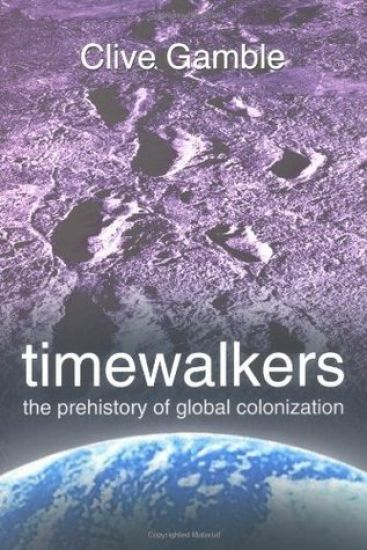
Timewalkers

Timewalkers

Clive Gamble

The History Press Ltd
2003
nidottu
Clive Gamble's book reinterprets three million years of archaeology to show how the earliest humans of the African savannah spread out to other continents, along the Old World track, and eventually colonized the world.
Settling the Earth

Settling the Earth

Clive Gamble

Cambridge University Press
2013
sidottu
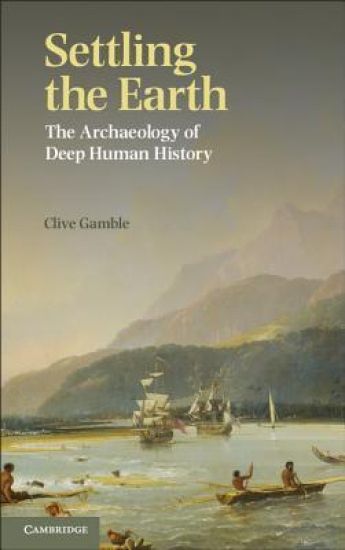
In this worldwide survey, Clive Gamble explores the evolution of the human imagination, without which we would not have become a global species. He sets out to determine the cognitive and social basis for our imaginative capacity and traces the evidence back into deep human history. He argues that it was the imaginative ability to 'go beyond' and to create societies where people lived apart yet stayed in touch that made us such effective world settlers. To make his case Gamble brings together information from a wide range of disciplines: psychology, cognitive science, archaeology, palaeoanthropology, archaeogenetics, geography, quaternary science and anthropology. He presents a novel deep history that combines the archaeological evidence for fossil hominins with the selective forces of Pleistocene climate change, engages with the archaeogeneticists' models for population dispersal and displacement, and ends with the Europeans' rediscovery of the deep history settlement of the Earth.
Settling the Earth

Settling the Earth

Clive Gamble

Cambridge University Press
2013
pokkari
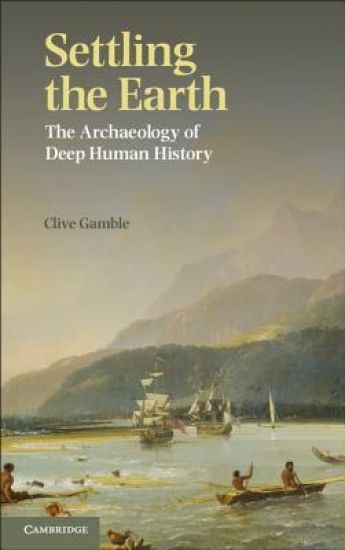
In this worldwide survey, Clive Gamble explores the evolution of the human imagination, without which we would not have become a global species. He sets out to determine the cognitive and social basis for our imaginative capacity and traces the evidence back into deep human history. He argues that it was the imaginative ability to 'go beyond' and to create societies where people lived apart yet stayed in touch that made us such effective world settlers. To make his case Gamble brings together information from a wide range of disciplines: psychology, cognitive science, archaeology, palaeoanthropology, archaeogenetics, geography, quaternary science and anthropology. He presents a novel deep history that combines the archaeological evidence for fossil hominins with the selective forces of Pleistocene climate change, engages with the archaeogeneticists' models for population dispersal and displacement, and ends with the Europeans' rediscovery of the deep history settlement of the Earth.