Kirjojen hintavertailu. Mukana 11 627 220 kirjaa ja 12 kauppaa.

Kirjahaku

Etsi kirjoja tekijän nimen, kirjan nimen tai ISBN:n perusteella.

14 kirjaa tekijältä Clive Hamilton

Earthmasters

Earthmasters

Clive Hamilton

Yale University Press
2014
pokkari
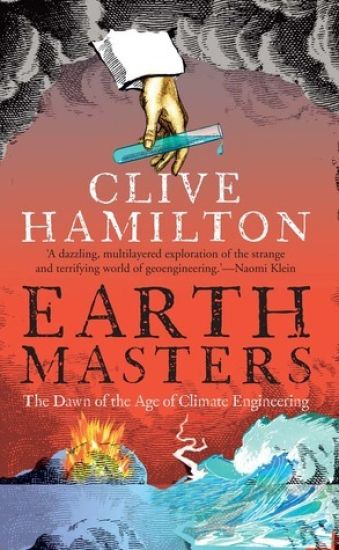
An essential book that comes to grips with the events that will determine the fate of the Earth This book goes to the heart of the unfolding reality of the twenty-first century: international efforts to reduce greenhouse gas emissions have all failed, and before the end of the century Earth is projected to be warmer than it has been for 15 million years. The question “can the crisis be avoided?” has been superseded by a more frightening one, “what can be done to prevent the devastation of the living world?” And the disturbing answer, now under wide discussion both within and outside the scientific community, is to seize control of the very climate of the Earth itself. Clive Hamilton begins by exploring the range of technologies now being developed in the field of geoengineering--the intentional, enduring, large-scale manipulation of Earth’s climate system. He lays out the arguments for and against climate engineering, and reveals the extent of vested interests linking researchers, venture capitalists, and corporations. He then examines what it means for human beings to be making plans to control the planet’s atmosphere, probes the uneasiness we feel with the notion of exercising technological mastery over nature, and challenges the ways we think about ourselves and our place in the natural world.
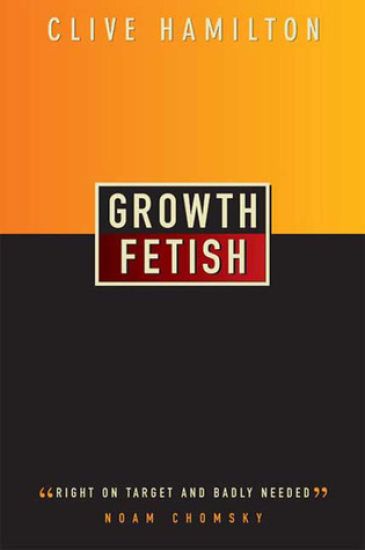
Growth Fetish

Growth Fetish

Clive Hamilton

Pluto Press
2004
pokkari
For decades our political leaders and opinion makers have touted higher incomes as the way to a better future. Economic growth means better lives for us all.But after many years of sustained economic growth and increased personal incomes we must confront an awful fact: we aren't any happier. This is the great contradiction of modern politics. Clive Hamilton argues that, far from being the answer to our problems, growth fetishism and the marketing society lie at the heart of our social ills. They have corrupted our social priorities and political structures, and have created a profound sense of alienation among young and old.Growth Fetish is the first serious attempt at a politics of change for rich countries dominated by sicknesses of affluence, where the real yearning is not for more money but for authentic identity, and where the future lies in creating a society that promotes the things that really do improve our well-being.
Growth Fetish

Growth Fetish

Clive Hamilton

Pluto Press
2004
sidottu
For decades our political leaders and opinion makers have touted higher incomes as the way to a better future. Economic growth means better lives for us all.But after many years of sustained economic growth and increased personal incomes we must confront an awful fact: we aren't any happier. This is the great contradiction of modern politics. Clive Hamilton argues that, far from being the answer to our problems, growth fetishism and the marketing society lie at the heart of our social ills. They have corrupted our social priorities and political structures, and have created a profound sense of alienation among young and old.Growth Fetish is the first serious attempt at a politics of change for rich countries dominated by sicknesses of affluence, where the real yearning is not for more money but for authentic identity, and where the future lies in creating a society that promotes the things that really do improve our well-being.
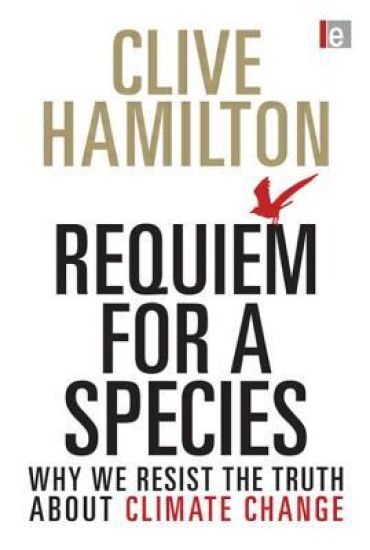
Requiem for a Species

Requiem for a Species

Clive Hamilton

Routledge
2015
nidottu
This book does not set out once more to raise the alarm to encourage us to take radical measures to head off climate chaos. There have been any number of books and reports in recent years explaining just how dire the future looks and how little time we have left to act. This book is about why we have ignored those warnings, and why it is now too late. It is a book about the frailties of the human species as expressed in both the institutions we built and the psychological dispositions that have led us on the path of self-destruction. It is about our strange obsessions, our hubris, and our penchant for avoiding the facts. It is the story of a battle within us between the forces that should have caused us to protect the Earth - our capacity to reason and our connection to Nature - and those that, in the end, have won out - our greed, materialism and alienation from Nature. And it is about the 21st century consequences of these failures. Clive Hamilton is author of the bestselling Affluenza and Growth Fetish, of Scorcher, and most recently Freedom Paradox.
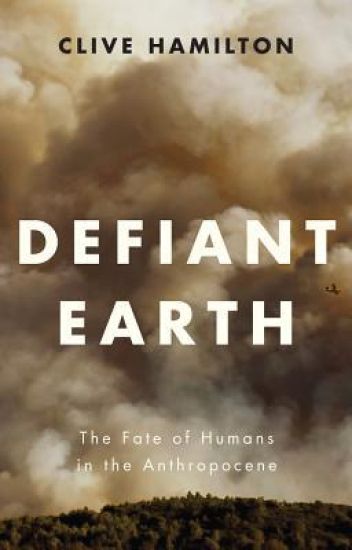
Defiant Earth

Defiant Earth

Clive Hamilton

Polity Press
2017
sidottu
Humans have become so powerful that we have disrupted the functioning of the Earth System as a whole, bringing on a new geological epoch – the Anthropocene – one in which the serene and clement conditions that allowed civilisation to flourish are disappearing and we quail before 'the wakened giant'. The emergence of a conscious creature capable of using technology to bring about a rupture in the Earth's geochronology is an event of monumental significance, on a par with the arrival of civilisation itself. What does it mean to have arrived at this point, where human history and Earth history collide? Some interpret the Anthropocene as no more than a development of what they already know, obscuring and deflating its profound significance. But the Anthropocene demands that we rethink everything. The modern belief in the free, reflexive being making its own future by taking control of its environment – even to the point of geoengineering – is now impossible because we have rendered the Earth more unpredictable and less controllable, a disobedient planet. At the same time, all attempts by progressives to cut humans down to size by attacking anthropocentrism come up against the insurmountable fact that human beings now possess enough power to change the Earth's course. It's too late to turn back the geological clock, and there is no going back to premodern ways of thinking. We must face the fact that humans are at the centre of the world, even if we must give the idea that we can control the planet. These truths call for a new kind of anthropocentrism, a philosophy by which we might use our power responsibly and find a way to live on a defiant Earth.
Defiant Earth

Defiant Earth

Clive Hamilton

Polity Press
2017
nidottu
Humans have become so powerful that we have disrupted the functioning of the Earth System as a whole, bringing on a new geological epoch – the Anthropocene – one in which the serene and clement conditions that allowed civilisation to flourish are disappearing and we quail before 'the wakened giant'. The emergence of a conscious creature capable of using technology to bring about a rupture in the Earth's geochronology is an event of monumental significance, on a par with the arrival of civilisation itself. What does it mean to have arrived at this point, where human history and Earth history collide? Some interpret the Anthropocene as no more than a development of what they already know, obscuring and deflating its profound significance. But the Anthropocene demands that we rethink everything. The modern belief in the free, reflexive being making its own future by taking control of its environment – even to the point of geoengineering – is now impossible because we have rendered the Earth more unpredictable and less controllable, a disobedient planet. At the same time, all attempts by progressives to cut humans down to size by attacking anthropocentrism come up against the insurmountable fact that human beings now possess enough power to change the Earth's course. It's too late to turn back the geological clock, and there is no going back to premodern ways of thinking. We must face the fact that humans are at the centre of the world, even if we must give the idea that we can control the planet. These truths call for a new kind of anthropocentrism, a philosophy by which we might use our power responsibly and find a way to live on a defiant Earth.
Silent Invasion

Silent Invasion

Clive Hamilton

Hardie Grant Books
2018
nidottu
In 2008 Clive Hamilton was at Parliament House in Canberra when the Beijing Olympic torch relay passed through. He watched in bewilderment as a small pro-Tibet protest was overrun by thousands of angry Chinese students. Where did they come from? Why were they so aggressive? And what gave them the right to shut down others exercising their democratic right to protest? The authorities did nothing about it, and what he saw stayed with him. In 2016 it was revealed that wealthy Chinese businessmen linked to the Chinese Communist Party had become the largest donors to both major political parties. Hamilton realised something big was happening, and decided to investigate the Chinese government’s influence in Australia. What he found shocked him. From politics to culture, real estate to agriculture, universities to unions, and even in our primary schools, he uncovered compelling evidence of the Chinese Communist Party’s infiltration of Australia. Sophisticated influence operations target Australia’s elites, and parts of the large Chinese-Australian diaspora have been mobilised to buy access to politicians, limit academic freedom, intimidate critics, collect information for Chinese intelligence agencies, and protest in the streets against Australian government policy. It’s no exaggeration to say the Chinese Communist Party and Australian democracy are on a collision course. The CCP is determined to win, while Australia looks the other way. Thoroughly researched and powerfully argued, Silent Invasionis a sobering examination of the mounting threats to democratic freedoms Australians have for too long taken for granted. Yes, China is important to our economic prosperity; but, Hamilton asks, how much is our sovereignty as a nation worth?
Requiem for a Species

Requiem for a Species

Clive Hamilton

Earthscan Ltd
2010
sidottu
This book does not set out once more to raise the alarm to encourage us to take radical measures to head off climate chaos. There have been any number of books and reports in recent years explaining just how dire the future looks and how little time we have left to act. This book is about why we have ignored those warnings, and why it is now too late. It is a book about the frailties of the human species as expressed in both the institutions we built and the psychological dispositions that have led us on the path of self-destruction. It is about our strange obsessions, our hubris, and our penchant for avoiding the facts. It is the story of a battle within us between the forces that should have caused us to protect the Earth - our capacity to reason and our connection to Nature - and those that, in the end, have won out - our greed, materialism and alienation from Nature. And it is about the 21st century consequences of these failures. Clive Hamilton is author of the bestselling Affluenza and Growth Fetish, of Scorcher, and most recently Freedom Paradox.
What's Left?: The Death of Social Democracy: Quarterly Essay 21
According to Clive Hamilton the author of two recent Australian bestsellers, Growth Fetish and Affluenza - Australia needs a completely new politics built on the world as we find it. In his provocative new essay, he throws out a challenge to the party of social democracy, the Labor Party - to both its true believers on the left and its right-wing machine men. What s Left? shows how the world today has little in common with the world that spawned social democracy. We no longer have social classes in the same way, we are ever more individualistic, and the locus of power and of cultural change has shifted to the consumption sphere.Yet social democracy and the Labor Party in particular, operates in large part in a mental space that has failed to acknowledge these changes. Modern left and right are so alike because they both accept that the principal objective of politics is to stoke the economy and look after the interests of the wealth creators.
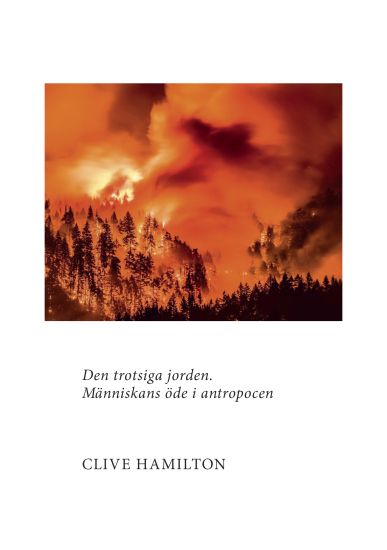
Den trotsiga jorden : människans öde i antropocen

Den trotsiga jorden : människans öde i antropocen

Clive Hamilton

Bokförlaget Daidalos
2018
sidottu
Filosofen Clive Hamiltons "Den trotsiga jorden" handlar om antropocen och om vad antropocen betyder för vår föreställning om oss själva som mänskliga varelser. Antropocen är namnet på den nya geologiska epok jorden numera befinner sig i på grund av mänsklig påverkan på jordsystemets fysikaliska, kemiska och biologiska återkopplingar, med den globala uppvärmningen som det tydligaste exemplet på detta. Vi människor har aldrig tidigare haft en sådan makt över våra grundläggande livsvillkor. Men heller aldrig stått så skyddslösa inför dem. De förändringar vi har satt igång hotar att underminera de konkreta grundvalarna för vår egen existens. Clive Hamilton diskuterar olika försök att definiera och förhålla sig till antropocen som begrepp och realitet men fokuserar framför allt på frågan om hur vi ska kunna axla ett rimligt – och tillräckligt – ansvar för planetens framtid och vår egen. För att kunna göra detta, menar han, måste vi förändra vår bild av oss själva och av förhållandet mellan oss och vår fysikaliska och biologiska omvärld. Vi behöver lära oss att ta vår makt och vår skyddslöshet på allvar. Och fort, för det finns ingen trygg gammal jord att återvända till. Den är borta.
Negotiating the End of the World

Negotiating the End of the World

Clive Hamilton

Polity Press
2026
sidottu
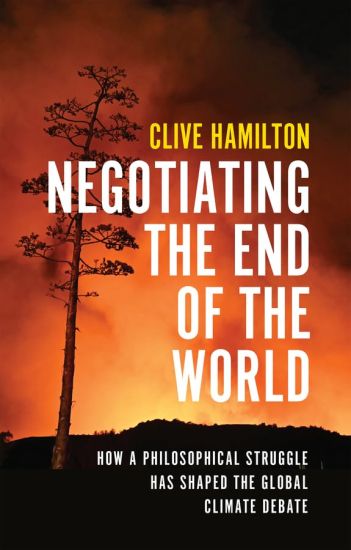
Behind the headlines, a struggle between two opposing philosophical visions has shaped the course of international efforts to save the planet from global warming. The liberal cosmopolitanism of the great Enlightenment philosopher Immanuel Kant has been up against the darker vision of an authoitarian global order of great power rivals developed by Carl Schmitt, 'Crown Jurist of the Third Reich'. Clive Hamilton shows how the influence of Schmitt's once-taboo ideas has recently spread around th world - in Trump's America, in Xi Jinping's China, and in Europe, with the rise of right-wing populism. His book maps how the actions of these three great powers have defined the course of global climate negotiations. The Kantian vision, best represented by the European Union, has common sense on its side - a threat to everyone that can be solved only by collective action calls for universalist, cosmopolitan responses. In practice, however, UN agreements have triggered resistance from surging anti-globalist forces influenced by the Nazi jurist's ideas, a world defined by friends and enemies and where weaker states submit to powerful ones. As the Earth hurtles toward a hot and perilous future, which of these worldviews prevails, Kant's or Schmitt's, could determine humanity's fate.
Negotiating the End of the World

Negotiating the End of the World

Clive Hamilton

Polity Press
2026
nidottu
Behind the headlines, a struggle between two opposing philosophical visions has shaped the course of international efforts to save the planet from global warming. The liberal cosmopolitanism of the great Enlightenment philosopher Immanuel Kant has been up against the darker vision of an authoitarian global order of great power rivals developed by Carl Schmitt, 'Crown Jurist of the Third Reich'. Clive Hamilton shows how the influence of Schmitt's once-taboo ideas has recently spread around th world - in Trump's America, in Xi Jinping's China, and in Europe, with the rise of right-wing populism. His book maps how the actions of these three great powers have defined the course of global climate negotiations. The Kantian vision, best represented by the European Union, has common sense on its side - a threat to everyone that can be solved only by collective action calls for universalist, cosmopolitan responses. In practice, however, UN agreements have triggered resistance from surging anti-globalist forces influenced by the Nazi jurist's ideas, a world defined by friends and enemies and where weaker states submit to powerful ones. As the Earth hurtles toward a hot and perilous future, which of these worldviews prevails, Kant's or Schmitt's, could determine humanity's fate.