Kirjojen hintavertailu. Mukana 12 016 292 kirjaa ja 12 kauppaa.

Kirjahaku

Etsi kirjoja tekijän nimen, kirjan nimen tai ISBN:n perusteella.

9 kirjaa tekijältä Clive Marsh

A Cultural Theology of Salvation

A Cultural Theology of Salvation

Clive Marsh

Oxford University Press
2018
sidottu
There aren't many serious works of systematic theology which engage with Breaking Bad, The Big Bang Theory, Crazy Heart, theories of capital and positive psychology, as well as the Isenheim Altarpiece and Handel's Messiah. This lively, contemporary study of salvation does precisely that. Christian doctrine cannot simply repeat what has gone before, even as it recognises the value and richness of the traditions Christianity carries with it. Clive Marsh acknowledges this in exploring how doctrine interweaves with life experience and cultural consumption. A Cultural Theology of Salvation considers how salvation is to be understood and articulated now, when the theme of 'redemption' appears outside of Christianity in the arts and popular culture. Marsh also assesses whether contemporary interest in 'happiness' has anything to do with salvation. The first part of the book sets the enquiry in the context of how theology operates as a discipline, and the cultural climate in which theology has to be done. The second part offers a number of case-studies (in art, music, TV, film, positive psychology, and economic life) exploring how the concerns of a doctrine of salvation are addressed directly and indirectly in Western culture. The third part distils the results of the case-studies in formulating a contemporary exposition of salvation, and concludes by showing what this means in practice.
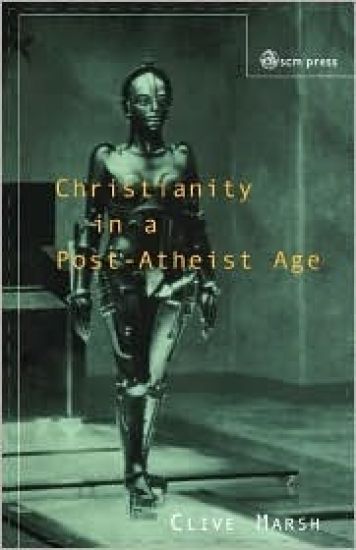
Christianity in a Post-atheist Age
Christianity is in crisis in the West and is failing to persuade people to adopt a religious lifestyle. This work is directed at anyone willing to have a serious look at the issues involved. Echoing the form of Luther's theses and the intent of Schleiermacher's "Speeches", the text offers 95 discussion starters for bemused contemporaries. It invites readers to think deeply about their own lives and to examine the religious and theological contexts of Britain today. The book then offers a bold proposal for a viable form of Christian belief, drawing heavily but not uncritically on liberal Protestantism. It thus develops further a tradition of Christian thought which SCM Press has done much to promote in the past. The appendices make the book suitable for individual or group study.
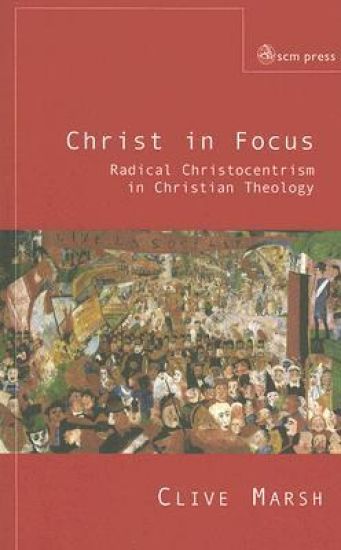
Christ in Focus

Christ in Focus

Clive Marsh

SCM Press
2005
nidottu
Christ in Focus demonstrates why the figure of Christ is so central for Christian faith and thought. It starts by asking what constitutes the focus or centre of Christian theology? In opposition to the way in which the trinity is being reasserted as the lynchpin of Christianity, this book argues that Christianity loses its soul when it is not Christocentric. Part One examines the way in which Christian theology works methodologically. Christology may not be the starting point of a systematic Christian theology, but this book argues that it must be the focus. The dangers in seeking to maintain a Christocentric focus are drawn out as a catalogue of distortions of Christocentricism. Part Two turns attention to the kind of Christology needed to sustain such a radical Christocentricism. In a series of critical dialogues, with the work of Schleiermacher, Rauschenbusch and Brock respectively, the author develops a corporate Christology adequate for today. It is argued that talk of 'dependence upon Christ' has, to date, turned Christians inward, or found them appealing to a past, isolated male saviour figure. In critiquing such an approach, an understanding of the contemporary Christ is developed; Christ as an empowering presence, for the many communal settings in which people live their lives today.
Theology Goes to the Movies

Theology Goes to the Movies

Clive Marsh

Routledge
2007
sidottu
Drawing a comparison between religion and cinema-going, this text examines a range of contemporary films in relation to key theological concepts. Cinema as a religion-like activity is explored through cognitive, affective, aesthetic and ethical levels, identifying the religious aspects in the social practice of cinema-going. Written by a leading expert in the field, Theology Goes to the Movies analyzes:the role of cinema and Church in Western culturethe power of Christian symbols and images within popular culturetheological concepts of humanity, evil and redemption, eschatology and God.This is an ideal text for students seeking a new way into the study of theology.
Theology Goes to the Movies

Theology Goes to the Movies

Clive Marsh

Routledge
2007
nidottu
Drawing a comparison between religion and cinema-going, this text examines a range of contemporary films in relation to key theological concepts. Cinema as a religion-like activity is explored through cognitive, affective, aesthetic and ethical levels, identifying the religious aspects in the social practice of cinema-going. Written by a leading expert in the field, Theology Goes to the Movies analyzes:the role of cinema and Church in Western culturethe power of Christian symbols and images within popular culturetheological concepts of humanity, evil and redemption, eschatology and God.This is an ideal text for students seeking a new way into the study of theology.
Financial Management for Non-Financial Managers
Financial Management for Non-Financial Managers is an accessible, practical and easy to understand guide that will allow any manager to gain confidence in understanding financial matters, managing a budget and dealing with bankers, accountants and finance professionals. A source of invaluable expert advice on all the essential aspects of financial management within the context of running a business, it covers: business structures, accounting and financial statements, analysis and ratios, planning, budgeting, product and service costing, setting selling prices, investment appraisal, finance and working capital, taxation and international transactions. This book explains financial literacy in the context of management, showing how improved awareness of finances can lead to increased value creation and protection for your business. Aimed at the practicing business manager, Financial Management for Non-Financial Managers includes case studies, spreadsheets and worked examples to accompany key skills and practices explained in the book. Online supporting resources for this book online template spreadsheets for planning, budgeting and variance analysis.
Business and Financial Models

Business and Financial Models

Clive Marsh

Kogan Page Ltd
2013
nidottu
A good business model should describe how an organization creates and delivers value, meaning that financial modelling is a vital tool for business strategy, allowing hypotheses and scenarios to be translated into numbers. It enables a company to experiment with different ideas and scenarios in a safe, low-risk environment, to consider what it is aiming to achieve, and to prioritize accordingly. Business and Financial Models provides an accessible introduction to these essential strategic practices, with guidance on using Microsoft Excel for projection and analysis. The book takes you through the process of building your model from the initial phase of formulating questions through modelling cash flow, budgets, investment appraisal and 'dashboard' tools for monitoring performance. Ideal for both small and large companies, Business and Financial Models also includes coverage of new visual thinking techniques, like Structured Visual Thinking, and how these can be incorporated into conventional business modelling. Online supporting resources for this book include downloadable figures from the book.
Methodist Theology Today

Methodist Theology Today

Clive Marsh

Continuum International Publishing Group Ltd.
2006
nidottu
British Methodism is reshaping itself. At a time of uncertainty about the future, owing to declining numbers and an ever-closer relationship with the Church of England, a collection of the liveliest theological minds in contemporary Methodism have written a book which shows how recent theology can be a resource for the future. Methodism has always had an active concern with both evangelism and social welfare and by means of its central organization it is able to coordinate efforts in these areas. The book asks challenging questions about how this may develop in the complex post-modern secular world.