Kirjojen hintavertailu. Mukana 12 016 292 kirjaa ja 12 kauppaa.

Kirjahaku

Etsi kirjoja tekijän nimen, kirjan nimen tai ISBN:n perusteella.

4 kirjaa tekijältä Clive McClelland

Ombra

Ombra

Clive McClelland

Lexington Books
2012
sidottu
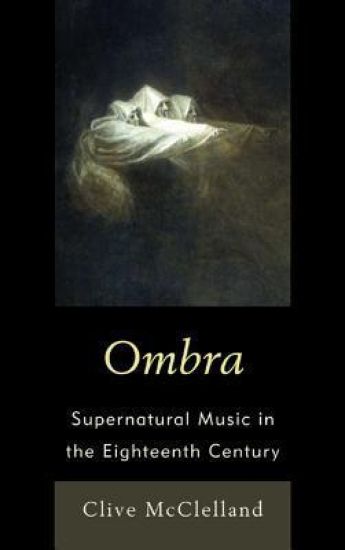
Ombra is the term which applies to an operatic scene involving the appearance of an oracle or demon, witches, or ghosts. Such scenes can be traced back to the early days of opera and were commonplace in the seventeenth century in Italy and France. Operas based on the legends of Orpheus, Iphigenia, and Alcestis provide numerous examples of ombra and extend well into the eighteenth century. Clive McClelland's Ombra: Supernatural Music in the Eighteenth Century is an in-depth examination of ombra and is many influences on classical music performance. McClelland reveals that ombra scenes proved popular with audiences not only because of the special stage effects employed, but also due to increasing use of awe-inspiring musical effects. By the end of the eighteenth century the scenes had come to be associated with an elaborate set of musical features including slow, sustained writing, the use of flat keys, angular melodic lines, chromaticism and dissonance, dotted rhythms and syncopation, tremolando effects, unexpected harmonic progressions, and unusual instrumentation, especially involving trombones. It is clearly distinct from other styles that exhibit some of these characteristics, such as the so-called 'Sturm und Drang' or 'Fantasia.' Futhermore, parallels can be drawn between these features and Edmund Burke's 'sublime of terror,' thus placing ombra music on an important position in the context of eighteenth-century aesthetic theory.
Ombra

Ombra

Clive McClelland

Lexington Books
2013
nidottu
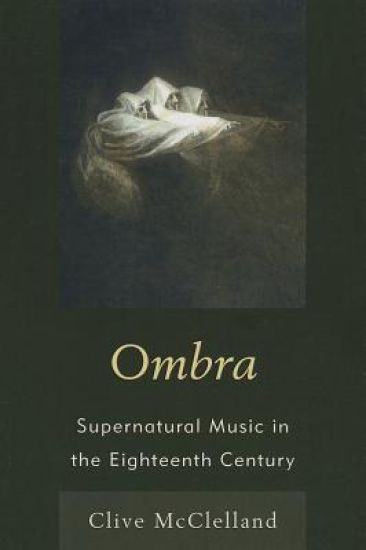
Ombra is the term which applies to an operatic scene involving the appearance of an oracle or demon, witches, or ghosts. Such scenes can be traced back to the early days of opera and were commonplace in the seventeenth century in Italy and France. Operas based on the legends of Orpheus, Iphigenia, and Alcestis provide numerous examples of ombra and extend well into the eighteenth century. Clive McClelland's Ombra: Supernatural Music in the Eighteenth Century is an in-depth examination of ombra and is many influences on classical music performance. McClelland reveals that ombra scenes proved popular with audiences not only because of the special stage effects employed, but also due to increasing use of awe-inspiring musical effects. By the end of the eighteenth century the scenes had come to be associated with an elaborate set of musical features including slow, sustained writing, the use of flat keys, angular melodic lines, chromaticism and dissonance, dotted rhythms and syncopation, tremolando effects, unexpected harmonic progressions, and unusual instrumentation, especially involving trombones. It is clearly distinct from other styles that exhibit some of these characteristics, such as the so-called 'Sturm und Drang' or 'Fantasia.' Futhermore, parallels can be drawn between these features and Edmund Burke's 'sublime of terror,' thus placing ombra music on an important position in the context of eighteenth-century aesthetic theory.
Tempesta

Tempesta

Clive McClelland

Lexington Books
2017
sidottu
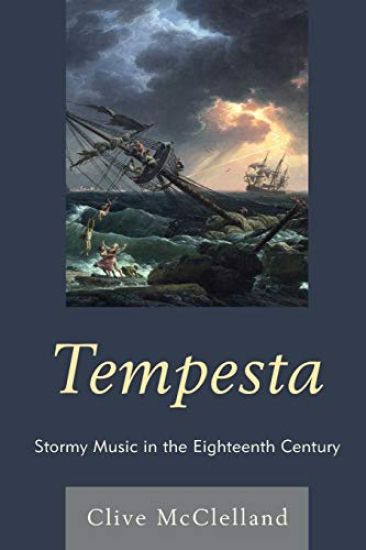
Tempesta is a term coined in this book applying to music that exhibits agitated or violent characteristics in order to evoke terror and chaos, involving ideas like rapid scale passages, driving rhythmic figurations, strong accents, full textures, and robust instrumentation including prominent brass and timpani. Music of this type was used for storm scenes, which in operas of the 17th and 18th centuries are almost invariably of supernatural origin, and other frightening experiences such as pursuit, madness, and rage. This ‘stormy’ music formed the ingredients of a particular style in the later 18th century that scholars in recent decades have referred to as Sturm und Drang, implying a relationship to German literature which I believe is unhelpful and misleading. Haydn’s so-called Sturm und Drang symphonies exhibit characteristics that are no different to his depictions of storms in his operas and sacred music, and there is no evidence of Haydn suffering some kind of personal crisis, or even of him responding to the ‘spirit of the age’. He was simply exploring the expressive possibilities of the style for dramatic/rhetorical effect. Scholars have been dissatisfied with the term for some time, but no-one has previously suggested an alternative. The term tempesta therefore applies to all manifestations of this kind of music, a label that acknowledges the ‘stormy’ origins of the style, but which also recognizes that it functions as a counterpart to ombra. Tempesta contributed enormously to the continued popularity of operas on supernatural subjects, and quickly migrated towards sacred music and even instrumental music, where it became part of the topical discourse. The music does not merely represent the supernatural, it instills an emotional response in the listener. Awe and terror had already been identified as sources of the sublime, notably by Edmund Burke (predating the German literary Sturm und Drang), and the latter half of the century saw the rise of Gothic literature. The supernatural remained popular in theaters and opera houses, and special music that could produce an emotional response of such magnitude was a powerful tool in the composer’s expressive armory.
Tempesta

Tempesta

Clive McClelland

Lexington Books
2019
nidottu
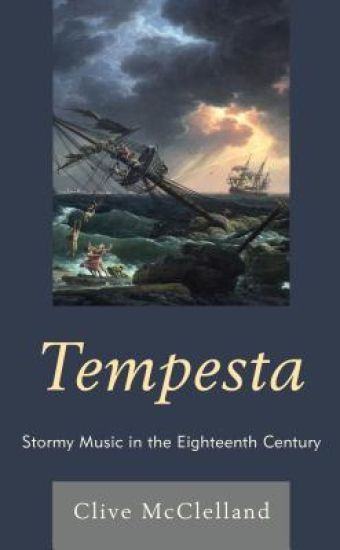
Tempesta is a term coined in this book applying to music that exhibits agitated or violent characteristics in order to evoke terror and chaos, involving ideas like rapid scale passages, driving rhythmic figurations, strong accents, full textures, and robust instrumentation including prominent brass and timpani. Music of this type was used for storm scenes, which in operas of the 17th and 18th centuries are almost invariably of supernatural origin, and other frightening experiences such as pursuit, madness, and rage. This ‘stormy’ music formed the ingredients of a particular style in the later 18th century that scholars in recent decades have referred to as Sturm und Drang, implying a relationship to German literature which I believe is unhelpful and misleading. Haydn’s so-called Sturm und Drang symphonies exhibit characteristics that are no different to his depictions of storms in his operas and sacred music, and there is no evidence of Haydn suffering some kind of personal crisis, or even of him responding to the ‘spirit of the age’. He was simply exploring the expressive possibilities of the style for dramatic/rhetorical effect. Scholars have been dissatisfied with the term for some time, but no-one has previously suggested an alternative. The term tempesta therefore applies to all manifestations of this kind of music, a label that acknowledges the ‘stormy’ origins of the style, but which also recognizes that it functions as a counterpart to ombra. Tempesta contributed enormously to the continued popularity of operas on supernatural subjects, and quickly migrated towards sacred music and even instrumental music, where it became part of the topical discourse. The music does not merely represent the supernatural, it instills an emotional response in the listener. Awe and terror had already been identified as sources of the sublime, notably by Edmund Burke (predating the German literary Sturm und Drang), and the latter half of the century saw the rise of Gothic literature. The supernatural remained popular in theaters and opera houses, and special music that could produce an emotional response of such magnitude was a powerful tool in the composer’s expressive armory.