Kirjojen hintavertailu. Mukana 11 244 527 kirjaa ja 12 kauppaa.

Kirjahaku

Etsi kirjoja tekijän nimen, kirjan nimen tai ISBN:n perusteella.

26 kirjaa tekijältä Clive Scott

Vers Libre

Vers Libre

Clive Scott

Clarendon Press
1990
sidottu
The prosodic description of free verse, in France as elsewhere, has long been fraught with difficulty: free verse is a web of shifting rhythmic effects, as relative as they are elusive. This book attempts to construct methods of analysis, on the basis of a study of the history and theory of free verse in France. After an initial exploration of the scansional problems posed by a free-verse poem (by Alain Fournier) and of the assumptions which might be made about its nature, Clive Scott looks for answers and verifications in the history of free verse's early years and in contemporary theoretical documents. How far was free verse in France an inevitable outcome of the 'liberalization' of regular verse? How far was free verse the result of fundamental changes in the way French rhythms were perceived? What did free verse owe to the popular song, to the prose poem, to translations? How far does the practice of free verse coincide with its history? Clive Scott's principle concern is to establish, on these foundations, working methods of scansion, and to show how they can be applied in the interpretation of specific poems. Accordingly, the second part of the book is devoted to extended commentaries on poems by Rimbaud, Laforgue, Claudel, and Apollinaire.
The Riches of Rhyme

The Riches of Rhyme

Clive Scott

Clarendon Press
1988
sidottu
This book is about the ways in which rhyme in French verse produces shapes or interferes with meaning - a topic which, despite its centrality, has hitherto received little critical attention. Part 1 examines those features which are peculiar to French rhyme - the different degrees of rhyme, rhyme gender, the frequency of rhymes on suffixes and endings - and explores the contributions they make to a poem's structure and semantic productivity. Its concern is twofold: to test the adequacy of the current methods of classifying rhymes and to demonstrate how comprehensive interpretations of a poem can be constructed from its rhyme-data. But wider issues are also confronted, including the relationships between rhyme and textuality, between rhyme and truth, between rhyme and rhythm. Part 2 analyses specific plays, poems and collections of poems: Racine's Mithridate, Moliere's Les Femmes Savantes, Voltaire's Poeme sur le Désastre de Lisbonne, Verlaine's Fêtes galantes and Aragon's Les Yeux d'Elsa.
Reading the Rhythm

Reading the Rhythm

Clive Scott

Clarendon Press
1993
sidottu
We are still a long way from knowing how to read the rhythms of free verse, a poetry which has been largely neglected by metrical theory. Clive Scott's readable and scholarly study indicates the strategies of reading needed if justice is to be done to free verse's rhythmic versatility. The core of Reading the Rhythm is an analysis of key French twentieth-century poets and poems, including Perse's Éloges, Cendrars's Prose du Transsibérien, Dix-neuf poèmes élastiques, and Documentaires; Apollinaire's Calligrammes; Supervielle's Gravitations; and Reverdy's Sources de vent. Contemporary trends in the visual arts - Cubism, Futurism, Orphism, photography - are called upon as perceptual models to illuminate free verse and a further perspective is added by the theme of travel and movement. This is an accomplished examination of the rhythms of free verse, and of its implications for our reading of regular verse. It is also a significant study of modernist poetics.
The Poetics of French Verse

The Poetics of French Verse

Clive Scott

Clarendon Press
1998
sidottu
This book explores the expressive resources peculiar to French verse, first through formal discussion of its poetics and then through detailed readings of texts from the seventeenth century to the present. At the same time, it offers a reassessment of the nature of the reading process itself, and makes a case for rescuing a sense of the complex modalities of language from the pressure to interpret. Reading is, above all, the experience of language, and of the self through language, and we should seek ways of preserving these kinds of experience, even though the conventions of critical discourse militate against them. Part Two presents a sequence of thirteen readings (including texts by La Fontaine, Chénier, Vigny, Baudelaire, Mallarmé, Apollinaire, Éluard, Césaire). These readings are grouped according to a set of underlying preoccupations --- formal, acoustic, rhythmic, narratological, etc. --- and each group is prefaced by an introductory discussion of the particular aspect highlighted.
Translating the Perception of Text
This book is about translating the perception of text; but that involves the elaboration, from reading, of a text of perception, a text capable of registering the complexities of language-based perception. It offers the phenomenology that has its primary source in the work of Merleau-Ponty.
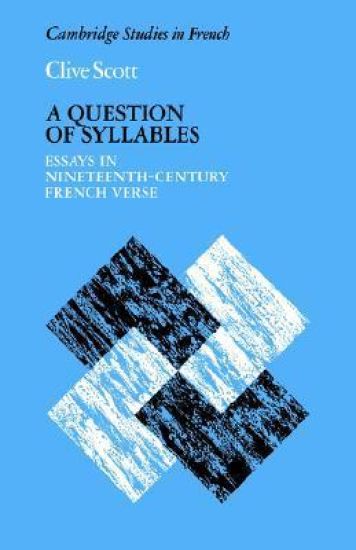
A Question of Syllables

A Question of Syllables

Clive Scott

Cambridge University Press
2005
pokkari
Dr Scott argues that only by attending to the precise locations of words in line or stanza, and to the specific value of syllables, or by understanding the often conflicting demands of rhythm and metre, can the reader of poetry acquire a real grasp of the intimate life of words in verse with all their fluctuations of meaning, mood and tone. The analyses through which the book pursues its argument address two principal concerns: the way in which syllabic position projects words and colours their complicated and challenged by the relationship of rhythm to metre.
French Verse-Art

French Verse-Art

Clive Scott

Cambridge University Press
2011
pokkari
This 1980 book is designed to help university students to master the technicalities and techniques of French verse. The author assumes that part of the difficulty encountered by readers derives from the need to approach French verse through English verse; this book undertakes, therefore, a differentiation of the two verse traditions. Dr Scott's concern is to provide the groundwork of a terminology, to discuss the origins and implications of that terminology, and to show how terminological knowledge can be translated into critical speculation about poetry. After three chapters which establish the essential features of the French line of verse and outline the difficulties the student is likely to encounter in trying to describe it and deal with it, the book moves on to consider rhyme, stanzas, verse forms and free verse.
French Verse-Art

French Verse-Art

Clive Scott

Cambridge University Press
1980
sidottu
This 1980 book is designed to help university students to master the technicalities and techniques of French verse. The author assumes that part of the difficulty encountered by readers derives from the need to approach French verse through English verse; this book undertakes, therefore, a differentiation of the two verse traditions. Dr Scott's concern is to provide the groundwork of a terminology, to discuss the origins and implications of that terminology, and to show how terminological knowledge can be translated into critical speculation about poetry. After three chapters which establish the essential features of the French line of verse and outline the difficulties the student is likely to encounter in trying to describe it and deal with it, the book moves on to consider rhyme, stanzas, verse forms and free verse.
A Question of Syllables

A Question of Syllables

Clive Scott

Cambridge University Press
1986
sidottu
Dr Scott argues that only by attending to the precise locations of words in line or stanza, and to the specific value of syllables, or by understanding the often conflicting demands of rhythm and metre, can the reader of poetry acquire a real grasp of the intimate life of words in verse with all their fluctuations of meaning, mood, and tone. The analyses through which the book pursues its argument address two principal concerns: the way in which syllabic position projects words and colours their complicated and challenged by the relationship of rhythm to metre.
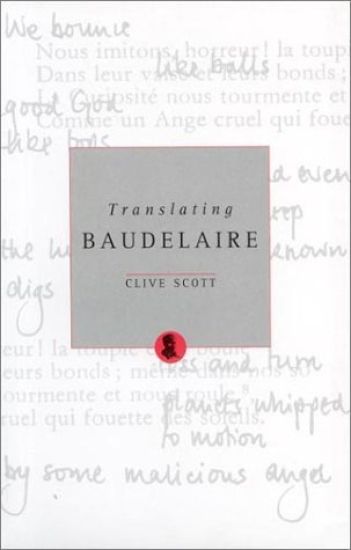
Translating Baudelaire

Translating Baudelaire

Clive Scott

University of Exeter Press
2000
sidottu
This book is the record of an apprenticeship in translating Baudelaire, and in translating poetry more generally. Re-assessing the translator's task and art, Clive Scott explores various theoretical approaches as he goes in search of his own style of translation. In the course of the book, versions of seventeen of Baudelaire's poems are offered, with detailed evaluations of the poems and the translations. Translating Baudelaire considers two neglected questions: What form should the criticism of translation take, if the critic is to do justice to the translator's 'project'? How can a translator persuade readers to respond to a translation as a text with its own creative dynamic and expressive ambitions?
Translating Baudelaire

Translating Baudelaire

Clive Scott

University of Exeter Press
2000
nidottu
This work is the record of an apprenticeship in translating Baudelaire, and in translating poetry more generally. Re-assessing the translator's task and art, Clive Scott explores various theoretical approaches as he goes in search of his own style of translation.
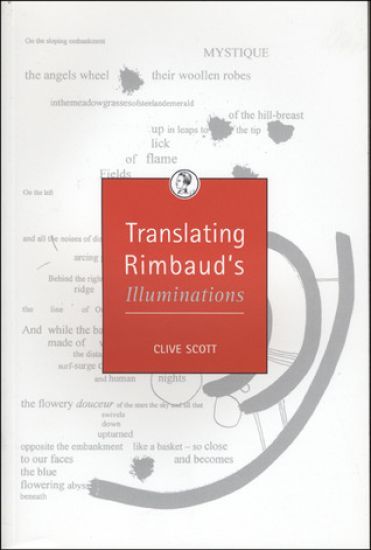
Translating Rimbaud's Illuminations

Translating Rimbaud's Illuminations

Clive Scott

University of Exeter Press
2006
nidottu
Translating Rimbaud’s Illuminations is a critique of the assumptions which currently underlie our thinking on literary translation. It offers an alternative vision; extending the parameters of literary translation by showing that such translation is itself a form of experimental creative writing. It also provides a reassessment of Rimbaud’s creative impulses and specifically his prose poems, the Illuminations. In the expanding field of translation studies, a brilliant and demanding book such as this has a valuable place. In addition, it also provides some fascinating ‘hands on’ translation work of a very practical kind. Published as a sequel to the author’s Translating Baudelaire (UEP, 2000), it will become part of the canon.
Translating Rimbaud's Illuminations

Translating Rimbaud's Illuminations

Clive Scott

University of Exeter Press
2006
sidottu
Translating Rimbaud’s Illuminations is a critique of the assumptions which currently underlie our thinking on literary translation. It offers an alternative vision; extending the parameters of literary translation by showing that such translation is itself a form of experimental creative writing. It also provides a reassessment of Rimbaud’s creative impulses and specifically his prose poems, the Illuminations. In the expanding field of translation studies, a brilliant and demanding book such as this has a valuable place. In addition, it also provides some fascinating ‘hands on’ translation work of a very practical kind. Published as a sequel to the author’s Translating Baudelaire (UEP, 2000), it will become part of the canon.
Translating Apollinaire

Translating Apollinaire

Clive Scott

University of Exeter Press
2014
sidottu
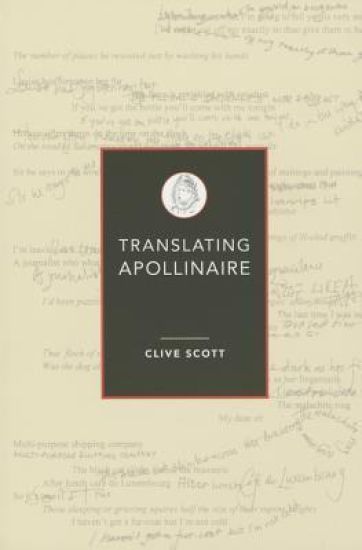
Translating Apollinaire delves into Apollinaire’s poetry and poetics through the challenges and invitations it offers to the process of translation. Besides providing a new appraisal of Apollinaire, the most significant French poet of WWI, Translating Apollinaire aims to put the ordinary reader at the centre of the translational project. It proposes that translation’s primary task is to capture the responses of the reader to the poetic text, and to find ways of writing those responses into the act of translation. Every reader is invited to translate, and to translate with a creativity appropriate to the complexity of their own reading experiences. Throughout, Scott himself consistently uses the creative resource of photography, and more particularly photographic fragments, as a cross-media language used to help capture the activity of the reading consciousness.
Translating Apollinaire

Translating Apollinaire

Clive Scott

University of Exeter Press
2014
nidottu
Translating Apollinaire delves into Apollinaire’s poetry and poetics through the challenges and invitations it offers to the process of translation. Besides providing a new appraisal of Apollinaire, the most significant French poet of WWI, Translating Apollinaire aims to put the ordinary reader at the centre of the translational project. It proposes that translation’s primary task is to capture the responses of the reader to the poetic text, and to find ways of writing those responses into the act of translation. Every reader is invited to translate, and to translate with a creativity appropriate to the complexity of their own reading experiences. Throughout, Scott himself consistently uses the creative resource of photography, and more particularly photographic fragments, as a cross-media language used to help capture the activity of the reading consciousness.
The Philosophy of Literary Translation

The Philosophy of Literary Translation

Clive Scott

Cambridge University Press
2023
sidottu
While reading transforms texts through memories, associations and re-imaginings, translation allows us to act out our reading experience, inscribe it in a new text, and engage in a dialogic and dynamic relationship with the original. In this highly original new study, Clive Scott reveals the existential and ecological values that literary translation can embody in its perceptual transformation of texts. The transfer of a text from one language into another is merely the platform from which translation launches its larger ambitions, including the existential expansion and re-situation of text towards new expressive futures and ways of inhabiting the world. Recasting language as a living organism and as part of humanity's ongoing duration, this study uncovers its tireless capacity to cross perceptual boundaries, to multiply relations between the human and the non-human and to engage with forms of language which evoke unfamiliar modes of psycho-perception and eco-modelling.
Literary Translation and the Rediscovery of Reading

Literary Translation and the Rediscovery of Reading

Clive Scott

Cambridge University Press
2012
sidottu
The act of translation is perhaps the ultimate performance of reading. By translating a text translators rework the source text into a reflection of their reading experience. In fact all reading is translation, as each reader incorporates associations and responses into the reading process. Clive Scott argues that the translator needs new linguistic resources to do justice to the intricacies of the reading consciousness, and explores different ways of envisaging the translation of a literary work, not only from one language to another, but also from one form to another within the same language. With examples drawn from different literatures, including English, this exciting new departure in translation theory has much to offer to students of literature and of comparative literary criticism. It also encourages all readers of literature to become translators in their turn, to use translation to express and give shape to their encounters with texts.
Literary Translation and the Rediscovery of Reading

Literary Translation and the Rediscovery of Reading

Clive Scott

Cambridge University Press
2015
pokkari
The act of translation is perhaps the ultimate performance of reading. By translating a text translators rework the source text into a reflection of their reading experience. In fact all reading is translation, as each reader incorporates associations and responses into the reading process. Clive Scott argues that the translator needs new linguistic resources to do justice to the intricacies of the reading consciousness, and explores different ways of envisaging the translation of a literary work, not only from one language to another, but also from one form to another within the same language. With examples drawn from different literatures, including English, this exciting new departure in translation theory has much to offer to students of literature and of comparative literary criticism. It also encourages all readers of literature to become translators in their turn, to use translation to express and give shape to their encounters with texts.
The Work of Literary Translation

The Work of Literary Translation

Clive Scott

Cambridge University Press
2018
sidottu
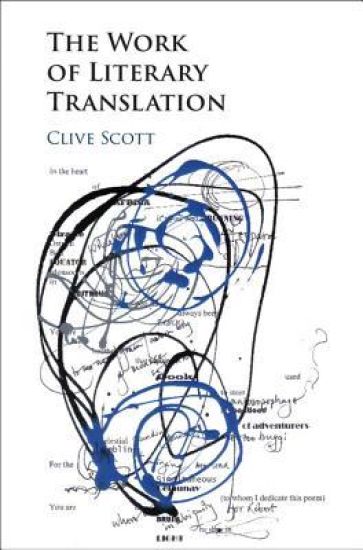
Offering an original reconceptualization of literary translation, Clive Scott argues against traditional approaches to the theory and practice of translation. Instead he suggests that translation should attend more to the phenomenology of reading, triggering creative textual thinking in the responsive reader rather than testing the hermeneutic skills of the professional translator. In this new guise, translation enlists the reader as an active participant in the constant re-fashioning of the text's structural, associative, intertextual and intersensory possibilities, so that our larger understanding of ecology, anthropology, comparative literature and aesthetics is fundamentally transformed and our sense of the expressive resources of language radically extended. Literary translation thus assumes an existential value which takes us beyond the text itself to how it situates us in the world, and what part it plays in the geography of human relationships.
The Work of Literary Translation

The Work of Literary Translation

Clive Scott

Cambridge University Press
2020
pokkari
Offering an original reconceptualization of literary translation, Clive Scott argues against traditional approaches to the theory and practice of translation. Instead he suggests that translation should attend more to the phenomenology of reading, triggering creative textual thinking in the responsive reader rather than testing the hermeneutic skills of the professional translator. In this new guise, translation enlists the reader as an active participant in the constant re-fashioning of the text's structural, associative, intertextual and intersensory possibilities, so that our larger understanding of ecology, anthropology, comparative literature and aesthetics is fundamentally transformed and our sense of the expressive resources of language radically extended. Literary translation thus assumes an existential value which takes us beyond the text itself to how it situates us in the world, and what part it plays in the geography of human relationships.