Kirjojen hintavertailu. Mukana 11 699 587 kirjaa ja 12 kauppaa.

Kirjahaku

Etsi kirjoja tekijän nimen, kirjan nimen tai ISBN:n perusteella.

3 kirjaa tekijältä Clyde Holler

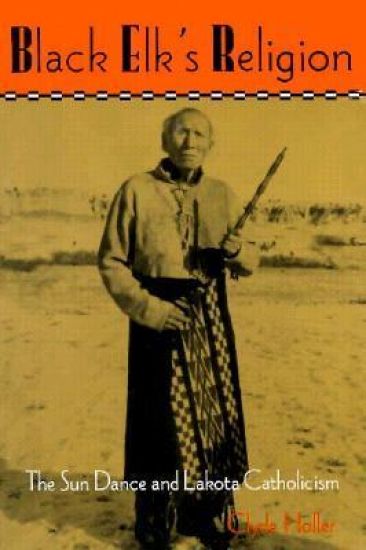
Black Elk's Religion

Black Elk's Religion

Clyde Holler

Syracuse University Press
1995
nidottu
Black Elk was one of the greatest religious thinkers produced by native North America, and the Sun Dance the central religious ritual of his Lakota tradition. Beginning with a review of the recent critical work on Black Elk by Paul B. Steinmetz, Julian Rice and Michael K. Steltenkamp, Holler reconstructs the history and development of the Lakota Sun Dance, essential background for understanding Black Elk's thought. His analysis is a comprehsnive study of the dance, which was banned by the government in 1883. Holler shows how Black Elk adapted the dance to the conditions and circumstances of reservation life, reinterpreting it in terms commensurate with Christianity. His firsthand account of the dance associated with Frank Fools Crow at Three Mile Camp near Kyle, South Dakota, shows how the contemporary Sun Dance reflects Black Elk's vision. Holler's book offers a philosophical engagement with native North American religion, carried out in close dialogue with anthropology. Readers who were captivated by John G. Neihardt's gripping portrait of Black Elk in ""Black Elk Speaks"" may be surprised to learn that he was a vital and creative leader until his death in 1950, not the broken, despairing old man made famous by Neihardt. Holler establishes that Black Elk was both a sincere traditionalist and a sincere Christian, seeing the two religious traditions as expressions of the sacred. Students of religion should be stimulated by Holler's interpretation of Black Elk as a creative thinker, rather than a passive informant on his people's past. Those interested in Native Americans, especially the Lakota, should appreciate his authoritative reconstruction of the Sun Dance, which proposes new understandings of this central Lakota religious ritual. The book also includes a glossary of terms.
Black Elk's Religion

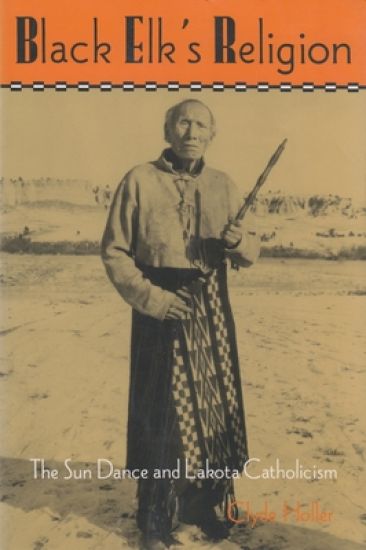
Black Elk's Religion

Clyde Holler

Syracuse University Press
1995
sidottu
Black Elk was one of the greatest religious thinkers produced by native North America, and the Sun Dance the central religious ritual of his Lakota tradition. Beginning with a review of the recent critical work on Black Elk by Paul B. Steinmetz, Julian Rice and Michael K. Steltenkamp, Holler reconstructs the history and development of the Lakota Sun Dance, essential background for understanding Black Elk's thought. His analysis is a comprehsnive study of the dance, which was banned by the government in 1883. Holler shows how Black Elk adapted the dance to the conditions and circumstances of reservation life, reinterpreting it in terms commensurate with Christianity. His firsthand account of the dance associated with Frank Fools Crow at Three Mile Camp near Kyle, South Dakota, shows how the contemporary Sun Dance reflects Black Elk's vision. Holler's book offers a philosophical engagement with native North American religion, carried out in close dialogue with anthropology. Readers who were captivated by John G. Neihardt's gripping portrait of Black Elk in ""Black Elk Speaks"" may be surprised to learn that he was a vital and creative leader until his death in 1950, not the broken, despairing old man made famous by Neihardt. Holler establishes that Black Elk was both a sincere traditionalist and a sincere Christian, seeing the two religious traditions as expressions of the sacred. Students of religion should be stimulated by Holler's interpretation of Black Elk as a creative thinker, rather than a passive informant on his people's past. Those interested in Native Americans, especially the Lakota, should appreciate his authoritative reconstruction of the Sun Dance, which proposes new understandings of this central Lakota religious ritual. The book also includes a glossary of terms.
The Black Elk Reader

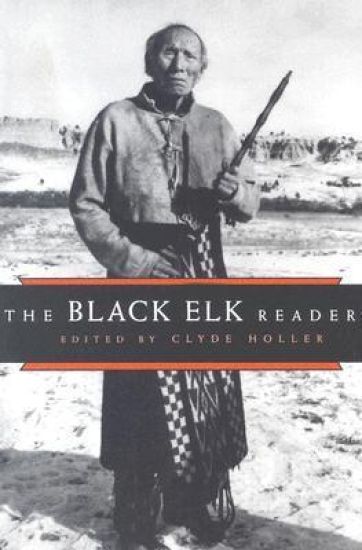
The Black Elk Reader

Clyde Holler

Syracuse University Press
2000
nidottu
This book includes both new essays and revised versions of classic works by recognized authorities on Black Elk. Clyde Roller's introduction explores his life and texts and illustrates his relevance to today's scholarly discussions.Dale Stover considers Black Elk from a postcolonial perspective, and R. Todd Wise investigates similarities between Black Elk Speaks and the Testimonio (as exemplified by I, Rigoberta Menchu: An Indian Woman in Guatemala). Anthropologist Raymond A. Bucko provides an annotated bibliography and a sensitive guide to the issues surrounding cultural appropriation, a subject also explored through Frances Kaye's engaging reading of Hawthorne's The Marble Fawn. Classic essays by Julian Rice and George W. Linden are included in the collection as well as Hilda Niehardt's reflections on the 1931 and 1944 interviews with Black Elk.With its unusually broad range of academic disciplines and perspectives, this book shows that Black Elk stands at the intersection of today's scholarly discussions. In addition to scholars of religion, anthropology, multicultural literature, and Native American studies, The Black Elk Reader will appeal to a general audience.