Kirjojen hintavertailu. Mukana 11 717 486 kirjaa ja 12 kauppaa.

Kirjahaku

Etsi kirjoja tekijän nimen, kirjan nimen tai ISBN:n perusteella.

5 kirjaa tekijältä Clyde W. Ford

Think Black

Think Black

Clyde W. Ford

Amistad Press
2021
nidottu
“Powerful memoir. . .Ford’s thought-provoking narrative tells the story of African-American pride and perseverance.” –Publisher’s Weekly (Starred)“A masterful storyteller, Ford interweaves his personal story with the backdrop of the social movements unfolding at that time, providing a revealing insider’s view of the tech industry. . . simultaneously informative and entertaining. . . A powerful, engrossing look at race and technology.”–Kirkus Review (Starred)In this thought-provoking and heartbreaking memoir, an award-winning writer tells the story of his father, John Stanley Ford, the first black software engineer at IBM, revealing how racism insidiously affected his father’s view of himself and their relationship.In 1947, Thomas J. Watson set out to find the best and brightest minds for IBM. At City College he met young accounting student John Stanley Ford and hired him to become IBM’s first black software engineer. But not all of the company’s white employees refused to accept a black colleague and did everything in their power to humiliate, subvert, and undermine Ford.Yet Ford would not quit. Viewing the job as the opportunity of a lifetime, he comported himself with dignity and professionalism, and relied on his community and his "street smarts" to succeed. He did not know that his hiring was meant to distract from IBM’s dubious business practices, including its involvement in the Holocaust, eugenics, and apartheid.While Ford remained at IBM, it came at great emotional cost to himself and his family, especially his son Clyde. Overlooked for promotions he deserved, the embittered Ford began blaming his fate on his skin color and the notion that darker-skinned people like him were less intelligent and less capable—beliefs that painfully divided him and Clyde, who followed him to IBM two decades later.From his first day of work—with his wide-lapelled suit, bright red turtleneck, and huge afro—Clyde made clear he was different. Only IBM hadn’t changed. As he, too, experienced the same institutional racism, Clyde began to better understand the subtle yet daring ways his father had fought back.

Of Blood and Sweat

Of Blood and Sweat

Clyde W. Ford

HARPERCOLLINS PUBLISHERS INC
2023
nidottu
“Ford’s overlap of past and present, narrative and commentary is masterful, and makes this volume all the more valuable to those readers wise enough to allow the past to inform the future. Of Blood and Sweat is a myth-busting work of genius that will stand as the last word on this vital subject for a long time to come.”—Elizabeth Dowling Taylor, New York Times bestselling author of A Slave in the White House and The Original Black EliteIn this, provocative, timely, and painstakingly researched book, the award-winning author of Think Black tells the story of how Black labor helped to create and sustain the wealth of the white one percent throughout American history.Clyde W. Ford uses the lives of individual Black men and women as a lens to explore the role they have played in creating American institutions of power and wealth—in agriculture, politics, jurisprudence, law enforcement, culture, medicine, financial services, and many other fields—while not being allowed to fully participate or share in the rewards. Today, activists have taken the struggle for racial equity and justice to the streets. Of Blood and Sweat goes back through time to excavate the roots of this struggle, from pre-colonial Africa through post-Civil War America. As Ford reveals, in tracing the history of almost any major American institution of power and wealth you’ll find it was created by Black Americans, or created to control them.Painstakingly researched and documented, Of Blood and Sweat is a compelling look at the past that holds broad implications for present-day calls for racial equity, racial justice, and the abolishment of systemic racism, and offers invaluable insight into our understanding of Black history and the story of America.
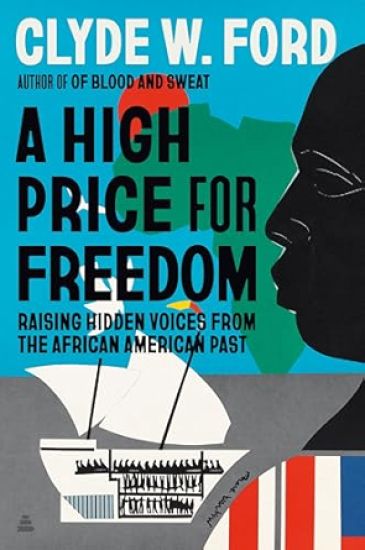
A High Price for Freedom: Raising Hidden Voices from the African American Past
The author and director of the Martin Luther King, Jr. Library Publishing Project gives voice to long silent African Americans from the past, allowing them to tell their own stories that shed new light on critical moments in the Black Freedom Struggle, challenging what we think we know about Black history. History is at its best when new findings and perspectives challenge old ideas and notions about the past, and even overturn common wisdom.What if a former enslaved man in Galveston, Texas, witnessed the first Juneteenth and told a completely different story from what most of us know about that day? Why were slave ships most prone to rebellion, including those carrying the most African women? How has Islam found its way into R&B, soul, jazz, and other American popular music? Who was Benjamin Banneker, really?In A High Price for Freedom, historian Clyde W. Ford addresses these and other questions, amplifying little-known voices from the African American past. In this wide-ranging, impeccably researched book, Ford begins with the 1656 court case of a woman named Elizabeth Key, who won a verdict for her freedom against her would-be enslaver--a victory that would forever change the nature, brutality, and course of American slavery.Ford examines a range of topics, from the role of women in fomenting slave revolts to an in-depth look at how Selma was not really about voting rights or even Martin Luther King, Jr, but about a twenty-six-year-old Black man named Jimmie Lee Jackson who was killed by an Alabama state trooper. As he laying dying in the only hospital that would treat Black people in February 1965, Jimmie Lee whispered to his nurse, a Catholic nun, "Sister, isn't this a high price for freedom?"Eye-opening, enlightening, and often counterintuitive, this fascinating history includes compelling, heartrending, and factual accounts about people and events in the African American past that teach us things we never learned and challenge the stories we thought we knew.
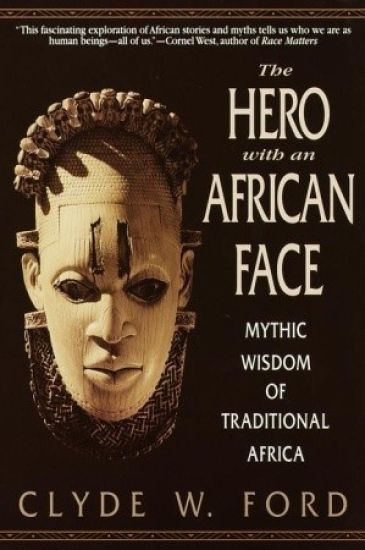
The Hero with an African Face

The Hero with an African Face

Clyde W. Ford

Bantam USA
2000
pokkari
In this remarkable book, Clyde Ford restores to us the lost treasure of African mythology, bringing to life the ancient tales and showing why they matter so much to us today.African myths convey the perennial wisdom of humanity: the creation of the world, the hero's journey, our relationship with nature, death, and resurrection. From the Ashanti comes the moving account of the grief-stricken Kwasi Benefo's journey to the underworld to seek his beloved wives. From Uganda we learn of the legendary Kintu, who won the love of a goddess and created a nation from a handful of isolated clans. The Congo's epic hero Mwindo is the sacred warrior who shows us the path each person must travel to discover his true destiny.These and other important African myths show us the history of African Americans in a new light--as a hero's journey, a courageous passage to a hard-won victory. The Hero with an African Face enriches us all by restoring this vital tradition to the world. "This fascinating exploration of African stories and myths...tells us who we are as human beings--all of us."--Cornel West, author of Race Matters"This wonderful and sustaining work illuminates the power and importance of ancient African myth.... Scholarship and masterful storytelling combine...fascinating."--NAPRA ReView"A master storyteller....Clyde Ford picks up where Joseph Campbell left off."--Jonathan Young, Ph.D., founding curator, Joseph Campbell Archives and Library"This is a breakthrough book on the mythic imagination of Africa."--Atlanta Daily World"An important first look at the universal themes of some of the principal African myths...excellent and much-welcomed."--Seattle Times"An excellent introduction to African mythology....Brings insights into the myths themselves and encourages further reading."--The Bloomsbury Review
Think Black: A Memoir

Think Black: A Memoir

Clyde W. Ford

Harpercollins
2020
cd
"Powerful memoir. . .Ford's thought-provoking narrative tells the story of African-American pride and perseverance."-Publisher's Weekly (Starred)"A masterful storyteller, Ford interweaves his personal story with the backdrop of the social movements unfolding at that time, providing a revealing insider's view of the tech industry. . . simultaneously informative and entertaining. . . A powerful, engrossing look at race and technology."-Kirkus Review (Starred)In this thought-provoking and heartbreaking memoir, an award-winning writer tells the story of his father, John Stanley Ford, the first black software engineer at IBM, revealing how racism insidiously affected his father's view of himself and their relationship.In 1947, Thomas J. Watson set out to find the best and brightest minds for IBM. At City College he met young accounting student John Stanley Ford and hired him to become IBM's first black software engineer. But not all of the company's white employees refused to accept a black colleague and did everything in their power to humiliate, subvert, and undermine Ford.Yet Ford would not quit. Viewing the job as the opportunity of a lifetime, he comported himself with dignity and professionalism, and relied on his community and his street smarts to succeed. He did not know that his hiring was meant to distract from IBM's dubious business practices, including its involvement in the Holocaust, eugenics, and apartheid.While Ford remained at IBM, it came at great emotional cost to himself and his family, especially his son Clyde. Overlooked for promotions he deserved, the embittered Ford began blaming his fate on his skin color and the notion that darker-skinned people like him were less intelligent and less capable--beliefs that painfully divided him and Clyde, who followed him to IBM two decades later.From his first day of work--with his wide-lapelled suit, bright red turtleneck, and huge afro--Clyde made clear he was different. Only IBM hadn't changed. As he, too, experienced the same institutional racism, Clyde began to better understand the subtle yet daring ways his father had fought back.