Kirjojen hintavertailu. Mukana 11 244 527 kirjaa ja 12 kauppaa.

Kirjahaku

Etsi kirjoja tekijän nimen, kirjan nimen tai ISBN:n perusteella.

9 kirjaa tekijältä Cole Harris

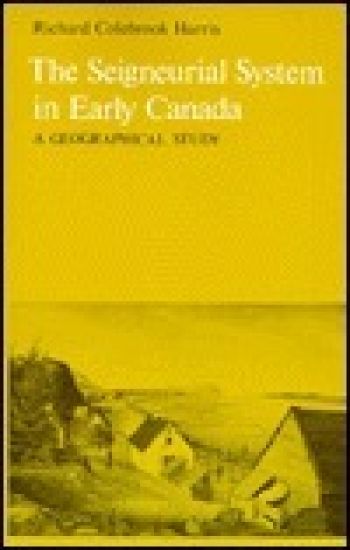
The Seigneurial System in Early Canada

The Seigneurial System in Early Canada

Cole Harris

McGill-Queen's University Press
1984
nidottu
This was the seigneurial system of land tenure, whose legal structure was transferred alsmot unaltered from France to the New World. Although the system was old and effete in seventeenth-century France, scholars have considered that it shaped much of the life of early Canada. Harris argues in this classic study, now available in paper for the first time, that such was not the case. If the seigneurial system were central to the development of early Canadian society, the patterns of settlement, land use, and trade in the colony would have borne the imprint of the system. Through inspection of such records as deeds of land concession and sale, statements of vassalage, and wills, Harris reconstructs the geography of Canada before the British conquest. This evidence leads to novel and interesting conclusions: that the seigneurie was not an important unit on the land and the seigneur was not a dominant figure in the life of the community. With remarkable clarity, Harris unfolds a detailed picture of the landscape of early Canada and of the people who created it. The reissue of this important volume will be welcomed by all interested in early European societies in North America.
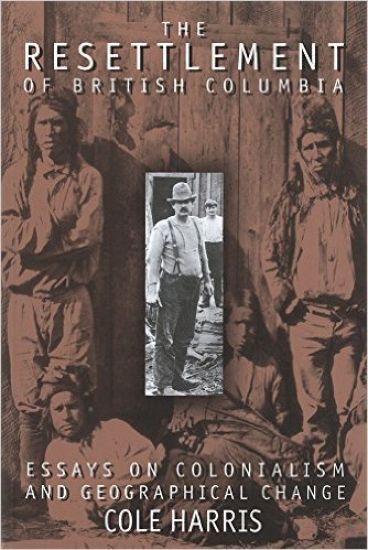
The Resettlement of British Columbia

The Resettlement of British Columbia

Cole Harris

University of British Columbia Press
1997
sidottu
In this beautifully crafted collection of essays, Cole Harris reflects on the strategies of colonialism in British Columbia during the first 150 years after the arrival of European settlers. The pervasive displacement of indigenous people by the newcomers, the mechanisms by which it was accomplished, and the resulting effects on the landscape, social life, and history of Canada's western-most province are examined through the dual lenses of post-colonial theory and empirical data. By providing a compelling look at the colonial construction of the province, the book revises existing perceptions of the history and geography of British Columbia.In their entirety, this eloquent collection of nine essays constitute a provocative and unique investigation into the meaning of colonialism and geographical change in the province.
The Resettlement of British Columbia

The Resettlement of British Columbia

Cole Harris

University of British Columbia Press
1997
pokkari
In this beautifully crafted collection of essays, Cole Harris reflects on the strategies of colonialism in British Columbia during the first 150 years after the arrival of European settlers. The pervasive displacement of indigenous people by the newcomers, the mechanisms by which it was accomplished, and the resulting effects on the landscape, social life, and history of Canada's western-most province are examined through the dual lenses of post-colonial theory and empirical data. By providing a compelling look at the colonial construction of the province, the book revises existing perceptions of the history and geography of British Columbia.In their entirety, this eloquent collection of nine essays constitute a provocative and unique investigation into the meaning of colonialism and geographical change in the province.
Making Native Space

Making Native Space

Cole Harris

University of British Columbia Press
2003
pokkari
This elegantly written and insightful book provides a geographical history of the Indian reserve in British Columbia. Cole Harris analyzes the impact of reserves on Native lives and livelihoods and considers how, in light of this, the Native land question might begin to be resolved. The account begins in the early nineteenth-century British Empire and then follows Native land policy – and Native resistance to it – in British Columbia from the Douglas treaties in the early 1850s to the formal transfer of reserves to the Dominion in 1938.Making Native Space clarifies and informs the current debate on the Native land question. It presents the most comprehensive account available of perhaps the most critical mapping of space ever undertaken in BC – the drawing of the lines that separated the tiny plots of land reserved for Native people from the rest.Geographers, historians, anthropologists, and anybody interested in and involved in the politics of treaty negotiation in British Columbia should read this book.
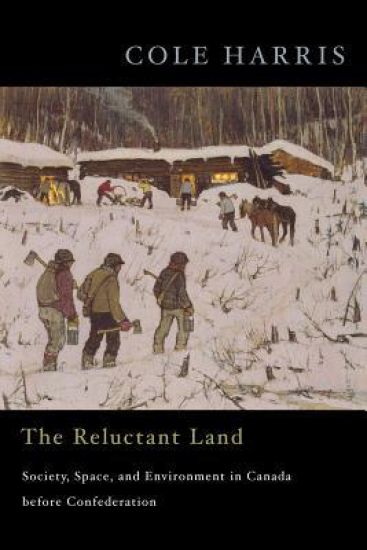
The Reluctant Land

The Reluctant Land

Cole Harris

University of British Columbia Press
2008
sidottu
The Reluctant Land describes the evolving pattern of settlement and the changing relationships of people and land in Canada from the end of the fifteenth century to the Confederation years of the late 1860s and early 1870s. It shows how a deeply indigenous land was reconstituted in European terms, and, at the same time, how European ways were recalibrated in this non-European space. It also shows how an archipelago of scattered settlement emerged out of an encounter with a parsimonious territory, and suggests how deeply this encounter differed from an American relationship with abundance. The book begins with a description of land and life in northern North America in 1500, and ends by considering the relationship between the pattern of early Canada and the country as we know it today. Intended to illuminate the background of modern Canada, The Reluctant Land is an intelligent discussion of people and place that will be welcomed by scholars and lay readers alike.
The Reluctant Land

The Reluctant Land

Cole Harris

University of British Columbia Press
2009
pokkari
The Reluctant Land describes the evolving pattern of settlement and the changing relationships of people and land in Canada from the end of the fifteenth century to the Confederation years of the late 1860s and early 1870s. It shows how a deeply indigenous land was reconstituted in European terms, and, at the same time, how European ways were recalibrated in this non-European space. It also shows how an archipelago of scattered settlement emerged out of an encounter with a parsimonious territory, and suggests how deeply this encounter differed from an American relationship with abundance. The book begins with a description of land and life in northern North America in 1500, and ends by considering the relationship between the pattern of early Canada and the country as we know it today. Intended to illuminate the background of modern Canada, The Reluctant Land is an intelligent discussion of people and place that will be welcomed by scholars and lay readers alike.
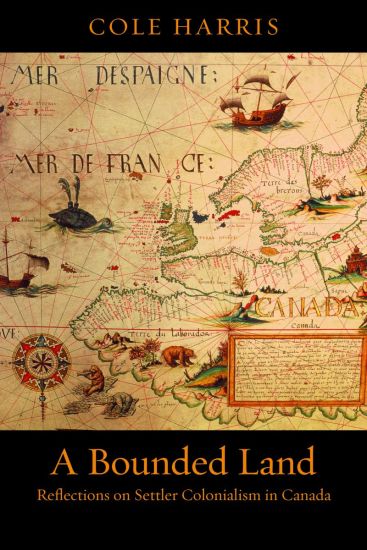
A Bounded Land

A Bounded Land

Cole Harris

University of British Columbia Press
2020
sidottu
Canada is a country of bounded spaces – a nation situated between rock and cold to the north and a political border to the south. In A Bounded Land, Cole Harris seeks answers to a sweeping question: How was society reorganized – for Indigenous and non-Indigenous people alike – when Europeans resettled this distinctive land?Through a series of vignettes that focus on people's experiences on the ground, Harris exposes the underlying architecture of settler colonialism as it grew and evolved, from the first glimpses of new lands and peoples, to the immigrant experience in early Canada, to the dispossession and resettlement of First Nations in British Columbia.By considering the whole territory that became Canada over 500 years and focusing on sites of colonial domination rather than settler texts, Harris unearths fresh insights on the continuing and growing influence of Indigenous peoples and argues that Canada's boundedness is ultimately drawing the country toward its Indigenous roots.
A Bounded Land

A Bounded Land

Cole Harris

University of British Columbia Press
2021
pokkari
Canada is a country of bounded spaces – a nation situated between rock and cold to the north and a political border to the south. In A Bounded Land, Cole Harris seeks answers to a sweeping question: How was society reorganized – for Indigenous and non-Indigenous people alike – when Europeans resettled this distinctive land?Through a series of vignettes that focus on people's experiences on the ground, Harris exposes the underlying architecture of settler colonialism as it grew and evolved, from the first glimpses of new lands and peoples, to the immigrant experience in early Canada, to the dispossession and resettlement of First Nations in British Columbia.By considering the whole territory that became Canada over 500 years and focusing on sites of colonial domination rather than settler texts, Harris unearths fresh insights on the continuing and growing influence of Indigenous peoples and argues that Canada's boundedness is ultimately drawing the country toward its Indigenous roots.