Kirjojen hintavertailu. Mukana 11 717 486 kirjaa ja 12 kauppaa.

Kirjahaku

Etsi kirjoja tekijän nimen, kirjan nimen tai ISBN:n perusteella.

2 kirjaa tekijältä Colin A. Palmer

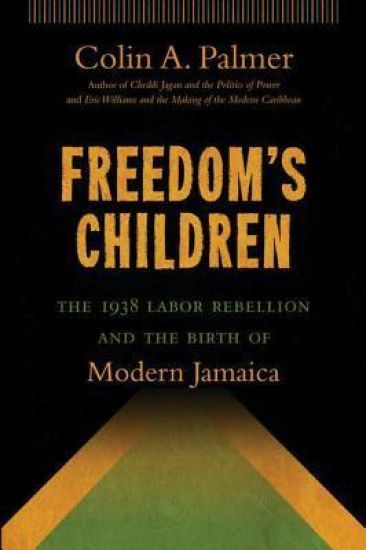
Freedom's Children

Freedom's Children

Colin A. Palmer

The University of North Carolina Press
2014
nidottu
Freedom's Children is the first comprehensive history of Jamaica's watershed 1938 labour rebellion and its aftermath. Colin Palmer argues that, a hundred years after the abolition of slavery, Jamaica's disgruntled workers challenged the oppressive status quo and forced a morally ossified British colonial society to recognise their grievances. The rebellion produced two rival leaders who dominated the political life of the colony through the achievement of independence in 1962. Alexander Bustamante, a moneylender, founded the Bustamante Industrial Trade Union and its progeny, the Jamaica Labour Party. Norman Manley, an eminent barrister, led the struggle for self-government and with others established the People's National Party. Palmer describes the ugly underside of British colonialism and details the persecution of Jamaican nationalists. He sheds new light on the nature of Bustamante's collaboration with the imperial regime, the rise of the trade-union movement, the struggle for constitutional change, and the emergence of party politics in a modernising Jamaica.
Inward Yearnings

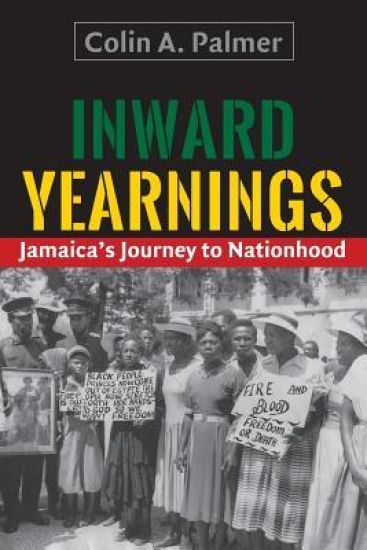
Inward Yearnings

Colin A. Palmer

University of the West Indies Press
2016
nidottu
Inward Yearnings: Jamaica’s Journey to Nationhood is a pioneering case study of an Anglo-Caribbean island’s search for a racial selfhood, its nervous embrace of its African heritage and ultimately a nationalism that reflected those inner longings. These complex and interrelated processes manifested themselves with the founding of the Universal Negro Improvement Association by Marcus Garvey in 1914, the emergence of Rastafarianism and the Back to Africa Movement in the 1930s, the People’s National Party’s adoption of self-government as its goal in 1940, and the appearance of numerous black consciousness groups in the 1950s.The first half of the book excavates the roots of these inner struggles, and their expressions and roles in Jamaica’s society and culture. The second half examines Jamaica’s entry into the West Indies Federation in 1958 and its secession by means of a referendum in 1961. The Colonial Office had convinced the ten federating units that they were all too small to make their individual independence a viable option. The Jamaicans attempted to subsume their nationalism in formation into a larger West Indian nationalism but the process failed. A federal union had been constructed upon a watery foundation.Palmer’s book is a carefully researched history of the federation’s failure and of Jamaica’s decision to affirm its own political identity and selfhood. The book is based largely on manuscript sources located in the British National Archives at Kew Gardens, the Jamaica Archives in Spanish Town and the National Archives of the United States located in College Park. The Jamaican newspaper, the Daily Gleaner, also constituted an invaluable source.