Kirjojen hintavertailu. Mukana 11 244 527 kirjaa ja 12 kauppaa.

Kirjahaku

Etsi kirjoja tekijän nimen, kirjan nimen tai ISBN:n perusteella.

6 kirjaa tekijältä Colin Burrow

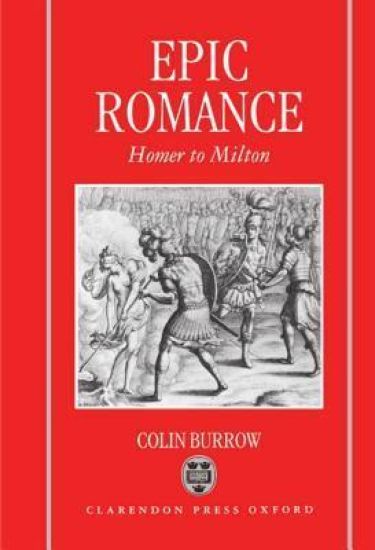
Epic Romance: Homer to Milton

Epic Romance: Homer to Milton

Colin Burrow

Clarendon Press
1993
sidottu
Epic Romance: Homer to Milton presents a comprehensive view of the epic tradition from Homer, through Virgil, Ariosto, Tasso, Spenser, and the host of minor writers who helped create the idiom within which these writers worked, to the idiom within which these writers worked, to the indiviudal authors in historical context link to develop a powerful explanation of how and why the epic changed from Homer to Milton. Dr Burrow shows how the romance hero, whose prime motives are love and pity, emerged from a sequence of reinterpretations of Homer which runs from Virgil's Aeneid and its medieval redactions to Ariosto's Orlando Furioso. Relating the emergence of the romance hero to the digressive, decentred form of romance, the author explores how later writers sought to control the digressive energies of the romance hero and to create a language and form of heroism more like those of classical epic. This analysis leads to a fresh account of the way in which Renaissance writers responded to, and moved tentatively towards, the writing of the past. Arguing against the view that Ariosto, Tasso, Spenser, and Milton were engaged ina battle for mastery over their predecessors, Dr Burrow reveals how they transformed they received intrepreations of past epic in order to draw closer to the narrative forms of their classical forebears.
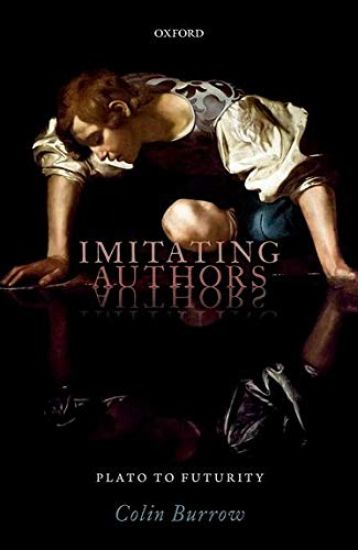
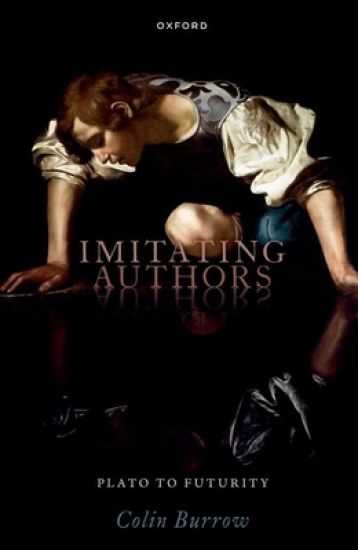
Imitating Authors

Imitating Authors

Colin Burrow

Oxford University Press
2019
sidottu
Imitating Authors is a major study of the theory and practice of imitatio (the imitation of one author by another) from antiquity to the present day. It extends from early Greek texts right up to recent fictions about clones and artificial humans, and illuminates both the theory and practice of imitation. At its centre lie the imitating authors of the English Renaissance, including Ben Jonson and the most imitated imitator of them all, John Milton. Imitating Authors argues that imitation was not simply a matter of borrowing words, or of alluding to an earlier author. Imitators learnt practices from earlier writers. They imitated the structures and forms of earlier writing in ways that enabled them to create a new style which itself could be imitated. That made imitation an engine of literary change. Imitating Authors also shows how the metaphors used by theorists to explain this complex practice fed into works which were themselves imitations, and how those metaphors have come to influence present-day anxieties about imitation human beings and artificial forms of intelligence. It explores relationships between imitation and authorial style, its fraught connections with plagiarism, and how emerging ideas of genius and intellectual property changed how imitation was practised. In refreshing and jargon-free prose Burrow explains not just what imitation was in the past, but how it influences the present, and what it could be in the future. Imitating Authors includes detailed discussion of Plato, Roman rhetorical theory, Virgil, Lucretius, Petrarch, Cervantes, Ben Jonson, Milton, Pope, Wordsworth, Mary Shelley, and Kazuo Ishiguro.
Imitating Authors

Imitating Authors

Colin Burrow

Oxford University Press
2023
nidottu
Imitating Authors is a major study of the theory and practice of imitatio (the imitation of one author by another) from antiquity to the present day. It extends from early Greek texts right up to recent fictions about clones and artificial humans, and illuminates both the theory and practice of imitation. At its centre lie the imitating authors of the English Renaissance, including Ben Jonson and the most imitated imitator of them all, John Milton. Imitating Authors argues that imitation was not simply a matter of borrowing words, or of alluding to an earlier author. Imitators learnt practices from earlier writers. They imitated the structures and forms of earlier writing in ways that enabled them to create a new style which itself could be imitated. That made imitation an engine of literary change. Imitating Authors also shows how the metaphors used by theorists to explain this complex practice fed into works which were themselves imitations, and how those metaphors have come to influence present-day anxieties about imitation human beings and artificial forms of intelligence. It explores relationships between imitation and authorial style, its fraught connections with plagiarism, and how emerging ideas of genius and intellectual property changed how imitation was practised. In refreshing and jargon-free prose Burrow explains not just what imitation was in the past, but how it influences the present, and what it could be in the future. Imitating Authors includes detailed discussion of Plato, Roman rhetorical theory, Virgil, Lucretius, Petrarch, Cervantes, Ben Jonson, Milton, Pope, Wordsworth, Mary Shelley, and Kazuo Ishiguro.
Shakespeare and Classical Antiquity

Shakespeare and Classical Antiquity

Colin Burrow

Oxford University Press
2013
sidottu
OXFORD SHAKESPEARE TOPICS General Editors: Peter Holland and Stanley Wells Oxford Shakespeare Topics provide students and teachers with short books on important aspects of Shakespeare criticism and scholarship. Each book is written by an authority in its field, and combines accessible style with original discussion of its subject. This book explains that Shakespeare did not have 'small Latin and less Greek' as Ben Jonson claimed. Shakespeare and Classical Antiquity shows the range, extent and variety of Shakespeare's responses to classical antiquity. Individual chapters on Virgil, Ovid, Classical Comedy, Seneca, and Plutarch show how Shakespeare's understanding of and use of classical authors, and of the classical past more generally, changed and developed in the course of his career. An opening chapter shows the kind of classical learning he acquired through his education, and subsequent chapters provide stimulating introductions to a range of classical authors as well as to Shakespeare's responses to them. Shakespeare and Classical Antiquity shows how Shakespeare's relationship to classical authors changed in response to contemporary events and to contemporary authors. Above all, it shows that Shakespeare's reading in classical literature informed more or less every aspect of his work.
Shakespeare and Classical Antiquity

Shakespeare and Classical Antiquity

Colin Burrow

Oxford University Press
2013
nidottu
OXFORD SHAKESPEARE TOPICS General Editors: Peter Holland and Stanley Wells Oxford Shakespeare Topics provide students and teachers with short books on important aspects of Shakespeare criticism and scholarship. Each book is written by an authority in its field, and combines accessible style with original discussion of its subject. This book explains that Shakespeare did not have 'small Latin and less Greek' as Ben Jonson claimed. Shakespeare and Classical Antiquity shows the range, extent and variety of Shakespeare's responses to classical antiquity. Individual chapters on Virgil, Ovid, Classical Comedy, Seneca, and Plutarch show how Shakespeare's understanding of and use of classical authors, and of the classical past more generally, changed and developed in the course of his career. An opening chapter shows the kind of classical learning he acquired through his education, and subsequent chapters provide stimulating introductions to a range of classical authors as well as to Shakespeare's responses to them. Shakespeare and Classical Antiquity shows how Shakespeare's relationship to classical authors changed in response to contemporary events and to contemporary authors. Above all, it shows that Shakespeare's reading in classical literature informed more or less every aspect of his work.
Edmund Spenser

Edmund Spenser

Colin Burrow

LIVERPOOL UNIVERSITY PRESS
1996
nidottu
Edmund Spenser (1554-1599) was the greatest Elizabethan poet, whose Shepheardes Calendar (1579) inaugurated a revolution in English poetry, and whose unfinished Faerie Queene (1590-96) was the longest and most accomplished poem written in the sixteenth century. Readers have always been immediately attracted by the fluid grace of is language, and by the magical world of dwarfs, hermits, knights and dragons evoked in The Faerie Queene, but have often been bewildered and overawed by the bulk and complexity of his writing. In this approachable and informative book, Colin Burrow clarifies the genres and conventions of work in Spenser’s poem. He explores the poet’s taste for archaism and allegory, and the native of epic and of heroism in The Faerie Queene. He presents Spenser as a ‘Renaissance’ poet, who is drawn at once to images of vital rebirth and to images of mortal frailty. In clear, jargon-free prose he explores Spenser’s equivocal relationship with his Queen and with the Irish landscape in which he spent his mature years. Spenser emerges from this book a less orthodox and harmonious poet that he is often thought to be, but as a complex, thoughtful and attractive writer.