Kirjojen hintavertailu. Mukana 11 342 296 kirjaa ja 12 kauppaa.

Kirjahaku

Etsi kirjoja tekijän nimen, kirjan nimen tai ISBN:n perusteella.

12 kirjaa tekijältä Colin Clarke

Class, Ethnicity, and Community in Southern Mexico

Class, Ethnicity, and Community in Southern Mexico

Colin Clarke

Oxford University Press
2000
sidottu
The state of Oaxaca has been studied intensively by archaeologists, historians, and anthropologists, but this is the first comprehensive overview of rural communities in the twentieth century. The study is rooted in the colonial and post-independence periods; but the text concentrates primarily on the post-revolutionary period, and on the land reform which allowed peasantries to be reconstituted in the lowland areas of the state, as a complement to the traditional peasantries which still existed on communal lands at high altitudes. Peasant lifestyles and production systems are examined, in particular to distinguish between those activities which are subsistence orientated, and those which are geared to the market. In the last thirty years rural life has been transformed by improved communications, and by services provided by the federal state, but above all by migration to Oaxaca City, other Mexican cities, and the USA. The outcome has been the emergence of class differences at the level of the community; the development of ethnic identities, based on language and regional differences; and the emergence of opposition to the hegemony of the party of government, the PRI. The wide range of issues under discussion will make this volume of interest to geographers, historians, anthropologists, and those involved in development studies.
Decolonizing the Colonial City

Decolonizing the Colonial City

Colin Clarke

Oxford University Press
2006
sidottu
In this sequel to Kingston, Jamaica: Urban Development and Social Change, 1692 to 1962 (1975) Colin Clarke investigates the role of class, colour, race, and culture in the changing social stratification and spatial patterning of Kingston, Jamaica since independence in 1962. He also assesses the strains - created by the doubling of the population - on labour and housing markets, which are themselves important ingredients in urban social stratification. Special attention is also given to colour, class, and race segregation, to the formation of the Kingston ghetto, to the role of politics in the creation of zones of violence and drug trading in downtown Kingston, and to the contribution of the arts to the evolution of national culture. A special feature is the inclusion of multiple maps produced and compiled using GIS (geographical information systems). The book concludes with a comparison with the post-colonial urban problems of South Africa and Brazil, and an evalution of the de-colonization of Kingston.
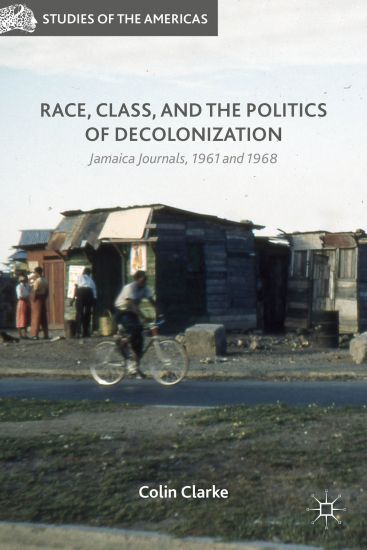
Race, Class, and the Politics of Decolonization
This book offers a detailed picture of Jamaica before and after independence. A 1961 journal sheds light on the political and social context before independence, while a 1968 journal shows how independence dissolved dissident forces and identifies the origins of Jamaica's current two party politics.
River of Dissolution

River of Dissolution

Colin Clarke

Routledge
2016
sidottu
First published in 1969. This title concerns itself with the ambivalence of Lawrence’s attitude towards corruption. Clarke demonstrates that Lawrence’s attitude to ‘will’ and to sensational or disintegrative sex is much more equivocal than conceded. At the same time this is a study of Lawrence’s debt as a novelist to the English Romantic poets. A tradition of metaphor is traced from the second half of the eighteenth century, through the poetry of the major Romantics to the Decadents, and so to Lawrence, whose attitudes to mechanism and corruption are shown to be articulated, above all, through ambivalent images of dissolution and disintegration. This title will be of interest to students of literature.
River of Dissolution

River of Dissolution

Colin Clarke

Routledge
2017
nidottu
First published in 1969. This title concerns itself with the ambivalence of Lawrence’s attitude towards corruption. Clarke demonstrates that Lawrence’s attitude to ‘will’ and to sensational or disintegrative sex is much more equivocal than conceded. At the same time this is a study of Lawrence’s debt as a novelist to the English Romantic poets. A tradition of metaphor is traced from the second half of the eighteenth century, through the poetry of the major Romantics to the Decadents, and so to Lawrence, whose attitudes to mechanism and corruption are shown to be articulated, above all, through ambivalent images of dissolution and disintegration. This title will be of interest to students of literature.
The Cameraman’s Cut

The Cameraman’s Cut

Colin Clarke

TROUBADOR PUBLISHING
2025
nidottu
In The Cameraman’s Cut, Colin Clarke takes the reader on an exhilarating journey through a lifetime behind the camera. From living with tree-dwelling cannibals in New Guinea to braving Arctic conditions at the North Pole, he has travelled globally, capturing extraordinary stories. He has visited the statues of Easter Island and the watering holes of the Congo, filmed with royals in Buckingham Palace and documented lives of the homeless in cardboard shelters. One moment, he’s face to face with cave-dwelling crocodiles in Madagascar; the next, he’s on stage with a rock ’n’ roll legend. Colin offers insights into human and geopolitical events, from the turmoil of the Middle East to life behind the Iron Curtain and the fall of the Berlin Wall. His work has also immersed him in history, science, sports, music, and the arts. His 50-year career began in Swinging London in the mid-sixties as a photographer’s assistant, leading to studies at the National Film School and four decades as a freelance cinematographer. Woven throughout the book is his unique perspective on the evolution of factual television and documentary filmmaking—the art, the craft, and the challenges of an ever-changing industry.
Mexico and the Caribbean Under Castro's Eyes

Mexico and the Caribbean Under Castro's Eyes

Colin Clarke

Springer Nature Switzerland AG
2019
nidottu
This book provides a first-hand account of the author’s encounters as a social geographer, based on his field research and travels in Mexico and the Caribbean. The interlocutors of different classes and races introduce the reader to a variety of urban and rural communities, many of them involved in development projects. Two leitmotifs of the 1960s and 1970s recur throughout the volume: decolonization, state formation, and the quest for democracy in the post-colonial societies of Mexico and the Caribbean; and the conditions which were likely to constrain or challenge these developments, quintessentially associated with the 1959 Cuban revolution, the cold war and student radicalism.
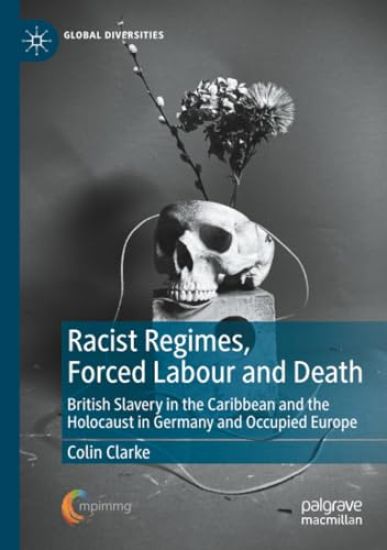
Racist Regimes, Forced Labour and Death

Racist Regimes, Forced Labour and Death

Colin Clarke

Springer International Publishing AG
2024
sidottu
This book compares the systems of exploitative race relations associated with two racist regimes – slavery in the British colonial Caribbean and forced labour in the Holocaust in Germany and the Nazi-occupied lands in Europe. Although each system was introduced by expansionist European powers, through racist enslavement, transportation, dehumanisation and the destruction of human life, the construction and operation of sugar plantations by African and Creole slave labour for the export of tropical products in the period 1650 to 1838 was different from the mass murder of Jewish and Gypsy civilians with the intention of creating a forced-labour regime and colonial-style ethnic cleansing during the Second World War.Though differentiated in time and place, the four principal common denominators that make feasible the detailed comparison of British Caribbean slavery and the Holocaust in Europe are racism, colonialism/occupation, slavery/forced labour, and death. Juxtaposition of these two companion studies will reveal comparisons and contrasts previously unexplored in the field of race relations under colonialism and the Holocaust. The book will be of interest to scholars and students of the social sciences and history, particularly those with an engagement with slavery and forced labour, the sociology of race and racism, and Holocaust studies.
Mexico and the Caribbean Under Castro's Eyes

Mexico and the Caribbean Under Castro's Eyes

Colin Clarke

Springer International Publishing AG
2018
sidottu
This book provides a first-hand account of the author’s encounters as a social geographer, based on his field research and travels in Mexico and the Caribbean. The interlocutors of different classes and races introduce the reader to a variety of urban and rural communities, many of them involved in development projects. Two leitmotifs of the 1960s and 1970s recur throughout the volume: decolonization, state formation, and the quest for democracy in the post-colonial societies of Mexico and the Caribbean; and the conditions which were likely to constrain or challenge these developments, quintessentially associated with the 1959 Cuban revolution, the cold war and student radicalism.
Racist Regimes, Forced Labour and Death

Racist Regimes, Forced Labour and Death

Colin Clarke

Springer International Publishing AG
2025
nidottu
This book compares the systems of exploitative race relations associated with two racist regimes - slavery in the British colonial Caribbean and forced labour in the Holocaust in Germany and the Nazi-occupied lands in Europe. Although each system was introduced by expansionist European powers, through racist enslavement, transportation, dehumanisation and the destruction of human life, the construction and operation of sugar plantations by African and Creole slave labour for the export of tropical products in the period 1650 to 1838 was different from the mass murder of Jewish and Gypsy civilians with the intention of creating a forced-labour regime and colonial-style ethnic cleansing during the Second World War. Though differentiated in time and place, the four principal common denominators that make feasible the detailed comparison of British Caribbean slavery and the Holocaust in Europe are racism, colonialism/occupation, slavery/forced labour, and death. Juxtaposition of these two companion studies will reveal comparisons and contrasts previously unexplored in the field of race relations under colonialism and the Holocaust. The book will be of interest to scholars and students of the social sciences and history, particularly those with an engagement with slavery and forced labour, the sociology of race and racism, and Holocaust studies.